
01
Whole-Room Coverage
Rated to clean up to 1,110 square feet in one hour, with listed shorter intervals for smaller areas — useful when sizing for bedrooms or open-plan spaces.
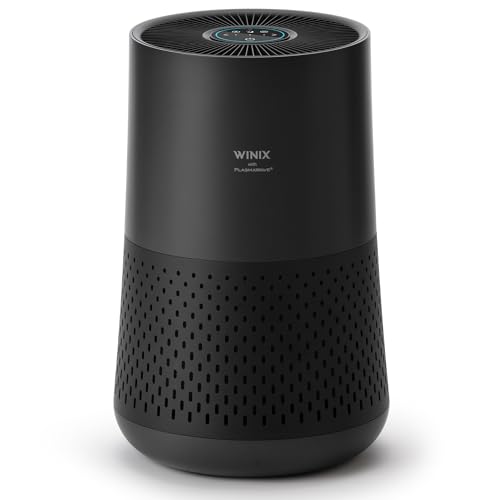
𝐀𝐇𝐀𝐌 𝐕𝐞𝐫𝐢𝐟𝐢𝐝𝐞 𝐚𝐭 𝟐𝟑𝟎 𝐬𝐪 𝐟𝐭: Also cleans rooms up to 1,110 sq ft in 1 hour (555 sq ft in 30 minutes, 370 sq ft in 20 minutes, 278 sq ft in 15 minutes) 𝐖𝐢𝐧𝐢𝐱 𝐓𝐫𝐮𝐞 𝐇𝐄𝐏𝐀: Captures 99.97%* of airborne allergens including pollen, dust, smoke, and pet dander, as small as 0.03 microns
As an Amazon Associate, AirPurifierFAQ earns from qualifying purchases. Product availability, price and specifications can change.
The WINIX A230 is presented as a room air purifier equipped with a True HEPA filter, an activated carbon stage, and a built-in air quality sensor with Auto Mode. According to the supplied product data it is rated to “clean” rooms up to 1,110 sq ft in one hour (with smaller-area cleanup times also listed) and claims to capture 99.97% of airborne allergens down to 0.03 microns. The unit is sold under Winix branding, lists a current price of $99.99 and is described as reducing VOCs and household odors in addition to particulate removal.
The published coverage metric (1,110 sq ft in one hour) positions this model for larger open-plan living spaces or for users who want a single appliance to serve adjoining areas rather than a small bedroom-only unit. The manufacturer’s claim about capturing 99.97% of airborne allergens to 0.03 microns targets allergy and smoke concerns, and the carbon layer is called out for VOC and odor reduction. Still, the way you use it will influence results: expect faster air turnover in open rooms and slower results in compartmentalized houses. Consider purchasing multiple units if you intend continuous protection in separated bedrooms or upstairs spaces.
The A230 is described as having a True HEPA filter plus a carbon filter. True HEPA media removes a very wide range of airborne particulates, while the activated carbon stage is intended to adsorb gases, VOCs and odors. The product copy explicitly states particle capture down to 0.03 microns and the 99.97% figure; that is the central technical claim available here. What is not provided in the supplied data are independent test results, the product’s CADR numbers, or third‑party certifications. Those omissions affect how you translate the marketing coverage claim into real-world expectations for pollutant reduction in a particular home.
The A230 reportedly includes an air quality sensor and an Auto Mode that adjusts fan speed in real time. That arrangement can simplify day-to-day use: the purifier should ramp up during events that generate particulates or odors and slow down when air quality improves. For buyers, this means less manual intervention if you want a set-and-forget device. The product data does not specify display behavior, sensor type, or how the unit reports air quality (numeric readout, color ring, etc.), so if these details matter to you—visible feedback, remote control or integration with smart home systems—verify them before purchase.
No filter life, replacement interval, or ongoing cost figures are provided in the supplied data, so account for unknown operating costs when planning a purchase. True HEPA and carbon consumables typically require periodic replacement depending on use and indoor pollutant load; heavy smoke or pet environments shorten service intervals. The A230’s Auto Mode can reduce runtime compared with continuous high-speed operation, which may extend filter life, but buyers should check the manufacturer’s recommended replacement schedule and the availability and price of genuine replacement filters. Also confirm warranty terms and whether replacement parts are sold directly by Winix or third-party retailers.
Optimal placement for any upright purifier is in a central location of the room you want cleaned, with several feet of clearance on intake and exhaust sides so airflow is not obstructed. Given the A230’s stated one‑hour coverage for a large area, place it where air can circulate freely into adjacent zones you want served. Avoid tight corners, behind furniture, or directly against a wall where airflow is restricted. If you plan to use the unit in a bedroom overnight, verify noise levels and night/sleep modes—these specifications are not included in the supplied data and can materially affect how suitable the unit is for a sleeping area.
Buyers seeking a single, sensor‑driven purifier for larger open rooms or combined living spaces who want HEPA filtration plus a carbon stage for odors and VOCs. It may suit households with intermittent smoke, pet dander or pollen exposure, provided the buyer confirms missing performance and operating details before purchase.
Before committing, verify key technical and ownership details that are not provided here: independent CADR ratings for smoke, dust and pollen; measured noise levels across fan speeds; recommended filter replacement intervals and replacement filter pricing; any third‑party test certifications; and the exact behavior and readout of the air quality sensor/Auto Mode. Also confirm warranty coverage and parts availability in your region. These specifics materially affect total cost of ownership and day‑to‑day convenience.
The WINIX A230 presents as a broadly capable HEPA+carbon purifier with sensor-driven Auto Mode and a prominent coverage claim (1,110 sq ft in one hour) that makes it attractive for larger rooms or combined living areas. The listed particle capture specification and odor-reduction carbon stage address common household concerns. However, the product data omits several practical metrics—CADR, noise, filter life and independent certifications—that determine real-world suitability and operating cost. If those missing details are acceptable or can be confirmed from the seller, this unit is worth considering for a single‑appliance approach to larger spaces; otherwise verify the absent specs before purchase.
The strongest reasons to consider it, based on the product data we have
Rated to clean up to 1,110 square feet in one hour, with listed shorter intervals for smaller areas — useful when sizing for bedrooms or open-plan spaces.
Includes a True HEPA filter that the product description states captures 99.97% of airborne allergens down to 0.03 microns, including pollen, dust, smoke and pet dander.
Built-in air quality sensor measures conditions and automatically adjusts fan speed in real time, reducing the need for constant manual control.
According to the product listing, the A230 is rated to clean rooms up to 1,110 sq ft in one hour. The listing also gives shorter‑time coverage: 555 sq ft in 30 minutes, 370 sq ft in 20 minutes, and 278 sq ft in 15 minutes. Verify these claims against your room layout and placement for best results.
The listing identifies a True HEPA filter and states it captures 99.97%* of airborne allergens (pollen, dust, smoke, pet dander) down to 0.03 microns. That is the product claim on the page; if you need independent verification or test data, check the manufacturer specifications or third‑party test reports.
The product description indicates the unit includes a carbon filter designed to reduce VOCs and household odors from cooking, pets, and smoke. The listing also notes this design helps prolong True HEPA filter life. For performance on specific odors or VOCs, check detailed specs or independent reviews.
The A230 includes a built‑in air quality sensor that measures air conditions and adjusts fan speed in real time. Auto Mode uses that sensor data to change fan speed automatically. If you need details about indicator lights, sensitivity settings, or how the sensor reports air quality, consult the user manual or product page.
The listing positions the A230 for bedroom use and specifically calls out capturing pet allergies and smoke. It should be suitable if the bedroom falls within the stated coverage (up to 1,110 sq ft). Consider room size, typical pollutant sources, and placement; for heavy smoke or multiple pets, confirm expected performance in independent reviews.
Filter life and replacement intervals are not specified in the provided listing. Verify the recommended replacement frequency, exact replacement filter model numbers, and any filter‑change indicators by checking the product manual or the manufacturer/Amazon product page before purchase.


Answers are educational and may link to relevant guides or products on this site. Product facts can change, so confirm current details before purchase.
