
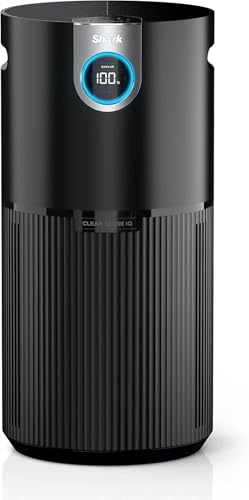
An air purifier is a room-sized appliance that reduces airborne contaminants by pulling room air through filters or other removal media. Most effective units use true HEPA filters for particles and activated carbon for many odors/VOCs. They lower particle concentrations where run, but do not replace ventilation or remove CO2 or humidity.
Why an air purifier matters
People use air purifiers to lower concentrations of airborne particles and some gases inside a room. That includes dust, pollen, pet dander, and much of the fine smoke and aerosols people inhale. In situations where opening windows or increasing building ventilation is impractical—bedrooms, offices, or during wildfire smoke—portable purifiers can reduce exposure to what’s already in the air.
That said, a purifier works on air already present: its benefit depends on matching capacity to room size, correct placement, and adequate runtime. It is a supplement to source control (removing or reducing the pollution source) and to ventilation, not a replacement for them.
How air purifiers work (simple steps)
- Mechanical filtration: A fan draws air through a particle filter—true HEPA (High Efficiency Particulate Air) filters trap a high fraction of particles down into the submicron range by a mix of interception, impaction and diffusion.
- Adsorption: Activated carbon or other sorbent media capture many odors and a subset of volatile organic compounds (VOCs) by adsorption. Capacity is finite and depends on the amount and type of carbon used.
- Electronic and other methods: Ionizers, electrostatic precipitators, UV lamps and photocatalytic systems are alternative approaches. Their effectiveness varies widely, and some technologies can create undesirable byproducts (for example, ozone) unless specifically designed and certified to avoid that.
Quick comparison table: common filter types and what they do
| Filter type | Targets | Typical limits / notes |
|---|---|---|
| True HEPA | Particles: dust, pollen, pet dander, smoke, many aerosols | Proven for particle removal when fitted and maintained; does not remove gases |
| Activated carbon (sorbent) | Odors, some VOCs and gases | Effective for many smells and some VOCs; capacity varies and media becomes saturated over time |
| Electrostatic / ionizer | Particles (can reduce airborne counts) | Performance varies; some models generate ozone—avoid ozone-generating devices |
| UV / photocatalytic | Microbial inactivation (theory: inactivates bacteria/viruses) | Lab effectiveness depends on exposure time and design; not a substitute for HEPA filtration for particles |
How to choose and use one: practical steps
- Measure the room area (and preferably volume). Look for a purifier rated for that room—check CADR (Clean Air Delivery Rate) or the manufacturer’s room-size guidance.
- Prioritize a model with a true HEPA filter for particle removal. Add activated carbon if odors, cooking smoke or VOCs are concerns.
- Place the purifier with unobstructed intake and exhaust—avoid tucking it behind furniture or inside cabinets. Centering it or placing it near the pollution source improves results.
- Run the unit continuously when you want the air kept clean. Short bursts provide limited benefit; continuous or long-run operation maintains lower average concentrations.
- Follow the manufacturer’s maintenance schedule. Filter replacement or cleaning (where allowed) preserves airflow and capture efficiency; clogged filters reduce performance and increase fan energy use.
- Avoid devices that advertise ozone generation or make sweeping health claims. Use certifications and third-party tests (AHAM, independent labs) as decision inputs.
Common misunderstandings and exceptions
Air purifiers do not ventilate a room. They do not lower carbon dioxide (CO2) levels or change humidity; those require ventilation, air exchange, or dedicated HVAC control. Not all purifiers remove gases—only units with specific sorbents like activated carbon target many VOCs and odors, and even then their capacity is limited.
One small purifier will not clean an entire house. Performance scales with CADR relative to room volume; multiple units or whole-building solutions are necessary for multi-room coverage. Finally, some “single-technology” claims (for example, that UV alone will solve all microbial risks) oversimplify complex physics and biology; integrated solutions and source control remain essential.
Next practical steps
- Note the room area and primary pollution sources (pets, smoking, wildfires, painting/chemicals).
- Compare units by CADR and check for “true HEPA” labeling and carbon media if you need odor/VOC control.
- For side-by-side model recommendations and sizing help, see our buyer guide: The Best Air Purifiers (2026).
- Review definitions and terms you encounter in spec sheets at our Air Purifier Glossary.
- Factor ongoing costs into your decision—replacement filters and electricity add to lifetime cost.
Related questions
Do air purifiers remove viruses?
HEPA filters capture particles in the same size range as many respiratory aerosols, so a HEPA-equipped purifier can remove virus-containing aerosols from the air stream. Effectiveness depends on airflow (CADR), how well the unit is sized and placed, and continuous operation. Air purifiers are an adjunct to ventilation, masks and hygiene—not a sole infection-control measure.
Can air purifiers remove CO2?
No. Consumer air purifiers do not remove carbon dioxide. CO2 concentration is controlled by ventilation (bringing in outdoor air) or by specialized gas-scrubbing systems used in industrial or spacecraft environments; these are not part of normal portable purifiers.
How do I know what size purifier I need?
Match the purifier’s CADR or manufacturer room-size rating to your room’s floor area (or volume). AHAM publishes CADR testing guidance, and manufacturers usually list recommended room sizes. When in doubt, choose a unit rated for a larger area than your room for faster turnover and lower steady-state particle levels.
Are ozone-producing air cleaners safe?
No. Devices that intentionally generate ozone for “air cleaning” are not recommended. Ozone is a lung irritant and can react with indoor chemicals to create secondary pollutants. Use certified devices that do not produce ozone and follow EPA and AHAM guidance when evaluating technologies.
Sources and further reading
- U.S. Environmental Protection Agency (EPA) — guides on indoor air cleaners and recommendations for smoke events.
- Association of Home Appliance Manufacturers (AHAM) — CADR testing and rating standards.
- Peer-reviewed literature on HEPA filtration, aerosol behavior, and indoor air interventions (select reviews and studies summarized in public health journals).
Sources for “What Is an Air Purifier?”
To keep our answer to “What Is an Air Purifier?” accurate, we rely on independent references such as the EPA’s Guide to Air Cleaners in the Home, AHAM Verifide CADR data and manufacturer spec sheets. See how we evaluate air purifiers and our editorial policy for details.
