Cleaner air guidance. Practical comparisons. Smarter recommendations.
Independent Guides Practical Comparisons Better Breathing
SEARCH AIRPURIFIERFAQ

What can we help you find?

Best

Best Air Purifiers for Cigarette Smoke (2026)

Best Air Purifiers for Cigarette Smoke (2026)
PRODUCTS IN THIS GUIDE

Recommended models

Product information comes from the current AirPurifierFAQ catalog and should be verified on Amazon before purchase.

Editorial plan

Reader problem: smokers and people who live with smokers need a clear, practical guide to buying an air cleaner that actually reduces cigarette smoke and the associated odors in the spaces they use most.

Editorial angle: recommend only real, available products from the supplied set and match each pick to the exact smoking scenario — from desktop ashtray capture and low‑maintenance desk units to small‑room HEPA+carbon purifiers and the special case of ozone deodorizers. For every recommendation we explain where the product will help, where it won’t, and what safety or maintenance trade‑offs to expect.

Dek: a practical 2026 buying guide that matches real products to cigarette‑smoking scenarios — from point‑source ashtray devices to whole‑room HEPA+carbon solutions — plus clear safety and maintenance advice.

Who this guide is for (and who it isn’t)

This page is written for people who want to reduce visible smoke, airborne particles from cigarette smoke, and cigarette odor in everyday living spaces: smokers who want to limit spread of smoke in a room, roommates or household members looking to cut down secondhand exposure in shared spaces, and hosts seeking localized odor control in small hospitality settings.

This guide is not a substitute for stopping smoking or for professional remediation of heavy, long‑standing tobacco contamination (thirdhand smoke embedded in fabrics, carpets and walls). Air cleaners can reduce airborne smoke and diminish odors; they don’t remove contamination baked into building materials without cleaning, repainting, or replacing soft furnishings. If a home or car has been heavily smoked in for years, cleaning and renovation — not just an air cleaner — are usually needed to restore neutral air and surfaces.

Quick verdict

Top pick — frestar Desktop Air Purifier: a small‑room HEPA + activated‑carbon unit that balances particle capture and odor adsorption for bedrooms and offices; USB‑powered, quiet (listed at 30 dB), and built for regular filter replacement. Best first choice for most cigarette‑smoke situations in small rooms.

How we selected these products

This roundup uses only the supplied product specifications and descriptions. We prioritized two filtration capabilities that matter most for cigarette smoke: particle removal (HEPA) and adsorption of gaseous odor compounds (activated carbon). Where a product combined both stages, it scored higher for routine cigarette‑smoke scenarios. For point‑source capture we favored compact ashtray designs that pair a fan with a carbon cartridge. We also included a washable‑filter desk fan for low recurring cost and a laser/workshop purifier that offers higher suction and monitoring features for heavy localized fumes.

Limitations of the source data: CADR figures (a standardized measure of particle removal) were not supplied for these products, so we cannot compare removal rates using that industry standard. Filter costs and precise filter lifetimes were often not listed; when manufacturers specify replacement counts or intervals we cite that information. For models without CADR, use the listed room coverage or product size as a practical sizing guide and expect performance to scale with fan speed, proximity to the smoke source, and filter condition.

Understanding cigarette smoke and what cleaners can and can’t do

Cigarette smoke is a mixture of airborne particles (including very fine particles in the PM2.5 range) and many volatile organic compounds (VOCs) that carry odor. That means two different mechanisms are needed for practical control:

  • Particle capture: True HEPA filtration removes the fine particles that make smoke visible and that contribute to PM2.5. HEPA is the primary technology for reducing airborne particles.
  • Gas/odor adsorption: Activated carbon removes many of the VOCs and odor‑causing molecules that HEPA alone cannot capture. Carbon is the practical standard for odor control in consumer air cleaners.

Most consumer devices address one or the other. A unit that combines HEPA plus activated carbon is the most pragmatic single purchase for everyday cigarette‑smoke scenarios: HEPA reduces visible and respirable particles and carbon reduces the perceptible tobacco smell. However, expect limits:

  • Consumer air cleaners reduce airborne contaminants but won’t instantly remove tobacco smell already embedded in fabrics, upholstery, curtains, carpets or paint (thirdhand smoke). Those surfaces often require targeted cleaning or replacement to fully remove odors.
  • Coverage matters: a small USB desktop purifier can be effective in a bedroom or at a desk, but it won’t dilute smoke across a large living room or an open floor plan.
  • Point‑source capture (ashtray devices) works best when placed inches from the smoking location. The closer to the source the purifier is, the more smoke it intercepts before it spreads.

Detailed pick recommendations (real products only)

1) Best overall for cigarette smoke (small rooms): frestar Desktop Air Purifier — product ID 2512

Why we picked it: Of the supplied products this unit is the only one that explicitly lists both HEPA and activated carbon filtration plus a stated small‑room coverage (161 sq ft) and a noise spec (30 dB). That combination makes it a balanced, practical choice for regular use in bedrooms, home offices and small living rooms.

Best for: Smokers or roommates in small apartments, bedrooms, home offices, or anyone who wants continuous, quiet smoke and odor reduction in a single room.

Key facts (from the listing): HEPA + activated carbon filter; listed coverage 161 sq ft (15 sq m); noise listed below 30 dB; USB powered; manufacturer lists replacement HEPA filter availability and recommends filter replacement every 3–6 months.

Pros:

  • Combines particle and odor stages in a single compact unit.
  • Low listed noise — suitable for bedroom or office background use.
  • USB power allows flexible placement and low running cost; small devices use only a few watts.
  • Manufacturer supplies replacement HEPA filters and suggests a 3–6 month replacement interval (actual life depends on smoking frequency and fan runtime).

Cons and limitations:

  • Designed for small rooms only — not a whole‑house solution.
  • CADR and exact long‑term filter replacement costs were not supplied in the product data; buyers should confirm replacement part SKUs and prices before purchase.

Practical placement and operation: For a 161 sq ft room position the frestar unit where it can draw the cigarette plume — typically on a bedside table or desk between the smoker and the rest of the room. Do not tuck it behind a monitor or curtain. Run it continuously at a low setting as background protection and increase the speed during and for 10–30 minutes after smoking to accelerate particle and odor reduction. Keep the intake clear of obstructions and replace the filters when odor returns or at the manufacturer’s recommended interval.

View product details and purchase options (listed price: $19.99).

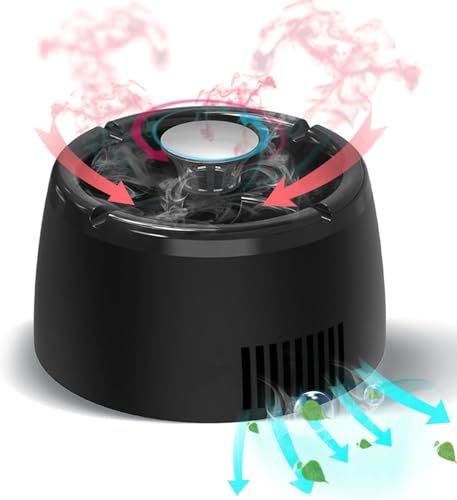
2) Best for point‑source capture and immediate ashtray odor: LANLison and TOBOWON smokeless ashtrays — product IDs 3290, 3188, 3051

Why we picked them: These ashtray‑style devices are designed to capture smoke at the source with a small fan and activated‑carbon filter. For someone who smokes repeatedly from a single chair, a localized capture device will intercept much of the smoke before it disperses through the room.

Best for: People who smoke at a consistent, localized spot (a desk, bedside table, balcony table, or smoking chair) and want immediate odor/smoke capture. Also useful for small hospitality areas or short‑term mitigation in rental units.

Key facts (from listings): All three list activated carbon filtration. LANLison models advertise cordless, rechargeable operation with about 3.5 hours runtime and claim suitability for spaces up to about 10 square meters (~107 sq ft). The TOBOWON variant notes that some packages include replacement carbon filters (three replacements included in one listing).

Pros:

  • Portable and rechargeable or USB‑powered for flexible placement close to the smoker.
  • Designed to trap smoke and odors at the source before the plume spreads into the room.
  • Small footprint — easy to place on a table, armrest, or balcony ledge.
  • Some packages include spare carbon filters, reducing short‑term maintenance needs.

Cons and limitations:

  • Intended for very small, localized areas — won’t clean an entire room or open plan.
  • Activated carbon pads saturate over time; effectiveness drops and the pads must be replaced or refreshed per manufacturer guidance.
  • Manufacturers do not supply CADR or formal whole‑room coverage beyond their small area guidance.

Practical placement and operation: Place the ashtray within inches of where the cigarette is held or smoked; capture effectiveness drops quickly as distance increases. Use higher fan speed during smoking. If the device supports aromatherapy, avoid using scented pads while trying to neutralize tobacco odor because added fragrances can mask or mix with tobacco smell rather than eliminate it. Keep a small stock of replacement carbon pads if you use the device regularly.

Links: LANLison (3290) • LANLison (3188) • TOBOWON (3051) (listed prices: $23.99, $22.99, $22.99 respectively).

3) Best low‑maintenance desk option (washable filter): Silanit Desktop Smoke Purifier Fan — product ID 3732

Why we picked it: This compact fan‑style purifier features a removable, washable filter and an oil‑collection cup for grease and residue. For users who prefer to avoid recurring filter purchases, a washable filter lowers long‑term expenses and waste.

Best for: Desk users, RV or dorm occupants, and casual indoor smokers who prioritize low maintenance and portability over whole‑room coverage.

Key facts (from the listing): USB power, removable oil cup and washable filter, adjustable tilt angle, quiet dual‑speed operation. The listing emphasizes ease of cleaning and an oil cup to capture residue; listed price: $43.99.

Pros:

  • Washable filter reduces recurring filter cost and waste and is straightforward to clean.
  • Adjustable tilt helps target intake toward the smoke source from different positions.
  • Quiet operation suitable for shared spaces.

Cons and limitations:

  • A washable mechanical or foam filter typically will not meet true HEPA performance for the smallest particles, and the manufacturer does not list a HEPA rating for this model.
  • Designed for desk/small‑area use — not a replacement for a correctly sized whole‑room HEPA+carbon purifier.

Practical placement and operation: Aim the adjustable intake toward the smoking location. Empty the oil cup and wash the filter on a scheduled basis (after heavy use or when suction/airflow drops). Running at higher speed during smoking helps move smoke into the intake; however, increased fan hours may require more frequent cleaning.

View product details.

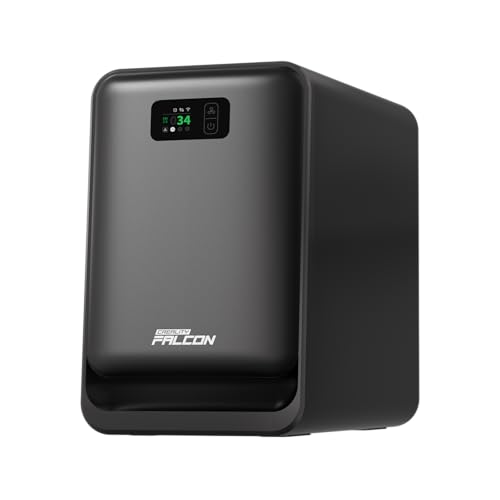
4) Workshop or heavy localized smoke: Creality Falcon AP1 (5‑stage filtration, Wi‑Fi) — product ID 3110

Why we picked it: Although designed primarily for laser engraving stations, the Creality Falcon AP1’s multi‑stage filtration, stronger suction and real‑time PM2.5 monitoring make it useful where smoke is dense and generated close to a bench or machine. Its integration with work equipment and automatic operation are practical if smoke events are intermittent and tied to a workspace.

Best for: Home workshops, studios or small business spaces where smoke or fumes are produced near a machine and higher airflow and monitoring matter more than compact size.

Key facts (from the listing): 5‑stage filtration, Wi‑Fi smart features, PM2.5 sensor and filter life reminders, compact form factor optimized for desktop machines. Listed price: $479.00.

Pros:

  • Higher suction and multi‑stage filtration designed for concentrated smoke sources.
  • Real‑time monitoring and filter reminders help manage performance over time.
  • Smart features support automation if synced with tools that produce smoke.

Cons and limitations:

  • Higher cost than basic desktop models — intended for heavier duty or workshop use.
  • Not a whole‑house purifier; performance is best for localized smoke close to the device’s intake.

View product details.

5) The ozone option (not a recommendation): Manfh Ozone Generator — product ID 3092

Why it’s included: The listing claims rapid deodorization and coverage up to 6,000 sq ft; some readers will encounter ozone machines marketed as a quick fix for “deep odors.” We include this product to explain what ozone devices do and to be explicit about safety and practical limits.

Key facts (from the listing): Manufacturer lists coverage up to 6,000 sq ft, timer up to 120 minutes with a hold option, operating noise listed below 30 dB, and a high ozone output claim. The listing also notes the product is not available for sale in California. Listed current price: $37.94.

Safety and editorial position: Ozone is a reactive gas. The manufacturer guidance for this product states the device must be used only in enclosed, unoccupied spaces and that people, animals and plants must be kept away during operation; ventilation for 30–60 minutes after treatment is advised before re‑entry. Because ozone can irritate lungs and mucous membranes and because it can react with indoor chemistry to form secondary pollutants, we do not recommend ozone generators for routine deodorizing in occupied living spaces. Consider ozone only as a last‑resort treatment for an unoccupied, ventilated space and follow manufacturer instructions and local regulations strictly. For occupied rooms, choose a HEPA+carbon approach and thorough cleaning instead.

View product details (safety notes included).

6) Small, rechargeable carbon pad option: Silanit Mini Rechargeable Desktop Air Purifier — product ID 2183

Why we picked it: This compact plug‑in/rechargeable model includes multiple replaceable carbon pads and is a straightforward, low‑cost way to reduce smell and light smoke odors at a desk or in a small shared space.

Key facts (from the listing): Activated carbon filter, includes five replaceable carbon pads, quiet fan, plug‑in operation. Listed price: $28.99.

Best for: Travelers, dorms, shared workspaces and small rooms where portability and a low initial cost are priorities.

Usage tips: Replace or air‑dry carbon pads per the manufacturer’s instructions. This model is suitable for light, intermittent use; it is not intended for regular heavy smoking in medium to large rooms.

View product details.

Comparing the picks — side‑by‑side summary

Model Filter type(s) Best room/use Noise / power Price (listed)
frestar Desktop HEPA + Activated Carbon Small room (161 sq ft) — bedroom/office 30 dB (listed) — USB powered $19.99
LANLison ashtray Activated Carbon Point‑source capture, up to ~10 sq m Not supplied — rechargeable (3.5 hr runtime quoted) $23.99
LANLison variant Activated Carbon Point‑source capture, up to ~10 sq m Not supplied $22.99
TOBOWON ashtray Activated Carbon Point‑source capture Not supplied $22.99
Silanit desktop fan Washable filter (plus oil cup) Desk / small room Quiet (dual‑speed, described as quiet) $43.99
Creality Falcon AP1 Multi‑stage (5 stages listed) Desktop/workshop localized smoke Not supplied; includes PM2.5 monitoring $479.00
Manfh ozone generator No filter (ozone output) Unoccupied deep deodorizing (manufacturer lists up to 6,000 sq ft) <30 dB listed $37.94

How to choose: a practical decision guide

Match what you buy to where and how you smoke. Below are decision criteria and example scenarios to clarify when each product type is appropriate.

  1. You want continuous background cleaning in a small bedroom or office: Choose the frestar Desktop (HEPA + activated carbon). Why: both particles and gases are addressed and the unit is sized and quiet for a private room. Example: if you smoke occasionally in a home office and want the room to smell less afterward, this is the most pragmatic single purchase.
  2. You smoke at a single spot and want to stop smoke before it disperses: Choose a smokeless ashtray (LANLison or TOBOWON). Why: these are engineered to intercept smoke at the source. Example: someone who always smokes on a balcony chair or at the same desk — a point‑source device placed within inches is more effective than a room purifier positioned several feet away.
  3. You want minimal recurring costs and easy cleaning: Choose the Silanit desktop fan with washable filter. Why: washable filters and an oil cup lower long‑term filter spending. Example: a dorm resident or RV owner who wants a tidy, low‑waste solution for occasional indoor smoking.
  4. Smoke is dense and generated near a machine or workbench: Choose the Creality Falcon AP1. Why: higher suction, multi‑stage filtration and a PM2.5 sensor suit concentrated, periodic smoke production. Example: when burning or cutting materials on a desktop and you want immediate capture and sensor feedback.
  5. Deep odor baked into an unoccupied space: Ozone units like the Manfh device are marketed for this use but should be treated as a last resort. Use only in unoccupied, sealed rooms and ventilate thoroughly after treatment. For occupied spaces, prefer cleaning and HEPA+carbon approaches instead.

Maintenance, filter replacement and operating cost — what to expect

Filter and maintenance costs are often the largest long‑term expense. Below are the practical points from the supplied listings and general guidance buyers should check before purchase:

  • frestar (HEPA + carbon): Manufacturer lists replacement HEPA filter availability and recommends replacement every 3–6 months. Actual life depends on how often you run the unit and how much smoke it processes. Before buying, confirm the replacement filter SKU and price on the product page so you can budget replacement costs.
  • LANLison / TOBOWON ashtrays: Use activated carbon pads that saturate and lose adsorption capacity. TOBOWON’s listing mentions three replacement filters included in the package. Plan on stocking replacements if you use the device every day; replacement cadence varies with smoking intensity.
  • Silanit desktop purifier (washable): The washable filter and oil cup lower recurring costs but require scheduled cleaning. Washing frequency depends on smoke density — check the filter visually and wash when greyed or when airflow decreases.
  • Silanit mini (carbon pads): Includes five replaceable carbon pads. Pads can be air‑dried and reused in some cases, but they will eventually require replacement for effective odor removal.
  • Creality Falcon AP1: Lists filter life reminders and a PM2.5 sensor. These features help with timely filter replacement, but exact replacement costs were not supplied here; check the product page for the filter model and price.
  • Manfh ozone generator: No filters; operating costs are electricity and the procedural cost of clearing, sealing and ventilating the space. Ozone treatment can also require repeat treatments for very persistent odors.

General rules:

  • Replace carbon/HEPA stages when odors return, when particle counts (if your unit reports PM2.5) stop responding, or at the manufacturer’s recommended interval.
  • Wash washable filters and empty oil collection cups promptly — grease buildup reduces airflow and capture efficiency.
  • Running at higher speeds during and immediately after smoking increases fan hours and can shorten filter life; balance performance needs with maintenance schedule and cost.

Placement, operation and routine habits for best results

How you use a device often matters as much as which device you buy. Apply these practical habits to get the most out of your purifier:

  • Place units to intercept the plume: For small room units place the purifier between the smoker and the rest of the room, not tucked behind furniture. For point‑source devices place them within inches of the smoke source.
  • Run continuously on low for background protection: Continuous low‑speed operation keeps particle and gas levels lower and avoids having to run at maximum fan speed frequently.
  • Boost during and after smoking: Increase fan speed during smoking and for 10–30 minutes afterward to accelerate clearance. For very small devices, boost for a shorter time to manage battery life.
  • Ventilate when practical: Opening a window briefly while running a purifier dilutes immediate plumes and complements filtration. Use this when weather and security allow.
  • Maintain clear intakes and exhausts: Don’t block airflow with curtains or piles of clothes; blocked intake drastically reduces performance.
  • Combine cleaning with filtration: Regularly launder curtains, cushion covers and clothing that absorb smoke odor; vacuum carpets and use hard surface cleaners on walls and trim when appropriate.

Troubleshooting: smell or particles persist — quick checks

  • If odors persist after using a HEPA+carbon unit: check whether the carbon stage is saturated or missing — carbon needs replacement; HEPA does not remove gas‑phase odors.
  • If smoke remains visible or PM2.5 readings stay high: confirm the unit is sized appropriately for the room (coverage vs. room area), that the fan is set high enough during events, and that the filter isn’t clogged.
  • If the unit’s airflow seems weak: remove and inspect washable filters, empty any oil cup, and check intake for dust buildup or obstructions.
  • If a point‑source ashtray doesn’t help: move it closer to the smoker (within inches) and ensure the fan is running on a stronger setting during smoking.
  • If you smell strong tobacco in the fabric or walls: cleaning or professional remediation may be needed in addition to air cleaning. Air cleaners reduce airborne transfer but don’t fully deodorize saturated surfaces on their own.

Safety, regulatory and practical limits

Two practical safety limits to keep in mind and a few additional practical caveats:

  1. Ozone devices are for unoccupied, ventilated treatments only: The Manfh listing is explicit: the treated area must be cleared of people, animals and plants and ventilated for 30–60 minutes after use. Ozone is a respiratory irritant and can form secondary pollutants when it reacts with indoor chemicals. Because of those risks we do not recommend ozone generators for routine deodorizing in occupied living spaces. If you consider ozone for an unoccupied remediation task, follow the manufacturer’s instructions and local regulations closely (and note any jurisdictional sale restrictions such as those listed for California on this product).
  2. Air cleaners reduce airborne contaminants but don’t fully treat bonded contamination: Long‑standing tobacco smoke that has impregnated fabrics, carpets, paint and HVAC ducts often requires cleaning, repainting, or replacement of affected materials to eliminate persistent odors and residue.

Additional practical caveats:

  • For multiroom or open layouts, a single small desktop purifier will have limited effect across the whole space. Consider multiple units or a larger room purifier appropriate to the total space if you need widespread reduction.
  • Many consumer listings omit CADR and detailed performance charts — where CADR is absent use the manufacturer’s listed coverage as a rough guide, and remember that proximity to the source, fan speed and filter condition directly affect outcome.
  • For shared housing or rental units, discuss smoking policies and mitigation expectations with roommates or landlords — filtration can help but won’t replace agreement on smoking location or cleaning responsibilities.

Practical checklist before you buy

  • Does the unit combine HEPA and activated carbon if you want both particle and odor reduction? (frestar lists both.)
  • Is the listed room coverage appropriate for the space you plan to use it in? If a coverage number is missing, expect the device to be optimized for desks or very small rooms.
  • Are replacement filters available and reasonably priced? Verify SKU and cost on the product page before purchase.
  • What is the noise level and power source? USB models are convenient but sized for small areas; quiet operation is important for bedroom/office use.
  • Do you need portability or rechargeable operation (ashtrays, minis) or do you prefer continuous plug‑in operation (desktop HEPA units)?
  • If you care about monitoring, does the unit provide a PM2.5 sensor or filter life reminders (Creality Falcon AP1 has a PM2.5 monitor and filter life reminders)?
  • Are you prepared to combine filtration with source control and cleaning? Filtration complements but does not replace source control (smoking outdoors) and cleaning of soft surfaces.

When to skip an air cleaner and address the source instead

An air cleaner is a tool, not a cure‑all. Consider source control and cleaning first in the following cases:

  • If smoke odor is deeply embedded in carpets, upholstery or walls — washing, steam cleaning, replacing materials or repainting may be necessary.
  • If multiple rooms or an entire house have persistent tobacco contamination, a single room device will only offer limited relief; consider professional cleaning or replacing HVAC filters and duct cleaning if appropriate.
  • If the goal is to make a shared living area smoke‑free, the only reliable long‑term solution is a policy restricting smoking indoors combined with ventilation and cleaning.

Testing and monitoring performance

Two practical ways to assess how well a purifier is working:

  • Subjective smell test: Does the perceptible cigarette odor decrease after running the unit for a typical smoking session? If odors return quickly, the carbon stage may be saturated or inadequate for the room size.
  • Particle/PM2.5 monitoring: Units with built‑in PM2.5 sensors (such as the Creality listing) or a separate cheap PM2.5 monitor let you see particle counts fall as the purifier runs. If particle levels don’t respond, try increasing fan speed, moving the unit closer to the source, or confirming the filter is installed and not clogged.

Built‑in sensors provide useful feedback but can vary in accuracy; a standalone calibrated monitor is the most reliable way to benchmark particle removal performance.

Practical daily routine for indoor smokers

Follow a short routine to get the best results with any of these products:

  1. Start the purifier on low before you begin smoking to establish background airflow.
  2. Position a point‑source device within inches of the cigarette or place a small room unit between the smoker and the rest of the room.
  3. Run the purifier on high during smoking and for 10–30 minutes after to clear the immediate plume.
  4. Ventilate briefly if possible (open a window) while the purifier runs to dilute the plume faster.
  5. Empty ashtrays, launder fabrics exposed to smoke regularly, and schedule filter cleaning/replacement according to usage patterns.

Bottom line — which pick for which situation

Summarized recommendations based on the supplied products:

  • Best overall small‑room solution: frestar Desktop Air Purifier (HEPA + activated carbon). Choose this when you need both particle and odor reduction in a bedroom, office, or small living room.
  • Best point‑source capture: LANLison or TOBOWON smokeless ashtrays. Choose an ashtray model when you always smoke from the same spot and want to intercept smoke immediately.
  • Best low recurring cost desk option: Silanit Desktop Smoke Purifier Fan. Choose this if you prefer washable filters and an oil cup to limit recurring filter purchases.
  • Best for heavy, localized smoke/workshop use: Creality Falcon AP1. Choose this when you need stronger suction, a multi‑stage approach and PM monitoring in a workshop or studio.
  • Ozone devices: Manfh’s ozone generator is included for completeness, but it should only be considered for unoccupied, sealed treatments and is not recommended for routine use in spaces where people or pets are present.
  • Small, inexpensive portable option: Silanit Mini Rechargeable Desktop Air Purifier. Choose this for travel, dorms or very small rooms where portability and initial price are the top priorities.

Further reading & resources

To make a final decision, verify the product pages for replacement filters and up‑to‑date coverage and noise figures. If you have persistent tobacco odor or are dealing with long‑term contamination, consider professional cleaners or landlords’ guidance for remediation. Use a PM2.5 monitor if you need objective feedback about particle removal performance.

Concluding notes

For most everyday cigarette‑smoking scenarios inside smaller rooms, a combination HEPA + activated‑carbon unit (the frestar Desktop in this set) gives the best balance of particle removal and odor reduction. If you smoke from a single chair or at a desk, a small point‑source ashtray with a carbon cartridge will intercept much of the plume and reduce immediate odors. Washable desk units lower recurring costs at the expense of peak fine‑particle removal compared with true HEPA stages. Ozone can be effective for deep, unoccupied deodorization, but its risks and regulatory restrictions mean it should be considered only in special cases and handled with care.

Match the product to your typical smoking pattern (single spot vs. whole room), confirm replacement filter availability and cost before purchase, and pair the purifier with ventilation and cleaning for the best results.

FAQ

Questions buyers often ask

How do HEPA and activated carbon filters work together to reduce cigarette smoke and odor?

HEPA and activated carbon address two different components of cigarette smoke: HEPA captures fine airborne particles (including PM2.5) that make smoke visible, while activated carbon adsorbs many of the volatile organic compounds (VOCs) that carry tobacco odor. A unit that combines both stages is the most pragmatic single purchase for everyday cigarette-smoke scenarios, though neither will remove smoke baked into fabrics or surfaces.

Will the frestar Desktop Air Purifier remove cigarette smoke in my bedroom?

The frestar Desktop Air Purifier pairs true HEPA with activated carbon, lists coverage of 161 sq ft (15 sq m), and is rated below 30 dB with USB power. That combination makes it a balanced choice for continuous particle and odor reduction in a single bedroom, home office, or small living room. Manufacturer guidance lists filter replacement every 3–6 months.

Where should I place an air purifier when someone is smoking?

Point-source capture works best: place the purifier inches from the smoking location or ashtray so it intercepts smoke before it spreads. Small desktop or ashtray-style devices are designed for this proximity. For room-sized units, position them relatively close to the likely smoke pathway (not tucked behind furniture) to increase the share of smoke they can capture.

The guide mentions ozone deodorizers as a special case — should I consider one?

Ozone deodorizers are listed as a special case on this page, but the supplied content does not provide performance or safety details. Before considering one, verify the manufacturer’s claims and look for independent safety information and usage restrictions. If you need guidance, check product-specific documentation or consult a qualified source about health and safety for occupants.

How do I size a purifier when CADR figures aren’t provided?

When CADR isn’t available, use the product’s listed room coverage or physical size as a practical guide. Expect performance to scale with fan speed, proximity to the smoke source, and filter condition. Match the listed coverage to your room’s square footage and prioritize units that combine HEPA and activated carbon for cigarette smoke.

How often do filters need replacing and what should I check before buying?

The frestar listing recommends HEPA filter replacement every 3–6 months. Many other products in the source lacked explicit filter-lifetime or cost data. Before buying, verify each model’s recommended replacement interval, filter availability, and ongoing cost from the manufacturer so you can budget maintenance and ensure continued odor and particle control.

AirPurifierFAQ
Logo
Register New Account
Shopping cart