OdorStop
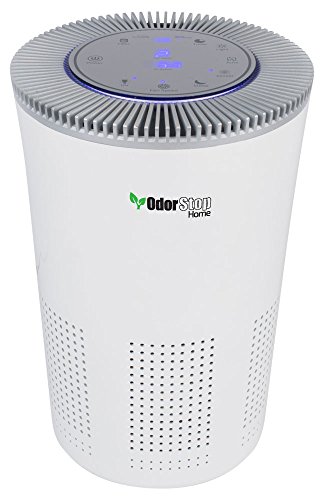
OdorStop HEPA Air Purifier with H13 HEPA Filter, UV Light, Active…
BrandOdorStopFilterH13 HEPA
$149.99
View product detailsDiscover effective allergy air purifiers designed to reduce airborne allergens and improve indoor air quality. Find trusted models with HEPA filters, quiet operation, and suitable features to help you breathe easier every day.


Use available room coverage, CADR, filtration, noise and replacement-filter information together. A large coverage number alone does not tell you how quickly a purifier can clean a room, and missing specifications are intentionally left blank rather than guessed.
Match airflow and coverage to the space where the purifier will actually run.
FiltrationCheck both particle filtration and carbon media when odors or smoke are part of the problem.
OwnershipConsider noise, controls and replacement-filter availability, not only the initial product price.
Compare the purifier’s listed coverage with the floor area you want to treat and note whether the product states air exchanges per hour (ACH). Several models list coverage and ACH equivalents (for example, Air Oasis gives both 3,975 sq ft in one hour and 795 sq ft at 5 ACH; EnviPure lists 2,200 sq ft at 1 ACH or 456 sq ft at 4.8 ACH). Verify the manufacturer’s stated coverage and whether it’s for 1 ACH or a higher exchange rate.
Replacement intervals vary by model. Air Oasis states up to 2 years between filter changes; Afloia recommends replacing filters every 4–6 months; EnviPure provides real-time filter-life monitoring with TrueFilter IQ. For other models, check the product page or manufacturer guidance for specific filter life and replacement schedules.
Safety specifics aren’t fully listed on the category page. The catalog shows products with UV, silver-ion screens, bipolar ionization, and ionizers, and QUEENTY states a “100% No-Ozone” claim for its model. Before buying, verify the manufacturer’s ozone emissions data, any safety certifications, and consult product documentation or your healthcare provider if you have health concerns.
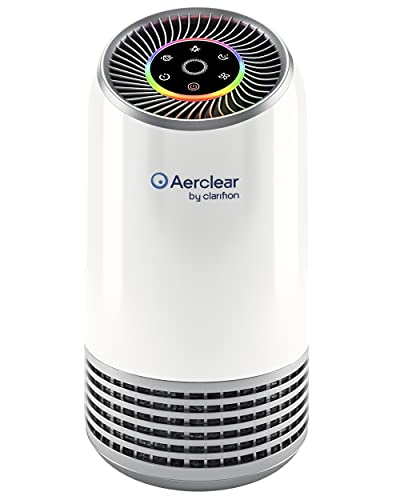
Look for models with low decibel ratings and sleep modes. Afloia lists 22 dB in sleep mode; QUEENTY runs at 25 dB in sleep mode; Frigidaire advertises quiet operation at 20 dBA (noted with an asterisk). Alen and Clarifion also emphasize quiet/sleep-friendly designs. Confirm the exact noise specs and available sleep or low-noise modes on the product page before purchasing.
Several models use H13 or True HEPA filters; Air Oasis specifies an H13 HEPA that removes particles down to 0.05 microns, Alen’s H13 captures particles as small as 0.1 micron, and Frigidaire’s HEPA captures particles as small as 0.3 microns. Some units add activated carbon for odors or additional stages like UV or ionizers. Verify the exact filter media and claimed particle-size capture for any specific model.
Air Oasis includes Wi‑Fi control (with a removable Wi‑Fi chip) for scheduling, filter-life, and particle counts. EnviPure offers real-time TrueFilter IQ filter-life monitoring and an air-quality monitor. Alen has a SmartSensor with color feedback. Frigidaire provides air-quality monitoring and Smart Mode. Check each product’s listing for app capabilities, scheduling, and any privacy or connectivity details you need.
Answers are educational and may link to relevant guides or products on this site. Product facts can change, so confirm current details before purchase.
