
VEVA
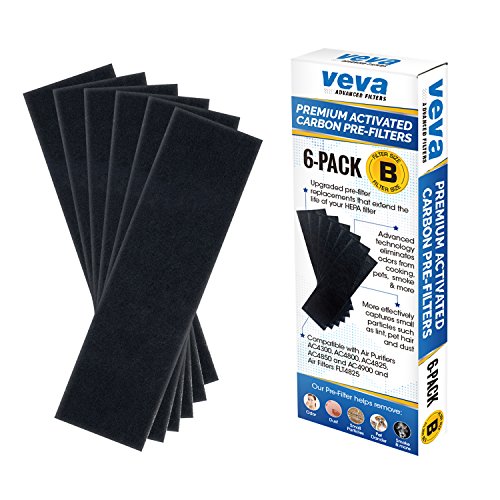
VEVA Replacement Pre Filter 6 Pack compatible with Germ Guardian Air…
BrandVEVAFilterHEPA + Activated Carbon + Pre-Filter
See today’s price on Amazon
View product details
Rechargeable Air Purifier: The negative ion air purifier can be charged by connecting to a commonly used mobile phone charger via a USB data cable.Weighing just 1.5 ounces, the product lasts 30-60 hours and only takes 2 hours to charge. Quiet running: light, and quiet.Wearable air purifier necklace can hang around your neck, hang in your car, put in your bag and work at your desk.Let the fresh air always be with you.
As an Amazon Associate, AirPurifierFAQ earns from qualifying purchases. Product availability, price and specifications can change.
This is a small, rechargeable personal air purifier sold as a wearable “necklace” device by SENECESLI. The product is described as a negative‑ion generator that requires no filter, weighs about 1.5 ounces, and charges over USB in roughly two hours. The manufacturer copy states a runtime of 30–60 hours, two selectable power modes (high and low), quiet operation, and an output of 120 million negative ions/cm³. The listing price is shown at $18.77 and the item is currently in stock. These are the explicit claims supplied; the notes below use those facts and place them in practical context for buyers.
The product is presented as a wearable, ultra‑light personal purifier: it is small enough to hang around the neck, tuck into a bag, or sit on a bedside table. At 1.5 ounces the unit is designed for close‑range use in the wearer’s breathing zone rather than to treat an entire room. The listing highlights travel and desk use — commuting, car trips, and short periods at work or school are the implied scenarios. Because the device is portable and USB rechargeable, it’s aimed at buyers who want continuous, low‑maintenance coverage at very close range rather than broad area air cleaning.
This model uses negative‑ion technology and explicitly requires no filter. Ionizers operate by charging particles so they attach to surfaces or cluster together; they do not draw room air through a mechanical capture medium like a HEPA filter. The product literature claims an ion concentration (120 million negative ions/cm³) and suggests those ions affect PM2.5, pollen and dust. Buyers should understand that ionization is a different mechanism from filtration: it may alter particle behavior near the device, but the listing does not provide standard metrics (for example, CADR or verified particle removal rates) that describe room‑scale performance.
The unit is rechargeable via USB using a common mobile phone charger and is said to take about two hours to reach a full charge. The manufacturer states a runtime range of 30–60 hours, with two power modes: high for stronger output and low for extended operation. The seller also describes the device as “quiet.” These operational claims suggest flexibility for travel and extended use without frequent recharging. The product listing does not, however, specify battery capacity (mAh), charging current, or a detailed runtime breakdown by mode—information some buyers may want for planning longer trips.
Because the product is filterless, there are no replaceable filters to buy or swap; the listing explicitly notes no filter replacement is required. That reduces routine consumables and simplifies ownership. Maintenance should focus on exterior care: keep the unit dry, wipe it clean, and check the lanyard and charging port for wear. The listing does not provide an IP (ingress protection) rating, materials list, or warranty details, so buyers should check seller information for guidance on water resistance, longevity expectations, and repair or return policies before purchase.
Practical placement is close to the user — worn around the neck, clipped or hung in a vehicle, or placed on a bedside surface. Controls are straightforward: the unit has two modes and can be switched between them, according to the product text. Because the unit is meant to be close to the body, confirm comfort of the lanyard and any manufacturer guidance about prolonged skin contact. Also verify any safety or certification information (not provided in the listing) and follow general precautions: avoid exposure to moisture, keep out of reach of small children when not supervised, and don’t block vents or the output while it’s running.
Shoppers who want a very small, inexpensive, wearable device for short‑range personal use — for example commuters, travelers, office workers or students who prefer a low‑maintenance, rechargeable unit to carry on the go. It’s best for buyers who understand it’s a personal ionizer rather than a whole‑room HEPA filtration system.
Before buying, confirm the specifications the listing omits: independent test results or third‑party measurements (CADR or verified particle removal), any ozone emission data, and safety certifications (for example, electrical and emissions standards). Ask the seller about battery capacity (mAh), expected runtime by mode, warranty or return policy, materials and strap construction, and any IP or moisture‑resistance rating. If you require measurable room‑scale filtration or HEPA‑level particle capture, seek a device that provides laboratory performance metrics rather than relying on ion concentration claims alone.
The SENECESLI portable negative‑ion necklace unit is a low‑cost, lightweight option for close‑range personal use that emphasizes portability, long runtime, and minimal maintenance. The listing supplies useful operational details — USB charging, two‑hour charge time, two modes, 30–60 hours runtime and a claimed ion output — but lacks standard performance metrics and safety test data that buyers typically use to compare air cleaners. If you want an easy, wearable device to carry on commutes or at a desk, this model fits that niche; if you need validated room‑scale filtration or documented emissions testing, look for products with published independent test results.
Preparing three grounded reasons from the product information already on this page.
Charge the unit with the included USB data cable using a commonly used mobile phone charger. The product charges in about 2 hours and—per the listing—runs roughly 30–60 hours depending on mode. The low-power mode extends runtime while high-power mode uses more battery.
The product uses negative ion technology and claims to emit 120 million negative ions/cm³ to adsorb and break down pollutants such as PM2.5, pollen and dust. The listing does not provide CADR, room-size ratings, or independent test data, so verify specific removal performance with the manufacturer or third-party test reports for wildfire smoke or PM2.5.
No filter replacement is required—the unit is filterless. The listing does not specify recommended cleaning or other maintenance tasks, so check the product manual or seller information for any cleaning instructions, recommended intervals, and safe handling procedures.
The purifier is designed as a lightweight (about 1.5 ounces) wearable necklace but can also hang in a car, sit in a bag, or rest on a desk or bedside table. It has two modes: high power for stronger cleaning and low power for extended runtime. Modes are described as easy to switch.
The listing does not state whether the device produces ozone or provide safety/certification details. If you have health concerns, verify ozone emission measurements, safety certifications, and any relevant test reports with the manufacturer or seller before use.
Key fields are empty in the listing: CADR, room-size recommendation, noise (dB) level, and detailed specs. Before purchasing, ask the seller for CADR or independent test results, noise measurements, ozone emissions data, warranty/return policy, and any certification or safety documentation you consider important.


Answers are educational and may link to relevant guides or products on this site. Product facts can change, so confirm current details before purchase.
