

QUEENTY
QUEENTY Desktop Air Purifier for office With H13 HEPA Filter,Ionizer,Fac…
BrandQUEENTYFilterH13 HEPA
$30.39
View product detailsProduct information comes from the current AirPurifierFAQ catalog and should be verified on Amazon before purchase.




Best overall for allergies: OdorStop OSAP5 — its H13 True HEPA filter, 360° intake, and Auto + Sleep modes make it a practical, low‑maintenance choice for most home allergy needs. It balances high‑grade HEPA capture with coverage large enough for living rooms and bedrooms.
This roundup is written for people who want an air purifier selected specifically to reduce common indoor allergy triggers: pollen, dust, pet dander and smoke particulates. It’s for the buyer who needs a practical match between filtration grade and room coverage, whether that’s a compact bedside unit for a sensitive sleeper, a desktop purifier for an office, or a larger device to run in an open-plan living area.
Use this page if you care about:
Pick decisions emphasize features that matter to allergy sufferers rather than marketing buzz. The models included are those with product attributes that match one or more of these buyer‑focused criteria:
Why it made the list: OdorStop pairs an H13 True HEPA filter with a 360° intake design and practical controls (Auto mode, Sleep mode, 24‑hr timer, child lock and filter/air quality display). Manufacturer coverage is stated at up to 1,000 sq ft, which makes the OSAP5 a strong generalist for medium and larger rooms.
What this means in practice: H13 filtration is prioritized for trapping fine allergy particles. The Auto mode helps maintain an appropriate fan speed without constant user adjustment; Sleep mode allows overnight operation where noise matters. The 360° intake can extend usable filter life and helps keep airflow balanced in multi‑directional room layouts.
Limitations and checks before buying: OdorStop’s product listing does not specify CADR or noise dB numbers — if maximum noise is important to you (for light sleepers), look for additional independent specs or test reports at the retailer page. Filter replacement costs are not specified in the manufacturer summary; check the product’s replacement filter SKU on the product page before purchase.
See details & buy OdorStop OSAP5
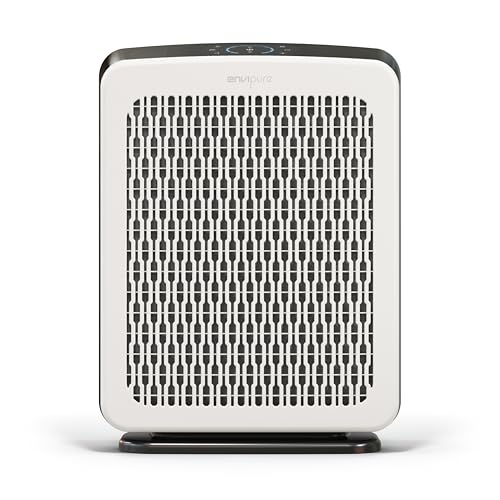
Why it made the list: EnviPure emphasizes large‑room capability with manufacturer statements up to 2,200 sq ft (at 1 ACH) and a second figure for higher ACH (456 sq ft at 4.8 ACH). It includes a real‑time filter monitoring system called TrueFilter IQ, which helps you avoid premature filter replacement and tracks filter life automatically.
Where it excels: If you need coverage for an open plan or want a single unit to serve multiple adjacent rooms, the EP‑300’s stated coverage and large filter design are practical advantages. The unit is also marketed as Energy Star‑compliant and lists a max noise figure (55.4 dB), which gives buyers context for placing the unit near living spaces.
Limitations: The product description lists “HEPA” rather than H13 specifically; the listing does not publish CADR numbers. If you need a specific certified CADR for smoke, pollen or dust, ask the seller or consult the product detail page. Also verify filter replacement cost and local availability of replacement filters.
See details & buy EnviPure EP‑300
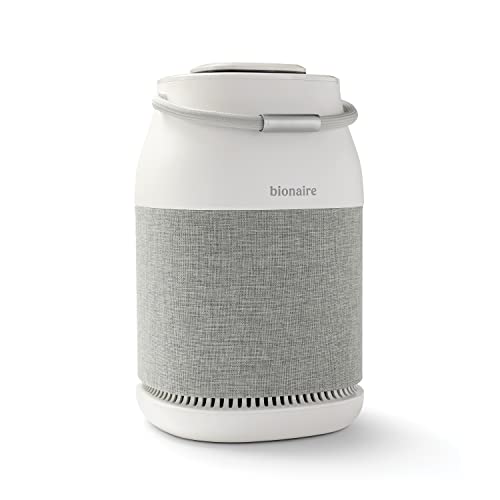
Why it made the list: Bionaire’s model lists six stages of filtration plus UV light protection and a 360° intake design, with manufacturer coverage up to 848 sq ft. It is AHAM‑verified for certain room sizes (the listing gives 175 sq ft at 4.8 ACH and up to 848 sq ft in 60 minutes), which is useful when estimating real‑world performance.
Where it excels: Useful if you want a large‑room clean air solution that combines True HEPA with ionizer and UV as supplemental stages. The 360° design helps air intake from multiple directions, reducing dead spots in larger rooms.
Limitations and safety notes: UV in air purifiers is primarily a supplemental feature; it does not replace HEPA particle capture. The listing mentions a built‑in ionizer — if you are sensitive to ozone or prefer to avoid ionization, verify whether the ionizer can be switched off.
See details & buy Bionaire True HEPA 360° UV
Why it made the list: The Afloia Kilo advertises a very quiet sleep mode (22 dB), multiple filter choices (including pet/allergy and antibacterial filters), and a manufacturer coverage claim of 1,076 sq ft. It includes atmosphere lighting and simple timers — features that suit bedrooms.
Where it excels: If you need a low‑noise bedside or bedroom unit, Afloia’s 22 dB sleep claim is attractive. The availability of a “pet allergy” filter option makes it a reasonable choice for pet owners with bedroom sensitivity who want a quieter device.
Limitations and checks: Manufacturer CADR is not stated. Confirm the annual cost of replacement filters and the recommended replacement interval — Afloia recommends filter changes every 4–6 months depending on local air quality.
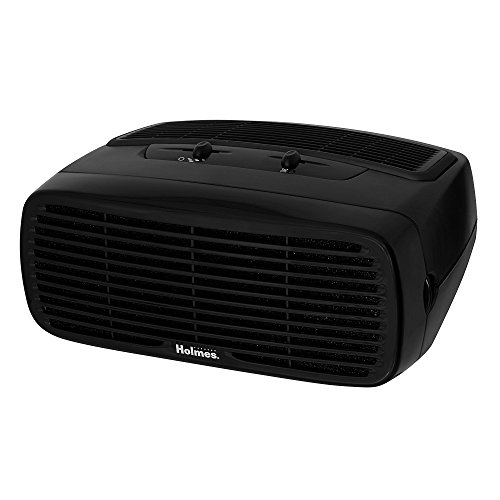
Why it made the list: Holmes supplies a low‑cost, compact option with a stated 70 CADR and recommended room coverage of 109 sq ft. It’s positioned for desks, dorms and small bedrooms where a full‑size purifier is unnecessary.
Where it excels: The 70 CADR figure helps set expectations — this is a small unit intended for personal spaces. It includes an optional ionizer and three fan speeds for basic, inexpensive filtration in small areas.
Limitations: The unit uses a HEPA‑type filter and the product copy states it captures particles as small as 2 microns. “HEPA‑type” and a 2‑micron claim are not equivalent to medical‑grade HEPA (H13/True HEPA) for fine sub‑micron particles. For people with strong sensitivities or who want the highest capture efficiency for very small particles, a True HEPA (H13/H14) unit is preferable.
See details & buy HOLMES desktop
Why it made the list: QUEENTY is a compact desktop purifier with an H13 HEPA filter and sleep mode at 25 dB. Its design emphasizes face‑level oscillating airflow intended to deliver purified air directly to a user’s breathing zone — useful for desk or bedside use where the goal is personal breathing‑zone benefit.
Where it excels: When you need a small, low‑cost personal purifier with a higher‑grade H13 filter, QUEENTY provides HEPA‑class filtration in a USB‑powered package. Because it’s H13, it supplies better submicron capture than “HEPA‑type” desktop models.
Limitations and checks: The manufacturer materials include an ionizer in the design; verify whether the ionizer can be disabled if you prefer to avoid ion generation. Also confirm replacement filter pricing and availability before purchasing.
See details & buy QUEENTY desktop
Why it made the list: Austin Air’s “it” personal unit is built from steel for durability and is presented as a portable personal purifier with quiet operation. The product copy claims capture of particles down to 0.1 microns and positions the unit for desk or travel use.
Where it excels: If you want a rugged, long‑lived small purifier you can move between home and office, Austin Air’s steel construction and compact footprint are advantages. The manufacturer’s “whisper‑quiet” claim suits use in quiet workspaces.
Limitations: Specific CADR and room coverage numbers are not provided in the product summary; this model is a personal purifier and is not intended to clean large rooms.
See details & buy Austin Air “it” Personal
Ozone generators — including products marketed as “odor eliminators” that rely on ozone — are not recommended for routine use to control indoor allergy triggers. These devices (for example, the Manfh 2026 ozone generator listed on the site) are designed to operate in unoccupied spaces and use ozone to chemically alter odors. Ozone can irritate airways and must be used with strict precautions; it is not a substitute for HEPA filtration when the goal is reducing particle‑bound allergy triggers in occupied spaces.
Devices that advertise ionization without HEPA filtration should also be treated cautiously. Ionizers that are not paired with a certified HEPA filter can reduce some particles but may produce byproducts (check for ozone emissions) and generally do not offer the same reliable particle capture as a True HEPA filter. For allergy‑focused purchases, choose HEPA (H13/True HEPA preferred) as the primary filter technology.
Below is a concise comparison of the practical strengths these products deliver for allergy buyers, based on manufacturer data supplied with each listing.
Tradeoffs to be aware of:
Two related metrics matter: the manufacturer’s stated coverage and the number of air changes per hour (ACH) you want.
True HEPA or H13 is the preferred filter class for allergy trapping. Where both options exist, choose H13/True HEPA for better capture of sub‑micron particles. Examples from this roundup:
If you intend to run the purifier overnight, look for published dB numbers at sleep/low settings. From the models above:
Manufacturers often omit the annual replacement cost in headline product copy. Before buying, check:
Consistent operation and timely filter changes are essential. A powerful purifier left off or run on low will not deliver the expected reduction in airborne allergens.
Short, practical recommendations to help you decide quickly.
An air purifier with a True HEPA/H13 filter will reduce airborne particles in the room it serves, which typically lowers immediate exposure to pollen, dust and pet dander. However:
Manufacturer listings vary in the detail provided. Common omissions in the product summaries above include CADR for many models, published low‑speed dB for some units, and explicit yearly filter cost. When items are not specified in the listing, we have called them out as “Not specified.” Before buying, expect to:
For detailed lab tests, CADR verification and long‑term reviews consult our main review and FAQ pages:
Yes — for most allergic sensitivities a True HEPA or H13 filter is the better choice. H13/True HEPA provides higher and more consistent capture of very small particles compared with “HEPA‑type” filters. If you’re comparing models, prefer H13/True HEPA when the goal is reliable particle removal from the breathing zone.
Decide the ACH you want (4–5 ACH is common for allergy relief). Use a product’s CADR or manufacturer coverage guidelines to match the purifier to your room. If the manufacturer gives both a square‑footage and an ACH figure (as EnviPure does), use the higher‑ACH guidance for bedrooms and the lower‑ACH guidance for general living spaces. When in doubt, choose a unit rated for a slightly larger area or add a second unit to ensure adequate coverage.
No. UV and ionization can be supplemental features but do not replace HEPA for particle capture. UV may address microbes under specific conditions; ionizers can help agglomerate small particles but should be paired with HEPA and used cautiously (confirm the unit does not produce ozone or that the ionizer can be disabled). For allergy control, HEPA is the foundational technology.
Replacement intervals depend on use and local air quality. Typical intervals range from 4 months to 12 months. Models marketed for bedrooms or active‑use environments may recommend 4–6 months. Check the manufacturer’s guidance and monitor any filter‑life indicator if provided to avoid premature performance loss.
Ozone generators are not recommended for routine use to reduce common indoor allergy triggers in occupied spaces. They operate by producing ozone and are designed to be used in unoccupied rooms with ventilation afterward. For allergy control in living spaces, rely on HEPA‑based purifiers instead.
Look for True HEPA or H13 filtration, a pre‑filter that captures hair and large particles, and a higher CADR or coverage to handle the extra particulate load. Models with “pet” filter options (like Afloia’s pet cartridge) can help reduce dander‑related exposures, and washable pre‑filters reduce the load on the HEPA stage.
For most allergy sufferers seeking a single reliable unit for home use, OdorStop OSAP5 is a practical all‑rounder because of its H13 True HEPA filter, Auto and Sleep modes, and broad coverage claim. If you need the absolute largest single‑unit coverage, EnviPure’s EP‑300 presents the highest manufacturer coverage and a useful filter‑monitoring system. For quiet bedroom use, favor Afloia or QUEENTY that publish low dB sleep settings.
Before you buy: confirm CAD
This guide prioritizes H13/True HEPA because it’s specified for fine particle capture. If a product listing says only "HEPA" or "HEPA-type," treat that as a limitation. Ask the seller or check the product page for the exact filter rating (H13, H14, etc.) and any independent verification before relying on it for allergy control.
The OSAP5 includes a Sleep mode intended for overnight use, which helps keep noise down. However, the manufacturer listing does not publish specific dB noise figures or CADR, so if maximum noise level is critical for you, check the retailer page or independent test reports for measured dB values before buying.
EnviPure lists coverage up to 2,200 sq ft (1 ACH) and 456 sq ft at 4.8 ACH, which makes it a practical single-unit option for many open plans. Verify the coverage figure that matches the ACH you want and confirm the HEPA grade (the listing says "HEPA," not explicitly H13) plus CADR and filter availability to ensure it meets your specific needs.
Several listings (for example OdorStop and EnviPure) don’t specify replacement costs. Check the product page for replacement filter SKUs, estimated lifetimes, local availability and price. If a unit has a filter-life monitor (like EnviPure’s TrueFilter IQ), that helps avoid premature changes, but confirm actual replacement cost and availability before purchase.
UV and ionization are treated here as supplemental stages — they do not replace HEPA particle capture. UV can add value for microbes in the airstream, but it’s not a substitute for HEPA filtration. The roundup excludes ozone generators and warns about unverified ionization; if you are ozone-sensitive, verify any ionizer’s emissions or choose a model without ionization.
ACH (air changes per hour) indicates how many times a unit can replace room air in an hour; manufacturers may quote coverage at different ACH values (e.g., EnviPure’s 2,200 sq ft at 1 ACH or 456 sq ft at 4.8 ACH). AHAM verification (as with the Bionaire listing) provides standardized test context. When comparing models, check whether coverage is quoted for 1 ACH or a higher ACH and look for AHAM/CADR data to understand real-world performance for pollen, dust or smoke.
Answers are educational and may link to relevant guides or products on this site. Product facts can change, so confirm current details before purchase.
