
In brief: Pet Dander Air Quality: reduce pet hair, dander and odors at home with the right purifier, filters, grooming routine and cleaning habits.
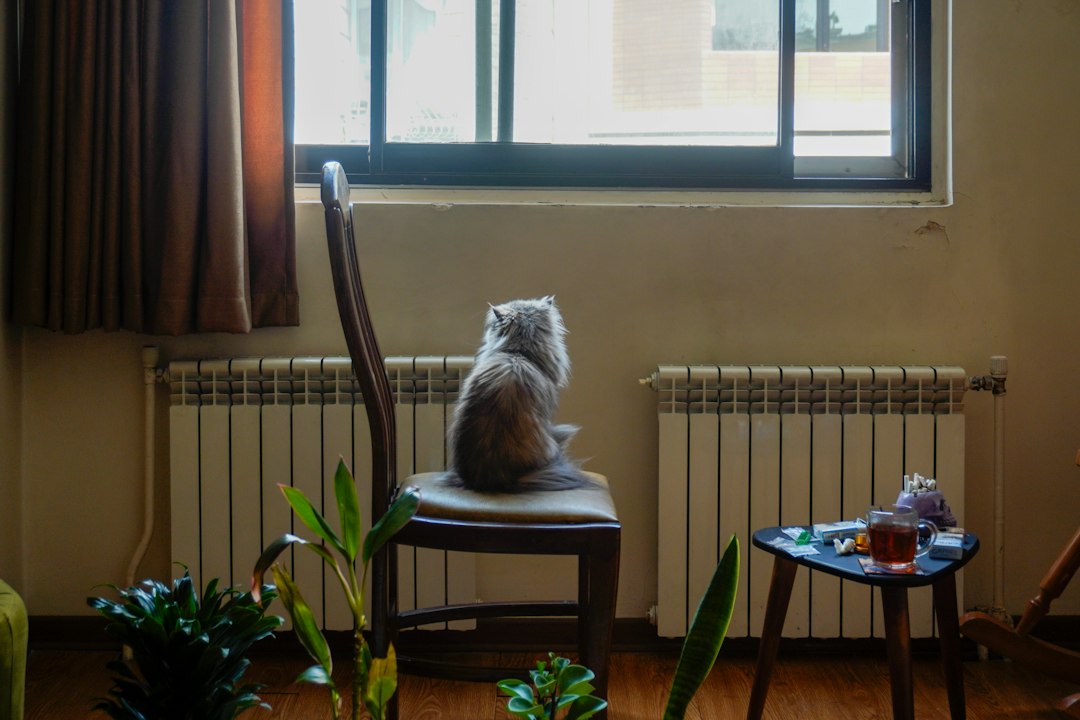
TL;DR: Pet dander is tiny skin flakes that become airborne with hair and dust. A true HEPA purifier plus a washable pre-filter or hair-capture stage reduces airborne dander; activated carbon helps odors. Size the unit to the room, run it near pet zones, and combine with regular grooming and cleaning.
What is pet dander and how does it behave indoors?
Pet dander is microscopic skin flakes shed by animals; it commonly clings to fur and rides on hair or dust. Dander behaves like fine dust: it can be kicked up by movement, suspended for hours in still air, settle on surfaces and re-suspend with activity—so filtration and surface cleaning both reduce exposure.
Definitions and distinctions help ground the practical steps below:
- Pet dander: Tiny flakes of skin shed continuously by animals. Invisible to the eye when airborne, dander travels with air currents and attaches to fibers and dust.
- Fur and hair: Visible strands that carry dander. Hair itself is large enough to be caught by pre-filters; it also drops dander as it sheds.
- Allergen vs. particle: “Dander” is an everyday descriptor; some people are sensitive to proteins contained in dander. This guide focuses on mechanical removal of airborne particles rather than medical management.
How dander spreads indoors
Animals release dander constantly. Grooming, jumping, running across furniture, and brushing all create bursts of airborne particles and hair. Air movement from fans, HVAC systems, and even people walking across a room can re-suspend settled dander. That’s why a single upholstery cleaning reduces surface load but won’t stop new airborne emissions unless ongoing filtration and behavioral changes are in place.
Short example: when a cat leaps up on a couch, hair and dander that were resting on its coat and the sofa fibres are agitated into the air. Some particles fall back quickly; finer flakes can stay suspended long enough to be inhaled or to settle on a nearby bed or dining chair.
Can air purifiers remove pet dander and hair?
Yes—air purifiers with true HEPA filtration capture airborne dander particles effectively; pre-filters or hair-capture stages trap larger hairs and protect the HEPA element. But purifiers reduce airborne load, they do not clean dander already embedded in upholstery and carpet, so combine filtration with surface cleaning and grooming for best results.
What to expect from purifiers
- Airborne capture: True HEPA filters are designed to remove very small particles from the air stream that passes through the unit. This makes them effective for airborne dander.
- Large debris: Visible hair and clumps are better intercepted by a pre-filter, hair-capture design, or external vacuuming; hair can clog a main HEPA if it isn’t pre-captured.
- Settled dander: Purifiers cannot extract dander that’s embedded in upholstery, bedding, curtains or deep in carpet pile; that requires targeted cleaning.
Manufacturer claims and real-world context
Manufacturers sometimes describe “hair capture” or list numerical removal rates. For example, a Dreame model advertises a 360° hair collection system and claims removal of floating hair and clumps, and Provirtec markets an H13 HEPA plus washable pre-filters and a pet mode. Those are useful product features—treat manufacturer claims as descriptions of design and not as guaranteed health outcomes. The practical takeaway is that purifiers are an effective layer in a multi-layer strategy: filtration + grooming + cleaning.
Which filter types and features matter for pet households?
Prioritize a washable pre-filter or hair-collection stage to remove fur, a true HEPA (H13/H14 if available) to capture dander, and an activated-carbon stage to reduce pet odors. Pet-focused safety and convenience features — chew-resistant cords, tip-over protection, quiet sleep modes and visible hair bins — improve day-to-day use in animal homes.
Core filter stages and their roles
- Pre-filter / hair capture: Traps visible hair and large fibres. Washable pre-filters extend main filter life. Provirtec supplies two washable pre-filters and recommends rotating them to protect the main H13 HEPA.
- True HEPA (H13/H14 preferred): Captures very small airborne particles, including dander. Provirtec lists an H13 HEPA stage; Levoit advertises HEPA performance and the maker’s listing cites 99.97% efficiency.
- Activated carbon: Adsorbs volatile odor compounds from urine and skin oils. AIRROMI and Provirtec include activated carbon in their filter stacks and highlight odor control.
- Washable vs replaceable: Washable pre-filters are low-cost to maintain; main HEPA and carbon stages generally need replacement on a schedule recommended by the manufacturer.
Pet-specific convenience and safety features
- Visible hair-collection compartments (e.g., Dreame’s transparent bin) make maintenance easier by letting you see when to empty.
- Chew-resistant cords, tip-over protection and pet-locks (features Provirtec and Dreame highlight) reduce risk where curious animals interact with appliances.
- Quiet sleep modes and low noise ratings matter for bedrooms; Levoit and AIRROMI list noise in the mid-20 dB range for sleep modes.
- App control and auto modes can keep a purifier running at the right speed automatically; Dreame offers app control and air-quality indicators while Provirtec has Auto Mode with a PM sensor.
Mini decision table: which features to prioritize
| Priority | Feature | Why it matters for pet owners |
|---|---|---|
| High | Washable pre-filter / hair capture | Protects main HEPA from fur, reduces replacement cost, captures clumps before HEPA |
| High | True HEPA (H13/H14) | Captures fine airborne dander and small particles |
| Medium | Activated carbon | Reduces urine/skin odors and household smells |
| Medium | Pet safety features | Chew-resistant cords, tip-over protection, pet-locks improve safety around animals |
| Low–Medium | Auto/PM sensor and app | Automates performance; useful when airborne load varies (e.g., grooming times) |
| Low | Aromatherapy or lights | Nice-to-have but not effective for particle removal; can disturb scent-sensitive pets |
How to choose the right purifier for your pet home (decision framework)
Choose a purifier by matching capacity to room size or CADR, prioritizing hair-capture and HEPA filtration, and assessing noise, maintenance cost and safety features. If one unit won’t cover the whole home, run smaller units in key pet zones rather than an undersized central unit.
Step-by-step framework
- Clarify the space: Identify the rooms where pets spend the most time—living room, bedroom, and where they sleep. Use manufacturer coverage (or CADR) as the starting point; if available, prefer CADR-based guidance (see our guide CADR Explained).
- Match capacity: For single rooms, select a unit rated for that room’s size or CADR; for multiple rooms, either run multiple room-sized units or a larger unit with proven CADR. AIRROMI lists 660 sq ft coverage for its A2002, while Levoit’s model lists 222 sq ft coverage and a CADR of 143 CFM in the maker’s listing—use those figures when planning.
- Prioritize filters: Look for washable pre-filters plus HEPA and carbon stages. Provirtec’s H13 HEPA + Activated Carbon + Pre-Filter stack and included washable pre-filters is an example of a pet-focused configuration.
- Consider maintenance and operating cost: Check whether pre-filters are washable and how often main filters need replacing; budget for replacements and replacements’ availability (HEAPETS sells replacement filter kits explicitly labeled for pet purifiers).
- Check noise and placement: For bedrooms prioritize low noise (Levoit and AIRROMI list sleep noise levels around mid-20 dB). Dreame and Provirtec also mention quiet modes.
- Safety and convenience: Pet-locks, chew-resistant cords and visible hair bins (Dreame’s transparent compartment) reduce hassle and risk.
Decision flow (quick):
- If heavy shedding and lots of hair: prioritize hair-collection designs and washable pre-filters (e.g., Dreame’s 360° hair capture, transparent bin).
- If odor is the primary concern: prioritize activated carbon and replaceable carbon capacity (AIRROMI and Provirtec include carbon stages).
- If bedroom use: prioritize quiet operation and verified CADR for the room (Levoit notes a 24 dB sleep mode and provides CADR and coverage figures).
- If budget is the primary constraint: look for compact HEPA + carbon units with washable pre-filters and reasonable replacement-filter costs (AIRROMI has a low price point listed).
Link to tools and further reading
For help converting CADR and room size into recommended run-time, use our tools page: Free Air Purifier Calculators and Tools. For certifications and how to interpret manufacturer tests, see Air Purifier Certifications Explained.
Where to place and how to run purifiers with pets
Place purifiers in the rooms where pets spend the most time, keeping intake and exhaust unobstructed, and run units continuously on auto or a medium setting—especially during peak activity and grooming—to reduce airborne spikes. For heavy-shedding pets, position a unit near the couch or pet bed to catch local emissions.
Placement best practices
- Near pet activity: Position a purifier close to furniture or zones where pets sleep or roam to intercept dander before it disperses widely. For instance, put a unit near a cat’s favorite couch or a dog’s bed.
- Avoid tight corners: Place units several inches from walls and away from obstructing furniture so airflow isn’t blocked.
- Intake orientation: If the unit has a bottom or side intake, don’t place it on carpet unless the manufacturer advises; a small platform or hard floor is usually better.
- Multiple smaller units vs one large: Two room-appropriate units in high-use zones often outperform a single distant unit. If pets spend time in both living room and bedroom, consider a unit in each.
How to run them
- Continuous operation: Run the purifier continuously if possible. Set to auto mode if the unit has a PM sensor (Provirtec provides Auto Mode with a PM2.5 sensor) so the fan speed adapts to activity spikes.
- Boost during grooming: Run the purifier at higher fan speed while brushing or bathing pets and for 30–60 minutes after to clear raised particles.
- Nighttime: Use sleep mode in bedrooms; Levoit and AIRROMI list very quiet sleep noise levels and Levoit emphasizes near-silent operation in Sleep Mode.
- Ventilation coordination: If you open windows for ventilation, leave purifiers running; they complement ventilation by filtering incoming air and removing re-suspended particles.
Daily and weekly routines to reduce airborne dander
Daily grooming, high-frequency vacuuming with a HEPA-equipped vacuum, and weekly washing of pet bedding deliver large reductions in airborne dander when combined with running air purifiers. Little, consistent habits matter more than sporadic deep cleans.
Daily habits
- Brush outdoors or in a garage: Where practical, brush pets outside to reduce indoor shedding. If you must brush indoors, do it near a running purifier on high.
- Brush briefly every day: Even a few minutes of brushing reduces the hair and dander load compared with infrequent long sessions.
- Wipe paws and fur: After walks or outdoor play, quick wipes reduce tracked-in dirt.
- Run purifiers continuously: Keep them on auto or a medium setting in pet zones.
Weekly tasks
- Vacuum with a HEPA vacuum: Vacuum floors, rugs and upholstery at least once a week; more often in heavy-shedding seasons.
- Wash pet bedding: Use hot-water cycles where recommended to remove dander from bedding and blankets.
- Wipe surfaces and doorknobs: Dander settles on tables, shelves and electronics—quick dusting keeps background load down.
Seasonal and behavioural adjustments
- During shedding seasons or when pets are unkempt, increase vacuuming frequency and ramp up purifier fan speed.
- If you host guests sensitive to dander, run purifiers on high for several hours before they arrive and groom pets the day before.
Maintenance and filter replacement schedule
Follow the maker’s guidance for cleaning washable pre-filters and replacing HEPA and carbon filters; check pre-filters visually and clean often in heavy-shedding homes. Rotating pre-filters (when available) prolongs the main filter life and keeps efficiency high.
General maintenance principles
- Check pre-filters frequently: Washable pre-filters should be inspected every 1–4 weeks in pet households and cleaned as soon as they look loaded with hair. Provirtec supplies two washable pre-filters and recommends cleaning and rotating them regularly.
- Replace HEPA and carbon per guidance: Main filters generally need replacement on a schedule determined by use and air quality; manufacturers sometimes include multi-piece filter kits—Provirtec includes one 4-in-1 filter with the unit packaging in its product offering.
- Visible bins and hair compartments: Empty visible hair collection compartments promptly; Dreame’s transparent compartment is designed so owners can monitor hair removal without disassembling the unit.
- Buy genuine replacements: Where manufacturers recommend original parts, following that advice protects fit and performance—Levoit and AIRROMI both note that genuine filters ensure best performance.
What the maker’s listings say
- Provirtec includes a 1-year filter kit: one 4-in-1 filter plus two washable pre-filters, and notes that actual life varies by use and pet shedding.
- HEAPETS lists replacement-filter packages and instructs that pre-filters can be vacuumed or washed and air-dried, with replacement timing depending on use and environment.
- Levoit emphasizes using official filters designed for their purifiers and lists lab-tested filtration performance in product materials; they recommend official replacements for best longevity.
Common pitfalls and troubleshooting
Common mistakes include undersizing a purifier, neglecting pre-filter cleaning, placing the unit in the wrong spot, and assuming a purifier will clean embedded upholstery dander. Solve most problems by checking capacity, cleaning pre-filters, and coordinating grooming and vacuuming.
Frequent issues and fixes
- Problem: Hair quickly clogs the main filter
- Fix: Use or install a washable pre-filter and clean it weekly. Consider a model designed with a hair-collection stage (Dreame advertises a 360° hair-collection system and a transparent compartment for monitoring).
- Problem: Purifier seems ineffective in large rooms
- Fix: Check the unit’s coverage or CADR. Either move the purifier closer to the pet zone, add a second smaller unit where pets spend time, or choose a larger unit with appropriate CADR (Levoit provides CADR and coverage info for one of its models).
- Problem: Bad odors persist
- Fix: Make sure the unit includes activated carbon and that the carbon stage is fresh. Wash pet bedding and clean litter boxes; AIRROMI and Provirtec include carbon stages designed to address odors.
- Problem: Pets chew cords or knock over units
- Fix: Choose models with chew-resistant cords and tip-over protection (Provirtec lists chew-resistant cord support and tip-over protection; Dreame notes bite-resistant cords and anti-tip design).
- Problem: Noise complaints
- Fix: Use Sleep Mode at night where available (Levoit and AIRROMI promote quiet sleep modes around mid-20 dB) and place noisy units away from bedrooms or elevate a unit to improve perceived noise distribution.
Soft best-of: purifier picks for pet owners (based on the maker’s listings)
Below are gentle category picks based on the maker’s listings. These are starting points—match capacity and features to your home and pets.
- Best for heavy hair and visible clumps: Dreame Pet Air Purifier AP10 — Dreame highlights a 360° high negative pressure return system for long-range cat hair capture, a transparent hair collection compartment for visual monitoring, and a pet-focused top seat. Noise listed at 31.9 dB. (Product page: Dreame AP10.)
- Best for HEPA-grade filtration with pet safety features: Provirtec Pet Air Purifier — Specs include H13 HEPA + Activated Carbon + Pre-Filter, two washable pre-filters plus one 4-in-1 filter, Auto Mode with a built-in PM2.5 sensor, and pet-ready safety features (rounded edges, tip-over protection, chew-resistant cord). Check the current price on Amazon. (Product page: Provirtec.)
- Best for quiet bedroom use and verified CADR/coverage: Levoit Air Purifier (Core 300-P / Pet-focused variant) — Levoit lists HEPA filtration, AHAM VERIFIDE CADR values (143 CFM), coverage of 222 sq ft, and Sleep Mode noise down to about 24 dB. Levoit also emphasizes 99.97% filtration efficiency for particles in the 0.1–0.3 µm range in the maker’s listing. Check the current price on Amazon. (Product pages: Levoit Core 300-P and Levoit variant.)
- Best budget starter for larger rooms: AIRROMI A2002 Pets Air Purifier — Coverage says up to 660 sq ft, HEPA + activated carbon filter, and 23 dB sleep noise. Good as a low-cost way to add filtration in a second room, while checking fit and performance for your household. Check the current price on Amazon. (Product page: AIRROMI A2002.)
- Replacement filters and ongoing costs: HEAPETS sells replacement H13 HEPA + Activated carbon + Pre-Filter kits with pre-filters and composite filters for models that accept them. Check the current price on Amazon. (Product page: HEAPETS replacement filters.)
How to use the shortlist
- If shedding and visible hair are your primary issues, start with a hair-capture design like Dreame and pair it with frequent pre-filter cleaning.
- If small-particle performance and quiet bedroom use matter most, consider Levoit for its CADR/coverage and sleep-mode noise characteristics.
- If you want a balance of HEPA-grade filtration, pet safety features and a modest price, Provirtec’s listed H13 stack with washable pre-filters is worth considering.
- If you need low-cost coverage for a larger room, AIRROMI’s coverage and low price may make it a useful supplemental unit—follow manufacturer guidance for genuine filters.
Tables, charts and quick checklists
Quick checklist for buying a pet-focused purifier
- Does it specify a washable pre-filter or hair-capture design?
- Does it use true HEPA (H13/H14 preferred) for fine dander?
- Is activated carbon present for odors?
- Does the unit’s coverage or CADR match the room where your pet spends time?
- Are replacement filters available and reasonably priced?
- Does it include pet-safety features (chew-resistant cord, tip-over, rounded edges)?
- Is noise low enough for bedrooms (sleep mode ≈ mid-20 dB is quiet)?
Comparison snapshot (maker’s listing facts only)
| Product | Filter(s) | Coverage/CADR | Noise (Sleep) | Notable pet feature | Price (maker’s listing) |
|---|---|---|---|---|---|
| Dreame Pet Air Purifier AP10 | Triple-stage; hair-collection compartment (manufacturer claims) | Not listed | 31.9 dB | 360° hair capture, transparent hair bin, pet seat top, chew-resistant cord | Check the current price on Amazon |
| Provirtec Pet Air Purifier | H13 HEPA + Activated Carbon + Pre-Filter (includes 2 washable pre-filters) | Not listed | Not listed | Auto Mode, Pet Mode, tip-over protection, chew-resistant cord | Check the current price on Amazon |
| Levoit (Core 300-P / Pet) | HEPA (Levoit notes HEPA-grade and 99.97% efficiency in product materials) | 222 sq ft; CADR 143 CFM (product notes) | 24 dB (Sleep Mode) | Pet Allergy Filter option, AHAM-verified data (noted in product materials) | Check the current price on Amazon |
| AIRROMI A2002 | HEPA + Activated Carbon | 660 sq ft (maker’s listing figure) | 23 dB (Sleep Mode) | Yellow Pet Allergy Filter option; aromatherapy (note: fragrance feature may not suit all pets) | Check the current price on Amazon |
| HEAPETS replacement filters | H13 HEPA + Activated Carbon + Pre-Filter (replacement kit) | Not applicable | Not applicable | Replacement filter kit for compatible pet purifiers | Check the current price on Amazon |
