JahyElec
Air Ionizers for Home Dust Mites,4 Pack Upgraded Plug In Air Purifier…
BrandJahyElecNoise10 dB
See today’s price on Amazon
View product detailsProduct information comes from the current AirPurifierFAQ catalog and should be verified on Amazon before purchase.




In brief: Best Air Purifier for Dust: our top air purifiers for household dust and fine particles, ranked by verified CADR, noise (dB) and yearly filter cost.
Ranked by our score from each maker's published specs. We earn a commission when you buy through our links, at no extra cost to you. Tap any button to see today's price on Amazon.
How this product scored 8.6 / 10
Based on the maker's specs as listed on Amazon. We don't lab-test every model. See how the score works.
How this product scored 8.2 / 10
Based on the maker's specs as listed on Amazon. We don't lab-test every model. See how the score works.

How this product scored 7.7 / 10
Based on the maker's specs as listed on Amazon. We don't lab-test every model. See how the score works.

How this product scored 7.1 / 10
Based on the maker's specs as listed on Amazon. We don't lab-test every model. See how the score works.

How this product scored 6.8 / 10
Based on the maker's specs as listed on Amazon. We don't lab-test every model. See how the score works.

How this product scored 6.5 / 10
Based on the maker's specs as listed on Amazon. We don't lab-test every model. See how the score works.

How this product scored 5.5 / 10
Based on the maker's specs as listed on Amazon. We don't lab-test every model. See how the score works.

How this product scored 5.4 / 10
Based on the maker's specs as listed on Amazon. We don't lab-test every model. See how the score works.

How this product scored 4.9 / 10
Based on the maker's specs as listed on Amazon. We don't lab-test every model. See how the score works.
How this product scored 4.6 / 10
Based on the maker's specs as listed on Amazon. We don't lab-test every model. See how the score works.
This roundup gives a short, buyer-first list of real, purchase-ready air purifiers for dust, mapped to the most common dust problems—light household dust and pet dander, travel and personal exposure, and heavy loads from renovations or workshop work—so you can pick the right tool for the place and volume you want to keep cleaner.
We evaluate the entries on three practical criteria: filtration stage or technology (true HEPA or filterless ionic/passive), stated airflow or the manufacturer’s stated coverage, and operating characteristics that affect real use (portability, power source, noise and replacement-cost implications). Where manufacturers do not provide CADR or filter pricing we mark those fields as “Not provided.” No product is ranked based on tests we did not perform; this is a specification- and use-case-driven buyer’s guide.
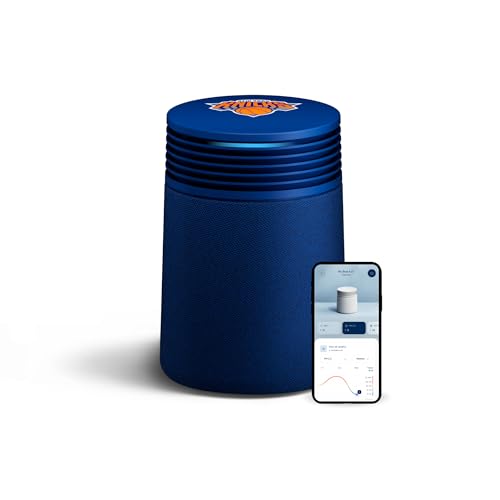
Top pick: Blueair x NY Knicks (SP1i) (8.6/10). HEPA filter for fine dust, pollen and dander; covers rooms up to 1,190 sq ft; sleep mode for quiet nights. It scores highest on this list, led by room fit and brand track record.
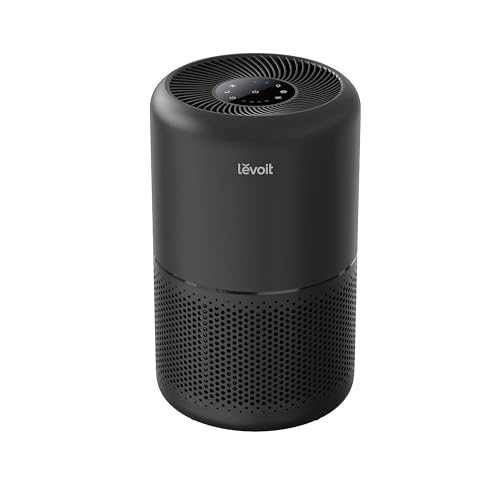
Runner-up: Levoit air purifier (up to 222 sq ft) (8.2/10, best for odors): covers rooms up to 222 sq ft. Also worth a look: Levoit PlasmaPro 600S-P (7.7/10, best for big rooms): covers rooms up to 2,956 sq ft.
Scores come from published specs, certifications and brand track record, weighted for dust. See how we score.
| Model | CADR / Airflow | Typical room (manufacturer) | Noise (dB) | Yearly filter $ | Buy |
|---|---|---|---|---|---|
| ALORAIR Air Scrubber HEPA | Airflow 270–550 CFM (manufacturer); CADR not provided | Filtration area quoted up to 5,500 cu ft (suitable for large/heavy-duty spaces) | Not provided | Not provided | Amazon — ALORAIR |
| Stand Up Desk Store Portable USB HEPA | HEPA-filtered; CADR not provided | Cupholder/desktop/car-sized (personal/small spaces) | Not provided | Not provided (replaceable filter included) | Amazon — Stand Up Desk Store |
| Airvida M1 Wearable (ible) | Filterless ionic — ion output up to 2,000,000 ions/cm³ (no CADR) | Personal use (breathing zone) | Not provided (silent, fan-free) | None (filterless) | Amazon — Airvida M1 |
| LIFTHONSO Portable Wearable | Filterless ionic (manufacturer-stated ion output; no CADR) | Personal use—wearable/necklace (approx. 3‑ft radius claimed) | Not provided (silent operation claimed) | None (filterless) | Amazon — LIFTHONSO |
| JahyElec Plug-in Ionizer | Filterless ionic; no CADR | Small rooms or bedside (plug-in) | 10 dB (manufacturer) | None (filterless) | Amazon — JahyElec |
| Parsca 20 Pack Ceiling Fan Filters | Activated carbon pads for fan blades (no CADR) | Room-wide when used with ceiling-fan circulation | N/A (passive) | Check the current price on Amazon. | Amazon — Parsca |
| Indoor Air Purification Dust Removal Magic Box (Generic) | Passive dust-collection box (no CADR) | Small spaces, closets, cars | Silent (no power) | Not provided | Amazon — Magic Box |
| Air Mic Dust Removal Box (Generic) | Passive/dust-collection (no CADR) | Closets, cars, small rooms | Silent | Not provided | Amazon — Air Mic Box |
This guide is aimed at buyers who need practical, purchase-ready options for removing airborne and circulating dust in real indoor environments. Use the sections below to match a product to the dust problem you actually face:
We limited the shortlist to products listed by makers and used only manufacturer specifications, feature lists and stated use cases. Primary selection factors were:
We did not invent CADR numbers, filter prices or noise levels—fields not provided by the manufacturers are marked “Not provided.” No product ranking here is based on lab testing by AirPurifierFAQ.
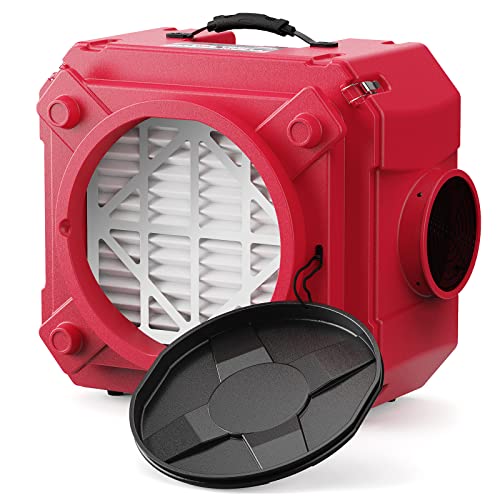
Why consider it: ALORAIR’s unit is a three‑stage air scrubber with MERV‑10 prefiltration, an activated carbon stage, and a true HEPA filter that the manufacturer states captures 99.97% of particles ≥0.3 μm. The company specifies an adjustable airflow range of 270–550 CFM and a quoted filtration area up to 5,500 cu ft—numbers that place this machine well into the heavy‑duty class, suitable for repair sites, renovations, garages and other high‑dust environments.
What it does well: High airflow plus HEPA capture—this combination is the decisive advantage when large volumes of dust are generated. The unit’s rotomolded shell and stackable design make it portable and rugged for jobsite use, and ALORAIR quotes a 10‑year limited warranty and ETL certification for electrical safety.
Watchpoints: CADR and yearly filter pricing are often not listed; expect filter replacements and check the full product page for current filter‑replacement programs or bundled offers. Higher airflow blowers will also be louder than desktop models (noise numbers not listed).
See price & full product details on Amazon — ALORAIR Air Scrubber HEPA
Why consider it: A USB‑powered, cupholder‑sized HEPA purifier with one replaceable HEPA filter included. The form factor is explicitly designed for desks and cars, and the unit includes three fan speeds and a small air‑quality indicator. For light household dust and pet dander near your immediate workspace, a desktop HEPA trap is often enough to cut airborne exposure.
What it does well: Low cost, replaceable HEPA filter and convenient USB power make this a practical, low‑friction choice for personal or car use. It’s also compact enough for travel or short‑term use in small rooms.
Watchpoints: CADR, noise and yearly filter pricing may not be listed; a single included filter means you should check replacement‑filter pricing before long‑term purchase.
See price & details on Amazon — Stand Up Desk Store Portable USB HEPA
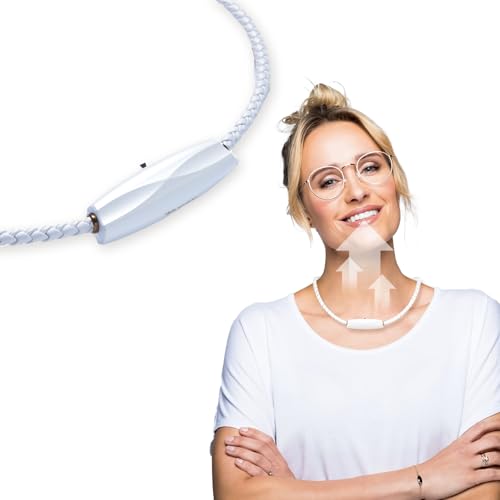
Why consider it: The Airvida M1 is a tiny wearable ion generator that the maker’s listing states delivers up to 2,000,000 negative ions/cm³. It’s fan‑free, filterless and intended to create a small clean‑air zone around the wearer’s breathing area. The product is light (≈20 g) and comes with necklace and clip accessories for commuting, travel, or office use.
What it does well: Portable, silent and designed specifically for personal bubble protection when moving through crowded or uncertain indoor air. The product is marketed as CARB‑compliant with low ozone emission design (manufacturer claim).
Watchpoints: As a filterless ionic device it is not a replacement for a whole‑room HEPA purifier—manufacturers typically describe these devices as a way to reduce exposure to airborne particles in the immediate breathing zone. No CADR is provided because the device is not intended to clean a full room.
See price & details on Amazon — Airvida M1
Why consider it: Another wearable/personal option that relies on electrostatic/ionic purification without replaceable filters. The manufacturer states Power Boost Technology and claims a personal bubble of cleaning within roughly a 3‑foot radius; the device is rechargeable and purports long run time on a single charge.
What it does well: No filters to replace and a claimed long runtime make this an attractive travel or commute accessory for people who want a personal mitigation option without ongoing filter costs.
Watchpoints: As with other ionizers, the effect is localized to the immediate breathing zone; these devices do not produce CADR numbers for whole‑room cleaning. Check the manufacturer’s full details on run time, charging and ion output if that matters for your use.
See price & details on Amazon — LIFTHONSO
Why consider it: Small, low‑cost plug‑in ionizer that the manufacturer says releases negative ions to reduce odors, pet dander and dust. It runs at under 10 dB according to the manufacturer—near silent operation—and requires no filters.
What it does well: Extremely low cost and maintenance‑free operation. Use it in quiet spaces where you want a subtle, continuous ion output without the sound of a fan.
Watchpoints: This is a filterless ionic device. It may cause particles to settle and thus reduce airborne concentration to some extent, but it is not a HEPA whole‑room purifier and manufacturer CADR is not provided. If you need measurable whole‑room dust removal, choose a HEPA device with documented airflow.
See price & details on Amazon — JahyElec Plug‑in Ionizer
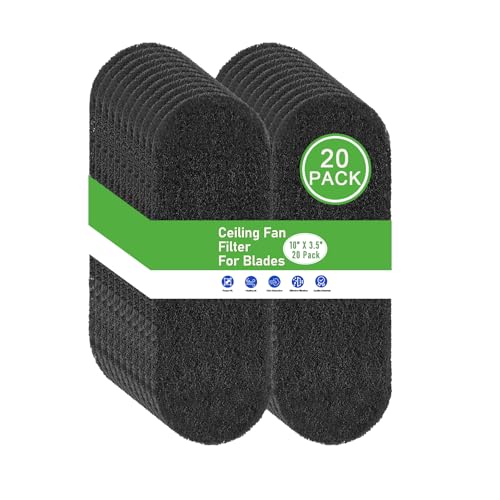
Why consider it: These are adhesive activated‑carbon pads that attach to ceiling‑fan blades. The manufacturer describes them as capturing dust, pollen and pet hair as the fan circulates air through the blade filters. Each pad is claimed to last about 2–3 months.
What it does well: When you already have a ceiling fan, these pads create continuous, low‑effort particle interception across the room as the fan circulates air. They are inexpensive and carry a low annual consumable cost; check the maker’s listing for current pack sizes and pricing.
Watchpoints: These pads are a passive supplement—not a substitute for a HEPA air cleaner. They rely on the fan moving air through the pad; effectiveness depends on fan speed and room mixing. They also require periodic replacement and proper adhesion during installation.
See price & details on Amazon — Parsca Ceiling Fan Filters
Why consider them: Both generic “magic box” products are passive dust‑collection devices that use plant‑based or proprietary formulations to capture dust without electricity. They’re inexpensive and silent, suitable for closets, cars or places where you want maintenance‑free, low‑cost supplemental capture.
What they do well: No power, no filters to replace and silent operation. Useful for small enclosed spaces or areas where running a powered purifier isn’t practical.
Watchpoints: Manufacturers don’t provide CADR, measurable airflow, or numerical capture efficiency. These items should be treated as low‑cost supplements to cleaning and not as replacements for HEPA filtration in rooms where you want measurable airborne dust reduction.
See price & details on Amazon — Magic Box
See price & details on Amazon — Air Mic Box
Not all “dust” is the same. Household dust includes skin flakes, textile fibers, pet dander and a range of small particulates; demolition or woodworking dust contains much larger loads of fine mineral or wood particles and often requires higher airflow to prevent rapid re‑suspension.
Understanding filter type and replacement cost is essential to long‑term value.
True HEPA traps sub‑micron particles with high efficiency. ALORAIR includes a true HEPA stage; the Stand Up Desk Store unit uses a replaceable HEPA filter. Makers do not universally list replacement costs—ALORAIR filter pricing is Not listed, and the portable HEPA lists a replaceable filter but no yearly cost. Always check a product’s filter SKU and current replacement price before purchase.
Activated carbon (Parsca ceiling‑fan pads and ALORAIR’s carbon stage) adsorbs some odors and gaseous chemicals and acts as a useful secondary stage for smoke and odors. ALORAIR also lists a MERV‑10 prefilter to trap large particles before the HEPA stage—this extends HEPA life in dusty environments.
Airvida, LIFTHONSO and JahyElec are filterless ion generators. Their selling points are no replacement filters and silent operation. The tradeoff is that they are primarily personal or localized mitigation devices; they do not provide a documented CADR for whole‑room cleaning and they typically cause particles to attach to surfaces or to collector plates rather than removing and holding them in a replaceable filter.
Parsca pads have a clear consumable cost listed by the maker: a multi-pack is offered and each pad is claimed to last 2–3 months, so annual consumable cost is small. Some generic units are sold as maintenance‑free but ongoing cost or product life may not be listed.
Two factors matter for whole‑room performance: the purifier’s airflow (CFM) and the room’s volume. For any purifier, the nominal target is how many air changes per hour (ACH) you want. For general dust reduction, many experts recommend 4–6 ACH for living spaces; higher ACH is often used for high dust loads or clinical settings.
Here are three simple steps to estimate whether a unit is large enough:
Example using a manufacturer’s numbers: ALORAIR lists a maximum airflow of 550 CFM and a filtration area of 5,500 cu ft. Using the formula above, 550 CFM gives ≈6 ACH in a 5,500 cu ft volume ((550 × 60) ÷ 5,500 = 6). That algebra helps illustrate why ALORAIR is positioned for larger, dustier spaces—the machine provides high airflow relative to its quoted filtration volume.
Note: many consumer purifiers list CADR rather than raw CFM; CADR is a pollutant‑specific performance number based on standard tests. CADR numbers are not consistently listed, so use manufacturer airflow or quoted coverage as your sizing reference, and verify CADR or independent tests where possible through our Air Purifier Reviews page.
It’s important to align expectations with device capabilities:
Initial price and ongoing consumables both matter.
To keep our Best Air Purifier for Dust information accurate, we rely on independent references such as the EPA’s Guide to Air Cleaners in the Home, AHAM Verifide CADR data and manufacturer spec sheets. See how we evaluate air purifiers and our editorial policy for details.
Match the machine to the dust problem. Small HEPA units (cupholder/desktop) are aimed at light household dust, pet dander and bedroom/office use where you need localized reduction. The ALORAIR is a three-stage, industrial-style scrubber with high airflow (270–550 CFM) and is intended for heavy loads from renovations, garages or workshops. Choose the ALORAIR only when you need high airflow plus HEPA capture for large or dusty spaces.
No. Wearable ionic devices create a small clean-air zone around the breathing area and can reduce personal inhaled particulate exposure. They are not whole-room solutions. Use them for commutes, open offices or crowded spaces where you want immediate, localized protection, not to replace a room-sized HEPA purifier.
Passive options are best used as supplements, not replacements. Ceiling-fan filters and dust-collection boxes intercept particles without power and reduce settled or circulating dust in targeted spots (closets, cars, or room surfaces). They don’t provide true whole-room HEPA filtration, so pair them with active cleaning or a HEPA unit when airborne particle reduction is required.
Ask the seller or manufacturer for the missing details before buying: CADR (if available), stated airflow/coverage, filter type and HEPA rating, replacement-filter model numbers, expected filter life and replacement cost, and noise levels. These items determine long-term operating cost and real-world suitability; the guide flags fields as “Not provided” when manufacturers omitted them.
For routine light household dust and pet dander, a small HEPA unit is typically sufficient. The ALORAIR is positioned for heavy-duty scenarios—repairs, renovations and workshops—where its high airflow and three-stage filtration are necessary. Consider room size, dust load and portability before choosing a heavy scrubber for everyday home use.
Manufacturer-stated airflow (CFM) or quoted filtration area indicates the unit’s intended volume-handling capacity and helps match a device to room size or dust load. The guide uses those specs rather than independent lab testing. Remember that placement, room layout and leaks affect real performance; if CADR or independent test data aren’t provided, verify operating conditions with the manufacturer.
Answers are educational and may link to relevant guides or products on this site. Product facts can change, so confirm current details before purchase.