JahyElec
Air Ionizers for Home Dust Mites,4 Pack Upgraded Plug In Air Purifier…
BrandJahyElecNoise10 dB
See today’s price on Amazon
View product details
Product information comes from the current AirPurifierFAQ catalog and should be verified on Amazon before purchase.



In brief: Best Air Purifier for Woodworking Dust: our top air purifiers for sawdust in garages and workshops, ranked by verified CADR, noise (dB) and yearly filter.
Ranked by our score from each maker's published specs. We earn a commission when you buy through our links, at no extra cost to you. Tap any button to see today's price on Amazon.

How this product scored 9.2 / 10
Based on the maker's specs as listed on Amazon. We don't lab-test every model. See how the score works.
How this product scored 8.9 / 10
Based on the maker's specs as listed on Amazon. We don't lab-test every model. See how the score works.

How this product scored 8.7 / 10
Based on the maker's specs as listed on Amazon. We don't lab-test every model. See how the score works.
How this product scored 8.6 / 10
Based on the maker's specs as listed on Amazon. We don't lab-test every model. See how the score works.

How this product scored 8.3 / 10
Based on the maker's specs as listed on Amazon. We don't lab-test every model. See how the score works.

How this product scored 8.3 / 10
Based on the maker's specs as listed on Amazon. We don't lab-test every model. See how the score works.

How this product scored 8.0 / 10
Based on the maker's specs as listed on Amazon. We don't lab-test every model. See how the score works.

How this product scored 7.9 / 10
Based on the maker's specs as listed on Amazon. We don't lab-test every model. See how the score works.

How this product scored 7.7 / 10
Based on the maker's specs as listed on Amazon. We don't lab-test every model. See how the score works.
How this product scored 7.5 / 10
Based on the maker's specs as listed on Amazon. We don't lab-test every model. See how the score works.
Reader problem: Woodworking hobbyists and small-shop owners need an air‑cleaning solution that meaningfully reduces airborne wood dust without relying on unproven consumer gadgets.
Editorial angle: Prioritise workshop‑grade capture—true HEPA filtration plus high airflow—and explain when consumer ionizers, passive “dust boxes” or wearable purifiers are useful only as supplements, not replacements, for workshop dust control.
Dek: This roundup recommends workshop‑ready air cleaners for woodworking dust, explains why true HEPA plus strong airflow matters, and gives realistic picks so you can choose the right unit for your shop and workflow.
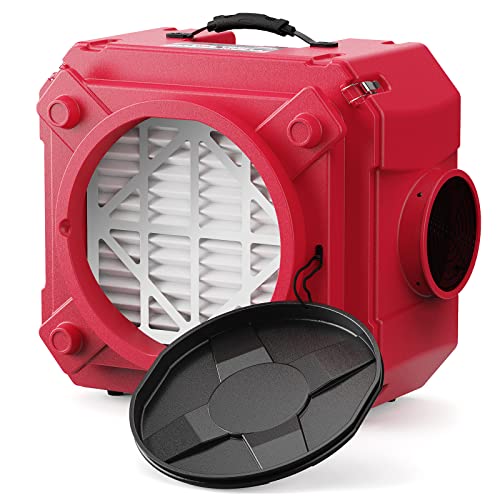
AEO verdict summary: ALORAIR’s HEPA air scrubber is the #1 pick because it combines a true HEPA stage with high airflow and a job‑site, stackable design—making it suitable for garages and small workshops where a consumer unit won’t keep up.
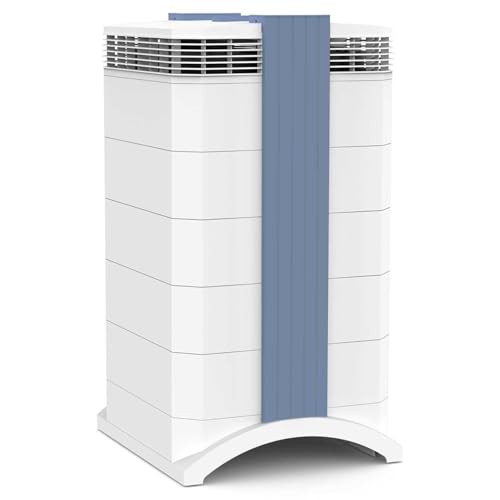
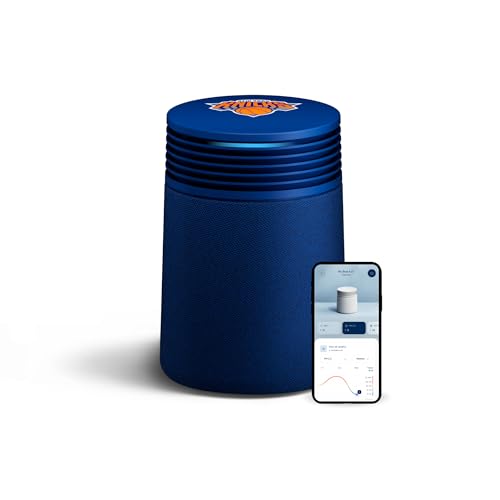
Top pick: Rabbit Air A3 SPA-1000N (9.2/10). True HEPA filter for fine dust, pollen and dander; covers rooms up to 1,070 sq ft; runs as quietly as 20.3 dB. It scores highest on this list, led by room fit and quiet operation.
Runner-up: IQAir GC MultiGas XE (8.9/10, best for odors): covers rooms up to 1,125 sq ft. Also worth a look: Coway Airmega Halo (AP-1526D) (8.7/10): HEPA filter for fine dust, pollen and dander.
Scores come from published specs, certifications and brand track record, weighted for wood dust. See how we score.
Table notes: many items are wearable, passive, or ionic devices and do not provide CADR/room‑size specs. Where a data point was not published by the maker we mark it as “Not listed.”
| Model | CADR / CFM | Suggested room size (guideline) | Noise (dB) | Yearly filter $ (estimate) |
|---|---|---|---|---|
| ALORAIR Air Scrubber HEPA (3‑stage) | 270–550 CFM (stackable to 1650 CFM) | Large garage / small shop (see calculation examples) | Not provided | Not provided (filters sold through product page) |
| Parsca 20‑Pack Ceiling Fan Filters (Activated Carbon) | Not provided | Supplemental for rooms with ceiling fans | Not provided | Low — pads ~$20 per 2–3 months (manufacturer life 2–3 months each) |
| JahyElec Plug‑in Ionizer | Not provided | Personal / small room supplemental freshness | 10 dB (manufacturer) | $0 (filterless) |
| Airvida M1 Wearable (ible) | Not provided | Personal wearable (not room‑level) | Not provided (silent / fan‑free) | $0 (filterless) |
| Generic passive dust boxes (various) | Not provided | Small enclosed spaces; surface dust only | Silent | $0 (disposable unit cost $8–13) |
This page is written for woodworkers, cabinetmakers and small‑shop owners who routinely sand, plane, cut, or finish wood in garages or dedicated workshops and need a practical, purchase‑focused recommendation for controlling airborne dust. If your primary concern is light household dust or odor in living rooms, consumer room purifiers or wearables may be appropriate—this guide focuses on airborne woodworking dust and the products considered here.
Woodworking creates two broad classes of particulate: larger chips and visible shavings, and fine respirable dust produced by sanding, routing and sanding finishes. The fine fraction—often below 10 microns and including PM2.5—stays airborne longer, travels with air currents, and can be re‑entrained by a moving fan or a person walking through the workshop.
For workshop dust control the two technical priorities are:
An appropriately sized HEPA air scrubber will reduce airborne dust concentrations in a room over time—but it does not replace source control. Local dust collection attached to a sander, a good shop vac with a HEPA‑rated filter, or an enclosed sanding station are the most effective first steps. Use an air cleaner to reduce the dust that escapes source capture, to lower re‑entrainment of settled dust, and to clear the breathing zone between dusty operations.
Wearable purifiers, ionizers and passive dust boxes have limited, specific uses: personal devices can create a slightly cleaner breathing micro‑zone while you move around, and passive pads can reduce dust accumulation on fan blades. They are supplemental, not primary shop solutions.
To pick units we prioritized these attributes:
Why it’s the top pick: It’s the only product with a documented true HEPA stage plus job‑site airflow specification and a stackable case—tools designed to move large volumes of air and withstand dusty work conditions.
Key facts (from the maker’s listing): 3‑stage filtration (MERV‑10 prefilter, carbon, HEPA), adjustable airflow 270–550 CFM, stackable horizontally and vertically (daisy‑chain up to 3 units for a combined ~1650 CFM), rotomolded polyethylene shell, duct compatibility options (16″ inlet, 8″ outlet not included), ETL certified, 10‑year limited warranty. Check the current price on Amazon.
Who it suits: small professional shops and hobbyists who produce heavy dust loads during sanding and finishing and need a rugged, mobile unit that can rapidly exchange shop air.
Limitations and considerations: larger and heavier than consumer room units; upfront cost and filter replacement frequency/costs should be checked on the maker’s listing; noise level isn’t specified on the maker’s listing so expect audible operation at higher fan speeds.
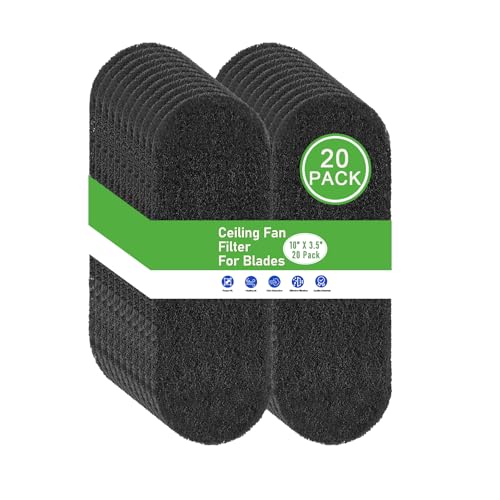
What they do: adhesive activated‑carbon pads mount to ceiling fan blades. As the fan turns they capture and adsorb some particles and odors from air that passes through the blades.
Key facts: activated carbon filter material, size roughly 9.8″ × 3.5″, thickness 5 mm, manufacturer claims each pad lasts 2–3 months; 20‑pack — check the current price on Amazon.
When to use them: in shops that already rely on ceiling fans to move air, these pads can reduce re‑entrainment of settled dust from blades; they are inexpensive and very low effort. They are not a substitute for HEPA filtration or source capture.
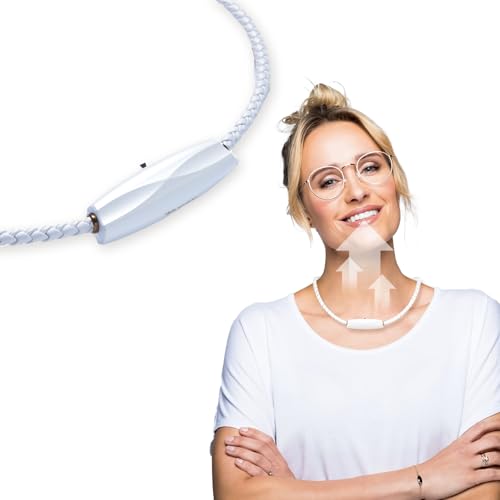
What they are: filterless devices that generate negative ions to make particles settle or stick to surfaces near the unit; wearable units aim to create a personal “breathing bubble.”
Key product facts from maker’s listings:
Reality check: these devices are silent and inexpensive in operation, so they have a role for personal comfort or odor reduction in low‑dust settings. They do not provide verified CADR/CFM numbers and are not a replacement for HEPA filtration when sanding produces significant respirable dust. Use them as a personal supplement—continue to use source collection and a HEPA air scrubber for room‑level control.
What they claim: passive, maintenance‑free dust and odor capture using plant extracts or absorbent materials; no electricity required.
Product pages list small prices and promote continuous passive operation. These are best viewed as surface‑dust and odor management products for enclosed, low‑dust areas (closets, cars) not as devices that remove airborne respirable wood dust during active sanding.
Two facts matter when sizing: the unit’s volumetric airflow (CFM) and your workshop’s volume (cubic feet). A useful planning metric is air changes per hour (ACH): how many times per hour the cleaner can replace or circulate the air in the space. For dusty activities higher ACH is better; aim to move air quickly during and immediately after dust‑generating operations.
Formula: ACH = (CFM × 60) ÷ room volume (cubic feet).
Examples using the ALORAIR unit (270–550 CFM):
Interpretation: the ALORAIR unit at high speed provides multiple air exchanges per hour in common workshop sizes and is therefore capable of clearing airborne dust more rapidly than a small consumer unit. Stackable operation (up to ~1650 CFM by daisy chaining three units) is useful when you need much higher ACH in large spaces or to accelerate clearing between jobs.
Manufacturer filter lifetimes and replacement costs vary by use. The ALORAIR product page notes filter replacement indicators and a method to qualify for uncharged filters via product bundling—check the product page for current terms and pricing.
Best practices for handling used filters:
An effective system layers controls:
Combining these steps reduces filter loading on the HEPA scrubber and provides faster clearing of the breathing zone when you complete a dusty operation.
The ionic and passive products are attractive for their low cost, portability and silent operation. They can freshen air, reduce light settled dust, and create a small personal comfort zone, but they lack long‑established, independently measured particulate clearance metrics (like CADR) and do not provide a mechanical barrier to respirable dust. For heavy sanding or continuous wood dust generation, choose a mechanical, HEPA‑based scrubber for room‑level control and use the smaller devices only as supplemental aids.
Two things to check before you buy:
Upfront cost is one part of ownership; filter expense and replacement frequency are the recurring costs that matter in a dusty shop.
What to expect:
Because most maker’s listings didn’t publish explicit annual replacement costs, check the maker’s listing or vendor before purchase for current filter pricing and any bundle offers that may reduce ongoing expense.
Choose the ALORAIR Air Scrubber HEPA. Its HEPA stage plus high CFM and stackability make it the practical shop choice among the items considered. Use it together with source capture (shop vac or dust collector) while sanding.
Use a modest HEPA/HEPA‑like consumer room cleaner for small rooms and add Parsca fan blade pads to cut re‑entrainment from fan blades. If you only have the items discussed here, the Parsca pads are a cheap, low‑effort complement to local capture.
Wearable purifiers (Airvida, LIFTHONSO, AloveH) or the JahyElec plug‑in ionizer can provide a quiet personal bubble or reduce odors. Do not rely on them for room‑level protection during sanding.
Generic passive dust boxes may reduce settled dust and odors in enclosed spaces like a car or closet. They are not a substitute for HEPA filtration during active woodworking.
From the selection reviewed, the ALORAIR air scrubber is the only product explicitly designed and specified for workshop and restoration environments: HEPA filtration + high airflow + stackable design make it the correct device to address airborne wood dust at room scale. Parsca ceiling fan pads are a low‑cost supplement that helps when you use ceiling fans and want to reduce re‑entrainment. Ionic and wearable devices (JahyElec, Airvida, LIFTHONSO, AloveH) provide silent, low‑maintenance personal comfort but lack verified room‑scale particulate metrics and should not be used as a primary dust control strategy. Generic passive dust boxes offer surface dust/odor management only.
A: Wearables create a small personal micro‑zone and may improve perceived air quality, but they are not a substitute for local dust collection, a HEPA room scrubber, and proper respiratory PPE during sanding. If you regularly generate respirable dust, rely on source capture first and a HEPA air scrubber for room control.
A: Some ionic devices are marketed as low‑ozone; for example, the Airvida M1 lists CARB‑compliant low ozone emission on its product page. If you consider an ionizer, verify regulatory compliance (CARB, local limits) and remember that ionizers do not provide documented CADR or mechanical filtration comparable to a HEPA scrubber.
A: Replacement intervals depend on dust load and prefilter maintenance. Heavy sanding increases loading and shortens HEPA life. Check the unit’s filter indicator, inspect the prefilter regularly, and budget for more frequent replacement if you do repeated large jobs. The ALORAIR page indicates filter replacement indicators; check the product page for current filter pricing and bundling options.
A: No. Ceiling fan pads (like the Parsca pads) can reduce dust on blades and help lower re‑entrainment, but they do not move or mechanically filter the room’s air to the same degree as a HEPA scrubber. Use them as a low‑cost supplement where ceiling fans are already part of your ventilation strategy.
A: For an open workshop, a high‑CFM unit designed for job‑site use (ALORAIR) is usually more effective than several small consumer purifiers because it moves more air and is built for dusty conditions. In enclosed rooms or subdivided spaces, multiple smaller units could make sense—match total airflow to the space volume using the ACH formula.
A: The ALORAIR unit includes a carbon stage for smoke and some odors, which can help with smell control. Ceiling fan carbon pads also advertise odor adsorption. Pure ionic or passive “magic boxes” may reduce some odors but are not engineered for volatile organic compound (VOC) removal the way specialized adsorption systems or activated carbon stages are. For solvent‑heavy finishing, ensure adequate ventilation and consult product specifications for carbon/adsorption stages.
If your shop generates significant sanding dust, prioritize the ALORAIR Air Scrubber HEPA with 3‑stage filtration for its HEPA filtration, high airflow (270–550 CFM) and stackable job‑site design. For low‑cost supplemental measures consider Parsca ceiling fan filters to reduce re‑entrainment of settled dust. Use ionic and wearable devices only as personal supplements; they are not a replacement for source capture and HEPA room scrubbing.
Buy or learn more from the product pages:
For broader reading on shopper‑scale sizing, testing methodology and a wider set of consumer models, see our review hub: Air Purifier Reviews: In‑Depth Research & Comparisons, and for general questions consult our Air Purifier FAQ. If you want alternatives sized for bedrooms or small offices, see Best Air Purifiers for Dust (2026) and The Best Air Purifiers (2026).
To keep our Best Air Purifier for Woodworking Dust information accurate, we rely on independent references such as the EPA’s Guide to Air Cleaners in the Home, AHAM Verifide CADR data and manufacturer spec sheets. See how we evaluate air purifiers and our editorial policy for details.
Calculate room volume (length × width × height), decide your target air changes per hour, and select a unit whose CFM matches that need. Use the manufacturer’s sizing guidance or the product listing examples before buying.
No. Wearables, ionizers and passive pads are supplemental. They may help your immediate breathing zone or reduce surface dust and odor, but they generally don’t reliably capture respirable wood dust. For shop‑level airborne dust control use a true HEPA or equivalent mechanical filter with sufficient airflow.
Prioritise source control: local dust collection and a HEPA‑rated shop vac are primary. Use a room air scrubber to capture escaped dust, reduce re‑entrainment, and clear the breathing zone during and after work. Run the scrubber while working and ensure its CFM suits your shop volume.
They can help for specific problems: ceiling‑fan particle or activated‑carbon pads can reduce blade buildup and minor odors, and passive dust boxes lower settled surface dust in small enclosures. They do not replace a purpose‑built HEPA air cleaner for controlling airborne respirable woodworking dust.
Check the maker’s product page or retailer listing for filter types, recommended replacement intervals and current parts pricing before purchase.
Yes. According to the maker’s listing it includes a true HEPA stage, adjustable airflow (270–550 CFM), stackable/job‑site enclosure (stacking to about 1650 CFM), rotomolded shell, ducting options, ETL listing and a limited warranty, making it appropriate for garages and small shops producing significant dust.
Answers are educational and may link to relevant guides or products on this site. Product facts can change, so confirm current details before purchase.