
ICARE
Cat Litter Deodorizer, 99% Odor Eliminator for Strong Pet Odors…
BrandICAREBest fitSmoke & Odor Air Purifiers
$19.99
View product detailsProduct information comes from the current AirPurifierFAQ catalog and should be verified on Amazon before purchase.

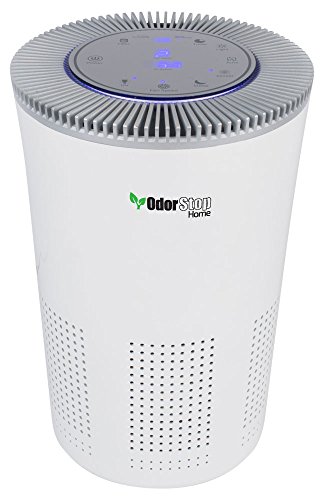


Our #1 pick is the OdorStop OSAP5. It pairs an H13 True HEPA stage with active carbon, has auto and sleep modes, and enough coverage for typical rooms—so it captures dander and adsorbs the odor molecules that make a litter box noticeable, while remaining quiet enough for bedrooms.
This page is written for cat owners who keep a litter box in living space and want an appliance that actually reduces odor without surprise costs, unsafe ozone exposure, or a machine so loud it ends up switched off.
Selection here is buyer-focused rather than lab-ranked. We matched real products on file to the specific task of reducing litter-box odor in typical household settings and chose models that address the two parts of the problem: particles (dander, dust that carries smell) and gas-phase compounds (ammonia and other VOCs from urine and feces).
Key selection priorities:
We used only the supplied product data for factual statements; where specs (CADR, quiet dB, filter prices) were not supplied we note that and recommend checking the product page before buying.
Why this choice: the OSAP5 combines an H13 True HEPA stage with active carbon, a 360° intake, and automatic control modes. That mix addresses the two basic contributors to a noticeable box: airborne particles (dander, dust) and gaseous odor molecules that require adsorption.
Product facts: H13 HEPA filter; coverage rated to 1,000 sq ft; auto mode and sleep mode; 5-speed motor; timer and filter-life display. The model is intended for whole-room use and comes with a multi-year manufacturer warranty.
When to buy this: choose the OSAP5 if your litter box is in a bedroom, living room corner or open-plan apartment and you want continuous background filtration that balances noise and performance. The H13 stage captures particles; the active carbon helps adsorb VOCs. Use on auto to balance sound and air changes, and check the unit’s filter-life display periodically.
Limitations: the manufacturer listing does not provide CADR or quiet-mode dB in the supplied data; we therefore recommend confirming noise and replacement-filter SKUs on the product page before purchase.
Why this choice: the Cypcat PAP001 is designed for high airflow and heavy carbon adsorption. It advertises dual-sided intake for more intake surface area and a large coverage rating that suits open layouts where odors travel across rooms.
Product facts: rated 2,500 sq ft coverage (1 ACH) or 530 sq ft at 5 ACH; True HEPA + activated carbon filtration; 6-stage filtration; 177 CFM per side intake rate (stated); 22 dB in whisper-quiet auto mode; auto mode and a pet mode; manufacturer guidance to replace filters every 4–6 months/3,000 hrs.
When to buy this: pick the Cypcat if you have several cats, a large living area, or a shared open-plan space where a low-carbon-capacity purifier won’t keep up. The unit’s dual intake, higher airflow ratings and thicker carbon stage are built for spreading odor loads.
How to use it for best effect: place the unit where it can draw air across the room rather than tucked into a corner behind furniture. Activate pet mode when the smell is strongest (after scooping or at the end of the day) and monitor the filter-replacement indicator.
Why this choice: another OdorStop model in the supplied data pairs H13 HEPA with active carbon and additional features such as UV. It shares the manufacturer focus on smoke and odor control with multiple speed settings and long filter life.
Product facts: H13 HEPA listed among the product attributes; manufacturer notes capture of cooking odors and other airborne contaminants; multiple speed modes, timer, sleep mode and a 3-year limited warranty are included.
When to buy this: useful for owners who want a tried brand with additional feature sets (timers, sleep mode) and a combined HEPA/carbon approach for bedroom or living-room placement. Confirm the presence and specification of the carbon stage and UV details on the product page if carbon-bed size or UV power is critical to your decision.
See the OdorStop HEPA with UV & carbon
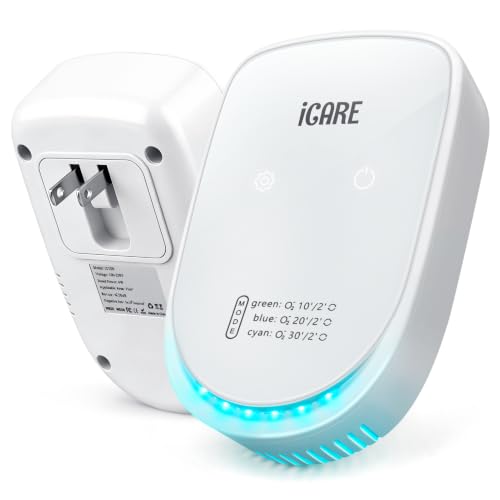
Why this choice: the ICARE unit is a palm-sized, plug-in, filter-free device that produces negative ions and is explicitly marketed for litter boxes. It’s low-cost, energy-efficient, and designed to be put right next to the box.
Product facts: plug-in negative-ion deodorizer (2000/cm negative ions claimed); 3 intelligent cleaning modes with duty-cycle patterns (Green: 10 min on/2 min off, Blue: 20/2, Cyan: 30/2); fanless, whisper-quiet operation; one-time purchase with no filters to replace; 3W power draw; described as ozone-free by the manufacturer.
When to buy this: this is a suitable choice if budget and convenience are primary and you want something to sit adjacent to a litter box to reduce airborne particles/dander and help with small, local odors. Its fanless design makes it unobtrusive next to the box or inside a small bathroom.
Realistic expectations: plug-in ionizers reduce airborne particles by encouraging agglomeration and settling and can make a small immediate area smell fresher, but they do not replace activated carbon for adsorbing gaseous odor compounds such as ammonia. Check that the model is truly ozone-free if that is important for your household.
See the ICARE plug-in deodorizer
Why this choice: the Oneluner set gives you multiple plug-in ionizers so you can attack odor at several likely problem points—bathroom, bedroom, hallway, and the litter-box location—without replacement filters or ongoing costs.
Product facts: compact plug-in negative-ion devices; whole-home 4-pack available; runs quietly; filter-free and energy-saving; suited to small spaces and intended for continuous low-maintenance use.
When to buy this: good for renters or households with several small areas where odors appear intermittently. Coverage is local; these are not room-sized HEPA+carbon purifiers and are best used close to odor sources.
Why this is listed: the Manfh ozone generator is effective at chemically reacting with and removing deep-set odors in unoccupied spaces and the product is commonly used in remediation scenarios. We include it because some owners will consider this last-resort approach for severe, persistent smells that resist cleaning.
Product facts: rated coverage up to 6,000 sq ft; output up to 55,000 mg/hour (manufacturer claim); manufacturer states operating noise below 30 dB; the listing includes a clear warning: operate only in enclosed, unoccupied spaces and ventilate 30–60 minutes after treatment before returning people, animals or plants; not available for sale in California (per the product page).
Important safety note: ozone generators are for short remediation jobs in empty, well-sealed spaces only. Do not run an ozone generator where people or pets are present. Because of these safety constraints, we treat the Manfh as a remediation tool—not a regular-use household purifier.
Why these choices: both are small, portable units intended for directional capture of fumes and odors at the source. They’re useful if you want a short-range solution placed directly above or beside a litter box or in a bathroom counter.
Product facts — Ormos: rechargeable desktop purifier, washable filter, described operation at about 36 dB, USB-powered, marketed for localized odor capture. Product facts — Silanit: desktop smoke purifier with washable, removable filter and dual-speed quiet operation; tilting angle for directional capture; washable filter and removable oil cup for kitchen use.
When to buy these: use them for source-control—put the unit so it can draw the immediate air above or beside the box. They won’t replace a room-sized HEPA + carbon system for persistent, whole-room odors but are inexpensive and low-effort for spot control.
See the Ormos desktop purifier | See the Silanit desk unit
Air purification helps, but how you place and run a unit matters more than the headline spec in many living-room or bedroom litter-box scenarios.
For maximum effect put a purifier where it can draw air from the immediate area of the box. A small targeted unit or plug-in ionizer directly beside the litter box removes/dilutes particles and freshens the first few inches of air—this reduces the smell you notice when you enter the room. For whole-room units, position them so air flows across the box area rather than having the box tucked in a dead corner behind furniture.
The effective removal of odor gases depends on sufficient air changes per hour (ACH) and enough activated carbon to adsorb volatile molecules. For a bedroom or mid-size living room, a unit with room coverage around 500–1,000 sq ft (or the manufacturer’s guidance) is suitable if used on a higher fan speed periodically. For large open areas, a higher-coverage unit (the Cypcat cites 2,500 sq ft) or multiple units are more effective.
1) Source control: daily scooping, washing the mat, and cleaning the box; 2) Local capture: a small directional or plug-in device; 3) Room treatment: a HEPA + activated carbon purifier running continuously on auto. Carbon removes the gaseous compounds that cause lingering smell; HEPA keeps dander and tracked litter from recirculating.
Open the room for 5–10 minutes after scooping (if possible), and run the purifier on a higher setting for 30–60 minutes. Many units have an auto or pet mode that increases airflow in response to poorer air quality; use it when you need a quick reduction.
Ionizers (ICARE, Oneluner) are excellent for encouraging small particles to settle and for low-cost local scent control, but they don’t provide the same adsorption of gases as a thick activated carbon bed. Use them as an adjunct for immediate near-box freshness, not as your only mitigation for persistent ammonia smells.
If you consider an ozone device (Manfh), treat it strictly as a temporary remediation step and follow the manufacturer’s safety instructions: run only in unoccupied, sealed spaces and ventilate thoroughly afterward. Ozone can oxidize and remove embedded smells from fabrics and walls but should never be used around live animals or people.
HEPA filters capture airborne particles—dander, dust, and fine litter dust—that can carry odor compounds or make a room feel stale. HEPA does not adsorb gases; it does, however, reduce the particulate load so particles that hold or adsorb odor compounds are removed from the air.
Carbon adsorbs gaseous compounds such as many VOCs and some odor molecules. The effectiveness depends on the carbon type, bed thickness and surface area. A large, pet-specific carbon stage is the single most practical way to reduce the molecule-level smell of a litter box in an occupied room.
Ionizers produce charged ions that attach to particles, making them settle onto surfaces or easier to capture. They can reduce airborne dust and some odors tied to particulate matter when placed close to the source, but they do not replace carbon for gas-phase removal. Check product claims about ozone emissions; reputable manufacturers will state “ozone-free” or list compliance with limits.
Ozone reacts chemically with many odor compounds and can remove embedded smells from fabrics and walls. Because it is a respiratory irritant and can harm animals, ozone must only be used in unoccupied, sealed spaces and ventilated prior to reoccupation. Consider ozone only for remediation of deep-set odors after cleaning and sealing off occupants.
Washable filters and small directional fans (Ormos, Silanit) help with short-range capture and odor concentration mitigation. These are cost-effective for immediate or temporary control but usually have lower carbon capacity and fewer formal VOC-adsorption capabilities.
Running costs fall into three buckets: electricity, replacement filters, and occasional deep cleaning or pre-filter replacement.
Decide by where the box sits and how strong the odor is:
We used only the supplied product information to make comparisons and recommendations. Several common buyer metrics—CADR figures, quiet-mode dB for some models, and exact replacement-filter pricing—were not supplied for every product, and are therefore marked N/A where applicable. Before purchase, confirm current CADR, noise and filter-SKU/pricing on the product page or manufacturer site. For broader methodology and testing information see our in-depth reviews and the general Air Purifier FAQ.
An air purifier can substantially reduce the smell you notice, especially if it combines HEPA (for dander and litter dust) with an activated-carbon stage (for gaseous odor molecules). Complete removal depends on scooping frequency, box cleanliness, ventilation and whether the purifier has sufficient carbon capacity and airflow for the room. See our buying guide and long-term maintenance tips in the Best series and reviews.
Many plug-in ionizers (including ICARE and Oneluner models) are marketed as ozone-free and are designed for near-box placement. They safely reduce airborne particles and provide local freshness for many owners. If ozone emissions are a concern, check the manufacturer’s claims for “
For close-proximity odor control, use a compact plug-in or desktop unit right at the box. For whole-room control, place a room-sized HEPA+carbon purifier where it can draw air across the room (not tucked behind furniture). The Cypcat guidance specifically recommends positioning to pull air across the space rather than hiding it in a corner.
Replacement intervals vary by model. The Cypcat PAP001 maker recommends replacing filters every 4–6 months or about 3,000 hours. Some units (like the OdorStop OSAP5) include a filter‑life display. If a specific interval isn’t listed on the page, check the manufacturer product page for exact filter SKUs and recommended replacement timing.
No—continuous ozone around pets is not safe. The guide notes ozone is only appropriate for short, unoccupied, well-ventilated remediation runs and must not be used continuously where cats are present. If you’re considering ozone, verify the manufacturer’s instructions and plan runs only when people and pets are out and the space can be aired afterward.
Plug-in ionizers and rechargeable desktop units can reduce immediate, very localized odor near the box and have low running costs, but they don’t provide the dual particle+gas removal of a True HEPA plus activated carbon system. For persistent or room-spread odors, choose a HEPA+carbon room purifier to capture dander and adsorb VOCs.
Use auto mode for continuous background filtration and a balance of sound and air changes—the OdorStop OSAP5 is recommended on auto for this. Activate pet mode (available on the Cypcat) when odors spike, such as after scooping. Use sleep mode overnight for quieter operation. If quiet‑mode dB isn’t listed, verify noise specs on the product page before buying.
Match the unit’s coverage to your space: the OdorStop OSAP5 is rated to 1,000 sq ft for whole-room use; the Cypcat PAP001 is rated 2,500 sq ft (1 ACH) or 530 sq ft at 5 ACH. Choose higher-airflow, larger-carbon-capacity units (like the Cypcat) for open-plan or multi-cat homes; for a bedroom or small apartment, the OSAP5 or a compact unit may suffice. Verify CADR and noise figures on the product page if not supplied.
Answers are educational and may link to relevant guides or products on this site. Product facts can change, so confirm current details before purchase.
