

Silanit
Desktop Smoke Purifier Fan, Portable USB Rechargeable Adjustable Angle…
BrandSilanitFilterWashable Filter
$43.99
View product details
Product information comes from the current AirPurifierFAQ catalog and should be verified on Amazon before purchase.




Top pick: Silanit Desktop Smoke Purifier Fan — a compact, USB-powered desktop unit with a washable filter, adjustable tilt and quiet dual-speed operation. For close-range capture of cooking fumes, vaping or RV use it balances portability, low running cost and practical source extraction better than the other small fan‑plus‑purifier devices reviewed here.
This roundup is for buyers who want a single device (or accessory) that pairs an air-moving fan with targeted filtration to remove local smoke, cooking fumes and short‑term odors. It focuses on portable desktop/rechargeable units and fan‑mounted filter pads rather than full‑room HEPA purifiers.
If your priority is whole‑room particulate removal — wildfire smoke, allergens, or long‑term indoor air quality — look instead at full‑size HEPA purifiers. See our larger buyer’s guide on room purifiers for those needs: The Best Air Purifiers (2026).
We limited picks to the real 2026 product listings supplied: compact desktop units, portable rechargeable devices, ceiling‑fan filter pads and one high‑output ozone machine. For each we inspected the manufacturer copy for filter type, power options, maintenance approach (washable vs replaceable), and safety guidance. We did not invent CADR, formal room coverage or technical test data where the manufacturer did not provide it.
The goal was practical recommendations: which of the supplied products actually matches common use cases (local source capture, travel, continuous passive odor adsorption, or one‑time deep deodorizing), and which trade‑offs matter when you choose.
For source capture — the smoke that passes directly above a stovetop, grill, hot pot or a small smoking area — nothing beats a compact fan designed to aim suction at the source. The Silanit Desktop Smoke Purifier Fan is our top single‑device pick because its adjustable tilt (15°) and washable oil cup let you place the intake very close to the source and keep maintenance cheap.
Why source capture is important: capturing emissions before they disperse requires much less airflow than trying to scrub an entire room. These small units are not HEPA whole‑room purifiers, but they can make a noticeable difference in the immediate breathing zone when placed correctly.
If you need a device you’ll carry to a campsite, hotel, shared kitchen or RV, prioritize rechargeability, size and simple cleaning. The ormos rechargeable desktop purifier is a budget, rechargeable option that stresses portability and quiet operation (advertised ~36 dB). Packable, dual‑suction designs that let you point intake at the source are more effective than passive desk blowers.
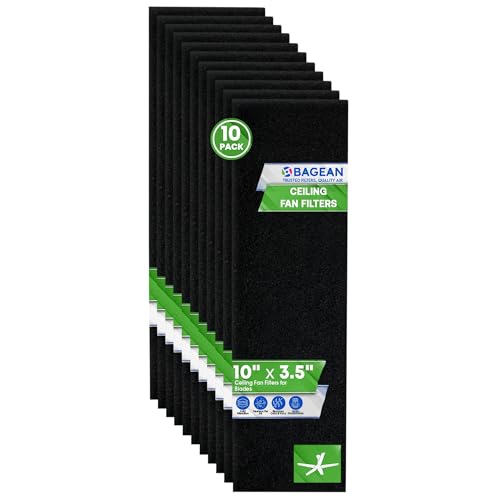
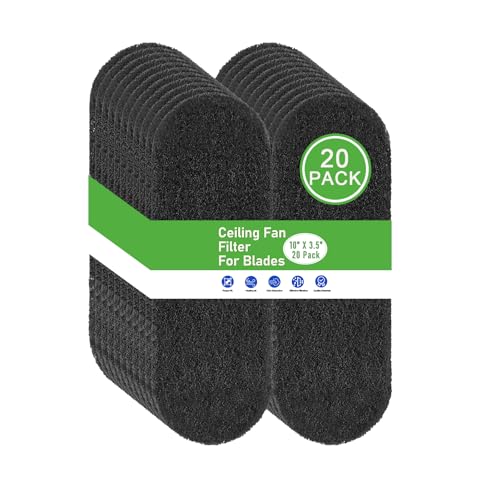
Ceiling‑fan activated‑carbon pads (Bagean, Parsca, Cizenal) convert an existing ceiling fan into a passive odor adsorber. They’re inexpensive, simple to install and work continuously while the fan runs. Expect them to reduce mild household odors and intercept larger dust/dander particles entrained near the blades; they are not a substitute for HEPA filtration when you need particulate removal.
Practical notes: filter pads are cheap but need periodic replacement — most vendors suggest changing every 2–3 months. When calculating ongoing cost, check pack size and frequency of replacement to estimate annual spend.
The Manfh ozone generator is a high‑output device advertised for rapid odor elimination in sealed spaces up to 6,000 sq ft. Ozone machines are fundamentally different: they produce a reactive gas (ozone) that chemically alters odorous compounds.
Strong warning: ozone is hazardous at concentrations used to deodorize rooms and must not be used in occupied spaces. We do not recommend ozone generators for routine household odor control. If you consider one for restoration, vehicle or post‑fire deodorizing, follow every manufacturer safety step — use only in sealed, unoccupied spaces, ventilate thoroughly for 30–60 minutes after treatment, and follow local regulations (some jurisdictions restrict sale/use).
Core facts: USB powered; washable and removable filter; removable oil collection cup; 15° adjustable tilt; quiet dual‑speed operation; current listed price $43.99.
Why it’s notable: the combination of a washable filter and an oil cup makes this one of the lowest‑cost‑to‑run desktop smoke extractors. The tilt mechanism lets you angle the intake toward a hob, hot pot or small grill so the unit traps emissions before they spread. Dual speeds provide a practical balance between quieter background use and higher suction during cooking sessions.
Strengths
Limitations
Best fit: users who frequently cook indoors, run hot‑pot or grill setups at a countertop, or need a portable extractor for an RV or small kitchen counter. Buy link: Buy on Amazon.
Core facts: USB‑rechargeable; washable/reusable pads; dual‑channel suction; advertised ~36 dB quiet operation; current listed price $19.99.
Why it’s notable: its portability and rechargeable design make it practical for campers, shared kitchens or short‑term gatherings where plugging in isn’t convenient. Dual suction lets you aim intake where the fumes originate. The low advertised noise figure is consistent with units intended for desk use.
Strengths
Limitations
Best fit: travelers, dorm residents, or anyone who needs a compact, rechargeable source‑capture device. Buy link: Buy on Amazon.
Core facts: plug‑in operation (no battery management); includes five activated‑carbon pads; marketed as ultra‑quiet and suitable for desks/small rooms; listed price $28.99.
Why it’s notable: its plug‑in design eliminates charging concerns and the included carbon pads are convenient for short‑term odor control. It’s a better fit when you want a low‑maintenance desktop device you can leave plugged in.
Strengths
Limitations
Best fit: dorms, bedside desks, and small rented rooms where simple odor control is the priority. Buy link: Buy on Amazon.
Core facts: activated‑carbon pads designed to attach to ceiling fan blades; variable pack sizes and prices (examples supplied: Bagean $16.98, Parsca 20‑pack $19.99, Cizenal 10‑pack $6.99); recommended change every 2–3 months.
Why they matter: if you already have a ceiling fan running regularly, these pads create continuous air contact with carbon media, providing a passive way to reduce cooking and household odors without adding another powered device into the room.
Strengths
Limitations
Best fit: homes with ceiling fans that run frequently and where odor reduction (cooking, pets, everyday smells) is the primary goal rather than particulate removal. See the Parsca 20‑pack and Cizenal 10‑pack pages for pack sizes and pricing: Parsca 20‑pack, Cizenal 10‑pack. Bagean filters: Bagean.
Core facts: advertised ozone output up to 55,000 mg/hour; coverage claim up to 6,000 sq ft; timer function up to 120 minutes plus continuous hold; current listed price $37.94; manufacturer warns operation only in enclosed, unoccupied spaces and ventilation required afterward.
Why this is included: the Manfh unit is a common reference point among high‑output ozone devices offered to consumers. It illustrates the power and risks of ozone for deep deodorizing.
Important safety and editorial stance
If you are considering an ozone device for a specialized purpose, consult a professional restoration service first rather than attempting unsupervised use.
Product page: Manfh ozone generator.
– Best single desktop extractor: Silanit Desktop Smoke Purifier Fan — washable filter + oil cup and adjustable tilt make it most useful for repeated close‑range capture.
– Best budget portable: ormos rechargeable purifier — lowest price, rechargeable, advertised quiet operation and dual suction for targeted use.
– Best plug‑in desk solution: Silanit mini with five activated carbon pads — low maintenance, plug‑in convenience.
– Best low‑cost whole‑room passive approach: ceiling‑fan activated‑carbon pads (Parsca/Bagean/Cizenal) — continuous odor adsorption when the fan is running.
– Ozone machine (Manfh): included for context; not recommended for ordinary household use—only for sealed, unoccupied deodorizing with professional-level precautions.
1) Are you trying to capture emissions at the source (stovetop, hot pot, small grill, vape)? Choose a small extractor you can place within 12–24 inches of the source (Silanit Desktop or ormos). Source placement matters more than fan power for local capture.
2) Do you need portability and battery/recharge options? Choose a rechargeable model (ormos) so you can run it away from outlets or take it on trips.
3) Is continuous, low‑maintenance odor control the goal and you already have a ceiling fan? Consider ceiling‑fan carbon pads; they’re inexpensive and work quietly while the fan is on.
4) Do you need to remove particulates across an entire room (wildfire smoke, allergies, heavy cigarette smoke)? The devices in this roundup are not whole‑room HEPA purifiers — for that use case see Best Air Purifiers for Cigarette Smoke (2026) and The Best Air Purifiers (2026).
– Placement: for small fan‑plus‑filter units, position the intake as near to the emission source as practical. A tiny change in distance greatly affects capture efficiency.
– Filters: washable filters are economical but need regular cleaning to maintain airflow. Activated carbon pads require replacement when saturated — the manufacturers here typically recommend every 2–3 months.
– Noise vs speed: higher suction modes will increase audibility. If you need quiet background use, run the unit on low and accept slower capture.
– Cleaning oil traps: when cooking greasy fumes, empty and clean oil collection cups frequently to prevent odor carryover and maintain suction.
Many small units avoid subscription-style replaceable HEPA filters; costs fall into two buckets: washable (near zero recurring filter cost) and replaceable carbon pads.
To estimate annual spend for carbon pads:
Because pack sizes and household setups vary, the safe, conservative approach is to check pack price and multiply by 4 (if you expect quarterly replacement) to produce a baseline annual cost.
– Ozone: do not use ozone devices in occupied spaces. Ozone irritates lungs and is regulated in many areas; always follow manufacturer instructions and local laws. We advise consulting a professional before attempting ozone treatments in homes or vehicles.
– Smoke sources: for cigarette smoke, wildfire smoke and other particulate‑heavy sources, a HEPA‑rated room purifier or HVAC filtration is a superior solution to small fan‑plus‑filter combos.
Treat compact fan‑plus‑filter devices as focused tools: they’re best for dealing with immediate, localized smoke and odors or for adding a modest, low‑cost layer of odor adsorption in rooms that already have ventilation. For whole‑house or whole‑room particulate problems combine them with a properly sized HEPA purifier or improved HVAC filtration.
See related content for broader guidance:
– Do I need source capture (place device near stovetop or grill) or whole‑room cleaning? (Choose a desktop extractor vs a HEPA purifier accordingly.)
– Is portability and battery power important? (Choose rechargeable models.)
– Am I trying to remove odors (carbon media) or particulates (HEPA)? The supplied small devices emphasize odor and local smoke capture more than certified particulate removal.
– Will I be using the device in shared or occupied spaces? Avoid ozone under all ordinary, occupied conditions.
No. The compact devices we cover are designed for close‑range capture and odor adsorption. Wildfire and heavy cigarette smoke require sustained high airflow and HEPA‑level filtration to meaningfully reduce particulate concentrations in a whole room. See our room purifier roundups for HEPA options: The Best Air Purifiers (2026).
Manufacturers suggest replacing ceiling‑fan carbon pads every 2–3 months. For units with washable filters or oil cups (Silanit), clean them when visibly soiled or when suction drops — frequency depends on cooking habits but typically every few weeks to months for regular kitchen use.
They can provide local odor relief and capture emissions near the device; rechargeable models are convenient for short‑term use. Expect limited whole‑room performance — they’re a tool to improve immediate breathing zones, not to sterilize an entire hotel room.
Ozone can neutralize some odors, but at concentrations that are hazardous to health. Ozone devices must only be used in sealed, unoccupied spaces with strict ventilation afterward. We do not recommend ozone generators for routine household use; consult professionals for restoration jobs instead.
Yes — combining targeted source capture with a properly sized HEPA purifier is an effective strategy. The small unit traps emissions where they form, while the HEPA purifier handles room‑scale particulates and recirculated air.
Check pack size and price on the product page, then assume a 2–3 month replacement interval per pad. Multiply the pack price by the number of packs required to cover your fan blades across the year. The vendors here offer multi‑packs (Parsca 20‑pack, Cizenal 10‑pack) so multi‑month supply purchases reduce the per‑month cost.
For targeted local smoke and cooking extraction, the Silanit Desktop Smoke Purifier Fan is the best all‑around pick among the supplied products because its washable filter, oil cup and adjustable intake angle deliver practical source capture with low ongoing cost. For portable rechargeability, choose the ormos model; for plug‑in, low‑maintenance desk odor control the Silanit mini is a simple option. Ceiling‑fan activated‑carbon pads are the most affordable continuous approach when you already have a fan running.
Reminder: if your priority is whole‑room particulate removal you should choose a certified HEPA purifier — see The Best Air Purifiers (2026). For technical questions about sizing a room purifier, visit our size calculator and buying guide sections on the site.
Buy links for the products discussed:
For deeper product reviews and longer tests of whole‑room purifiers, visit our review hub: Air Purifier Reviews: In‑Depth Research & Comparisons.
Place the intake very close to the emission source (hob, hot pot, small grill) and angle it so suction draws fumes up before they disperse. The Silanit’s 15° adjustable tilt helps aim the intake; use higher suction during cooking and keep the unit within the immediate breathing zone rather than relying on it to clean the whole room.
Ceiling-fan carbon pads reduce mild household odors and can intercept larger dust or dander stirred up near the blades, but they are not a substitute for HEPA filtration. For allergens or fine particulate problems like wildfire smoke or long-term indoor air quality, choose a full-size HEPA room purifier instead.
Most vendors suggest replacing ceiling-fan carbon pads every 2–3 months. To estimate annual cost, check the pack size and vendor replacement recommendation, then multiply how many packs you’ll need per year. If exact replacement frequency or pack quantities aren’t listed, verify those details with the seller before buying.
No — ozone generators produce a reactive gas that is hazardous at deodorizing concentrations and must not be used in occupied spaces. If you consider one for restoration or vehicle/post-fire deodorizing, use only in sealed, unoccupied areas, follow every manufacturer safety step, ventilate thoroughly for 30–60 minutes after treatment, and check local regulations.
Prioritize rechargeability, compact size, easy cleaning, and quiet operation. Packable, dual-suction designs that let you point intake at the source are more effective than passive desk blowers. Also verify battery runtime and charging method with the manufacturer before purchasing to ensure it meets your travel or RV needs.
Washable filters lower ongoing cost but can be less effective on very fine particulates compared with true HEPA filters. Many desktop fan-plus-purifier units in this roundup lack CADR or formal room-coverage specs. If fine-particle or whole-room removal is a priority, verify the manufacturer’s filtration claims or choose a certified HEPA room purifier.
Answers are educational and may link to relevant guides or products on this site. Product facts can change, so confirm current details before purchase.
