

AIRCYAN
AirCyan 4500 Sq.Ft Most Efficient Energy Star 2025 Dehumidifier
BrandAIRCYANFilterHEPA
$179.99
View product detailsProduct information comes from the current AirPurifierFAQ catalog and should be verified on Amazon before purchase.


This roundup is written for people who run air purifiers for long periods and want appliances that do the job without spiking electricity bills. That includes night‑time use in bedrooms, continuous operation in basements or damp rooms, and desktop/personal devices that run from USB. It also covers situations where a single product combines functions (for example, dehumidification plus filtration).
“Energy-efficient” in this article is narrowly defined: models we included either carry an explicit energy claim (an ENERGY STAR accolade or a manufacturer‑stated daily kWh figure), list a clear low‑power draw (USB or a stated wattage), or advertise low‑power features and sleep/eco modes that materially lower consumption. Where a product’s power numbers aren’t supplied, we flag that gap and show how to estimate running cost from published info.
Best overall energy‑efficient pick: AIRCYAN 4500 — it carries a 2025 ENERGY STAR “Most Efficient” badge and a manufacturer‑stated energy figure (~4.44 kWh/day under extreme conditions), making it the clearest documented choice among the supplied products for continuous, large‑space operation (and it doubles as a dehumidifier + HEPA purifier).
Selection followed strict rules so readers can trust the picks:
If you’d like deeper lab‑style testing and CADR comparisons, see our reviews hub: Air Purifier Reviews: In‑Depth Research & Comparisons.
Think about two separate questions when choosing for energy efficiency: (1) how much power the unit draws when running, and (2) how effectively it moves/filter air for your space (so you need fewer hours or a smaller device). Below are the supplied products mapped to typical buyer scenarios.
Best pick among supplied models: AIRCYAN 4500. It carries a documented ENERGY STAR “Most Efficient” designation for 2025 and the manufacturer lists an extreme‑condition figure of ~4.44 kWh/day. The 2‑in‑1 design (dehumidifier + HEPA + carbon filters) is intended for continuous basement/large‑space use and includes Eco and Sleep modes as well as a continuous drain option. Those features make it the clearest documented choice for long‑run efficiency on this list.
Good mid‑size choice: BLACK+DECKER Tabletop (BAPT01). It is ENERGY STAR certified and specifically claims coverage up to 435 sq ft with a 5 ACH (air changes per hour) claim; that combination of verified certification and explicit coverage makes it a safe middle ground for continuous use in bedrooms and small living rooms where CADR/wattage aren’t supplied.
Best picks: frestar Desktop HEPA and QUEENTY Desktop H13. frestar explicitly lists a 5W power draw and USB power — that makes it extremely economical to run nonstop from a USB power source. QUEENTY is USB‑powered and operates quietly in sleep mode (25 dB), with an H13 HEPA filter; the listing does not give a wattage number but USB power implies very low draw compared with mains‑powered room purifiers. These desktop devices are best where you want continuous, localized clean air with minimal electricity cost.
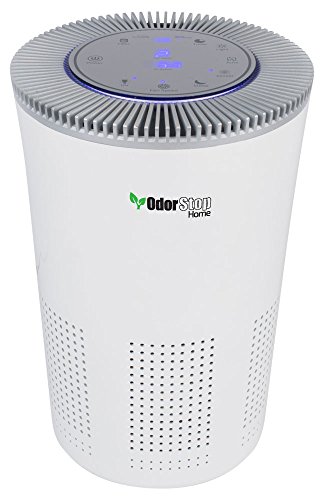
Best fit from the supplied set: OdorStop H13 HEPA. It combines H13 filtration, activated carbon, auto mode and multiple speeds, and is described as having a high clean air delivery rate in its features (though CADR is not listed). It targets smoke and odor removal with a 360° intake and an auto mode for adaptive operation; energy performance depends on how often it runs at high speed, which is not specified, so consider using its Auto Mode or Sleep Mode to reduce runtime when air quality is better.
Note on ozone: The Manfh ozone generator is marketed for very rapid odor elimination in unoccupied spaces (claims up to 6,000 sq ft). Ozone devices are not comparable to HEPA purifiers for occupied‑space continuous use — they must be operated in empty, sealed spaces and ventilated thoroughly afterwards. See safety note below.
AIRCYAN 4500 is the only supplied product that explicitly pairs a dehumidifier function with HEPA filtration. For basements that need both humidity control and continuous air cleaning, a combined unit can be more energy efficient than running two separate appliances — provided the unit’s energy performance has been documented, as AIRCYAN’s has.
Key supplied facts: 2‑in‑1 dehumidifier + HEPA (dual H10 HEPA and carbon), Smart features (Wi‑Fi, Alexa, Google Assistant), Sleep Mode reducing noise to 42 dB, marketed for 4,500–5,500 sq ft dehumidification coverage. Manufacturer lists a 2025 ENERGY STAR “Most Efficient” award and an energy figure of ~4.44 kWh/day under extreme test conditions; in extreme conditions it extracts 65 pints at 95°F/95%RH (41 pints at 86°F/80% RH). The unit includes a drain hose for continuous operation and an Eco Mode.
Why it matters: the explicit ENERGY STAR “Most Efficient” claim and the stated ~4.44 kWh/day provide rare manufacturer numeric energy disclosure, letting you compare running cost directly (see the running‑cost examples section for calculation). The combination of dehumidifier and filtration is practical in basements or very large damp spaces where humidity control reduces HVAC/dehumidifier runtime overall.
Limitations: CADR and explicit continuous wattage at typical room conditions are not supplied. The published kWh/day is tied to the manufacturer’s extreme extraction conditions; your typical kWh/day may be lower in milder ambient conditions.
Key supplied facts: Coverage up to 161 sq ft, HEPA + activated carbon, USB powered, explicitly lists 5W power draw, low noise (30 dB), compact and portable. Manufacturer recommends filter replacement every 3–6 months for optimal performance.
Why it matters: a stated 5W draw is rare in supplier listings and is an immediate indicator of very low continuous running cost: 5W for 24 hours is only 0.12 kWh/day. That makes frestar the best explicitly low‑power continuous personal/small room pick on this list.
Limitations: CADR isn’t provided, so performance per watt vs. other mains units can’t be calculated precisely. It’s a small‑room/desktop device, not intended to purify whole open rooms effectively.
Key supplied facts: H13 HEPA filter, USB powered (plug & play), Sleep Mode at 25 dB, face‑height outlet and oscillation claimed to improve local air delivery, certified 100% no‑ozone and with FCC/CE/RoHS/WEEE notices.
Why it matters: USB power and sleep mode indicate very low energy usage and a pleasant noise profile for desk/bedside use. H13 HEPA is a higher‑grade HEPA spec than generic HEPA listings and suitable for close‑range particulate capture.
Limitations: wattage is not specified, so calculate using the USB power source if you need a kWh estimate (see estimating method below). CADR and explicit coverage are not given; QUEENTY is intended for point‑of‑breath purification rather than whole‑room overhaul.
Key supplied facts: ENERGY STAR certified, three‑stage HEPA filtration (claims up to 99.97% at 0.3 microns), coverage up to 435 sq ft based on 5 ACH, Sleep Mode, filter life up to ~2,000 hours, timer and child lock.
Why it matters: ENERGY STAR certification gives independent assurance about the unit’s efficiency relative to similar machines in its category. The coverage/ACH claim provides a useful sizing figure for bedrooms and small living rooms where you want verified continuous operation without guessing wattage.
Limitations: CADR and wattage are not published in the supplied description. You’ll need to decide on runtime and fan speed scheduling to optimize energy use.
Key supplied facts: H13 HEPA, auto mode and sleep mode, 5‑speed motor, 24‑hour timer, filter life & air quality display, 360° intake design, weighs 6 lb, 3‑year limited warranty. Marketed for smoke and odor reduction; manufacturer states it has a high clean air delivery rate but does not give CADR numbers in the supplied listing.
Why it matters: H13 filtration and auto mode allow the unit to scale power to need. For smoke/odor scenarios, activated carbon plus H13 is usually the best mains‑powered approach among the supplied models — power consumption will vary by fan speed.
Limitations: power/wattage numbers are not given, so you must estimate or measure to compare energy use precisely.
Key supplied facts: marketed coverage up to 6,000 sq ft, timer up to 120 minutes with a continuous hold option, operating noise below 30 dB, rapid ozone output up to 55,000 mg/hour, not legal for sale in California in supplied listing, and includes stern usage notes about operation in unoccupied, enclosed spaces and ventilation after use.
Why it matters: ozone machines are designed to oxidize odors and are presented as rapid‑action deodorants for unoccupied spaces. They are not a continuous‑use air cleaning method for occupied rooms and cannot be sensibly compared with HEPA units on an energy‑efficiency basis intended for humans or pets to occupy the room during operation.
Safety note: do not use ozone generators in occupied spaces; operate only in sealed, empty areas and ventilate thoroughly before reentry. Because of their different operating profile, we do not recommend ozone generators as energy‑efficient replacements for HEPA filtration in occupied rooms.
To estimate running cost, you need a device’s wattage (or a stated kWh/day) and your electricity price. The math is straightforward:
When a product states a per‑day kWh number (like AIRCYAN’s ~4.44 kWh/day under extreme conditions), use that directly. When you only know wattage (frestar lists 5W), compute from watts. When neither is supplied, use duty cycle assumptions with the device’s features (e.g., Auto Mode/ Sleep Mode reduces fan speed) and consider measuring with a plug‑in power meter for accuracy.
Example 1 — AIRCYAN 4500 (manufacturer figure): manufacturer lists ~4.44 kWh/day in an extreme extraction scenario. Using an example electricity price of $0.16 per kWh (substitute your local rate):
Two caveats: (1) the 4.44 kWh/day figure is tied to the manufacturer’s extreme environmental test; typical operation in milder conditions will likely use less energy. (2) In many homes combined humidity control can reduce HVAC/dehumidifier load, changing the total household energy picture.
Example 2 — frestar Desktop HEPA (explicit wattage): frestar lists 5W power draw.
That example shows why USB/low‑wattage desktop purifiers are attractive for continuous personal use: even running 24/7, their electrical cost is negligible compared with mains units. The trade‑off is coverage: frestar’s 161 sq ft claim is for a small room or close‑range operation.
Many suppliers omit wattage and CADR. In that case:
You can think about energy efficiency as a ratio: how much clean air or useful function you get per watt. The ideal comparison uses CADR divided by watts. Unfortunately, most supplied listings here do not include CADR or wattage. So the responsible comparison uses the available objective signals:
Bottom line: if you need precise per‑watt performance comparisons, look for CADR and wattage on product listings or measure with a power meter. In lieu of that, ENERGY STAR badges, explicit kWh/day figures and stated low wattage are the most useful supplied signals — all present here in at least one model.
Here are the practical trade‑offs that determine real energy efficiency in your home:
A too‑small device runs hard and wastes power; a correctly sized device runs at lower speeds and cycles less. Use the manufacturer’s coverage claims (e.g., BLACK+DECKER’s 435 sq ft at 5 ACH, frestar’s 161 sq ft) as a starting point and site the unit where airflow is unobstructed.
ENERGY STAR or a manufacturer‑stated kWh/day figure gives you a direct way to forecast cost. When those aren’t available, a stated wattage (even a USB label) is the next best thing.
Auto Mode, Sleep Mode, timers and eco modes reduce average fan speed and energy use when full power isn’t needed. All mains models here list Sleep Mode; OdorStop and BLACK+DECKER list Auto Mode or adaptive control.
Filter replacement can be a larger lifetime expense than electricity for small devices. The supplied product pages rarely list annual filter cost; when the listing doesn’t provide a replacement price, check retailer listings for the filter SKU or measure filter life claims (BLACK+DECKER cites ~2,000 hours per filter) to estimate replacement frequency and cost.
If you sit at a desk or sleep near a bedside unit, a USB 5W model like frestar or a USB QUEENTY unit will likely cover your needs at a tiny electrical cost—just don’t expect whole‑room results.
Ozone generators (Manfh) are intended for deodorizing unoccupied spaces and operate under a short, high‑output duty cycle. They are not an energy‑efficient substitute for continuous filtration in occupied rooms and should be used only in strict accordance with manufacturer safety instructions.
Strengths in the supplied set:
Limitations across the set:
What that means for buyers: AIRCYAN is the clearest documented choice for continuous large‑space operation because of its ENERGY STAR award and stated kWh/day; frestar and QUEENTY are the best supplied options where tiny continuous cost is the priority; BLACK+DECKER provides a middle path backed by ENERGY STAR certification for whole‑room small‑to‑medium spaces.
For more general help choosing by room and budget, see our broader guides: The Best Air Purifiers (2026) and Best Air Purifiers by Room, Need and Budget.
This page is a buyer‑focused roundup based only on the supplied manufacturer and retailer facts. It is not a lab test; we did not run the units side‑by‑side for CADR per watt. Where a model lacked wattage or CADR we explicitly flagged that and provided a method to estimate running cost. If you need a lab‑style numeric efficiency ranking (CADR/watt) consult units that publish both CADR and wattage or check our review hub at Air Purifier Reviews: In‑Depth Research & Comparisons, which lists models that have been independently tested.
From the supplied models, AIRCYAN 4500 is the clearest single pick because it carries a 2025 ENERGY STAR “Most Efficient” badge and a manufacturer‑stated figure of ~4.44 kWh/day under extreme conditions. That explicit energy disclosure lets you project actual cost more reliably than models that omit wattage or kWh numbers.
Choose a USB/low‑wattage desktop unit. frestar explicitly lists 5W and USB power and is rated for a 161 sq ft coverage. QUEENTY is also USB powered with H13 HEPA and a 25 dB sleep mode; its wattage isn’t supplied but USB operation implies low draw. These units are the most economical to run continuously.
No. Ozone generators (Manfh in the supplied set) operate by producing ozone to oxidize odors and are meant for short, high‑output treatments in unoccupied, sealed spaces. They cannot be used continuously in occupied rooms and therefore are not comparable to HEPA purifiers for ongoing occupied‑space air cleaning. Observe all safety instructions if you use an ozone generator and ventilate the space for 30–60 minutes after treatment.
Yes, but with caveats. Use the unit’s modes — Auto, Sleep, timers — to estimate typical duty cycle. For a more accurate number, measure with a plug‑in power meter over a sample period with the fan speeds you typically use. If a manufacturer provides kWh/day (as AIRCYAN does) or an ENERGY STAR rating, use those numbers directly.
It depends on the device. For small USB units with single‑digit wattage (e.g., frestar), electricity costs are negligible and filter replacements can dominate lifetime cost. For larger mains units (AIRCYAN, BLACK+DECKER, OdorStop), electricity can be a meaningful annual expense; however, without supplied filter prices it’s wise to check retailer filter listings to calculate a true total cost of ownership.
For lab‑style CADR and comparative testing, see our review hub: Air Purifier Reviews: In‑Depth Research & Comparisons. For general buying questions consult Air Purifier FAQ: Every Question Answered.
If you run a purifier continuously and want the best documented energy efficiency among the supplied models, start with AIRCYAN 4500 for large/damp spaces and frestar or QUEENTY for desktop/personal low‑power use. If an exact watts vs. CADR comparison is critical, look for models that publish both numbers or measure real‑world power draw with a watt‑meter in your home.
Each pick in this guide links to the product entry where you can review retailer details and purchase options (we include Amazon buttons on the site per pick). For broader context and lab tests, visit our reviews and best air purifiers pages.
Safe usage reminder: do not operate ozone generators in occupied spaces — they are a separate class of product with specific safety and ventilation requirements.
First try to get the unit’s wattage or amperage from the manufacturer or retailer. If that’s unavailable, use a plug-in power meter to measure real consumption. To estimate cost: multiply watts by hours of use, divide by 1,000 to get kWh, then multiply by your local electricity price. If you can’t measure, verify the maker’s specs or ask for a published kWh/day figure.
ENERGY STAR is a third-party program; a listed product has gone through that program’s qualification process. A manufacturer energy claim (for example, a stated kWh/day) is self-reported and may be based on specific test conditions. Verify the ENERGY STAR listing and the conditions behind any manufacturer kWh/day number before relying on it for long‑term cost estimates.
It can be. The guide notes combined units may be more efficient than two separate machines, but that depends on the unit’s documented energy performance. AIRCYAN 4500 is given as an example with an ENERGY STAR Most Efficient award and a manufacturer-stated ~4.44 kWh/day figure. Verify the combined unit’s published energy numbers and compare them against the summed consumption of separate devices for your expected runtime.
No. The page explicitly excludes ozone generators from recommended continuous/occupied use. Ozone devices are intended only for very rapid odor removal in unoccupied, sealed spaces and require thorough ventilation afterward. If considering one, verify the manufacturer’s safety instructions and local regulations and never operate an ozone device in an occupied room.
Think about two things: (1) the unit’s power draw when running, and (2) how effectively it moves/filters air for your room size (coverage, ACH or CADR). Choose a device that can achieve the needed air changes without running at high power for long periods. For example, AIRCYAN is recommended for large continuous use, BLACK+DECKER for mid‑size rooms, and USB desktops (frestar/QUEENTY) for personal zones. Verify coverage/ACH or CADR claims and the unit’s low‑power modes before buying.
The guide flags this limitation and recommends verifying missing specs. Ask the manufacturer or retailer for CADR, wattage, or a kWh/day figure, and check for ACH/coverage claims. If details aren’t provided, consult third‑party lab tests or the reviews hub for deeper comparisons, or measure consumption with a power meter once you have the unit.
Answers are educational and may link to relevant guides or products on this site. Product facts can change, so confirm current details before purchase.
