
01
Large Room Coverage
Designed to treat spaces up to 1,000 sq ft, its 360° airflow aims to distribute cleaned air evenly across open living areas, larger rooms, and shared family spaces.
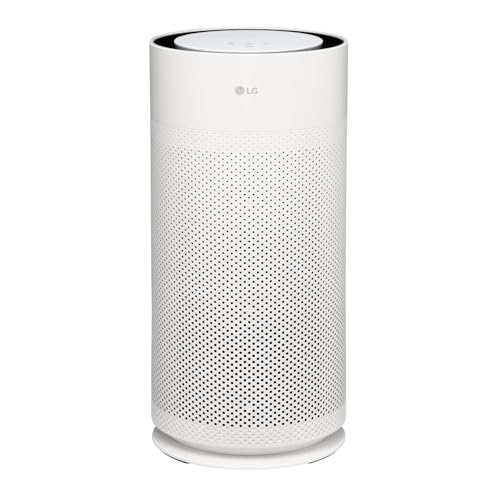
Advanced multi-stage filtration system helpt to capture fine dust and allergens such as pollen and pet dander, making it ideal for people who live in cities, humid environments, or homes where maintaining cleaner indoor air is part of everyday comfort. Designed with all-around 360° airflow to distribute clean air evenly throughout rooms up to 1,000 square feet, making it well-suited for people with open living areas, shared family spaces, apartments, and larger rooms that need consistent air circulation.
As an Amazon Associate, AirPurifierFAQ earns from qualifying purchases. Product availability, price and specifications can change.
The LG PuriCare™ AeroHit is presented as a large-room air purifier with a multi-stage filtration system and a True HEPA filter. According to the supplied product data, it is designed for spaces up to 1,000 sq ft, uses an all-around 360° airflow pattern, and includes a PM 1.0 particle sensor with an LED air quality indicator. It also offers Wi‑Fi connectivity through LG ThinQ and is described as space‑efficient and quiet, with noise down to 25 dB. The listing price and stock status are shown; other formal performance metrics (CADR, filter life, certifications) are not provided in the supplied information.
The product description positions this AeroHit for larger, open living areas — shared family rooms, open-plan apartments, and similar spaces where one purifier needs to move air throughout a wide footprint. The stated 1,000 sq ft coverage is the primary guide for fit: buyers seeking a single-unit solution for an entire living floor or a large studio will find this claim relevant. The space-efficient footprint and quieter operation also make it a reasonable consideration for apartments or multi-use rooms where floor space and noise matter. Verify your actual room dimensions and layout against the advertised coverage before relying on a single unit.
The unit is described as having an advanced multi-stage filtration system and a True HEPA filter combined with 360° airflow. A circular intake/distribution design can help reduce dead zones and spread treated air more evenly than a single-sided intake, which matters in open spaces. The PM 1.0 sensor reports very fine particulates and an LED indicator provides at-a-glance air quality feedback. The listing does not include a CADR number or a detailed breakdown of individual filter stages, so you should treat the ‘True HEPA’ claim as a high-level descriptor and, if particle-size capture efficiency is important for your needs, request the manufacturer’s specific particle-capture or test data.
The description highlights a low-noise floor — as low as 25 dB — and a smaller footprint (claimed 42% less floor space than typical 360° units). Those factors influence where you can place the unit and how intrusive it will be during sleep or work. The product listing does not specify filter lifetime, replacement part numbers, replacement cost, or typical power draw; these are central to operating cost and convenience. The LG ThinQ connectivity suggests remote control and monitoring capability, which can simplify scheduling and provide usage visibility, but confirm whether the app offers filter-change reminders and energy-monitoring features if those matter to you.
With a 360° design the unit benefits from being in a relatively open location — central in the room or on a clear surface — to let air circulate freely around it. Avoid tucking it tightly against walls or into corners where intake or outflow might be restricted. Use the LED air-quality indicator and PM 1.0 readout to judge how placement affects local readings: if levels remain elevated near a source (cooking, smoking, pets), a temporary closer placement or supplemental local ventilation may be needed. The Wi‑Fi/LG ThinQ connectivity lets you change fan speeds, schedule runs and monitor air quality remotely; check the app interface and permissions to ensure they meet your convenience and privacy expectations.
The PM 1.0 sensor measures very fine particles, which is useful for tracking sub-micron aerosols that sometimes pass other sensors. The LED air-quality indicator gives instant visual feedback, a useful feature for quick assessment without opening an app. LG ThinQ and Wi‑Fi capability allow remote adjustments and monitoring as advertised; however, the supplied data doesn’t enumerate what metrics are logged, whether historical trends are available, or how alerts are handled. If you rely on detailed air‑quality tracking or integration with a broader smart-home system, verify whether the app offers exportable data, third‑party integrations, or API access.
Likely the best fit for buyers who need a single air purifier to serve a large open-plan space (up to the advertised 1,000 sq ft), who value a compact footprint, quiet operation and remote-control convenience via Wi‑Fi. It may suit households with seasonal pollen, pet dander or urban dust concerns where broad circulation and real‑time PM1.0 feedback are useful. Those who require laboratory-verified performance numbers or detailed operating-cost forecasts should confirm missing specs before deciding.
Before buying, confirm the missing technical details that affect long-term value: CADR or equivalent test results to compare cleaning speed; the exact HEPA specification or particle-size capture rates; filter model numbers, expected filter life and replacement costs; power consumption and estimated running cost; and warranty terms. Also verify the specifics of the LG ThinQ features (what data it shows, whether it provides reminders or logs, and any smart-home integrations). If quiet operation is critical, ask how the 25 dB measurement was taken (distance and mode). Finally, check return policy and local support options.
The LG PuriCare AeroHit presents a feature set aimed at larger rooms: True HEPA filtration, 360° airflow, PM 1.0 sensing and Wi‑Fi control in a compact footprint with a low-noise claim. For buyers prioritizing a quiet, space-efficient purifier for an open-plan living area, it is a credible option based on the supplied claims. However, if you need verified performance metrics (CADR), predictable running costs (filter life and price), or specific certification details, request those data points from the seller or manufacturer before purchase.
The strongest reasons to consider it, based on the product data we have
Designed to treat spaces up to 1,000 sq ft, its 360° airflow aims to distribute cleaned air evenly across open living areas, larger rooms, and shared family spaces.
Multi-stage system with a True HEPA filter helps capture fine dust, pollen and pet dander, addressing common indoor allergens in city, humid or pet-owning households.
Built-in PM 1.0 sensor and LED air-quality indicators provide continuous particulate feedback, while Wi‑Fi with LG ThinQ lets users monitor and adjust settings remotely.
The supplied context does not state a replacement interval. Check the product manual, LG support pages, or the Amazon product listing for the manufacturer’s recommended replacement schedule and genuine replacement part numbers. Also verify whether the unit or LG ThinQ app provides filter-life alerts.
The description lists a multi-stage filtration system and a True HEPA filter but does not specify an activated carbon or VOC/odor filter. Verify the full filter specification on the official product page or manual to confirm whether it includes odor/VOC-targeting media.
CADR is not provided in the supplied context. If CADR is important to you, check the manufacturer’s spec sheet or the retailer listing for CADR numbers so you can compare performance against other models.
The listing states the purifier is designed for low-noise operation as low as 25 dB and highlights suitability for sleeping, working, or studying. For a personal comparison or exact operating noise at different fan speeds, review independent tests or customer reviews and the manufacturer’s noise specifications.
The context says LG ThinQ connectivity allows remote adjustment and air-quality monitoring from virtually anywhere. It does not specify voice assistant (Alexa/Google/HomeKit) support. Verify supported integrations and voice-control options on the product page, LG ThinQ documentation, or the user manual.
Because the unit is designed with 360° airflow and 1,000 sq ft coverage, place it in an open, central location with unobstructed space around the intake and outlet. Avoid tucking it behind furniture or in tight corners. Check the owner’s manual for any additional placement recommendations from LG.


Answers are educational and may link to relevant guides or products on this site. Product facts can change, so confirm current details before purchase.
