
01
Large‑Room Coverage
Rated for rooms up to 1,140 sq ft; third‑party testing reports it can filter 1,140 sq ft per hour and achieve five air exchanges per hour in a 228 sq ft space.

ADVANCED AIR CLEANING TECH: Combines a HEPA-13 filter that captures 99.97% of dust, pollen, smoke, mold, & other ultrafine impurities, combined with Plasma Ion Technology that projects positive and negative ions in the air allowing you to breathe easy. CLEAN AIR IN MINUTES: Filters up to 1,140 SQFT per hour, to exchange 228 SQFT 5 times per hour, allowing you to breathe cleaner air in minutes, based on 3rd party testing.
As an Amazon Associate, AirPurifierFAQ earns from qualifying purchases. Product availability, price and specifications can change.
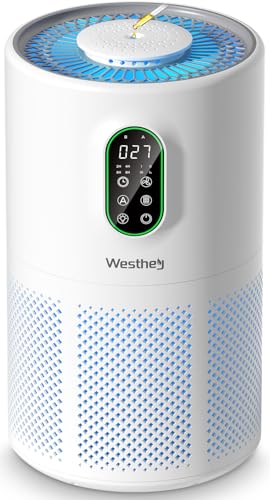
This Instant-branded air purifier combines a HEPA-13 filter, an activated carbon layer, and a marketed Plasma Ion Technology to address particles and odors in larger spaces. The manufacturer and product listing state the HEPA-13 element captures 99.97% of dust, pollen, smoke, mold and other ultrafine impurities. The unit is described as able to ‘filter up to 1,140 sq ft per hour’ — a figure the listing uses to show a 228 sq ft space could be exchanged five times per hour according to third‑party testing. Onboard sensors, an Auto Mode and a light sensor that dims displays for quieter night use are also specified.
The Instant HEPA Quiet Air Purifier is presented as a large‑room purifier that pairs a HEPA‑13 mechanical filter with an activated carbon layer and a Plasma Ion module. The product copy specifies the HEPA‑13 captures 99.97% of common particulates and the carbon layer is intended to reduce odors. The listing also highlights an Auto Mode with an air‑quality readout (percentage plus a three‑color band: white/okay/orange/poor/red) and a light sensor feature that turns off displays and lowers noise at night. These are the explicit, supply‑side claims; other performance numbers beyond those supplied are not stated in the documentation.
The combination of HEPA‑13 media and activated carbon is consistent with a two‑stage approach: mechanical removal of particles followed by adsorption of some gaseous compounds and odors. The supplier claims the unit “filters up to 1,140 sq ft per hour” and cites third‑party testing that equates that airflow to five air changes per hour in a 228 sq ft space. Those statements give a sense of intended throughput for larger, open rooms, but the listing does not provide a CADR number, fan speed breakdown, or explicit particle‑size curves. Those missing details make it harder to compare this unit head‑to‑head against purifiers where CADR and tested particle removal rates are published.
The purifier includes an Auto Mode that reportedly adjusts fan speed according to detected air quality and a digital percentage readout plus a three‑color band to indicate air status. The light sensor is described as a night feature that turns displays off and ‘lowers noise to whisper‑quiet levels’ for bedroom use. The presence of an air‑quality readout and automatic adjustment is useful for hands‑off operation, but the available information does not list specific manual fan speeds, timer options, or exact sound levels. If you depend on particular run modes or need measured decibel data for a bedroom, those points should be checked with the seller.
The product is marketed for spaces up to 1,140 sq ft (and cites the per‑hour filtration figure noted above), so it targets living rooms, open plans or shared office spaces rather than just small bedrooms. Effective placement follows general purifier practice: open area, unobstructed intake and exhaust, and away from walls or corners that impede flow. The unit uses replaceable HEPA‑13 and activated carbon media, but the listing does not state replacement interval, filter cost, or whether pre‑filters are washable. Buyers should confirm filter availability, replacement procedure and any recommended maintenance schedule before purchase to budget ongoing ownership costs.
Shoppers who want a purifier positioned for larger rooms or open layouts and who prioritize HEPA‑13 particle capture plus an activated carbon stage for odors. Also suited to buyers who value automatic air‑quality sensing and a night mode that reduces display lighting and noise — provided they verify the unit’s sound and filter‑replacement details against their needs.
Before buying, verify several items that the listing does not specify: CADR ratings for smoke, pollen and dust (for direct comparisons); measured noise levels in decibels at each fan speed; recommended filter replacement intervals and replacement part costs; and any independent ozone testing related to the Plasma Ion feature. Also ask the seller for the third‑party test report referenced for the throughput claim so you can see test conditions and methodology.
The Instant HEPA Quiet Air Purifier brings a familiar combination—HEPA‑13 particle filtration plus activated carbon and an ion‑projection module—along with automatic sensing and a night‑friendly display. The listing’s throughput claim and third‑party test reference position it as a candidate for larger rooms, but key comparative metrics (CADR, measured noise, filter life and independent ozone testing for the Plasma Ion feature) are not published in the supplied data. If those items are important to you, request the test reports and specification sheets before purchasing; if the missing details meet your acceptance threshold, the unit’s feature set is coherent for larger‑space general‑purpose use.
The strongest reasons to consider it, based on the product data we have
Rated for rooms up to 1,140 sq ft; third‑party testing reports it can filter 1,140 sq ft per hour and achieve five air exchanges per hour in a 228 sq ft space.
Includes a HEPA‑13 filter stated to capture 99.97% of dust, pollen, smoke, mold and other ultrafine particles, according to the product description.
Auto Mode monitors air quality, displays a percentage and colored light band, and automatically adjusts fan speed to respond when readings indicate poor or changing air quality.
The product page does not list a replacement interval. Filter life typically depends on usage and air quality. Verify the recommended replacement schedule and replacement part numbers on the product manual, packaging, or the retailer’s listing so you can plan replacements appropriately.
According to the listing (third‑party tested), the unit can process air for areas up to 1,140 sq ft per hour. The statement that it can exchange 228 sq ft five times per hour indicates it achieves five air changes per hour (ACH) in a 228 sq ft room. Check the detailed specs or CADR/ACH figures on the manufacturer page for exact room‑size guidance for your layout.
Auto Mode senses air quality and automatically adjusts fan speed. The digital readout shows a percent air quality and a colored light band: white for good, orange for okay, and red for poor. The unit then increases or decreases circulation to return the air quality to good.
The listing says Plasma Ion Technology projects positive and negative ions into the air to help clean it, but it does not provide safety metrics. Verify whether the unit emits ozone, any relevant safety certifications, and manufacturer guidance for use around people, children, or pets before purchase.
Yes. The Instant purifier combines a HEPA‑13 filter (listed as capturing 99.97% of ultrafine impurities) with an activated carbon layer that helps reduce odors. The product is categorized for pet use and lists removal of pet hair, pollen, dust, smoke and odors.
The page describes a "whisper‑quiet" design and a light sensor that turns off displays and lowers noise for bedtime but does not provide decibel (dB) numbers. If precise noise levels matter, check the detailed specifications or ask the seller for dB ratings at each fan speed.



Answers are educational and may link to relevant guides or products on this site. Product facts can change, so confirm current details before purchase.
