
01
Five-stage filtration system
Includes HEPA, activated carbon, TiO2 cold catalyst and UV-C lamp in a five-stage system, which the manufacturer says helps reduce airborne particles and odors.
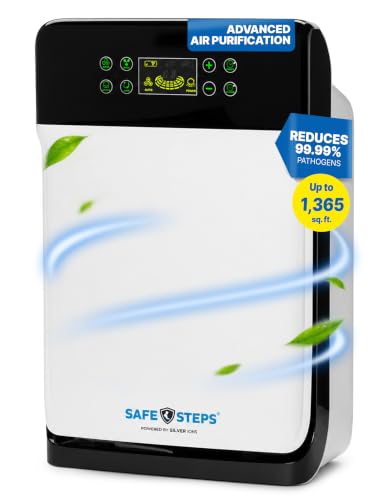
5-STAGE FILTRATION SYSTEM: Features HEPA, activated carbon, germicidal, TiO2 cold catalyst filters and UV lamp technology. This air purifier with UV light and HEPA filter helps reduce airborne particles and odors for improved indoor air quality. LARGE ROOM COVERAGE: Designed for spaces up to 1,350 sq. ft. with 180 CFM airflow and CADR average of 160. This air purifier large room solution supports consistent air circulation across offices, clinics, gyms and commercial environments.
As an Amazon Associate, AirPurifierFAQ earns from qualifying purchases. Product availability, price and specifications can change.
The Aura Wind UV-C HEPA Air Purifier is a multi-stage room air cleaner that, per the supplied product information, combines HEPA and activated carbon filtration with additional germicidal and TiO2 cold catalyst stages plus a UV lamp. The manufacturer positions it for large spaces—up to 1,350 sq. ft.—and lists an airflow of 180 CFM with an average CADR of 160. It also includes built-in air quality and particle sensors, three fan speeds, a quoted noise range of 35–65 dB, and a floor-or-tabletop design. The description indicates filters may last up to one year depending on usage.
The stated coverage of up to 1,350 sq. ft., a 180 CFM airflow figure and an average CADR of 160 place this model in the large-room category in the product literature. The vendor cites environments such as offices, clinics, gyms and other commercial or shared spaces—locations where continuous circulation and a visible air-quality indicator are often useful. Buyers should read those placement suggestions as guidance rather than a guarantee: effective air changes depend on room geometry, ceiling height, furniture layout and how many ACH (air changes per hour) you need for your specific use case.
The unit is described as a five-stage system: HEPA, activated carbon, germicidal, TiO2 cold catalyst and a UV lamp. In general terms, a HEPA stage targets airborne particles, activated carbon adsorbs many gases and odors, and cold catalyst/TiO2 stages are intended for certain volatile compounds and chemical byproducts. The UV lamp and the germicidal stage are presented as complementary technologies. The listing’s language states these elements ‘help reduce airborne particles and odors’; the exact HEPA efficiency class, carbon volume, and the specific roles or interactions of the catalyst and UV lamp are not defined in the supplied data and can materially affect performance in different scenarios.
The product lists 180 CFM airflow and a CADR average of 160. Those numbers give a general sense of throughput: higher airflow/CADR corresponds to faster removal of airborne particles in a space of a given volume. The term ‘average CADR’ suggests a summarised figure rather than CADR by particle type (smoke, dust, pollen), which is a common way manufacturers report performance. For purchasers, the useful takeaway is that the unit is targeted at larger rooms, but you should plan based on your desired ACH and consider that real-world results vary with room layout and continuous pollutant sources.
The unit includes built-in air quality and particle sensors and offers three fan speeds, giving users the ability to monitor conditions and adjust airflow. A quoted noise range of 35–65 dB accompanies the speed settings; this suggests quieter operation on lower speeds and louder on high, but the supplied data does not provide noise by individual fan speed. The chassis is described as suitable for floor or tabletop placement, which provides placement flexibility. When positioning the purifier, aim for clear intake and outlet airflow paths and avoid enclosing the unit in a tight cabinet or directly against a wall to maintain effective circulation.
The product description indicates the filters ‘can last up to one year depending on usage,’ which frames expectations for periodic replacement; however, exact replacement intervals and part numbers are not provided in the supplied data. The presence of sensors may reduce guesswork about when to increase fan speed, but they do not replace routine inspection and filter replacement. Also note the inclusion of a UV lamp: verify whether the lamp is user-replaceable, what replacement interval is recommended, and whether any safety features or interlocks are built in to prevent direct UV exposure during operation.
Buyers seeking a large-room air purifier with multiple filtration stages and on-board air-quality sensing for offices, workout areas, classrooms or open-plan spaces. It may suit users who want HEPA plus carbon filtration combined with additional germicidal and catalyst stages and a UV lamp. Consider this unit if you prioritize throughput (180 CFM and a reported CADR average of 160) and flexible placement; confirm the missing specifics below before finalizing a purchase.
Verify the HEPA efficiency rating (e.g., H13/H14) and whether CADR is specified separately for smoke, dust and pollen. Ask for explicit filter part numbers, replacement costs and whether the one-year life estimate assumes typical daily hours. Confirm UV lamp type, replacement interval, and any manufacturer guidance on UV safety and ozone emissions. Request measured noise levels at each fan speed and check the unit’s dimensions and weight for tabletop versus floor placement. Finally, check warranty details and any available documentation for sensor calibration and expected maintenance procedures.
On paper, the Aura Wind UV-C HEPA Air Purifier is aimed at larger rooms and combines several common filtration technologies with on-board sensors and a flexible form factor. The listed 180 CFM airflow and average CADR of 160 suggest it’s intended to move air at a rate suitable for open or shared spaces, and the five-stage description indicates a broad approach to particulates and gases. Before buying, insist on clarifications—HEPA rating, CADR breakdown, filter part numbers and UV-lamp details—to ensure the product meets your specific performance and maintenance expectations.
The strongest reasons to consider it, based on the product data we have
Includes HEPA, activated carbon, TiO2 cold catalyst and UV-C lamp in a five-stage system, which the manufacturer says helps reduce airborne particles and odors.
Rated for spaces up to 1,350 sq ft with 180 CFM airflow and an average CADR of 160, making it appropriate for larger offices, clinics or gyms per product data.
Built-in particle and air quality sensors plus three fan speeds and a 35–65 dB operating range support monitored control and relatively quiet daily use in shared indoor environments.
The listing says filters can last up to one year depending on usage. Replace intervals will vary with air quality and run time. Verify the recommended replacement schedule, exact filter part numbers, and whether the unit has a filter-change indicator on the product manual or seller page before buying replacements.
The product includes UV lamp technology and germicidal features, but the page doesn’t specify safety details. Verify the manufacturer’s safety information: whether the UV-C is enclosed, whether it runs continuously in occupied rooms, and any recommended precautions in the user manual.
The purifier is designed for spaces up to 1,350 sq ft and lists a CADR average of 160 with 180 CFM airflow. To understand expected air-change rates for your room, verify the manufacturer’s guidance or technical documentation that translates CADR/CFM into air changes per hour for specific room sizes.
The unit includes activated carbon in its 5-stage system and is categorized for smoke & odor purification. Activated carbon targets many odors and gaseous compounds, but the page doesn’t quantify removal efficiency. Verify performance claims for the specific types of smoke or odors you’re concerned about on the product or manufacturer specifications.
Noise is listed at 35–65 dB and the purifier offers three fan speeds. Expect lower noise at reduced fan settings and higher noise at maximum airflow, but the listing doesn’t break down dB by speed. Verify detailed noise levels per fan speed in the product manual or seller’s specifications if noise is critical.
The listing states built-in air quality and particle sensors provide awareness of indoor conditions and help users monitor air changes and adjust settings. It does not specify display types, auto-modes, or app connectivity. Verify exactly what readouts, alerts, or automatic controls are included in the product information or manual.


Answers are educational and may link to relevant guides or products on this site. Product facts can change, so confirm current details before purchase.
