
01
Real-Time Filter Monitoring
TrueFilter IQ technology automatically tracks filter performance in real time and refreshes monitoring daily, helping avoid premature replacements and reduce wasted spend.
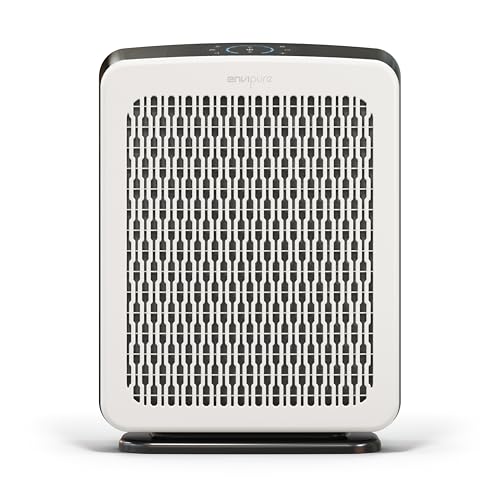
HIGH-EFFICIENCY HEPA FILTRATION: Transform your home into a sanctuary of clean air. EnviPure intelligent HEPA filter air purifiers feature an indoor air quality monitor, and capture up to 99.5% of airborne particles as small as 0.3 microns, including dust, pollen, smoke, pet dander, and more. Suitable for rooms as large as 2200 sqft (at 1 air change per hour) or 456 sqft (4.8 air change per hour). SMART FILTER ALERTS WITH TRUEFILTER IQ: Maximize filter life and stop wasting money on premature replacements. EnviP...
As an Amazon Associate, AirPurifierFAQ earns from qualifying purchases. Product availability, price and specifications can change.
The EnviPure EP-300 is presented as a large-room HEPA air purifier with an emphasis on long filter life and built-in air-quality sensing. According to the supplied product information it uses a HEPA filter rated to capture up to 99.5% of particles down to 0.3 microns, offers manufacturer-stated coverage figures (up to 2,200 sq ft at one air change per hour or 456 sq ft at 4.8 air changes per hour), and includes a TrueFilter IQ system that monitors filter performance in real time. The listing also cites a large 13" x 16" filter, an EnergyStar-related energy-efficiency claim, touchscreen controls and a reported maximum noise figure of 55.4 dB.
The vendor positions the EP-300 for large open spaces: the published coverage numbers resemble two different performance targets (one air change per hour at 2,200 sq ft, and a higher air-change example of 4.8 per hour for about 456 sq ft). Those distinctions matter: larger spaces can be treated if you accept a lower air exchange rate, while higher exchange rates—useful for allergy relief or smoke removal—apply to much smaller rooms. If you need frequent air turnover (for heavy smoke, chemical sources, or medically necessary rapid clearance) confirm the intended air-change rate for your room size before relying on the stated coverage figures.
The EP-300 is described as using a HEPA filter that captures up to 99.5% of particles as small as 0.3 microns. That specification indicates a focus on removing common particulates such as dust, pollen, pet dander and some smoke aerosols. The listing does not provide an industry-standard CADR (Clean Air Delivery Rate) figure or a specified HEPA class (for example H13 or H14), so you cannot directly compare the unit’s throughput against other models without additional data. The stated room-area figures imply moderate total airflow; if you need high air exchange for rapid clearing, seek CADR or measured air-flow numbers from the seller.
The EP-300 emphasizes reduced replacement frequency through a physically larger 13" x 16" filter and manufacturer-supplied TrueFilter IQ monitoring that reportedly tracks filter performance in real time and refreshes daily. Those features are designed to help avoid premature changes, though the listing does not include an expected filter lifetime in months or hours, nor filter pricing. The product description also notes energy efficiency relative to EnergyStar requirements and quotes a maximum noise level of 55.4 dB; both are relevant to running cost and livability, but the concrete electricity consumption and typical operating noise across fan speeds are not supplied. Expect to verify replacement-filter cost and estimated lifetime to judge ongoing expense.
The EP-300 is described as having a slim footprint with touchscreen controls and a neutral aesthetic intended to blend into domestic spaces. The unit is marketed as lightweight and easy to move, but specific dimensions and weight are not provided in the supplied material. Placement matters for any purifier: position it where airflow is unimpeded—away from tight corners, not behind furniture—and near the source of pollutants if possible. If you plan to use the unit in a bedroom or nursery, consider the quoted 55.4 dB top-end noise figure against your tolerance for sound; quieter operation typically requires running at lower fan speeds.
The manufacturer highlights TrueFilter IQ as a real-time filter-life monitoring system and calls out automatic daily refresh of filter monitoring. In practice, an on-board monitoring system can be useful to avoid guesswork about replacement timing, provided it is reliable and the replacement indicator reflects actual loading rather than a fixed timer. The listing does not state whether the system uses particle-counting sensors, pressure-drop sensing, or an algorithmic estimate, so confirm how the monitor determines remaining useful life. Also verify the availability and cost of replacement filters and whether the indicator can be reset if you temporarily remove or clean a prefilter.
Shoppers who want a HEPA-based purifier intended for large, open rooms and who value on-board filter-life monitoring and a physically larger filter element. It may suit people seeking a balance of perceived quiet operation (55.4 dB at max) and energy-conscious design, provided they confirm throughput metrics and replacement-filter economics before buying.
Before purchase, verify three things the listing does not fully specify: (1) CADR or measured airflow at each fan speed so you can compare cleaning speed against other models; (2) the HEPA grade (H13/H14 or equivalent) and the expected filter lifetime and replacement cost; and (3) full product dimensions, weight and warranty terms to ensure placement and support expectations. Also ask how TrueFilter IQ determines filter life (sensor type or algorithm) and whether there are additional smart features, mobile apps, or firmware updates.
The EnviPure EP-300 presents as a HEPA air purifier targeted at larger rooms and emphasizes filter-life management with its TrueFilter IQ system and a relatively large filter element. The listing supplies useful indicators—particle capture at 0.3 microns, room-coverage examples, a 13" x 16" filter size, EnergyStar-related efficiency claims and a quoted 55.4 dB top noise level—but omits CADR, HEPA class, explicit filter-life figures and full physical specs. If those gaps matter to you, request CADR, certified HEPA classification, replacement-filter cost and warranty details before purchasing.
The strongest reasons to consider it, based on the product data we have
TrueFilter IQ technology automatically tracks filter performance in real time and refreshes monitoring daily, helping avoid premature replacements and reduce wasted spend.
Rated to cover up to 2,200 sq ft at one air change per hour, with a 456 sq ft rating at 4.8 air changes per hour, per product data.
True HEPA filtration captures up to 99.5% of airborne particles down to 0.3 microns, addressing pollen, dust, smoke, pet dander and other common household particulates.
The EP-300 is rated for up to 2,200 sq ft at 1 air change per hour. The listing also notes coverage of 456 sq ft at 4.8 air changes per hour. Actual coverage depends on desired air changes per hour for your space and room layout/ventilation.
TrueFilter IQ tracks filter performance in real time and automatically refreshes its monitoring daily to help avoid premature replacements. The context doesn’t specify how alerts are shown (LED, display, app, etc.), so check the product manual or listing for the exact alert method and replacement guidance.
The EnviPure HEPA filter captures up to 99.5% of airborne particles as small as 0.3 microns. The listing explicitly calls out dust, pollen, smoke, pet dander, and similar particles.
On the maximum setting the unit runs at 55.4 dB. The product is described as ultra-quiet and suitable for bedrooms, nurseries, or offices where noise sensitivity matters. If you need a direct audible comparison, verify in-person or with an official sound-level chart.
The unit uses a large 13" x 16" HEPA filter designed for extended use. The listing does not give a specific replacement interval; rely on the TrueFilter IQ monitoring and consult the manufacturer’s instructions or product manual for the recommended replacement schedule.
The listing states the EP-300 exceeds Energy Star requirements for low power usage, indicating energy-efficient operation. The exact power draw (watts) or operating cost is not provided here—verify the detailed specifications or the product manual for precise power consumption figures.


Answers are educational and may link to relevant guides or products on this site. Product facts can change, so confirm current details before purchase.
