
In brief: Air Purifier Too Big for Room: no, oversizing is fine. A bigger unit cleans faster and runs quieter on lower speeds. Clear, sourced answers from AirPurifier
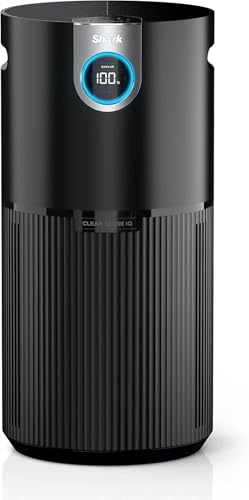
Short answer: No — an air purifier cannot damage a room simply by being rated for a larger area. Oversizing is usually a matter of cost, noise and inefficiency rather than safety. Match the purifier’s CADR (or converted CFM) to your room volume and desired air changes per hour (ACH) to avoid unnecessary expense and excessive fan noise.
Why an oversized purifier isn’t usually harmful
Filtration and clean-air circulation are scaleable: a larger unit moves more air and will remove particles faster. That extra capacity is a performance advantage in many situations (open-plan spaces, wildfire smoke events, or when you need rapid clearing). It does not create a toxic or structural risk to a room.
The real tradeoffs are practical. A much higher-capacity unit costs more to buy and run, generates more noise at high fan speeds, and can use more electricity and replacement filters. In some room layouts an aggressively directed exhaust can create uncomfortable drafts or poor mixing if the device is poorly placed.
How to tell if a purifier is actually “too large” for your needs (quick checklist)
- Find the unit’s CADR (manufacturers or spec sheet). If CADR is given in m³/h, convert to CFM: 1 m³/h ≈ 0.5886 CFM.
- Calculate required CADR for your room using the steps below. If the unit’s CADR is substantially higher than required for the ACH you want, it’s likely over‑specified.
- If the purifier spends most time at low speed after the room clears, or its lowest speed is still noisy/drafty, consider running it on a lower setting, moving it, or replacing it with a smaller model next time.
Sizing and calculation: pick the right CADR (step-by-step)
Use CADR (in CFM) and ACH rather than advertised square footage. Square‑foot ratings are often simplified and assume a specific ceiling height and ACH.
- Measure the room volume: length × width × ceiling height = cubic feet (ft³).
- Decide how many air changes per hour (ACH) you want. Common targets: 2–3 ACH for general continuous use, 4–6 ACH for bedrooms or allergy relief, and higher (6–12+) for rapid clearing or smoke events.
- Calculate required CADR (CFM): Required CADR = (Room volume × ACH) ÷ 60.
- If CADR is given in m³/h, convert: CFM ≈ (m³/h) × 0.5886.
Example: 12 ft × 15 ft room with 8 ft ceiling = 1,440 ft³. For 5 ACH: CADR = (1,440 × 5) ÷ 60 = 120 CFM. A purifier with CADR ≈120 CFM is appropriate; a unit at 240 CFM would clear air twice as fast but may be unnecessary for continuous operation.
Example using a listed product
The Afloia Europa lists CADR 280 m³/h in its specs. Converting: 280 m³/h ≈ 280 × 0.5886 ≈ 165 CFM. At 5 ACH that covers roughly (165 × 60 ÷ 5) ≈ 1,980 ft³ — about a 247 ft² room with 8 ft ceilings. That illustrates how CADR/CFM gives a clearer picture than a lone “square‑foot coverage” number.
Common misunderstandings
- “Bigger equals better” — not always. Bigger clears air faster but can be overkill for steady-state needs and brings noise and cost penalties.
- Square‑foot coverage on a box often assumes a single ceiling height and a modest ACH; it’s a convenience label, not a guarantee for every room layout.
- Placing a high‑capacity unit in a tight corner or behind furniture reduces its effective performance; airflow patterns matter as much as rating.
Practical implications and what to do if your unit is over‑specified
- Lower fan speed: If your purifier reaches desired air quality quickly, run it on low or an auto mode to save energy and cut noise.
- Placement: Put the unit where it can intake and exhaust freely (a few feet from walls, away from obstructions) to avoid dead zones and drafts.
- Use timers/modes: Timers, night or sleep modes, and auto sensing reduce unnecessary high‑speed runtime.
- Filter costs: Higher airflow models may require larger or more expensive filters. Factor replacement costs into the “too big” decision.
- Return or swap: If noise or draft is disruptive and you’re within return policy, consider exchanging for a lower‑capacity model sized to your room.
When oversizing is helpful or necessary
Choose a higher‑capacity purifier if you need fast clearing (post‑cooking, wildfire smoke, high indoor emissions), you have an open-plan area, or you want extra margin for multiple sources of pollution. For continuous background filtration in a small closed bedroom, a smaller unit set to the appropriate CADR for the desired ACH will usually be quieter and more economical.
Related questions
Will an oversized air purifier make the room “too windy” or noisy?
It can if you run it at high speed in a small room. Many units have lower-speed or quiet modes that reduce airflow and noise; adjusting speed or moving the unit farther from seating/sleeping areas usually eliminates drafts and reduces perceived noise.
Can I just run a bigger purifier on low speed to save energy?
Yes. Running a larger unit on low can be efficient—if the fan motor is designed to run quietly and efficiently at low speeds. However, very large units may have a higher minimum airflow and still produce more noise than a smaller model at its low setting.
Do advertised square‑foot coverage numbers mean the same as CADR?
No. Coverage numbers are simplifications. CADR (and resulting ACH calculations) provide a reproducible engineering basis to match a purifier to your room volume. See the calculation steps above for a reliable method.
How do I convert CADR listed in m³/h to CFM?
Multiply m³/h by about 0.5886. Example: 280 m³/h × 0.5886 ≈ 165 CFM.
Sources and further reading
- U.S. Environmental Protection Agency — Indoor Air Quality: Filtration and Air Cleaners (https://www.epa.gov/indoor-air-quality-iaq)
- Association of Home Appliance Manufacturers (AHAM) — information on CADR and certification (https://www.aham.org)
- Peer‑review literature and reviews on indoor filtration and ventilation (search PubMed for recent reviews: https://pubmed.ncbi.nlm.nih.gov/?term=air+filtration+indoor+air)
Sources: Air Purifier Too Big for Room
To keep our Air Purifier Too Big for Room information accurate, we rely on independent references such as the EPA’s Guide to Air Cleaners in the Home, AHAM Verifide CADR data and manufacturer spec sheets. See how we evaluate air purifiers and our editorial policy for details.
