
Fel d 1 is the primary protein allergen produced by cats that becomes airborne when it binds to tiny skin flakes (dander), saliva residues and dust.
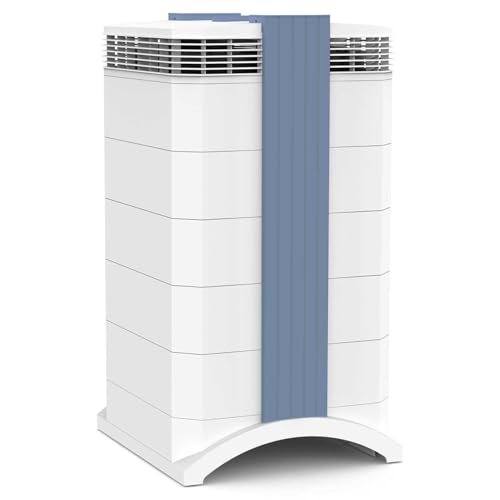
Why Fel d 1 matters when buying an air purifier
Because Fel d 1 travels on small particles, the practical route to reducing airborne exposure is particle filtration, not scent-masking or chemical adsorbents alone. A purifier with true HEPA filtration can capture the particle-bound allergen; fan capacity and room coverage determine how quickly the purifier reduces airborne load. Pre-filters, vacuuming and source measures (grooming, restricted pet zones) lower the input that the purifier must handle.
How to interpret Fel d 1 measurements
Laboratories report Fel d 1 in a few common ways: airborne concentration (often in nanograms per cubic metre, ng/m3) or as mass per gram of settled dust sampled from surfaces. Higher numeric values indicate more Fel d 1 present, but there are no universal single-number health thresholds to apply — values are comparative and useful for tracking changes or comparing rooms.
- If you get a report, confirm whether the sample was airborne or settled dust and what units were used.
- Ask the lab whether reported values are adjusted for sampling duration/volume (airborne) or dust mass (settled samples).
- Use pre- and post-intervention sampling to judge relative reduction rather than relying on a single absolute number.
Concrete examples (illustrative only)
These example values are for orientation, not medical guidance:
- Airborne: 0.2 ng/m3 — low in many comparative studies.
- Airborne: 2 ng/m3 — moderate.
- Airborne: 20 ng/m3 — high relative to the examples above.
If a home test shows substantially elevated numbers, the actionable steps are the same: increase air changes (larger/faster purifier or multiple units), confirm the purifier uses true HEPA, and increase cleaning frequency. Repeat sampling can show percent reduction achieved by a given setup.
Filtration and specifications to prioritize
- True HEPA filter: captures particle-bound allergens. Verify the manufacturer specifies HEPA (not just “HEPA-type” or “HEPA-like”). For technical context see HEPA: What It Means for Air Purifiers.
- CADR and room sizing: choose a model whose CADR or recommended room size matches the volume you need to treat; higher CADR gives faster removal — learn how to size a unit at CADR: What It Means for Air Purifiers.
- Filter maintenance: replace according to manufacturer guidance and monitor loading in homes with pets; heavily loaded pre-filters reduce HEPA effectiveness if not cleaned or changed.
- Avoid relying on: ionizers or ozone-generating devices as primary solutions; they do not substitute for mechanical particle capture. See Ionizer: What It Means for Air Purifiers and Ozone (O3): What It Means for Air Purifiers.
Related terms every shopper should know
- Micron — particle size units; Fel d 1 typically binds to particles in the respirable range.
- MPPS — most penetrating particle size, relevant to filter efficiency claims.
- MERV — rating for whole-house HVAC filters that can reduce dander in central systems.
Common mistakes and misconceptions
- Assuming any product labeled “for pets” removes Fel d 1 — always confirm true HEPA performance and credible test data.
- Using a small unit in a large room or relying solely on spot-cleaning; sizing and source control matter.
- Expecting instant elimination — particle-bound allergens settle and re-aerosolize; consistent air changes and cleaning are necessary.
Buying checklist and sample questions
- Checklist: true HEPA, CADR matched to room volume, filter replacement interval/cost, verified CADR or third-party tests, noise at intended fan speed.
- Questions to ask retailers or labs: “Does this model use a certified/true HEPA filter?” “What CADR or room coverage do you recommend for X sq ft?” “Do you have particle-removal test data?” “Are lab results airborne (ng/m3) or from settled dust?”
For broader context on sizing and model selection, see our guide to Best Air Purifiers by Room, Need and Budget, and general care tips at Air Purifier FAQ: Every Question Answered.
Sources for “Fel d 1: What It Means for Air Purifiers?”
To keep our answer to “Fel d 1: What It Means for Air Purifiers?” accurate, we rely on independent references such as the EPA’s Guide to Air Cleaners in the Home, AHAM Verifide CADR data and manufacturer spec sheets. See how we evaluate air purifiers and our editorial policy for details.
