


In brief: Honeywell vs Levoit Air Purifier: honeywell vs Levoit compared side by side: CADR, noise, filters, running costs and features, with a clear winner for each.
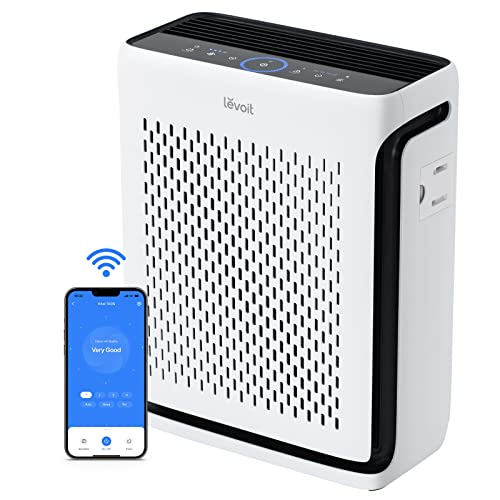
Quick verdict — winner by use
Honeywell HPA830W wins for bedroom and medium-room use where quiet operation, an integrated VOC sensor/air-quality indicator, sleep mode and an aromatherapy tray are priorities. Levoit Core 600S‑P wins for extra‑large rooms, open plans or whole‑apartment coverage where high CADR (391 CFM) and rapid air turnover matter. Both are AHAM‑verified in their product texts; choose by the room size and features you need.
At-a-glance comparison
| Specification | Honeywell HPA830W (Honeywell) | Levoit Core 600S‑P (Levoit) |
|---|---|---|
| Brand / Model | Honeywell HPA830W (Designer Series) | Levoit Core 600S‑P |
| Listed coverage | 900 sq ft (circulates 1×/hr); 190 sq ft up to 4.8×/hr (product text) | 2,933 sq ft (product text); example: 606 sq ft every 12.4 minutes |
| CADR | 391 CFM | |
| Filter / Filtration | HEPA filter; captures up to 99.97% of microscopic airborne allergens and particles (product text) | 3‑stage filtration; 99.97% filtration efficiency for 0.1–0.3 µm (product text) |
| Smart / Auto features | Auto Mode, Sleep Mode; VOC sensor and air quality indicator (product text) | Auto Mode; AirSight Plus Technology sensor (product text) |
| Special features called out | 360° intake; UltraQuiet Technology; essential‑oil tray; VOC sensor and air quality indicator; AHAM Verifide (product text) | VortexAir Technology 3.0; AirSight Plus sensor described as twice as accurate as an infrared laser; AHAM Verifide (product text) |
| AHAM / independent testing | Independently tested and AHAM Verifide for the stated circulation examples (product text) | AHAM Verifide (explicitly called out in product text) |
| Price: check the current price on Amazon. | Check the current price on Amazon. | Check the current price on Amazon. |
| Best-fit use cases (from product text) | Bedroom, medium–large rooms; quiet operation; VOC sensing; optional aromatherapy | Extra‑large rooms, open floor plans, whole‑apartment purification, fast turnover needs |
| Notes / Missing specs to check | CADR: Not listed; noise dB: Not listed; replacement filter cost: Not listed. | Noise dB: Not listed; replacement filter cost: Not listed. |
One-line takeaway: Honeywell is positioned as a quiet, bedroom‑friendly HEPA purifier with VOC sensing and aromatherapy; Levoit is positioned as a high‑CADR workhorse for very large spaces and rapid whole‑room turnover.
How the two actually differ — feature deep dive
Coverage and airflow (practical effect)
Both product descriptions give an explicit coverage claim, but they point to different uses. Honeywell’s text presents two circulation examples: it will circulate and filter room air up to 4.8× per hour in a 190 sq ft room, and it will circulate 900 sq ft once per hour. Those two numbers show the unit is intended for bedrooms and medium‑to‑large rooms when you want multiple air exchanges per hour or single‑pass circulation in a larger space.
Levoit’s description states a much larger coverage: 2,933 sq ft per hour (and a concrete example of 606 sq ft every 12.4 minutes). Levoit also supplies a CADR figure — 391 CFM — which aligns with the brand’s emphasis on fast turnover in open or multi‑room layouts.
Practical decision: if you need to refresh air in a whole living area, basement or connected open plan, the Levoit’s higher stated coverage and the 391 CFM CADR make it the better choice according to the maker’s listing. If your primary need is a bedroom or a single medium room where quieter operation, sleep features and VOC sensing matter, the Honeywell better matches that need.
Filtration effectiveness
Both product texts claim HEPA‑class performance. Honeywell’s listing says the HEPA filter captures up to 99.97% of microscopic airborne allergens and particles and highlights particle types such as dust, pollen, pet dander and smoke. Levoit’s features state a 3‑stage filtration system with 99.97% efficiency specifically for 0.1–0.3 µm particulates. The Levoit copy also uses the term “3‑stage filtration,” while Honeywell focuses on HEPA capture plus a 360° intake.
Because Levoit provides the particle‑size band and Honeywell focuses on the HEPA capture percentage and real‑world examples (smoke), treat both as capable HEPA options — the difference is more about coverage throughput (how much air they move) than raw filtration media performance.
Sensors, intelligence and modes
Honeywell highlights an integrated VOC sensor and an Air Quality Indicator that the product text says illuminates so you can see air quality from across the room. It also calls out Auto Mode and Sleep Mode, and “UltraQuiet Technology.” That combination is clearly engineered for someone who wants the purifier to respond to indoor air chemistry (TVOCs) and to stay unobtrusive in a bedroom setting.
Levoit emphasizes its AirSight Plus Technology sensor and calls it twice as accurate as an infrared laser (that phrasing is from the product text). It also supports Auto Mode and positions the sensor as providing sensitive inputs that let the purifier adjust fan speed automatically. The Levoit pitch therefore emphasizes automated, high‑accuracy particulate monitoring tied to its rapid airflow performance.
Noise and sleep use
Honeywell explicitly calls out UltraQuiet Technology and Sleep Mode, positioning it for bedroom use. Numeric noise levels (dB) are not listed for either model, so we cannot compare measured noise from the product texts alone. If low measured noise is a decisive factor for you, look for manufacturer dB numbers or third‑party measurements before you buy.
Special conveniences
Honeywell includes an essential‑oil tray for optional aromatherapy (product text). The Honeywell text also highlights a 360° intake design and specific messaging about reducing wildfire smoke. Levoit highlights VortexAir Technology 3.0 and gives operational examples (turnover times); it also calls out AHAM verification and its AirSight Plus sensor’s accuracy.
Price and value
The maker’s listings position the Honeywell as a mid‑priced HEPA unit with bedroom‑focused features and the Levoit as a higher‑coverage unit whose premium correlates to larger coverage and higher CADR. Filter replacement costs, expected filter life, and energy use are not listed, so you cannot calculate total cost of ownership from the product texts alone.
Who should pick Honeywell HPA830W
- You mainly need a bedroom or medium room purifier that emphasizes quiet operation and sleep mode.
- You want an air quality indicator and a VOC sensor built into the unit so the purifier responds to chemical pollutants as well as particles.
- You value an aromatherapy option (essential‑oil tray) and a 360° intake design.
- You want a capable HEPA purifier at a lower price point — check the current price on Amazon.
Who should pick Levoit Core 600S‑P
- You need to cover very large rooms, open floor plans, high ceilings, or multiple connected spaces — the product text states up to 2,933 sq ft per hour.
- You prioritize fast air turnover and a documented CADR (391 CFM) that drives throughput in larger volumes.
- You want a purifier that Levoit presents as AHAM Verifide for large‑area performance and that emphasizes a sensitive particle sensor (AirSight Plus).
- You’re willing to pay more for greater coverage and throughput — check the current price on Amazon.
Decision scenarios — pick by specific needs
If you sleep with the purifier in the bedroom
Honeywell’s UltraQuiet Technology, Sleep Mode, VOC sensor and visible air‑quality indicator are explicit product features tailored to bedroom use. The Honeywell listing calls out the unit as “the ideal bedroom air purifier,” which matches buyers who need low profile operation and chemical‑sensing in a sleep environment.
If you want whole‑apartment or living‑room coverage
Levoit’s claims (2,933 sq ft per hour and 391 CFM CADR) position it for larger‑space use. The listing includes an example turnover time (606 sq ft every 12.4 minutes), which indicates the unit moves a lot of air — useful in open plans or when you want faster particle removal across larger volumes.
If wildfire smoke is a concern
Honeywell’s text specifically calls out that HEPA purifiers can help reduce smoke particles and mentions wildfire smoke and odor control in the features. Levoit’s description refers to high filtration efficiency for fine particulates (0.1–0.3 µm). Both units present HEPA‑class performance; choose based on whether you need faster whole‑space turnover (Levoit) or a quiet, bedroom‑oriented solution that emphasizes smoke reduction (Honeywell).
Known limitations — what to verify before you buy
- Noise levels: Neither product listing includes numeric dB measurements. Honeywell claims “UltraQuiet Technology” but no dB figures are listed. If measured noise is a decisive factor, consult manufacturer specs or third‑party tests that list dB at different fan speeds.
- Honeywell CADR: The Honeywell HPA830W listing does not include a CADR number. Do not assume CADR parity; Levoit supplies 391 CFM.
- Filter replacement cost and expected lifetime: Both listings omit filter life and replacement cost. Running costs cannot be calculated from the product texts alone.
- Power consumption and size footprint: These details are not listed. If wall plug placement, energy use or physical footprint matter, check the manufacturer spec sheet.
- Accessory fitment: The site lists a CoreCarbon pre‑filter product designed to fit Honeywell models HPA030 & HPA030B. That accessory does not claim fitment for the HPA830W in the maker’s listing; do not assume compatibility across Honeywell models without checking.
- Health claims: The product texts describe filtration efficiency and particle capture; do not infer medical treatment, cures or prevention beyond the manufacturer’s filtration statements.
Side‑by‑side practical checklist before checkout
- Confirm the room area you want to treat and compare it to the coverage numbers: 900 sq ft (Honeywell, 1×/hr) vs 2,933 sq ft (Levoit, 1×/hr claim).
- If you need faster turnover for a given space (more exchanges per hour), use the example numbers: Honeywell gives 4.8×/hr in 190 sq ft; Levoit gives a 12.4‑minute turnover example for 606 sq ft.
- Ask the seller or check the spec sheet for CADR or dB if these numbers are decisive — Levoit lists CADR (391 CFM); Honeywell’s listing does not.
- Check filter part numbers and replacement cost from the manufacturer; neither product text includes replacement prices.
- For bedroom purchase, verify sleep‑mode noise figures; Honeywell advertises UltraQuiet and Sleep Mode but without dB values.
Choose if — quick selection prompts
Choose Honeywell HPA830W if
- You mainly need a bedroom or medium‑room purifier that emphasizes quiet operation and sleep mode.
- You want an air quality indicator and a VOC sensor built into the unit.
- You like the option to use an essential‑oil tray for light aromatherapy.
- You want a mid‑priced HEPA purifier — check the current price on Amazon.
Choose Levoit Core 600S‑P if
- You need to cover very large rooms, open floor plans, or multiple connected spaces (the product text states coverage up to 2,933 sq ft).
- You prioritize fast air turnover and a provided CADR (391 CFM) that supports high throughput.
- You want a purifier presented as AHAM Verifide for large‑area performance with a sensitive particle sensor (AirSight Plus).
- You are willing to pay more for greater coverage and airflow; check the current price on Amazon.
Final notes and next steps
Both units are described as AHAM‑verified in their product texts and both claim high HEPA‑class filtration. The meaningful practical differences are coverage and throughput (Levoit high; Honeywell moderate) versus bedroom‑focused features and VOC sensing (Honeywell).
If you want more comparisons across brands or room recommendations, see our comparison hub and buying guides: Air Purifier Comparisons and Best Air Purifiers by Room, Need and Budget. For broader brand comparisons see Air Purifier Brands Compared.
Affiliate links
Both models are strong in the contexts above; use the product pages to check local availability, current street prices and any additional technical specs (noise dB, filter part numbers, replacement cost) before purchase. (Affiliate links to both products are provided on the product modules embedded on this page.)
Sources: Honeywell vs Levoit Air Purifier
To keep our Honeywell vs Levoit Air Purifier information accurate, we rely on independent references such as the EPA’s Guide to Air Cleaners in the Home, AHAM Verifide CADR data and manufacturer spec sheets. See how we evaluate air purifiers and our editorial policy for details.
