
In brief: Air Purifier vs Air Scrubber: air scrubbers are job-site machines for renovation and mold remediation; air purifiers are for daily home use.
TL;DR
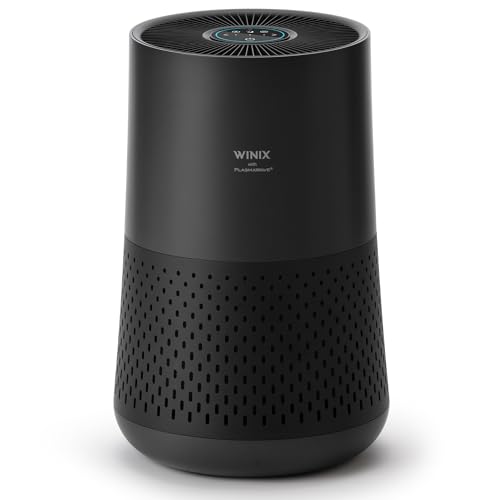
Air purifiers are consumer-grade units intended for continuous use in living spaces to remove particles and reduce odors (HEPA + activated carbon, CADR/room guidance). Air scrubbers are higher-airflow, rugged machines made for temporary jobsite or remediation use—built to move much more air quickly during renovation, smoke or water/fire restoration.
What is an air purifier?
An air purifier is a consumer device designed for continuous indoor operation to reduce airborne particles and common odors. Typical home units rely on staged filtration—prefilter for large debris, true HEPA for particles and activated carbon for gases/odors—and are sized to rooms using CADR or recommended room coverage.
Core definition and purpose
Air purifiers are sold and marketed primarily for steady, day‑to‑day use in occupied spaces: bedrooms, living rooms, offices and classrooms. They aim to lower the concentration of airborne particles such as dust, pet dander, pollen and many smoke particles. Many models also include activated carbon or specialty media to adsorb volatile organic compounds (VOCs) and reduce odors.
Typical components and what each does
Most consumer air purifiers use a three‑stage approach:
- Prefilter: captures hair, large dust and extends life of the HEPA stage.
- True HEPA filter: mechanically captures a very high fraction of particles down to 0.3 microns—useful for allergens and many smoke particles.
- Activated carbon: porous media that adsorbs many gases and odors. The effectiveness depends on carbon volume and contact time.
How performance is expressed
Manufacturers typically state CADR (clean air delivery rate), recommended room coverage, or ACH (air changes per hour). CADR gives a practical measure of particle removal at a given fan speed; room coverage tells you the size of space the manufacturer expects a unit to handle. For occupied rooms, choose a purifier whose CADR or stated room size matches your intended coverage at realistic fan settings for continuous use.
Common problems a purifier solves
Air purifiers are the standard choice for asthma/allergy symptom management (non-medical, symptom reduction through particle removal), routine smoke events (kitchen smoke, occasional wildfire haze), pet odors, and reducing dust loads in living spaces—especially when run continuously at appropriate fan settings.
What is an air scrubber?
An air scrubber is an industrial‑style, high‑airflow machine intended for temporary placement during construction, restoration, and remediation. Its design emphasizes CFM and durability with stackable housings and modular filter stages so it can quickly process large volumes of air under heavy contaminant loads.
Definition and operational role
Air scrubbers are commonly used on jobsites for renovation dust control, remediation after fires or floods, mold remediation, and anywhere a rapid reduction in airborne contamination is needed. They are designed to run for shorter durations but move far more air than consumer purifiers, making them effective for evacuating dust and particles from large rooms or buildings.
Typical filter stages and mechanical features
Scrubbers often accept multiple stages: MERV‑rated prefilters for large debris, HEPA modules for fine particle capture, and activated carbon modules for gases or odors. Mechanically they prioritize rugged housings, stackability (to combine CFM), duct compatibility, integrated handles and outlets, and electrical features suitable for jobsite use (GFCI outlets, resettable breakers).
Deployment patterns
Scrubbers are typically used temporarily and moved between rooms or stacked to increase total throughput. Their strength is processing a high cubic‑foot volume per minute (CFM) rather than running quietly for continuous living‑space comfort.
How do they work: a technology primer?
Purifiers use smaller fans and staged filters to quietly move air through media optimized for capture (HEPA) or adsorption (carbon). Scrubbers use much larger fans and wider filter paths—trading quiet, continuous comfort for brute‑force airflow and rapid turnover. The mechanisms for capture are common; design emphasis differs.
Filtration mechanisms: particles versus gases
Particle capture is primarily mechanical: particles collide with or are intercepted by fibers in HEPA or other mechanical filters. The effectiveness depends on fiber density, media depth and airflow speed. Gaseous contaminants require adsorption—activated carbon or specialized chemisorptive media—because gases pass through mechanical filters.
Fan design and airflow (CFM) differences
Consumer purifiers optimize for lower noise and continuous operation, so they use smaller fans and ducted paths that maintain reasonable CADR at lower power. Scrubbers emphasize high CFM; they use larger motors and open paths to move a room‑scale volume quickly. Higher airflow reduces residence time in the filter, so scrubbers often use larger media beds or multiple staged filters to preserve capture efficiency at those speeds.
Noise, power and duty cycle trade‑offs
Lower noise is fundamental for home purifiers because occupants need to sleep and live near them; that constrains fan size and therefore air throughput. Scrubbers accept higher noise and duty cycles because they operate in unoccupied or temporary work zones, prioritizing rapid contaminant removal over quiet operation.
Containment and ducting
Scrubbers frequently support ducting to isolate and direct airflow—useful for negative‑pressure setups during remediation. Consumer purifiers are usually free‑standing, without duct hookups, and are not designed to create room negative pressure for containment.
Side‑by‑side comparison
| Attribute | Air Purifier (consumer) | Air Scrubber (industrial/jobsite) | Example product from site |
|---|---|---|---|
| Intended purpose | Continuous cleaning of occupied living spaces (allergies, daily dust, odors) | Temporary, high‑load cleaning: renovations, remediation, fire/water damage | ALORAIR HEPA Air Scrubber (jobsite scrubber) and Air Scrubber Mobile by Aerus |
| Typical filtration | Prefilter + True HEPA + activated carbon | MERV prefilter + HEPA modules + carbon stage optional | ALORAIR: 3‑stage (MERV‑10, carbon, HEPA); Aerus: ActivePure tech and other media |
| Airflow focus | CADR / room coverage, moderate CFM suitable for continuous use | High CFM (hundreds to thousands when stacked) for rapid volume processing | ALORAIR: adjustable 270–550 CFM (per unit), stackable up to 3 units |
| Noise and comfort | Designed for low noise at normal settings | Louder; noise accepted because used in unoccupied zones or temporarily | ALORAIR unit weight ~39.6 lb; designed for portability, not quiet comfort |
| Portability | Compact and lightweight; easy to place in living areas | Robust housings with handles and stackability; moved between job sites | ALORAIR: rotomolded LLDPE shell, handle, stackable horizontally and vertically |
| Typical buyers | Homeowners, renters, small offices | Restoration companies, contractors, serious DIY renovation projects | ALORAIR marketed for repairs, construction, restoration; Aerus marketed as portable |
| Typical cost | Consumer price range (lower entry point; many models under $500) | Often higher unit cost for industrial grade; rental common | ALORAIR (two SKUs) and Aerus Mobile |
| Usage pattern | Continuous 24/7 or many hours/day | Temporary runs during projects; moved and stacked as needed | ALORAIR: filtration area stated as 5,500 cubic feet and max airflow 550 CFM |
Notes on the table: Where product specifics aren’t listed on the site, consult the maker’s listing. The ALORAIR scrubber listings include stated CFM ranges, stackability and filter stages; the Aerus Air Scrubber Mobile lists coverage up to 500 sq ft and uses branded ActivePure technology.
How do I choose: decision framework & flowchart?
Choose by matching the problem to the device: for chronic, occupied‑space filtering choose a consumer air purifier sized to room CADR; for acute, high‑load events or large volume work choose scrubbers (or rental) prioritized for high CFM and rugged temporary deployment.
Stepwise decision framework
- Identify the problem type: daily pollens/dust/odors versus project/remediation (renovation dust, heavy smoke, post‑fire/water debris).
- Confirm occupancy: will people be present continuously? If yes, favor quieter purifiers for occupied spaces; if area will be vacated during cleaning, scrubbers are acceptable.
- Estimate space and required air changes: calculate room volume (sq ft × ceiling height). For ongoing control, aim for a purifier that achieves recommended ACH at typical fan settings. For remediation, estimate required CFM to achieve multiple air changes quickly.
- Decide on logistics: do you need portability between rooms, stackability, ducting or negative pressure? Scrubbers support these; consumer purifiers usually do not.
- Factor maintenance and lifecycle costs: consumer HEPA and carbon cartridges are smaller and often simple to replace; scrubbers use larger, sometimes more expensive modules—rental can be cost‑efficient for one‑off jobs.
- Check safety and features: avoid ozone‑producing modes in occupied spaces; ensure electrical and jobsite features (GFCI) are present for scrubbers.
Decision flowchart (textual)
Use this as a quick branching guide:
- If the problem is everyday (allergies, pets, cooking odors, occasional smoke) → pick a consumer air purifier sized to the room CADR/coverage.
- If the problem is one‑time or episodic but large (home renovation, mold remediation, post‑fire or water damage) → use an air scrubber (or rent multiple units) to rapidly move air and filter heavy loads.
- If you need containment (negative pressure) or ducting → scrubber with duct capability.
- If noise and continuous proximity to people matter → purifier; if temporary heavy cleaning in unoccupied rooms matters → scrubber.
Real‑world scenarios and recommendations
Below are common situations and the practical device choices you should consider. Each scenario explains why one device is preferable and what configuration or operational detail matters most.
1. Bedroom for seasonal allergies
Scenario: You wake with congestion during spring and want lower pollen/dust exposure overnight. Recommendation: true HEPA consumer purifier sized to the bedroom floor area and ceiling height. Run the purifier continuously at a medium or high setting for several hours before sleep to lower particle levels; keep doors and windows closed during high pollen times.
Practical notes: Aim for a unit whose CADR for pollen/dust matches the bedroom area so you achieve at least 4–5 ACH when sleeping. Use a purifier with an easy‑accessible filter for regular replacement; consider a model with an auto mode using a particle sensor.
2. Persistent cooking odors and small apartment
Scenario: Frequent frying leaves lingering smells in an open kitchen/living area. Recommendation: consumer purifier with a substantial activated carbon bed alongside HEPA. For open-plan spaces, use a unit designed for the full combined area or two smaller units distributed.
Practical notes: Activated carbon capacity matters. Smaller carbon loads saturate quickly; replace or regenerate as recommended. Run higher fan speeds during and after cooking for 30–60 minutes to reduce odors.
3. Wildfire smoke in a house
Scenario: Temporary but intense smoke infiltration from nearby wildfires. Recommendation: For occupied areas, a high‑CADR consumer purifier (or several placed in main living areas) is appropriate to maintain livable indoor air quality. For whole‑house remediation or if smoke has deeply penetrated finishes, consider professional scrubbers and HVAC filtration upgrades temporarily.
Practical notes: Smoke particles include very fine fractions; a true HEPA stage is critical. Run units continuously and seal the building envelope where possible. If the smoke event is short‑term, a consumer purifier may suffice; for severe, prolonged events or if combined with soot on surfaces, assess scrubber use and professional cleaning.
4. Renovation dust during a kitchen remodel
Scenario: Demolition and sanding produce large amounts of dust and debris across multiple rooms. Recommendation: Air scrubbers placed in the work zone, possibly stacked or ducted, to rapidly remove airborne dust. For adjacent occupied rooms, run consumer purifiers as a complement to capture residual particles in living areas.
Practical notes: Use containment (plastic sheeting) and negative pressure if extensive demolition occurs. Scrubbers move large volumes and keep dust from migrating; consumer purifiers struggle with the scale and tend to clog prefilters rapidly if used alone in the work zone.
5. Post‑fire restoration
Scenario: Fire damaged part of a home, leaving smoke residue and odors. Recommendation: Professional remediation typically uses industrial air scrubbers in conjunction with surface cleaning and HVAC interventions. Homeowners should not rely on a single consumer unit to manage the complex mix of particulate and gaseous residues.
Practical notes: Scrubbers with carbon stages help reduce odors; multiple scrubbers or stacked units are common. For occupied nearby spaces, use consumer purifiers to reduce particle levels while remediation proceeds. Consider professional assessment for structural or HVAC contamination.
6. Mold remediation after water damage
Scenario: A flooded basement has mold growth and visible spores. Recommendation: Certified remediation often requires scrubbers to control airborne spores during removal and drying. Scrubbers with HEPA modules and negative‑pressure setups prevent spore spread; consumer purifiers can be helpful in occupied adjacent rooms but are not substitutes for containment and professional cleanup.
Practical notes: Do not run small consumer units in the affected room during active remediation unless they are part of a containment strategy approved by a professional. HEPA capture is necessary but not sufficient if remediation protocols and protective measures are not followed.
7. Small office or classroom wanting continuous improvement
Scenario: An office with regular occupancy seeks continuous reduction in particle load. Recommendation: Consumer purifiers sized for the room and distributed to ensure no area is starved of clean air. For larger open areas consider multiple units or upgrading building HVAC filtration (MERV 13 or better where feasible).
Practical notes: For continuous occupancy, choose quiet models with proven CADR and maintenance simplicity. Check for certified test data (CADR) and factor in filter replacement frequency when budgeting.
Product callouts from the site
Below are three product entries on this site that illustrate how scrubbers and portable units are presented. They are listed with the product facts provided by the retailer—use these details when comparing models or deciding on rental versus purchase.
ALORAIR Air Scrubber HEPA with 3‑Stage Filtration
What the listing states: This ALORAIR scrubber uses a 3‑stage filtration system (MERV‑10 prefilter, carbon filter, and HEPA rated to trap 99.97% of particles ≥0.3 microns). The unit offers adjustable airflow in the 270–550 CFM range, a filtration area stated at 5,500 cubic feet, rotomolded LLDPE housing, and stackability (up to three units can be daisy‑chained to increase combined airflow).
Why it represents a scrubber: Its adjustable high CFM, stackability and heavy‑duty housing are typical of machines intended for repairs, construction and restoration where rapid, large‑volume processing is needed. The product listing also notes jobsite features like GFCI auxiliary outlets and an indicator for filter replacement. (Product URL: ALORAIR HEPA Air Scrubber.)
ALORAIR Air Scrubber with 3‑Stage Filtration
What the listing states: Similar to the unit above, this ALORAIR model lists the same filtration stages and a maximum airflow of 550 CFM. The listing emphasizes heavy‑duty operation and stackability, and notes a 10‑year limited warranty. It is marketed for wildfire smoke remediation among other use cases. (Product URL: ALORAIR Air Scrubber 3‑Stage.)
Air Scrubber Mobile by Aerus
What the listing states: Branded as a portable “Air Scrubber Mobile,” the product lists ActivePure Technology and coverage up to 500 sq ft, making it suitable for dorm rooms, small offices and personal spaces. The product description includes an O3 Boost function and adjustable intensity settings. (Product URL: Aerus Air Scrubber Mobile.)
Note of caution: the product description includes an O3 Boost function; ozone modes and ozone‑generating features should be used strictly according to manufacturer guidance and avoided in occupied spaces unless explicitly recommended by qualified authorities for specific applications.
Maintenance, costs, and common pitfalls
Maintenance and operating cost vary significantly between purifiers and scrubbers. Purifiers typically have lower recurring filter costs and simpler replacements; scrubbers use larger filters and media with higher per‑filter cost, although rental can be economical for short jobs.
Filter life and replacement patterns
Consumer HEPA and prefilters: expect prefilters to be washable or replaced every 3–6 months depending on loading; HEPA cartridges commonly every 6–18 months depending on use. Carbon cartridges vary widely—high odor or smoke exposures shorten life considerably.
Scrubber modules: MERV and HEPA modules used in scrubbers are larger and can be more costly. Heavy dust loads and continuous high‑CFM runs will shorten life; keep spare prefilters on hand for dusty jobs to protect HEPA modules.
Operational cost considerations
- Electricity: higher for scrubbers due to larger fans and motors; factor runtime when comparing ongoing costs.
- Filter replacements: scrubber HEPA modules can be expensive—budget accordingly or consider rental for single jobs.
- Labor: scrubbers may require setup for stackability, ducting and negative pressure; include labor in cost assessment.
Common mistakes and how to avoid them
- Using a consumer purifier to try to handle a whole‑house renovation without containment—result: rapid filter clogging and inadequate performance. Fix: use scrubbers in the work zone and consumer purifiers for occupied adjacent rooms.
- Buying a purifier with insufficient CADR for the intended room. Fix: calculate room volume and choose a unit whose CADR achieves the desired ACH at realistic settings.
- Assuming “HEPA‑like” or “HEPA‑style” is the same as true HEPA. Fix: prefer units labeled “True HEPA” or HEPA‑H13/H14 for critical particle capture; check manufacturer claims carefully.
- Using ozone modes or ozone‑producing devices in occupied spaces. Fix: avoid ozone modes for routine occupied use and follow manufacturer guidance when an ozone function exists.
Next steps (soft shopping guidance)
Start by defining the problem you need to solve: ongoing indoor allergies or a one‑time renovation? Use the decision framework above to decide purifier versus scrubber. For one‑time remediation, check local rental options for industrial scrubbers; for ongoing household needs, review consumer purifiers by CADR and filter type.
Practical checklist before buying
- Measure room area and calculate volume (sq ft × ceiling height).
- Decide desired ACH (typical targets: 2–5 ACH for general comfort, higher for smoke/allergy concerns).
- Pick devices sized to achieve those ACH at realistic fan settings; if in doubt, choose slightly larger capacity or multiple units for even distribution.
- Check filter types and replacement costs—factor in a year of replacement costs when budgeting.
- If tackling a renovation or remediation, consult professionals and consider renting scrubbers rather than purchasing expensive modules you won’t use often.
For curated recommendations and model comparisons, see our Best Air Purifiers by Room, Need and Budget page (/best/) and the calculators on the Free Air Purifier Calculators and Tools page (/tools/) to estimate required CADR and ACH for your space.
Further reading (site resources)
- CADR Explained: How to Read Air Purifier Ratings
- Air Purifier Filter Types Explained
- Air Quality in a New or Renovated Home
- Air Purifier Filter Replacement Guide
Soft callout: If you need a household solution for continuous use, look at consumer purifiers with true HEPA and substantial carbon media on our Best page. If you face renovation, wildfire smoke infiltration, or restoration work, consider renting or buying a jobsite air scrubber like the ALORAIR HEPA scrubber listings above; compare costs versus rental for your job duration.
Sources: Air Purifier vs Air Scrubber
To keep our Air Purifier vs Air Scrubber information accurate, we rely on independent references such as the EPA’s Guide to Air Cleaners in the Home, AHAM Verifide CADR data and manufacturer spec sheets. See how we evaluate air purifiers and our editorial policy for details.
