
air purifier for rv and camper shoppers need clear rules for size, filters, and placement. This guide explains what actually helps and how to pick a unit that fits a small, moving space.
As an Amazon Associate, AirPurifierFAQ earns from qualifying purchases. We link to the live listing so you always see the current price.
Our picks for air purifier for rv and camper
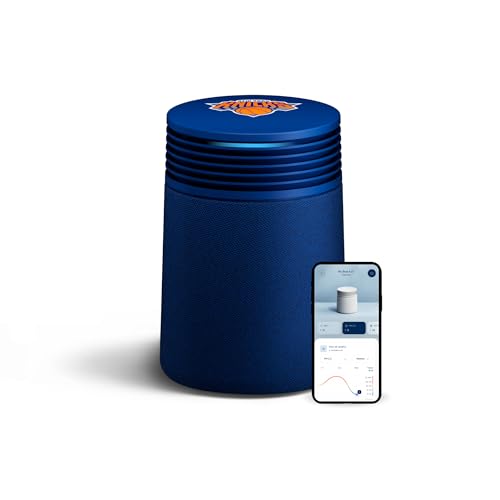
BLUEAIRBLUEAIR x NY Knicks Air Purifiers for Home up to 1,190 Ft²,…Covers up to 1,190 sq ft · HEPABLUEAIR SP1i fits owners who want HEPA coverage plus app control and auto operation for larger RV layouts.Check today’s price on Amazon LevoitLevoit Smart Air Purifiers for Home Large Room up to 2933 Ft²,…Covers up to 2,933 sq ftLevoit Core 600S-P suits very large motorhomes or multiroom campers needing high coverage and auto mode.Check today’s price on Amazon
 CowayCOWAY Airmega Halo HEPA Air Purifier for Pets & Allergy, AP-1526D(W), WhiteCovers up to 1,898 sq ft · HEPACoway Airmega Halo AP-1526D is for larger open-plan RVs that need reliable HEPA filtration across more square footage.Check today’s price on Amazon
 Rabbit AirRabbit Air A3 SPA-1000N HEPA Air Purifier, Toxin Absorber, BlackCovers up to 1,070 sq ft · True HEPA + Activated CarbonRabbit Air A3 SPA-1000N is a top pick when you need True HEPA plus activated carbon for particles and odors.Check today’s price on Amazon
 IQAirIQAir HealthPro Plus XE Air Purifier HyperHEPA WiFi, Large Rooms 1125 sq…Covers up to 1,125 sq ft · True HEPAIQAir HealthPro Plus XE fits users who want True HEPA filtration with Wi‑Fi and an air quality sensor for monitoring.Check today’s price on Amazon
The specific problem and what actually helps
RVs and campers are small, tight spaces. As a result, odors, dust, pet dander, and smoke can feel stronger than in a house. Also, air exchanges with the outside are limited when windows and vents are closed. A good air purifier reduces airborne particles and some odors by moving cabin air through effective filters.
True filtration helps most. For example, a True HEPA filter captures very small particles like dust and pollen. In addition, an activated carbon stage adsorbs many odors and volatile organic compounds (VOCs). Finally, a purifier with decent airflow and a proper placement will actually clean the cabin air instead of just moving it around.
For more background, see the U.S. EPA’s guide to air cleaners in the home.
How to size an air purifier for RV and camper use (CADR rule)
Size matters more in small spaces. Use a simple rule: aim for a CADR in cubic feet per minute (cfm) roughly two thirds of the room area in square feet. For example, if your RV living area is 150 sq ft, look for a unit with about 100 cfm CADR.
This rule gives a solid air exchange rate without oversizing the unit. However, if you smoke inside or have severe odors, consider a higher CADR to clear air faster. Also, if your camper layout includes separate sleeping and living areas, calculate the largest contiguous space and size for that area.
Filter types that matter here
Filters determine what the purifier actually removes. Because space is limited, choose filters that handle the mix of particles and odors you expect.
- True HEPA: This is essential for particles such as dust, pollen, and pet dander. It captures very small particles that settle slowly in a closed cabin.
- Activated carbon: This stage helps with odors, cooking smells, and many common VOCs. In an RV, odors concentrate quickly, so carbon can make a big difference.
- Pre-filters: These trap larger particles and extend the life of HEPA and carbon stages. They are useful because RVs often have more dust from travel.
Finally, note that some manufacturers label HEPA differently. Prefer units that explicitly say “True HEPA” when you need certified particle removal. In addition, confirm the product lists carbon or odor control if smells are a priority.
Noise, running cost, and practical trade-offs
Noise matters a lot in an RV because the cabin is compact and close to sleeping areas. Also, many owners run purifiers at night, so low noise on the lowest settings is important. Look for models with a low-noise or sleep mode when you want quiet operation.
Running cost has two parts: electricity and filter replacement. Smaller units draw less power, and that helps when you rely on batteries or shore power. Also, HEPA and carbon filters need periodic replacement. As a result, check filter life and how easy it is to buy replacements before you commit to a model.
Finally, balance is key. A very quiet unit may have lower airflow. Instead, choose a purifier that offers multiple speed settings so you can run faster when needed and quieter when sleeping.
Placement tips and installation advice
Placement affects performance more than you might think. For best results, place the purifier where airflow is not blocked. For example, avoid tucking it under a table or behind a couch. Instead, position it near the center of the living area or in the aisle so air can circulate freely.
If your RV has a kitchen, run the purifier near the cooking area while cooking to reduce odors and grease particles. In addition, if your unit has directional outlets or inlets, face them to allow intake from one side and exhaust toward an open area.
Also, secure the unit when traveling. Some purifiers can tip or slide during transit. Fasten or stow the purifier so it won’t move, and keep filters dry to prevent mold if moisture is present.
Common mistakes to avoid
- Buying too small: A tiny purifier may look convenient, but it won’t exchange enough air in a 200+ sq ft RV space.
- Ignoring carbon filters: If you cook, have pets, or use strong cleaners, skip models without activated carbon.
- Blocking airflow: Many people place purifiers in cabinets or corners. Instead, keep them in open space for best circulation.
- Forgetting filter cost: Replacement parts matter. Check filter availability before you buy.
- Assuming quiet equals effective: Low noise may mean low airflow. Instead, compare speed settings and CADR equivalents.
Short look at recommended models and who each suits
Below are five models that work well in many RV and camper situations. Each entry lists coverage, filter type, and smart features when available. Choose the one that matches your cabin size and priorities.
- BLUEAIR x NY Knicks Signature SP1i – Coverage: 1,190 sq ft. Filter type: HEPA. Smart features: App Control, Auto Mode. This unit suits owners who want app control and a model rated for large coverage. Because it lists HEPA and app controls, it works well in bigger rigs with living areas that need automatic adjustments.
- Levoit Core 600S-P – Coverage: 2,933 sq ft. Filter type: (manufacturer lists filtration but not specified here). Smart features: Auto Mode. This high-coverage model fits very large motorhomes or multiroom setups. However, confirm the exact filter stages if carbon is required for odors.
- COWAY Airmega Halo AP-1526D(W) – Coverage: 1,898 sq ft. Filter type: HEPA. Smart features: none listed. This unit is a strong choice for RVs with larger open floor plans. Also, its HEPA filtration helps with common airborne particles.
- Rabbit Air A3 SPA-1000N – Coverage: 1,070 sq ft. Filter type: True HEPA + Activated Carbon. Smart features: none listed. This model is ideal if you want both True HEPA particle removal and activated carbon for odors. In addition, its coverage is well matched to common camper living areas.
- IQAir HealthPro Plus XE – Coverage: 1,125 sq ft. Filter type: True HEPA. Smart features: Wi-Fi, Air Quality Sensor. This purifier fits users who want True HEPA filtration plus built-in air quality sensing and Wi-Fi for remote monitoring. Also, its coverage suits most RV cabins.
Final tips and checklist before you buy
Finally, use this quick checklist before picking a unit. First, measure your main cabin floor area in square feet. Second, calculate the CADR target (two thirds of area in cfm). Third, confirm the unit has True HEPA if particles are your main concern. Fourth, add activated carbon if you need odor control. Fifth, check noise levels and filter replacement intervals.
Also, think about where you’ll run the purifier during travel and when plugged in at campsites. As a result, choose a balance of CADR, filter types, and noise that fits how you live and travel in your RV or camper.
Not sure what size you need? Our free size calculator tells you the right CADR for your room in 30 seconds.
Frequently asked questions
How do I calculate the right size for my RV?
Measure the main cabin floor area in square feet. Then target a CADR (cfm) of about two thirds of that number. For example, a 150 sq ft area needs roughly 100 cfm CADR for good air exchange.
Do I need activated carbon in an RV?
Yes, activated carbon helps with cooking smells, fuel odors, and many VOCs found in cabins. If you frequently cook or have pets, choose a purifier with a carbon stage in addition to HEPA.
Will a purifier remove mold spores?
A True HEPA filter captures many airborne mold spores. However, filters won't fix moisture problems. As a result, control humidity and ventilation in addition to using a purifier.
Can I run an air purifier while driving?
You can run most purifiers while driving if they are secured and plugged in. However, ensure the unit is fastened so it cannot tip or slide during transit.
How often should I replace filters in an RV?
Replacement depends on use, dust levels, and filter types. Check manufacturer guidance and inspect filters regularly. Because RVs can be dustier, you may need to replace pre-filters more often.
Black Friday and Cyber Monday 2026: see our hand-picked air purifier and filter deals.
