
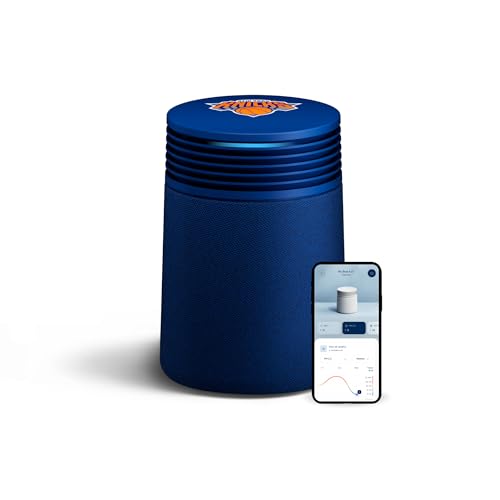
air purifier for home with newborn and pets is a common search for families who want cleaner indoor air. This guide explains what actually helps, how to size a unit, what filters matter, and which models suit different rooms and needs.
As an Amazon Associate, AirPurifierFAQ earns from qualifying purchases. We link to the live listing so you always see the current price.
Our picks for air purifier for home with newborn and pets
BLUEAIRBLUEAIR x NY Knicks Air Purifiers for Home up to 1,190 Ft²,…Covers up to 1,190 sq ft · HEPABLUEAIR Signature SP1i fits families who want app control and automatic adjustments for medium-to-large open spaces.Check today’s price on Amazon CowayCOWAY Airmega Halo HEPA Air Purifier for Pets & Allergy, AP-1526D(W), WhiteCovers up to 1,898 sq ft · HEPACoway Airmega Halo suits homes needing very large coverage across open plans where pets roam freely.Check today’s price on Amazon
 LevoitLEVOIT Smart Air Purifiers for Home Large Room Up to 1733 Ft²…Covers up to 1,733 sq ftLevoit Core 400S-P is for families who want one large-capacity unit to serve a big living area rather than many small purifiers.Check today’s price on Amazon
 Rabbit AirRabbit Air A3 SPA-1000N HEPA Air Purifier, Toxin Absorber, BlackCovers up to 1,070 sq ft · True HEPA + Activated CarbonRabbit Air A3 SPA-1000N fits homes where both True HEPA particle removal and activated carbon odor control are important.Check today’s price on Amazon
 IQAirIQAir HealthPro Plus XE Air Purifier HyperHEPA WiFi, Large Rooms 1125 sq…Covers up to 1,125 sq ft · True HEPAIQAir HealthPro Plus XE serves families who want precise particle removal plus Wi‑Fi and an air quality sensor for feedback.Check today’s price on Amazon
air purifier for home with newborn and pets: the real problem and what helps
If you have a newborn and pets you face three common indoor issues: pet dander and hair, odors from fur and litter or crates, and fine particles like dust that settle on toys and surfaces. Also homes with pets can have more tracked-in pollen and small particles. What actually helps is continuous filtration that removes airborne particles and an activated carbon stage that reduces smells. A good purifier does not stop shedding or replace cleaning, but it reduces airborne particles that float near breathing zones.
In addition, ventilation and frequent vacuuming with a HEPA-filter vacuum also cut particles in the room. However, cleaning alone is not enough because microscopic particles stay airborne for hours. As a result, an air purifier that runs steadily helps keep airborne particle levels lower over time because it continually cycles room air through a HEPA filter.
For more background, see the U.S. EPA’s guide to air cleaners in the home.
how to size a unit: the CADR rule you can use
Sizing matters more than features. Use this simple CADR rule: CADR (in cfm) should be about two thirds of the room area in square feet. For example, for a 150 sq ft nursery you want roughly 100 cfm CADR. Also you should check manufacturer CADR ratings for smoke, dust, or pollen and pick the number that matches the particle type you care about most.
In addition, consider how often you want full air changes. If you want 4 to 6 air changes per hour in a nursery, pick a unit rated for that room volume. However, manufacturers sometimes list square-foot coverage rather than CADR. When they list coverage, match it to your room size and add 10–20% for open floor plans or adjoining spaces. Finally, if the baby spends time in multiple rooms, plan for one purifier per main living area or a higher-capacity model placed where the family spends the most time.
filters that matter here: True HEPA and activated carbon
True HEPA filters trap at least 99.97% of particles 0.3 microns in size, which includes pet dander and many fine dust particles. In addition, activated carbon filters adsorb odors and volatile organic compounds (VOCs) that come from pet urine, cleaning products, and furniture. Both stages are helpful for homes with newborns and pets because they address particles and smell.
Also consider a pre-filter to catch hair and large fibers so the HEPA stage lasts longer. However, avoid relying on electrostatic-only filters if you want consistent capture of fine particulates. Finally, check replacement schedules and filter availability because frequent changes increase running costs and maintenance work.
noise, running cost, and practical operation
Noise matters in a nursery because newborns sleep often and light sleep can be disrupted. Look for models with quiet low-speed operation or a sleep mode. Also some purifiers are quieter at the same airflow because of better fan design, so read the decibel ratings if available. In addition, running a purifier continuously on low is usually quieter and still effective because it provides constant air circulation.
Running cost includes filter replacements and electricity. Filters with larger surface area tend to last longer, and units with low power fans cost less to run. However, no matter the model, expect to replace the HEPA and carbon stages periodically. Finally, reduce waste by using pre-filters that can be cleaned or vacuumed instead of replaced when possible.
placement tips and nursery-specific advice
Place the purifier near the baby’s main sleeping or play area but keep it at least 2–3 feet from walls and furniture so airflow is not blocked. Also avoid placing the unit directly next to the crib because any appliance should be kept at a safe distance from bedding and cords. Instead put the purifier on a stable surface at crib height or higher so clean air circulates through the breathing zone.
If pets sleep in the same room, place the purifier between the pet area and the baby when possible, because direct airflow from pet to baby can carry shed dander. In addition, run the unit continuously to prevent peaks of particles after pet playtime. Finally, clean the pre-filter weekly if hair accumulates, and vacuum the room regularly to help the purifier work more efficiently.
mistakes to avoid
- Buying too-small units: don’t rely on a purifier rated for a much smaller area; it won’t lower airborne particle levels in the nursery.
- Placing the purifier behind furniture: this cuts airflow and cuts CADR effectiveness.
- Ignoring filter changes: clogged filters reduce airflow and increase noise, so follow replacement instructions.
- Relying only on ozone-generating devices: these are not recommended for infant rooms and can irritate sensitive airways.
- Using noisy high settings at night: instead use quiet continuous settings or sleep modes to balance performance and rest.
recommended models and who they suit
Below are five models that fit families with a newborn and pets. Each entry notes coverage and what the filters or smart features provide. Also these picks cover a range of coverage sizes for small nurseries to large open living areas.
BLUEAIR x NY Knicks Air Purifiers for Home up to 1,190 Ft², Signature SP1i (BLUEAIR)
This model lists coverage up to 1,190 sq ft and uses a HEPA filter. Also it includes app control and an auto mode for hands-free operation. It suits families who want smart control and coverage for a medium-to-large open space, and it works well when you need continuous automatic adjustment.
COWAY Airmega Halo HEPA Air Purifier for Pets & Allergy, AP-1526D(W) (Coway)
Coway’s model lists coverage up to 1,898 sq ft and uses a HEPA filter. It is a fit when you want a high-coverage unit for large living areas or multi-room open plans, and it suits households where pets move freely between spaces. However, confirm that the CADR matches your main room’s needs before relying on it for a small nursery.
LEVOIT Smart Air Purifiers for Home Large Room Up to 1733 Ft² Core 400S-P (Levoit)
Levoit’s model lists coverage up to 1,733 sq ft. It is a good match for families who need a single large-capacity purifier for open-plan main rooms. Also if you prefer a brand known for practical home designs, this model fits a family that wants wide coverage rather than many small units.
Rabbit Air A3 SPA-1000N HEPA Air Purifier, Toxin Absorber, Black (Rabbit Air)
Rabbit Air lists coverage up to 1,070 sq ft and specifies True HEPA plus activated carbon. As a result it’s a strong option if you want both particle removal and odor control from pet areas. It suits parents who want a quieter, well-rounded unit with explicit carbon filtration to manage smells.
IQAir HealthPro Plus XE Air Purifier HyperHEPA WiFi, Large Rooms 1125 sq ft (IQAir)
IQAir lists coverage up to 1,125 sq ft and uses True HEPA with Wi‑Fi and an air quality sensor. It suits families who want high-performance particle removal plus feedback about air quality. In addition, the sensor feature helps you see when particle levels rise after pet activity so you can adjust fan speed.
Finally, choose a model that matches your room size and lifestyle: use smaller quiet units for a nursery and larger or central units for open living areas. Also run purifiers continuously and follow filter maintenance for steady benefits.
Not sure what size you need? Our free size calculator tells you the right CADR for your room in 30 seconds.
Frequently asked questions
How many air purifiers do I need with a newborn and pets?
One purifier per main living area is a good rule. Also place a quiet unit in the nursery and a larger unit in open living spaces if pets spend time there. Finally, consider an extra unit if your home has several separate rooms where the baby spends time.
Should I run the purifier all night in the nursery?
Yes — running continuously on low or sleep mode is best because it provides steady filtration without loud noise. In addition, continuous operation prevents peaks of particles after pet activity or cleaning.
Are activated carbon filters necessary with pets?
Activated carbon helps reduce pet-related odors and some VOCs, so it is useful if smells from litter boxes, bedding, or crates are a concern. However, carbon does not capture particles, so pair it with a True HEPA stage for full benefit.
How often should I replace filters in a home with pets?
Filter life depends on pet hair and activity, but check the manufacturer’s recommended schedule and inspect the pre-filter often. Also clean washable pre-filters weekly if hair builds up, and replace HEPA and carbon elements as advised to keep airflow and performance steady.
Can air purifiers remove pet hair?
Air purifiers remove airborne hair and dander but will not stop shedding on furniture and floors. Also regular vacuuming and grooming help reduce the amount of hair that becomes airborne, which makes the purifier more effective.
Black Friday and Cyber Monday 2026: see our hand-picked air purifier and filter deals.
