

Quick reader problem (one-line answer)
Should you buy a portable air purifier or upgrade the central HVAC filter to make the air in your home cleaner? This page shows which is better for specific use cases, with clear tradeoffs and a side-by-side comparison of representative products.
Quick verdict (winner-by-use)
Winner-by-use (50 words): For targeted, room-level removal of particles and common odors, the portable Coway Airmega 150 is the better choice—it’s designed to clean a single room quickly, combines HEPA and carbon, and runs independently of HVAC. For continuous whole-house baseline filtration, the AprilAire 413 MERV‑13 HVAC replacement filter is the practical winner.
Side-by-side spec table (real product examples)
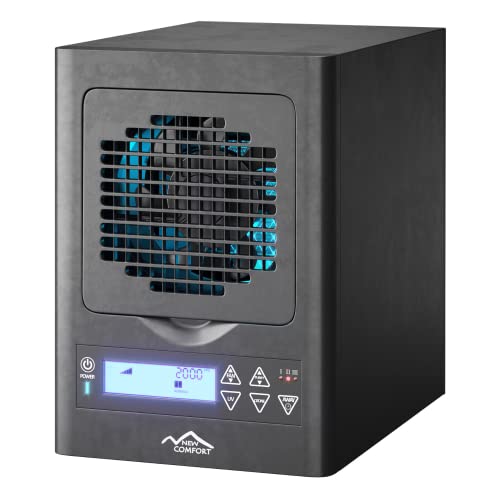
| Feature | Coway Airmega 150 (portable purifier) | New Comfort BL3000 (whole‑home / ozone‑capable) | AprilAire 413 (HVAC replacement filter) |
|---|---|---|---|
| Type / Intended use | Portable room air purifier (Airmega 150) | Whole‑space purifier / ozone generator (marketed for wide area) | Replacement filter for whole‑house HVAC systems (MERV 13) |
| Coverage claimed | Designed to clean up to 518 sq ft in 30 minutes; 1,035 sq ft in 60 minutes | Capable of purifying air in spaces up to 3,000 sq ft | Fits whole‑house HVAC systems; coverage depends on system airflow |
| Filter / technology | HyperCaptive system: HEPA + Carbon + Washable filter | 6 stages: Washable HEPA, UV (270 nm), activated ozone generator, TiO2 photocatalytic, charcoal, negative ion | MERV 13 filter media (AprilAire 413) |
| Notable operational features | Auto mode with air quality monitoring; cartridge filter design; touch display | 5-speed fan; adjustable ozone output 0–1,500 mg/hr; remote control; UV light | Engineered for airtight fit in AprilAire systems; designed for up to 12‑month filter life |
| Maintenance / life | Cartridge design simplifies replacement/cleaning (replacement interval Not specified in the available facts) | Includes washable HEPA; user-adjustable ozone output (service and maintenance specifics not fully listed) | 12‑month filter life recommended; designed for fewer replacements and reduced strain on HVAC system |
| Safety / special notes | Standard portable purifier features and consumer safety expectations (no ozone listed) | Contains an ozone generator; product warnings specify use in unoccupied spaces only and P65 warning; not legal for shipment to California | Presented as a system filter; performance claims include removal percentages reported from testing (per product features) |
| Price (as listed) | $189.99 | $329.99 | $60.99 (current price listed) |
What these products illustrate about the difference between air purifiers and HVAC filters
At a high level, the distinction is about scale and placement.
- Portable air purifiers (example: Coway Airmega 150) are room‑focused devices designed to increase the number of times the air in a defined room is exchanged and passed through high‑grade filtration. They are useful where people spend concentrated time—bedrooms, living rooms, home offices—and when you want higher local clean‑air rates than the central system provides.
- HVAC filters (example: AprilAire 413) are installed in a central air handler and filter the air that passes through the household ductwork. They provide continuous, whole‑house baseline filtration whenever the system is running. The reach is wide, but the local exchange rate in a single room depends on the HVAC fan schedule and duct airflow.
- Some whole‑home devices combine multiple technologies (example: New Comfort BL3000) and are marketed for very large coverage. These can include active chemistries such as ozone—effective for certain odors but carrying regulatory and safety caveats. Such units are not the same as a standard HEPA filter and require careful use and understanding of limitations.
Types of contaminants and how each option addresses them
Different technologies target different contaminant classes; choice depends on what you want to reduce.
- Particles (dust, pollen, pet dander, many aerosols): HEPA filtration is the standard for removing airborne particles. The Coway lists HEPA in its HyperCaptive system; the New Comfort includes a washable HEPA stage; the AprilAire 413 is MERV 13 and is presented as removing a large share of common allergens.
- Odors and gases (VOCs, cooking smells, smoke odors): Activated carbon or charcoal media are commonly used. The Coway includes carbon in its cartridge; the New Comfort includes charcoal and a photocatalytic stage. Central HVAC filters typically do not include significant carbon unless specified as a combined media product.
- Special or active treatments: UV, photocatalytic oxidation, negative ions or ozone appear in some whole‑home units. Those can extend capability but add complexity and, in the case of ozone, significant safety concerns (see below).
Safety note: ozone and whole‑home “multi‑stage” units
The New Comfort BL3000 is included here as an illustrative whole‑house unit that incorporates an ozone generator and a number of active stages. The supplied product facts include clear warnings: it has adjustable ozone output up to 1,500 mg/hr, an explicit “use in unoccupied spaces only” instruction, and a California Proposition 65 warning. It also cannot be shipped to California.
Ozone generators are not recommended as a general household solution for continuous occupied‑space air cleaning. If you are evaluating products that produce ozone, treat them as specialty devices for controlled, temporary use (following the manufacturer’s safety instructions), not as a substitute for filtration that can be used continuously in occupied rooms.
How to decide: coverage target, contaminants, and operational constraints
Answer three simple questions to narrow the choice.
- Where do you need cleaner air? If it’s one or a few rooms where people spend most of their time, a portable purifier that’s properly sized for that room is the fastest way to increase clean‑air exchanges. If you want continuous baseline reduction across an entire house, a high‑quality HVAC filter handles every cubic foot of air that flows through the system when the fan runs.
- What are you trying to remove? For particles, HEPA or a MERV 13 filter are both good choices (but installed and used differently). For odors and many VOCs, choose a unit with activated carbon; many portable purifiers include this, while most HVAC MERV filters do not. For stubborn odors or sanitizing cycles, some whole‑home devices advertise active chemistries—read warnings and limits carefully.
- How will it be maintained and operated? HVAC filters are traded on a schedule (AprilAire specifies up to 12‑month life for the 413), while portable purifiers have replaceable cartridges or washable elements—check replacement cost and access. Also consider whether you can and will run the HVAC fan more often to improve whole‑house circulation.
Choose A if / Choose B if
Choose the Coway Airmega 150 (portable purifier) if:
- You need strong, fast cleaning for a single room or a small set of adjacent rooms (the product lists cleaning up to 1,035 sq ft in 60 minutes).
- You want HEPA filtration plus activated carbon for odor and VOC reduction in the room where people spend time.
- You prefer a standalone device with auto mode and on‑unit air quality monitoring, and you want cartridge‑style filter replacement for easier handling.
Choose the AprilAire 413 (HVAC replacement filter) if:
- You want continuous, whole‑house baseline filtration without installing multiple portable units; the filter is designed to fit AprilAire systems and run for up to 12 months.
- You prefer a MERV 13 system filter that, per the manufacturer, removes a high percentage of common allergens and was lab‑verified against ASHRAE test methods.
- You want a low‑effort, system‑level approach that filters all air drawn through the furnace/air handler when the system is on.
Consider the New Comfort BL3000 only with caution (not recommended for occupied, continuous use):
- The BL3000 is presented as a large‑coverage multi‑stage unit with ultraviolet light, photocatalytic media and an adjustable ozone generator up to 1,500 mg/hr. Its features and warnings—P65 notice, “use in unoccupied spaces only,” and shipment restriction to California—mean it is a specialty device, not a standard consumer continuous‑use purifier.
- If you are considering such a device, read the warnings, understand the legal and health implications in your jurisdiction, and follow manufacturer instructions (ventilate and avoid occupancy during ozone use). For routine occupied‑space particle removal and odor management, HEPA/carbon filtration is the safer, conventional choice.
Common decision scenarios and recommended approach
Allergies or particle sensitivity in a bedroom
Best immediate solution: a portable HEPA purifier sized for the bedroom (Coway Airmega 150 is an example). It increases air exchanges locally and delivers targeted HEPA filtration while people are present. An HVAC upgrade to a MERV 13 filter provides continuous whole‑house baseline filtration, which helps but may not deliver the same local exchange rate unless the system fan runs often.
Smoke from wildfire or heavy outdoor pollution
Short term: run a portable HEPA purifier in occupied rooms to increase local clean‑air supply rapidly. Longer term: upgrading the HVAC filter to a MERV 13 like the AprilAire 413 will reduce incoming particles whenever the central fan is running, improving whole‑house baseline protection. Avoid ozone devices as an alternative; they are not an appropriate substitute for particle filtration in occupied spaces.
Persistent odors (cooking, pet smells, nicotine)
Portable units with carbon media (Coway includes carbon in its cartridge) are useful for localized odor control. Some whole‑home multi‑stage units claim strong odor removal using ozone or catalytic stages—remember the safety limits of ozone and that those devices carry specific warnings.
Large, open floor plan or multiple rooms
If you need whole‑house coverage, a single oversized portable unit may not be adequate; either deploy multiple room purifiers sized to each area or use a whole‑house MERV 13 filter combined with more frequent HVAC fan operation to distribute filtered air. The AprilAire 413 is designed for whole‑house installation; its effectiveness depends on system airflow and fan schedule.
Budget and maintenance considerations
Upfront costs and ongoing maintenance differ. The Coway Airmega 150 has an entry price listed (product facts show $189.99) and uses a cartridge design intended to simplify filter replacement; the AprilAire 413 is a lower‑cost replacement filter ($60.99 listed) with a recommended annual change. The New Comfort BL3000 carries a higher listed price ($329.99) and may involve more complex maintenance and safety steps due to active chemistries and ozone control.
Combining approaches: why you might want both
These strategies are complementary. An HVAC MERV 13 filter creates a cleaner baseline throughout the home whenever the system is running and captures a broad portion of particulates from return air. A portable HEPA + carbon purifier provides higher exchange rates and focused treatment in rooms where people sleep, work, or spend long periods. For many households this combination—whole‑house filtration for baseline plus portable units where needed—offers the best balance of coverage and targeted performance.
Practical considerations before you buy
- Match device capacity to the space. The Coway lists room‑size guidance (518 sq ft in 30 minutes; 1,035 sq ft in 60 minutes). The New Comfort advertises up to 3,000 sq ft coverage, while an HVAC filter’s effective reach depends on system airflow.
- Check the replacement and service schedule. AprilAire lists a 12‑month life for the 413; Coway’s cartridge approach is intended to ease replacement but the specific interval was not supplied. For New Comfort, washable HEPA is listed but detailed service intervals are not provided in the supplied facts.
- Confirm what the device does not cover. Standard HVAC MERV filters do not remove gases or odors unless specifically combined with carbon media; portable purifiers with carbon handle many odors better at room scale. Ozone devices require special handling and are not a substitute for safe, continuous filtration in occupied spaces.
- Look for performance transparency you care about: CADR, ACH (air changes per hour) at a given room size, or independent test results. Those specific third‑party metrics were not included in the supplied product facts here, so check seller documentation if CADR or ACH matters for your decision.
Limitations and things not covered by these product facts
- CADR or ACH figures for the listed models were not supplied in the product facts and are useful for precise sizing—consult manufacturer documentation if you need those numbers.
- Noise levels, exact replacement filter costs, and energy use (wattage) were not provided for these specific products in the supplied data; those factors affect real‑world acceptability and running cost.
- Long‑term measured effectiveness in specific household conditions (for example, capture rate for particular particle sizes in a given layout) requires independent testing or real‑world measurement and is not represented here beyond the manufacturers’ stated claims.
Final guidance: a practical decision checklist
Use this short checklist to pick the approach that fits your situation.
- If you spend most waking and sleeping hours in one room and want immediate, reliable particle and odor reduction there: choose a portable HEPA+carbon purifier sized to that room (example: Coway Airmega 150).
- If you want continuous whole‑house baseline filtration and prefer a low‑maintenance system change: choose a MERV 13 system filter (example: AprilAire 413) and consider running the HVAC fan more often to distribute filtered air.
- If you encounter persistent odors or require episodic sanitizing cycles, evaluate technologies carefully. Do not use ozone generators in occupied spaces; the New Comfort BL3000 illustrates a device with ozone capability and explicit warnings—treat that as a specialty option, not the default household choice.
- When in doubt, combine approaches: a central MERV 13 filter for baseline plus a portable HEPA/carbon purifier in the rooms you use most gives both breadth and localized performance.
Where to read more
If you want model picks and tested recommendations, see our curated lists at Best Air Purifiers by Room, Need and Budget and consult our in‑depth reviews for specific CADR, noise and energy measurements not included in the product facts summarized above.
Soft note: if you plan to buy, our “best‑of” roundup links above point to models we’ve evaluated across real‑world criteria and maintenance cost—use those lists to find tested models that match the decision points in this guide.
