

Yes — air purifiers actively move air through a fan → filter → outflow path and therefore circulate and clean the air that passes through them. That circulation is local to the airflow the unit creates; achieving uniform whole‑room mixing depends on CADR, fan speed, room size and placement, and may require additional fans or multiple units.
Why air purifiers move air (how they work)
Most portable air purifiers contain a fan that draws room air into an intake, forces that air through one or more filters (HEPA, activated carbon, or others), and expels the filtered air through an outlet. That process both moves and cleans the air along a directed path. The device therefore circulates the air that travels through it, removing particles, some volatile compounds (if carbon is fitted) and certain odors from that stream.
Two distinctions matter for practical results. First, local airflow: the immediate intake‑to‑outlet path where the unit exerts the strongest influence. Second, whole‑room mixing: how well air from every corner reaches the purifier and is returned as cleaned air. A purifier can have strong local airflow but still leave dead zones if room geometry or obstructions prevent mixing.
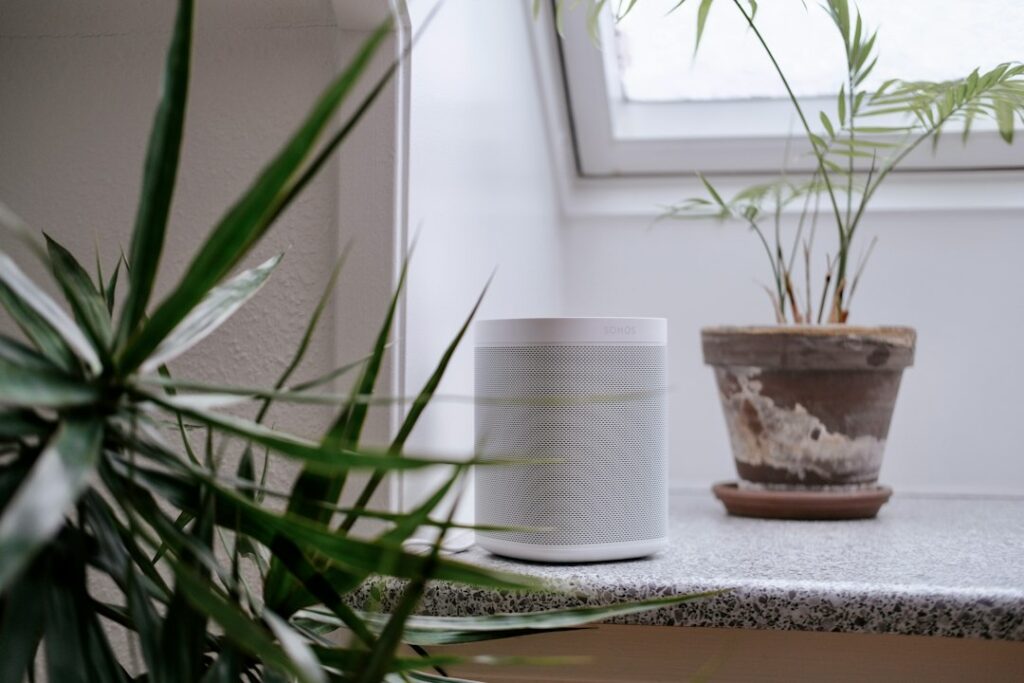
How well purifiers circulate air: key metrics and limits
| Metric | What it measures | How to use it |
|---|---|---|
| CADR | Clean Air Delivery Rate — volume of filtered air delivered for specific particle types (smoke, dust, pollen), typically in cubic feet per minute (cfm). | Compare CADR to your room volume to estimate how fast the purifier will reduce particulates and how much mixing potential the unit has. Use manufacturer CADR figures for relevant particle types. |
| ACH | Air changes per hour — how many times the room’s air is effectively cleaned in one hour. | A higher ACH reduces concentrations faster. Compute ACH from CADR and room volume (formula below) to set realistic expectations. |
| Airflow (cfm) | Raw cubic feet per minute of air the fan moves. | Shows the unit’s capacity to displace air. Useful when comparing how aggressively a unit will mix room air at a given speed setting. |
ACH formula: ACH = (CADR in cfm × 60) ÷ room volume in cubic feet. Room volume = floor area × ceiling height. Use the CADR value appropriate to the particle type you care about (smoke for fine particles, pollen/dust for larger particles).
Limits to bear in mind: CADR and airflow are measured under standard conditions and assume unobstructed placement. Closed doors, furniture, high ceilings, or complex room shapes reduce effective mixing. A single purifier may struggle to produce uniform air quality in very large or partitioned spaces.
Practical steps to maximize circulation and coverage
- Match CADR to room volume. Compute ACH using the formula above and pick a unit (or units) that provide the ACH target you want. For general particulate reduction, higher ACH produces faster declines in concentration.
- Place the unit for mixing, not just convenience. A central location or a position that returns cleaned air toward the center of a room promotes circulation. Keep at least a few inches clearance around intakes/outlets; don’t tuck a purifier into a tight cabinet.
- Use higher fan settings when rapid mixing is needed. Low speeds conserve energy and reduce noise, but they also slow how quickly the unit draws contaminated air from distant corners.
- Supplement with passive mixing if necessary. A small oscillating fan or ceiling fan can bridge dead zones by nudging room air toward the purifier’s intake without substantially disturbing filtration.
- Consider multiple units for larger or zoned spaces. Two smaller purifiers placed strategically can outperform a single large unit when the room is divided by furniture or partial walls.
- Position near the pollution source when appropriate. If smoke, cooking aerosols, or pet dander originate from a specific area, placing a purifier near that source catches contaminants before they disperse widely.
- Maintain filters and follow operating guidelines. A clogged filter or reduced fan performance lowers both circulation and filtration effectiveness.
Common misunderstandings and exceptions
People sometimes assume a high‑powered purifier will instantly equalize air in every corner. In reality, turbulent mixing in rooms is driven by multiple factors — temperature differences, fans, doors opening, and human movement — not the purifier alone. Another misconception is that running a purifier at low speed suffices for continuous protection; lower speeds reduce mixing and slow contaminant removal.
Exceptions: systems integrated into HVAC central ventilation will achieve whole‑house air movement differently than portable purifiers. Also, purifiers that include ionizers, plasma or other active technologies may alter perceived performance in specific tests; rely on CADR and verified filtration specs for apples‑to‑apples comparisons. Never use ozone‑producing devices for indoor air cleaning.

Related questions
Do air purifiers actually work?
Short answer: yes for particles if the unit has a certified HEPA filter and sufficient CADR for the space. Effectiveness depends on matching capacity to room size, proper placement, and maintenance. See the linked guide for deeper discussion of limits and evidence.
Do air purifiers cool a room?
No — air purifiers do not provide meaningful cooling. Their fans move air but do not remove heat. At best you may feel increased air movement (a wind‑chill effect); for actual cooling use an air conditioner or fan designed for that purpose.
Do air purifiers dry out the air?
Most air purifiers do not significantly change humidity. Only devices with dedicated dehumidification or humidification functions alter room moisture levels.
Can air purifiers remove CO2?
Typical air purifiers do not remove CO2. Gas‑phase filters such as activated carbon target certain volatile organic compounds and odors, but CO2 requires ventilation or specialized scrubbers to reduce concentrations.
Next steps and where to read more
If you’re selecting equipment, calculate your room volume, decide on an ACH goal, then compare CADR numbers. For product recommendations and capacity guidance see our buying guide at The Best Air Purifiers. For terms and definitions consult our Air Purifier Glossary and for deeper basics see Air Purifier Basics: Questions and Answers.
Sources and further reading
- U.S. Environmental Protection Agency — guidance on portable air cleaners and indoor air quality.
- Association of Home Appliance Manufacturers (AHAM) — CADR testing standard and consumer guidance.
- Peer‑reviewed literature on HEPA filtration performance and indoor aerosol dynamics (see academic reviews on particle filtration and ACH concepts).
