
In brief: Do air purifiers kill bacteria? HEPA filters trap many airborne bacteria (they’re larger than 0.3 microns) but don’t kill them.
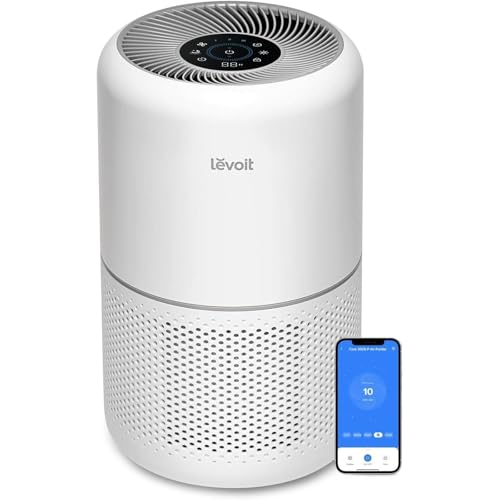
Yes — many portable air purifiers with True HEPA filters will remove airborne bacteria by capturing particles that carry them. Some units pair HEPA with an engineered UV‑C or inactivation stage that can reduce viability, but real-world “killing” depends on UV dose, airflow and design. Avoid ozone generators; they’re not recommended for occupied spaces.
Why capture and kill are different
Air-cleaning technologies work in two fundamentally different ways: mechanical capture and microbial inactivation. True HEPA filters are mechanical: they trap particles in the filter fibers, including droplets and aerosol particles that carry bacteria. Trapping reduces airborne concentration but does not chemically or thermally destroy microbes on the filter.
Inactivation technologies — commonly UV‑C light, sometimes combined with photocatalysis or plasma — aim to damage microbial DNA/RNA or cell structures so organisms can no longer reproduce. To be effective these systems must deliver a sufficient dose during the time air spends inside the treatment chamber. If the airflow is too fast or the lamp intensity too low, inactivation will be incomplete.
Other technologies address gases and odors (activated carbon) or change particle behavior (ionizers). Those generally do not reliably inactivate bacteria and some ionizers can create harmful byproducts including ozone.
How common technologies affect bacteria
| Technology | How it acts | Effect on bacteria | Key limitations |
|---|---|---|---|
| True HEPA | Mechanical capture of particles (including droplets and aerosols) | Removes many airborne bacteria by trapping particle carriers | Filters do not actively kill; need replacement and careful handling |
| UV‑C (germicidal) | UV light damages microbial genetic material | Can inactivate bacteria if exposure time and intensity are sufficient | Ineffective if poorly configured; safety risk if UV leaks into the room |
| Ionizers / bipolar ionization | Charge particles so they settle or stick to surfaces; may form reactive species | Mixed results in studies; not a reliable stand‑alone antimicrobial | Performance varies; some models produce ozone or byproducts |
| Ozone generators | Produce ozone to oxidize organic material | Can inactivate microbes only at concentrations unsafe for people | Not recommended by EPA for occupied spaces |
| Activated carbon | Adsorbs gases and odors | No meaningful effect on airborne bacteria | Useful for VOCs/odors, not microbial control |
Practical steps to reduce airborne bacteria at home
- Pick the right base technology: Choose a unit with a True HEPA filter for particle removal. HEPA is the most consistently proven technology for trapping bacteria‑laden particles.
- Match CADR/ACH to the room: Look for a purifier with a CADR or stated air changes per hour (ACH) suitable for the room size. Higher CADR = faster reduction of airborne particles.
- Consider proven inactivation only if well engineered: If you want inactivation, choose devices where UV‑C or another germicidal stage is enclosed and specified for the purifier’s airflow; avoid units that expose UV light to the room.
- Run it consistently: Continuous operation at a moderate-to-high setting while the room is occupied provides steady reduction in airborne load; intermittent use limits effectiveness.
- Maintain filters and components: Replace or clean prefilters and HEPA elements per manufacturer guidance. When changing filters, bag and seal used filters and wash hands afterward to avoid resuspending captured material.
- Combine controls: Use purifiers alongside ventilation (outdoor air), surface cleaning, and personal hygiene — purifiers are one layer of risk reduction, not a complete solution.
- Avoid ozone devices: Do not use ozone generators in occupied spaces; the EPA advises against them for disinfection or odor removal in homes.
When air purifiers won’t help (realistic limits)
Portable purifiers reduce airborne particles but they cannot sterilize a room or replace cleaning, handwashing, or medical infection-control measures. Large respiratory droplets settle quickly onto surfaces and are better managed by surface cleaning and source control. If a unit is undersized for the space, poorly placed (blocked intake/exhaust), or poorly maintained, expect little benefit.
Common misunderstandings
- “HEPA kills bacteria”: No — HEPA traps bacteria; it doesn’t reliably kill them. Some bacteria may remain viable on the filter surface.
- “Bigger is always better”: A physically larger unit is not necessarily more effective for your room unless its CADR or ACH matches the space.
- “All UV‑C is effective”: UV‑C works in principle, but consumer‑level performance varies with lamp intensity and airflow. Look for validated designs and enclosed chambers.
- “Odor machines disinfect air”: Many compact odor-removal devices focus on breaking down smells and may not meaningfully reduce airborne bacteria. (If you’re comparing products, check for True HEPA and CADR figures.)
Related questions
Do air purifiers help with cooking smoke?
Do air purifiers help with cat litter smell?
Best Air Purifiers for Viruses & Germs (2026)
Sources and further reading
Key guidance and evidence: EPA — “Guide to Air Cleaners in the Home” (covers when and how portable air cleaners help and warns about ozone generators); AHAM — information on CADR and performance metrics for consumer air cleaners. For technical background, search the peer‑reviewed literature on “HEPA filtration and bacteria” and “UV‑C air disinfection” for laboratory and field studies assessing capture and inactivation under varying airflow and dose conditions.
If you want a short list of units likely to reduce airborne microbes, start with True HEPA models sized for your room and consider models that combine HEPA + enclosed UV‑C from reputable manufacturers; see our recommendations at Best Air Purifiers for Viruses & Germs (2026).
Sources for “Do Air Purifiers Kill Bacteria”
To keep our answer to “Do Air Purifiers Kill Bacteria” accurate, we rely on independent references such as the EPA’s indoor air and COVID-19 guidance, AHAM Verifide CADR data and manufacturer spec sheets. See how we evaluate air purifiers and our editorial policy for details.
