
In brief: Air Purifier for Litter Box Smell: a purifier with a thick carbon filter near the litter box reduces ammonia smell, but scooping daily and good litter.
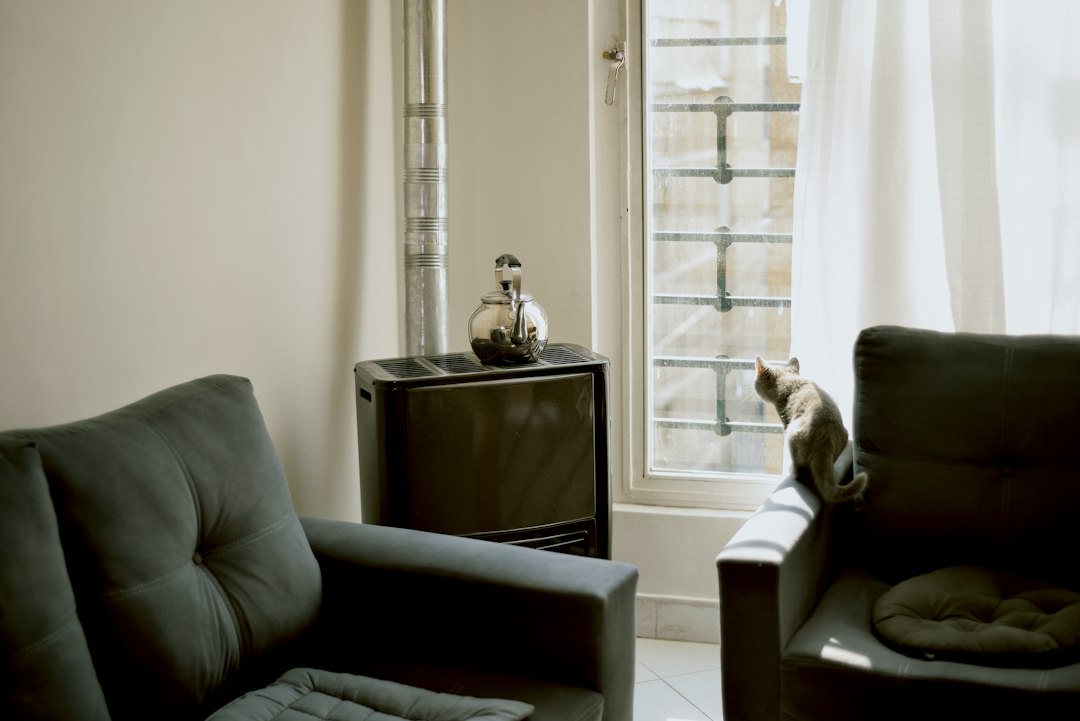
Yes — the right air purifier can noticeably reduce many litter-box odors, but only as part of a system. A unit that combines a particle filter (HEPA) with a substantial activated‑carbon/adsorption stage will cut airborne dander, litter dust and many odor molecules. It cannot replace scooping, box cleaning, ventilation or removing the source of the smell.
Why an air purifier can (and can’t) help
There are two separate problems inside litter‑box odor: airborne particles (litter dust, cat dander, aerosolized fecal solids) and gas‑phase odor molecules (ammonia, other volatile organic compounds). Different technologies remove each type.
HEPA and other particle filters remove the particulate fraction that often carries odor compounds and solid waste. Removing dust and dander reduces the perception of “mustiness” and stops particulates from spreading through rooms. But HEPA filters do not absorb gases like ammonia.
Activated carbon (or other adsorption/oxidation media) targets gas‑phase molecules. In practice, a purifier must have both a HEPA stage and a sufficiently large carbon bed (or equivalent adsorbent) to make a meaningful dent in litter‑box odors. Small or token carbon layers, or devices that only produce ions or fragrances, will generally have limited effect on ammonia and some VOCs.
Finally, no air cleaner removes the source. If the litter box is dirty or poorly ventilated, a purifier can only mask or reduce the symptom; source control (scooping, cleaning, ventilation) remains primary.
Quick technology comparison (at a glance)
| Technology | What it removes | Good for litter‑box smell? | Typical limitations / notes |
|---|---|---|---|
| HEPA / particle filter | Airborne particles: litter dust, dander, pollen | Partially — reduces particle‑bound odors and spread of dust | Does not remove gaseous ammonia/VOCs; needs prefilter for hair/clumps |
| Activated carbon / adsorption beds | Gas‑phase molecules: many VOCs and odor compounds | Yes — one of the most effective components for odors when carbon volume and contact time are adequate | Performance depends on carbon type, quantity, and airflow; carbon saturates and must be replaced |
| Ionizers / negative‑ion devices (plug‑in) | Causes particles to settle; can reduce airborne particulates | Limited — may reduce dusty smell but usually won’t remove gases like ammonia | Many are filter‑free and low‑cost; effectiveness varies. Some older designs produce ozone — avoid those. |
| Passive absorbers / gel boxes | Adsorb or chemically neutralize some odors in small enclosed spaces | Useful for tiny, enclosed locations; limited for open rooms | Work best near the source in confined areas; need periodic replacement |
| Ozone generators | Intended to oxidize odors | No — not recommended | Health risks to people and pets; poor real‑world performance for typical home odor loads |
Practical steps to reduce litter‑box smell with an air purifier
- Buy the right combination: choose a purifier that pairs True HEPA (or equivalent particle filtration) with a significant activated‑carbon stage. Whole‑home or large‑room models that advertise “HEPA + activated carbon” are most suitable; for example, some pet‑focused units combine both stages to handle particles and gases.
- Prioritize carbon bed size and replaceability: odor reduction scales with the amount and quality of carbon and the time air spends in contact with it. Small “token” carbon inserts rarely help for persistent ammonia; look for replaceable carbon filters or dedicated odor cartridges.
- Place the purifier near the source: position the unit within a few feet of the litter box, not tucked across the room. Closer placement gives the purifier first access to emitted gases and dust.
- Run continuously on a moderate setting: odors are produced irregularly; continuous operation maintains lower background concentrations. Use higher fan speeds while cleaning the box or during the initial deployment to clear dust and spikes.
- Keep the box clean and ventilate: scoop daily, deep‑clean the box per manufacturer guidance, and provide ventilation if possible. Purifiers complement — they don’t replace — these actions.
- Consider litter and box choices: clumping, low‑dust litters and covered boxes change odor dynamics. Covered boxes can concentrate gases; if using a cover, combine it with a nearby purifier or a box with built‑in ventilation.
- Watch for maintenance signals: replace HEPA and carbon filters on the manufacturer schedule. Carbon becomes saturated; a saturated carbon filter won’t remove additional gases.
Product types you’ll see and what to expect
Plug‑in ionizer-style deodorizer units (for example, products marketed as negative‑ion pet deodorizers) are inexpensive and maintenance‑free. They often claim to settle dust and “neutralize” odors, and some advertise ozone‑free operation. These devices can reduce airborne particles but usually lack the adsorbent mass to remove ammonia effectively. Passive gel/plant‑based boxes can help in tiny, enclosed spaces but won’t clear an open room.
For more robust results, look at true air purifiers that list both HEPA and activated carbon in their specifications. Some models in the market combine high‑capacity carbon and HEPA with filters designed for pet environments — these are the most appropriate starting point for persistent litter odors.
Common misunderstandings and important exceptions
- “An air purifier will remove ammonia entirely” — unlikely unless the unit has a very large, fresh adsorbent bed designed for ammonia; many household carbon filters are better at organic VOCs than free ammonia.
- “Filterless ionizers solve odors” — they sometimes reduce dust but usually don’t remove gases responsible for the characteristic urine/ammonia smell.
- “Smaller, cheaper purifiers are enough” — for open living spaces, a low‑capacity unit with minimal carbon won’t be adequate; CADR and carbon capacity matter.
- “Covering the litter box reduces smell” — covers can trap gases and increase local concentrations; use a purifier or ventilation in that area if you use covered boxes.
Related questions
Will an air purifier remove ammonia from the litter box?
Sometimes — but not reliably with small carbon filters. Ammonia is a small, polar molecule that can be harder for typical thin carbon layers to capture. Larger or specialized adsorbents, frequent replacement, or increased ventilation are often needed to control ammonia effectively.
Are plug‑in ionizers and deodorizer boxes worth it?
They can help reduce airborne dust and provide a low‑maintenance, budget option for small areas. Expect limited gas removal and no substitute for cleaning. If you choose one, place it at the source and manage expectations.
Should I put the purifier inside a closed litter closet or the main room?
If the box is in a small closet, put the purifier near the closet opening or provide airflow to it; a purifier inside a sealed closet may not exchange enough air with the room. In open rooms, keep the purifier close to the box but out of the cat’s way.
Sources and further reading
- U.S. EPA — Indoor Air Quality: basic guidance on ventilation, source control and cleaning for indoor pollutants.
- AHAM — information on CADR and how to match purifier capacity to room size.
- Peer‑reviewed literature — reviews on activated carbon adsorption for VOCs and studies of HEPA effectiveness for airborne particles. Search scientific databases for “activated carbon VOC adsorption review” and “HEPA filter pet dander study.”
- AirPurifierFAQ: “Pollutants & Odors: Questions and Answers” — broader context on odor removal and pollutant types: /faq/pollutants/
- AirPurifierFAQ: Best models for cat litter odor (recommendations and shopping guidance): /best/air-purifiers-for-cat-litter/
- AirPurifierFAQ glossary for key terms (CADR, HEPA, VOC): /glossary/
If you want product-specific options tuned for litter boxes, see our round‑up of tested models at /best/air-purifiers-for-cat-litter/ — the best practical solutions pair True HEPA with a substantial, replaceable carbon stage and are sized for the room where the box sits.
Sources: Air Purifier for Litter Box Smell
To keep our Air Purifier for Litter Box Smell information accurate, we rely on independent references such as the EPA’s Guide to Air Cleaners in the Home, AHAM Verifide CADR data and manufacturer spec sheets. See how we evaluate air purifiers and our editorial policy for details.
