
In brief: How Loud Is an Air Purifier? (dB Levels Explained)? Most purifiers run 25-35 dB on sleep mode (a whisper) and 50-65 dB on high (conversation to vacuum).
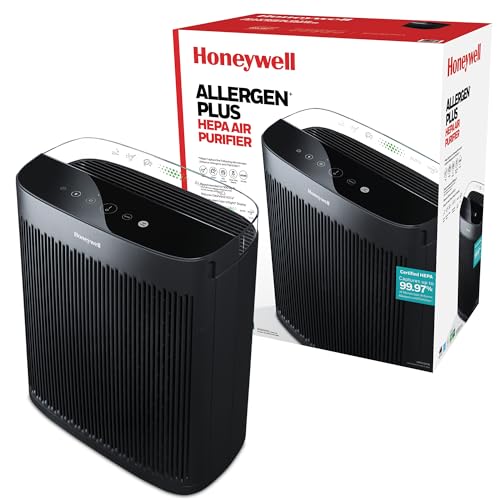
Air purifiers range from nearly silent on low settings to clearly noticeable at maximum fan speed. Most modern HEPA-style units are quiet enough for bedrooms and offices when run on low or “sleep” modes, but noise rises with fan speed, filter resistance and proximity—always check dB(A) figures and the stated measurement distance.
Why decibels matter — what the numbers mean
Decibels (dB) are a logarithmic measure of sound intensity. A 3 dB change is roughly the smallest difference most people notice; a 10 dB change sounds about twice as loud. Manufacturers normally report A-weighted decibels (dB(A)), which approximate human hearing sensitivity across frequencies.
Two practical points are often overlooked. First, the stated dB value depends on where and how it was measured—common distances are 1 metre (≈3.3 ft) or 5 ft from the unit; those are not interchangeable. Second, perceived annoyance depends on the sound’s character: a steady broadband whoosh is less intrusive for some people than a tonal motor whine at the same dB(A).
How to read this table: noise labels and everyday comparisons
| Label | Everyday example | When to run | Manufacturer spec — what to look for | Practical placement tip |
|---|---|---|---|---|
| Very quiet | Soft whisper / quiet library | Nights, bedrooms, shared workspace | Look for a low-mode dB(A) reported with a clear test distance (e.g., “25 dB(A) at 1 m”); confirm “sleep” mode exists. | Place slightly further from the bed (3–6 ft) and avoid pointing exhaust at the pillow. |
| Quiet | Normal conversation background | Living rooms, daytime use | Compare low/medium dB(A) values and note the fan speed tied to each figure. | Keep at least a foot of clearance from walls to reduce turbulence. |
| Noticeable | Loud conversation, background appliance hum | When faster cleaning is needed — cooking, pets | Expect higher medium/high dB(A) numbers; check whether the spec sheet lists measurement distance. | Run on medium for short bursts; schedule high speed when room is unoccupied. |
| Loud | Traffic noise / TV at high volume | Quick clearing of heavy pollution (wildfire smoke, strong odors) | High-speed dB(A) will be substantially above low settings; ensure CADR justifies running high speed in large rooms. | Use only briefly and/or move unit farther from seating/sleeping areas. |
Practical implications and typical household scenarios
Bedrooms: If sleep is the priority, prioritize units with an explicitly listed sleep/night dB(A) and quiet low-mode specs. Even a small increase in dB can wake light sleepers if the noise has tonal peaks.
Living rooms and daytime spaces: Medium settings are usually acceptable and deliver faster air cleaning. In open-plan homes you’ll often need a higher CADR (and therefore higher fan speed) to move air effectively, which increases audible output.
Kitchens and near pollutant sources: Smoke, cooking fumes and strong odors often require higher fan speeds to achieve noticeable air quality change. Expect more noise during these tasks and plan to run high speeds only while you’re present or before guests arrive.
Exceptions and common misunderstandings
Comparing raw dB numbers without the measurement context is a common mistake. A manufacturer reporting 40 dB(A) at 1 m will sound different in-room from a competitor that reports 40 dB(A) at 5 ft—those distances are close but not identical, and room acoustics can amplify or dampen sound. Some brands present “in-room” or “estimated” dB figures calculated with models; ask how that estimate was derived.
Another misconception: quieter dB doesn’t always equal less annoying. A slightly louder unit with a smooth white-noise character can be better tolerated than a lower-dB unit with an intermittent motor whine. Read user reviews that mention “tone,” “hum,” or “rattle” in addition to quoted dB values.
How to choose and test a quiet air purifier — step-by-step
- Decide the use case and required CADR/room size (see “What CADR Do I Need for My Room?” for sizing basics: /faq/specs/what-cadr-do-i-need/).
- Compare manufacturer dB(A) figures, noting the distance and which fan speed the figure represents (low/med/high/sleep).
- Prioritize units with a true sleep/night mode and explicit low-mode measured dB(A). Check the product manual or spec sheet for test conditions.
- Read reviews focused on noise character and night use; video demonstrations with ambient audio can be revealing.
- If possible test in person: place the unit where you’ll use it, stand or lie at your normal position, run low and medium speeds, and note whether the sound masks speech or disrupts sleep.
- Use placement and scheduling to reduce disturbance: lower speed at night and run higher speeds during the day or just before you go to bed to clear the room in advance.
See our picks for the quietest models for vetted options: /best/quiet-air-purifiers/.
Placement and mitigation tips to reduce perceived noise
- Avoid pointing intake or exhaust directly at beds or seating areas; angling the airflow can make a big subjective difference.
- Keep a few inches of clearance around the unit (manufacturer-recommended minimums), and avoid cramming it into a tight corner where bass can build up.
- Place small units on soft surfaces or anti-vibration pads to reduce structure-borne rumble; hard floors can reflect and amplify sound.
- Use scheduling: run high speed when the room is empty and switch to low/sleep modes at night.
- If the purifier’s noise is tonal and distracting, a low-level white-noise machine or fan may mask the tone and improve sleep for some people.
Next steps — what to watch for on spec sheets
When reading product pages and manuals, look specifically for: dB(A) values tied to fan speeds, the stated measurement distance (e.g., 1 m), whether a sleep/night mode is documented, and any third‑party test or AHAM verification for CADR. Avoid making buying decisions from marketing buzzwords alone; the numbers and test conditions tell the real story.
If you want curated quiet options and in-depth comparisons, consult our guide to the quietest air purifiers: /best/quiet-air-purifiers/. For definitions of terms used above, see our glossary: /glossary/.
Related questions
How loud is too loud for sleeping?
Individual tolerance varies, but many people find steady background noise above typical bedroom levels disruptive. Prioritize units with explicit night/sleep-mode dB(A) specs and read real-user sleep reviews. If you’re a light sleeper, test in the room before committing.
Do larger or more powerful units make more noise?
Often yes: to achieve higher airflow (CADR) a unit will run higher fan speeds or larger motors, which produces more noise. That doesn’t mean large units can’t be quiet—design choices, motor quality and cabinet damping are influential—so compare low-mode dB(A) and noise character as well as CADR.
Can placement reduce noise enough to avoid buying a quieter model?
Placement and anti-vibration measures can significantly reduce perceived noise, but they can’t change the absolute sound output. If you need very low noise at night, choose a unit with a genuinely quiet low-mode rather than relying solely on placement tricks.
Are “sleep” or “night” modes just marketing?
Not always. Many manufacturers lower fan speed, change motor control to reduce tonal noise, or dim lights in sleep modes. Confirm with the spec sheet whether a documented lower dB(A) corresponds to the sleep mode and seek user reports describing overnight use.
Sources and further reading
- U.S. Environmental Protection Agency — Indoor Air Quality resources.
- Association of Home Appliance Manufacturers (AHAM) — product testing and CADR guidance.
- World Health Organization — Environmental Noise Guidelines (relevant summaries on sleep disturbance and noise).
- Product manufacturer spec sheets and user manuals — for dB(A) figures and measurement distance.
Sources for “How Loud Is an Air Purifier? (dB Levels Explained)?”
To keep our answer to “How Loud Is an Air Purifier? (dB Levels Explained)?” accurate, we rely on independent references such as the EPA’s Guide to Air Cleaners in the Home, AHAM Verifide CADR data and manufacturer spec sheets. See how we evaluate air purifiers and our editorial policy for details.
