
air purifier for tiny house is a different challenge than for a normal room. Tiny homes need compact, efficient units that move air well, and this guide explains what actually helps and how to pick one.
As an Amazon Associate, AirPurifierFAQ earns from qualifying purchases. We link to the live listing so you always see the current price.
Our picks for air purifier for tiny house
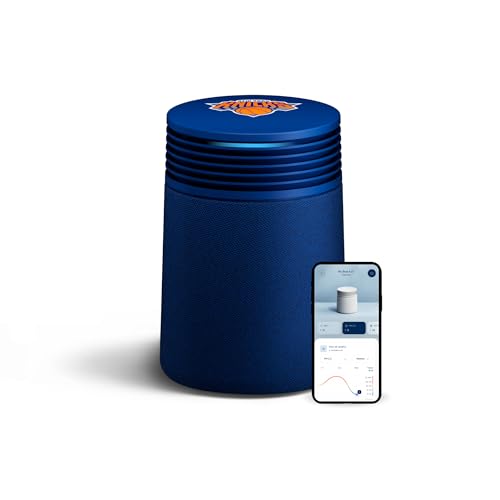
BLUEAIRBLUEAIR x NY Knicks Air Purifiers for Home up to 1,190 Ft²,…Covers up to 1,190 sq ft · HEPABLUEAIR SP1i fits those who want app control and a HEPA-rated unit sized for larger tiny-house open plans.Check today’s price on Amazon LevoitLevoit Smart Air Purifiers for Home Large Room up to 2933 Ft²,…Covers up to 2,933 sq ftLevoit Core 600S-P fits owners who need very high stated coverage and auto mode, but confirm filter stages before relying on gases removal.Check today’s price on Amazon
 CowayCOWAY Airmega Halo HEPA Air Purifier for Pets & Allergy, AP-1526D(W), WhiteCovers up to 1,898 sq ft · HEPACoway Airmega Halo fits pet owners or allergy-prone households that need a HEPA unit with higher coverage.Check today’s price on Amazon
 Rabbit AirRabbit Air A3 SPA-1000N HEPA Air Purifier, Toxin Absorber, BlackCovers up to 1,070 sq ft · True HEPA + Activated CarbonRabbit Air A3 SPA-1000N fits tiny-house users who want True HEPA plus activated carbon for particles and odors.Check today’s price on Amazon
 IQAirIQAir HealthPro Plus XE Air Purifier HyperHEPA WiFi, Large Rooms 1125 sq…Covers up to 1,125 sq ft · True HEPAIQAir HealthPro Plus XE fits people who want a True HEPA unit with Wi‑Fi and an air quality sensor for monitoring.Check today’s price on Amazon
Why tiny houses are a special case
Tiny houses concentrate everything in a small volume, and that changes how air cleaners perform. Also, ventilation tends to be limited because windows are small and mechanical ventilation is often minimal. As a result, pollutants can build up faster than in larger homes, so the purifier needs to move air efficiently and run steadily.
For example, cooking, pet dander, candles, and off-gassing from new finishes can have a bigger effect in a tiny house. However, the unit should not be oversized for the space because it will waste energy and likely be louder than necessary. Instead, aim for the right balance of airflow, filters, and noise level.
For more background, see the U.S. EPA’s guide to air cleaners in the home.
How to size an air purifier for a tiny house (CADR rule)
Use the CADR rule: CADR in cubic feet per minute (cfm) should be about two thirds of your room area in square feet. For example, a 300 sq ft open tiny house needs roughly a 200 cfm CADR unit. This gives the purifier enough airflow to cycle the air reasonably fast without being oversized.
Measure the total open floor area you want cleaned. Also include lofts or connected sleeping areas because air mixes rapidly in a small footprint. If your tiny house has multiple separate rooms, size for the largest active space or plan two smaller units.
Because many manufacturers list coverage in sq ft rather than CADR, check the stated coverage and confirm it matches your house size. Finally, if you want faster air changes because of heavy cooking or smoking, increase the target CADR by 25% to 50%.
Filters that matter: True HEPA and activated carbon
True HEPA filters remove fine airborne particles. Also, they are the most reliable choice for dust, pollen, and many aerosols. However, HEPA does not remove gases, odors, or many VOCs.
Activated carbon filters absorb gases and smells. In addition, they matter if you cook often, use strong cleaners, or live near vehicle exhaust. Because tiny houses concentrate smells, carbon is often worth adding.
For tiny houses, look for a purifier that combines True HEPA and a substantial carbon stage. Also consider filter replacement ease and filter size because compact units sometimes use smaller filters that clog faster. Finally, follow manufacturer guidance for filter life and replacement frequency.
Noise, energy use, and running cost
Noise matters more in a tiny house because you are always close to the unit. Also, many units are louder at high fan speeds, and that can hurt sleep or daily comfort. Choose a purifier with a quiet low or auto mode, and check noise ratings before buying.
Energy use affects cost to run. However, compact purifiers usually use less power than whole-house systems. Still, a unit that runs 24/7 will add to your bill, so prefer energy-efficient motors or sleep modes. Finally, plan for filter replacement costs over time because filters are the main ongoing expense.
Placement tips for a tiny home
Place the unit where air can reach it from the whole living area. Also, avoid corners and low spots where airflow is limited. For open tiny houses, a central location on the main floor is usually best. If you have a loft bedroom, aim the purifier so air can move between levels.
Keep it at least a few inches from walls and furniture to allow intake and exhaust. In addition, avoid putting it near heat sources that can disturb airflow. Finally, elevate very small units slightly off the floor if the manufacturer recommends it to improve circulation.
Common mistakes to avoid
- Choosing a unit sized only for one small area. Instead, size to the total open area or use multiple units for separated spaces.
- Relying only on a HEPA filter when odors or VOCs are a problem. Also add activated carbon if you cook, smoke, or use strong cleaners.
- Placing the purifier in a corner or behind large furniture. As a result, the unit will underperform.
- Running the purifier only intermittently. For steady pollutant control, run it continuously on a low or auto setting.
- Ignoring noise specs. Instead, prioritize quieter models if you sleep nearby.
Short look at five recommended models and who they suit
Below are five purifiers that fit different tiny house needs. Each summary sticks to the facts provided and explains who would benefit most.
BLUEAIR x NY Knicks Air Purifiers for Home up to 1,190 Ft², Signature SP1i
This BLUEAIR model lists coverage up to 1,190 sq ft and uses a HEPA filter. Also, it has app control and an auto mode for smarter operation. Choose this if you want smart features and a unit rated for larger open tiny houses or multi-zone layouts.
Levoit Smart Air Purifiers for Home Large Room up to 2933 Ft², Core 600S-P
The Levoit Core 600S-P claims coverage up to 2,933 sq ft and includes an auto mode. Although filter type is not listed here, the high coverage makes it a candidate when you need a powerful airflow option for a sizable open plan tiny house. However, confirm the filter stages before deciding.
COWAY Airmega Halo HEPA Air Purifier for Pets & Allergy, AP-1526D(W), White
Coway’s Airmega Halo lists coverage up to 1,898 sq ft and uses a HEPA filter. It is positioned for pets and allergies, so pick it if you need strong particle removal across a bigger tiny-house footprint. Also, its design suits homeowners who want a unit with a higher stated coverage.
Rabbit Air A3 SPA-1000N HEPA Air Purifier, Toxin Absorber, Black
Rabbit Air’s A3 SPA-1000N pairs True HEPA with activated carbon, and it covers up to 1,070 sq ft. Because it includes both particle and gas control, it fits tiny-house owners who cook often or worry about odors and VOCs. Also, it suits people who prefer a combined filter approach in a compact footprint.
IQAir HealthPro Plus XE Air Purifier HyperHEPA WiFi, Large Rooms 1125 sq ft
IQAir lists coverage up to 1,125 sq ft and uses True HEPA. It also has Wi‑Fi and an air quality sensor for monitoring. Pick this when you want a high-performance True HEPA unit with sensing and smart connectivity in a small living footprint.
How to pick the right model for your tiny house
Start by measuring the total open floor area you plan to serve. Also, convert that to a CADR target using the two-thirds rule. Next, decide if odors or gases are a concern; if so, prioritize a unit with activated carbon. Finally, compare noise ratings and smart features to match how you live.
For multi-level tiny homes, place a single higher-CADR unit centrally or use two smaller units for each level. In addition, think about filter replacement ease because cramped spaces can make maintenance harder. Finally, pick a quieter model if you sleep near the purifier.
Not sure what size you need? Our free size calculator tells you the right CADR for your room in 30 seconds.
Frequently asked questions
Do I need a purifier if my tiny house has good ventilation?
Good ventilation helps a lot, but a purifier still adds continuous particle and odor control. Also, ventilation may bring outdoor particles in, so a purifier reduces those. Finally, in cold or windy weather you may close vents, and the purifier keeps air cleaner then.
How loud should a purifier be for a tiny house?
Aim for a model with a quiet low or sleep mode because you are often close to the unit. Also, check noise ratings and user reports when possible. If you sleep within a few feet, prefer units rated for low dB on their quiet setting.
Can one unit clean an entire tiny house?
Yes, if the unit's CADR or stated coverage matches your total open area. However, for multi-room layouts or separated lofts you may need two units or a higher-CADR model. Also, place the unit centrally to maximize coverage.
How often do filters need replacing in a tiny house?
Filter life depends on use, pollutant levels, and filter size. Because tiny houses concentrate particles, filters may clog faster than in larger homes. Finally, follow the manufacturer's replacement guidance and check filters visually for heavy buildup.
Should I choose smart features for a tiny house purifier?
Smart features like auto mode, app control, and sensors can help because they adjust fan speed and reduce noise when air is clean. However, they are optional; a well-sized, quiet purifier with manual controls can work just as well.
Black Friday and Cyber Monday 2026: see our hand-picked air purifier and filter deals.
