

Manfh
2026 Upgraded High Capacity Ozone Generator Odor Removal Up to 6000…
BrandManfhCoverage6,000 sq ft
Original price was: $46.99.$37.94Current price is: $37.94.
View product details
Product information comes from the current AirPurifierFAQ catalog and should be verified on Amazon before purchase.


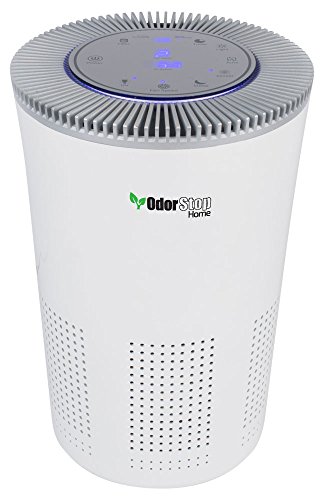


Our top whole‑house standalone pick for 2026 is the Sans HEPA Air Purifier — true H13 HEPA filtration, a full pound of activated carbon for cooking and VOC odors, CARB‑certified ozone‑free operation, real‑time sensors and whisper‑quiet 25 dB operation make it the most practical continuous solution for large, open homes. For aggressive, short‑term odor remediation in unoccupied spaces, see the Manfh ozone generator below — it can be effective but must only be used with strict safety procedures and local regulatory awareness.
Buy Sans HEPA (Amazon) If odors are the primary issue, see the odor‑remediation pick below — includes mandatory safety guidance.
This guide is for homeowners and long‑term renters who want a single, purchase‑ready standalone unit intended to provide broad coverage for large, connected living spaces — open‑plan houses, lofts, and homes where one central purifier is preferred over multiple room‑by‑room units. It targets people who want a system they can run continuously in occupied rooms to reduce particles, allergens and routine household VOCs/odors.
It also serves buyers who understand the difference between continuous, ozone‑free HEPA filtration and episodic odor remediation with ozone. If your primary need is one‑time, aggressive deodorization (for example, after heavy smoke or severe pet odor embedded in materials), this guide presents an odor‑remediation option but not as a substitute for continuous HEPA filtration in occupied spaces. If you’re only shopping for a bedroom, desk or travel purifier, choose one of our portable guides instead (see links at the end).
One‑line summary: A practical, continuous‑use standalone designed for large open homes — true H13 HEPA plus a heavy activated‑carbon stage and built for quiet, all‑day operation.
Why we picked it
Sans meets the practical requirements for a whole‑home standalone: a true H13 HEPA stage for particle capture plus an unusually large activated‑carbon stage to address everyday cooking and pet odors without relying on ozone. The low noise rating and automatic sensor control make it simple to run continuously in occupied spaces, which is what most buyers seeking “whole‑house” standalone coverage really need.
Limitations / who should skip it
If your home contains many closed rooms with doors or very tall ceilings, a single centralized unit will be less effective — consider a hybrid approach (central unit + smaller bedroom units). Also, CADR values and confirmed annual filter costs were not present in the supplied data; confirm those figures on the product page before purchase.
One‑line summary: A high‑output ozone machine intended strictly for rapid odor deodorization in unoccupied, ventilated spaces — not a continuous, occupied‑home air cleaner.
Why we included it
Manfh is included to show a clearly different category: a chemically active odor remediation tool that modifies odor molecules via ozone. It is useful for people who need a one‑time, aggressive treatment in an empty and ventilated property. Because the device produces ozone, it carries hazards and legal restrictions; that is why it is presented with a clear safety brief and not recommended for everyday use in occupied homes.
Limitations / who should skip it
Do not use in occupied spaces. This device is not a filter-based air cleaner; after treatment you must ventilate and may still need to clean or replace contaminated materials. Check local laws before purchase — some jurisdictions restrict indoor ozone generators.
These two picks serve very different problems:
Cost considerations: Whole‑home HEPA units have recurring filter expenses and some energy use for continuous fans. The Manfh device has no filters but carries non‑monetary costs: planning, evacuation, ventilation time and potential remediation of materials. Because the dataset lacked definitive filter pricing and CADR values for Sans, confirm replacement filter prices and CADR on the manufacturer pages before buying.
To decide whether a single standalone purifier can cover your home, use these practical checks and examples.
Measure the square footage of the connected living area you want to treat (living room + kitchen + dining area if doors remain open). For multi‑story homes, treat floors separately unless you have a central open volume. Example: a single‑story open plan with living + kitchen + dining of 1,700 sq ft — a unit that claims 1,854 sq ft coverage (manufacturer claim for Sans) might be an appropriate primary unit, provided ceilings are typical height and doors are mostly open.
Coverage claims are usually in sq ft assuming standard ceiling height (commonly ~8 feet). For taller vaulted ceilings, compute cubic footage (sq ft × ceiling height) and double‑check the manufacturer’s assumptions. If your ceilings are much higher than standard, a device rated by sq ft may underperform relative to its claim because it must move more air to achieve the same air changes per hour.
Key performance metrics to ask the manufacturer or retailer for are the unit’s CADR (Clean Air Delivery Rate) or recommended air changes per hour (ACH) for the stated coverage. If CADR is not supplied, rely on the stated coverage but treat it with caution. A conservative approach for a house with many closed rooms is to supplement a central unit with smaller purifiers in bedrooms.
Different pollutants demand different solutions. Here’s how to match technology to your problem and what trade‑offs to expect.
Trade‑offs to consider:
Filter replacement and energy use are the main recurring costs. Because our dataset lacks confirmed replacement pricing for Sans, here’s how to estimate costs before you buy:
Standalone high‑capacity purifiers and HVAC‑integrated solutions both have valid use cases. Consider these trade‑offs before choosing one path.
If you want whole‑home filtration whenever your HVAC fan circulates air, consult an HVAC professional to determine suitable MERV ratings and to assess whether the system fan and motor can handle a higher efficiency filter without excessive pressure drop. For many buyers seeking a fast, low‑effort solution, a high‑capacity standalone like the Sans is the more practical option.
Ozone generators are a separate category and should be treated as such. The Manfh unit is listed to illustrate the narrow circumstance in which ozone might be considered. Do not treat ozone generators as routine air cleaners.
Essential safety checklist if you are planning a one‑time ozone treatment:
Most products in the supplied dataset are portable, desktop or USB‑powered units designed for single rooms. Those products can be excellent for targeted spaces but are not realistic single‑unit whole‑house solutions. From the supplied list, only the Sans HEPA qualifies as a practical whole‑home continuous unit and the Manfh as an odor remediation tool. Several essential buyer metrics were not supplied in the dataset — notably CADR and confirmed yearly filter replacement cost for the Sans. These are important items: always confirm CADR, manufacturer coverage test protocol, filter part numbers and replacement pricing on the product pages or with the manufacturer before purchase.
For more technical background and related buying options, see these resources:
Yes, but only under the right conditions. A single standalone purifier can be effective in open‑plan homes where interiors are connected and doors are commonly left open. For homes with many closed bedrooms and doors, a single unit will struggle to move air fast enough through closed doors, and a hybrid approach (central unit + local units) or HVAC integration is usually more effective. Always compare the product’s stated coverage to the area you want treated, factoring in ceiling height and obstructions.
Replacement intervals depend on usage and pollutant load. The Sans listing recommends replacing filters every 3 months depending on use and air quality. Heavy indoor pollutant loads — frequent cooking, many pets, wildfire smoke — will shorten filter life. Confirm exact replacement part numbers and suggested intervals with the manufacturer and budget replacements accordingly (the provided dataset did not include replacement pricing for Sans, so verify that on the product page).
Only as a last‑resort, limited, short‑term approach and only for unoccupied spaces. Ozone generators like the Manfh model can chemically alter some odor molecules and can be effective for embedded smells in materials, but ozone is hazardous to people, pets and plants and is restricted in some jurisdictions. If you consider ozone, prepare a strict safety plan: evacuate people and animals, protect or remove sensitive items, turn off HVAC distribution if advised, use the manufacturer’s timer, ventilate thoroughly after treatment and verify local regulations. For everyday odor control in occupied homes, choose a HEPA unit with a large activated carbon stage instead.
CARB (California Air Resources Board) certification relates to limits on ozone emissions from air‑cleaning devices. A CARB‑certified or ozone‑free designation indicates the device meets ozone emission standards and is safe for continuous use in occupied indoor spaces with respect to ozone output. For continuous, occupied‑space use, prefer devices certified as ozone‑free or compliant with applicable safety standards and verify the certification documentation on the product page.
When CADR is unavailable, rely on the product’s verified coverage claim (sq ft) and any stated ACH guidance, true HEPA filter ratings (H13 or equivalent), fan speed range and presence of real‑time sensors. Contact the manufacturer or retailer and request CADR testing data if CADR is a decisive factor. CADR provides a standardized measure for particle removal, but practical coverage and ACH matter more in complex home layouts.
Both are valid approaches: HVAC filtration treats the whole home when the fan runs and is invisible, while standalone units are portable and easier to install with no ductwork changes. HVAC upgrades often require a professional to ensure the system can handle higher‑efficiency filters without undue pressure drop. Standalone units offer quick improvement and flexibility and can be combined with HVAC filtration for layered protection.
In our review of the supplied product set, the Sans HEPA air purifier stands out as the practical, continuous‑use whole‑home standalone option because it combines an H13 HEPA stage, a large activated carbon bed and quiet operation — the qualities most buyers need for an occupied home. The Manfh ozone generator is a clearly labeled, separate category: a high‑output tool for short‑term odor remediation in empty, ventilated spaces and not a substitute for continuous HEPA filtration.
Before clicking purchase, double‑check the missing metrics we flagged: CADR, verified coverage test details, and replacement filter pricing and availability. These factors determine whether a high‑capacity unit will deliver value over time and meet your home’s specific layout and pollutant profile.
A single whole-house unit suits large, open-plan homes and lofts where one central purifier can circulate air continuously. If your home has many closed rooms with doors, very tall ceilings, or segmented layouts, a hybrid approach (central unit plus smaller bedroom units) is usually more effective. Check manufacturer coverage claims and real-world placement when deciding.
The guide presents the Sans HEPA as a continuous-use solution: it’s CARB‑certified ozone‑free, rated at a quiet 25 dB, and designed for all‑day operation. Before purchasing, verify CADR/coverage, confirm filter replacement costs, and follow the manufacturer’s recommended maintenance and replacement schedule.
Manfh is intended only for aggressive odor treatment in unoccupied, well‑ventilated spaces. Follow strict safety procedures: evacuate people and pets, ventilate thoroughly after treatment, and observe local regulations (it isn’t available for sale in California). Verify the manufacturer’s operating and post‑treatment instructions before use.
Confirm CADR, the manufacturer’s verified coverage and any test protocols used, noise specs at the speeds you’ll run, filter part numbers, and current replacement pricing. The guide flagged missing data as “Not provided” — treat those gaps as action items to resolve on the manufacturer or retailer product page before purchase.
The page notes a built‑in UV‑C stage but provides no details on intensity, shielding, or maintenance. UV‑C can have safety and efficacy implications, so verify with the manufacturer: lamp specifications, whether UV‑C is enclosed, maintenance/replacement requirements, and any claimed impacts on pathogens or filter life.
The manufacturer recommends replacing the filter every three months, depending on usage and air quality. The guide does not provide a specific carbon replacement interval or annual cost — confirm the recommended schedule for both HEPA and activated carbon stages and current replacement prices on the product page.
Answers are educational and may link to relevant guides or products on this site. Product facts can change, so confirm current details before purchase.
