
air purifier for traffic pollution is about removing fine particles and traffic-related gases that enter homes near busy roads. This guide explains what actually helps, how to size a unit, which filters matter, and how to place and run a purifier for best results.
As an Amazon Associate, AirPurifierFAQ earns from qualifying purchases. We link to the live listing so you always see the current price.
Our picks for air purifier for traffic pollution
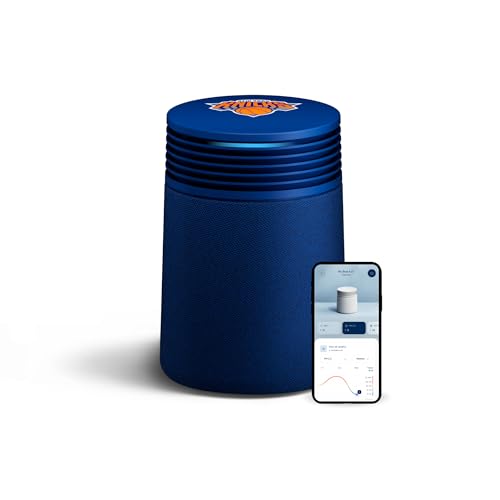
BLUEAIRBLUEAIR x NY Knicks Air Purifiers for Home up to 1,190 Ft²,…Covers up to 1,190 sq ft · HEPABLUEAIR Signature SP1i fits users who want wide coverage and app control for large rooms.Check today’s price on Amazon LevoitLevoit Smart Air Purifiers for Home Large Room up to 2933 Ft²,…Covers up to 2,933 sq ftLevoit Core 600S-P suits very large open spaces and users who want auto mode for hands-off operation.Check today’s price on Amazon
 CowayCOWAY Airmega Halo HEPA Air Purifier for Pets & Allergy, AP-1526D(W), WhiteCovers up to 1,898 sq ft · HEPACoway Airmega Halo AP-1526D fits those who need strong particle removal across large areas.Check today’s price on Amazon
 Rabbit AirRabbit Air A3 SPA-1000N HEPA Air Purifier, Toxin Absorber, BlackCovers up to 1,070 sq ft · True HEPA + Activated CarbonRabbit Air A3 SPA-1000N fits homes near traffic that need both True HEPA and activated carbon for gases.Check today’s price on Amazon
 IQAirIQAir HealthPro Plus XE Air Purifier HyperHEPA WiFi, Large Rooms 1125 sq…Covers up to 1,125 sq ft · True HEPAIQAir HealthPro Plus XE fits users who want True HEPA filtration with Wi‑Fi and an air quality sensor.Check today’s price on Amazon
The specific problem: what traffic pollution brings indoors
Traffic pollution mainly includes fine particulate matter (PM2.5) and a mix of gases like nitrogen dioxide and volatile organic compounds. These pollutants enter homes through doors, windows, and gaps in walls. As a result, indoor air near busy roads often has higher particle counts and odors than homes in quieter locations.
HEPA filters remove the fine particles that stick in the lungs. However, HEPA does not remove gases or many odors. For those, you need activated carbon or other gas-targeting media. In addition, particle levels rise quickly during traffic peaks. So a purifier must both filter particles well and run often to keep indoor levels lower.
For more background, see the U.S. EPA’s guide to air cleaners in the home.
How to size the purifier: the CADR rule for traffic pollution
Correct sizing matters because a unit that is too small will not lower particle levels fast enough. Use this simple CADR rule: aim for CADR in cfm that equals about two thirds of the room area in square feet. For example, a 150 sq ft bedroom needs a CADR roughly 100 cfm.
Also, consider how often you want the air exchanged per hour. Higher air changes per hour work better during sharp pollution spikes. However, louder, higher fan speeds can be disruptive. So balance size with expected noise and run time.
Finally, if you plan to cover multiple rooms or an open-plan living area, size for the total open area rather than each corner. Instead, run one high-CADR unit centrally or use multiple units sized for each area.
Filter types that matter for traffic pollution
True HEPA filters: These traps capture fine particles, including PM2.5. For traffic pollution, insist on a True HEPA stage. It removes the particles that carry most of the health risk.
Activated carbon: This media absorbs gases and many odors. Because traffic emissions contain nitrogen oxides and VOCs, a thick activated carbon layer helps reduce those gaseous pollutants. For example, look for a purifier that lists activated carbon or a specified carbon weight for better gas removal.
Combined approach: Use a purifier that pairs True HEPA with activated carbon. That combination handles both the particles and the gases common in traffic pollution. In addition, some advanced media target specific gases, but basic HEPA+carbon covers the main needs.
Noise, running cost, and practical operation
Noise matters because you will likely run the purifier for long periods. Higher fan speeds move more air, but they make more noise. For example, if you need to run at high speed during rush hour, a unit with a quieter high setting is preferable. Also, some purifiers have effective low and medium settings that still meet CADR needs for many rooms.
Electric use is another factor. A small, efficient unit uses less power and costs less to run over time. However, cheap, undersized units may be forced to run at high speeds continuously, which raises electricity use and noise. As a result, choose a properly sized purifier to balance runtime and power draw.
Filter replacement frequency affects ongoing cost. HEPA filters and carbon filters will need periodic replacement. In addition, heavy pollution or continual use shortens filter life. Finally, consider models with filter-change indicators so you replace media when needed rather than on a fixed schedule.
Placement tips for homes near busy roads
Place the purifier near the source of entry if possible. For example, set it close to a frequently opened door, window, or a room that faces the busy street. This approach reduces the time particles spend in the room air, because the purifier captures them soon after entry.
Also, keep the purifier away from walls and obstructions. Most units need a clear airflow path on intake and exhaust sides. If the unit sits in a corner or behind furniture, performance drops.
Use a single large unit for open floor plans, because a high-CADR purifier moves more air through the whole space. Instead, use multiple smaller units for separated rooms so each space gets adequate air changes. Finally, run the unit continuously during pollution events, and increase the setting during morning and evening traffic peaks.
Mistakes to avoid
- Relying on HEPA alone: HEPA removes particles, but not gases. If you need to reduce traffic-related gases, add activated carbon.
- Buying a unit that’s too small: An undersized purifier will not move enough air. As a result, particle levels remain high even with continuous use.
- Placing the unit in a corner or behind obstructions: This cuts airflow and reduces effectiveness.
- Turning the purifier off at night: Pollution events can happen at any time. Instead, run at a low setting to keep levels lower without loud noise.
- Ignoring filter life and sensor reliability: Replace filters when indicators show, and be cautious of models with unclear sensor behavior.
Recommended units and who they suit
Below is a short look at each recommended product and the kind of user it suits. All units listed include features that matter for traffic pollution in different ways.
BLUEAIR x NY Knicks Air Purifiers for Home up to 1,190 Ft², Signature SP1i (BLUEAIR)
This unit lists coverage up to 1,190 sq ft and uses a HEPA-type filter. It also offers app control and an auto mode. Because it covers large areas and has smart features, it suits users who want wide coverage and remote control. However, confirm whether the filter stage includes activated carbon if gas removal is important.
Levoit Smart Air Purifiers for Home Large Room up to 2933 Ft², Core 600S-P (Levoit)
This model claims coverage up to 2,933 sq ft and has an auto mode. It fits very large open areas and those who want automatic adjustment. In addition, its large coverage means fewer units may be needed for open-plan homes. However, check the specific filter media for carbon content if gases are a primary concern.
COWAY Airmega Halo HEPA Air Purifier for Pets & Allergy, AP-1526D(W), White (Coway)
This Coway model covers up to 1,898 sq ft and uses a HEPA filter. It suits users who need strong particle removal over a large area. Also, consider adding a separate carbon source or venting strategies if traffic gases are a top worry.
Rabbit Air A3 SPA-1000N HEPA Air Purifier, Toxin Absorber, Black (Rabbit Air)
This unit lists coverage up to 1,070 sq ft and combines True HEPA with activated carbon. Because it pairs both particle and gas media, it is a strong option for traffic pollution near busy roads. In addition, it suits users who value gas adsorption as well as particle removal.
IQAir HealthPro Plus XE Air Purifier HyperHEPA WiFi, Large Rooms 1125 sq ft (IQAir)
The IQAir model covers up to 1,125 sq ft and uses True HEPA. It includes Wi-Fi and an air quality sensor. This one is suitable for users who want sensor feedback and precise particle filtration. However, if gases are a major concern, verify the carbon or gas-filtering options available for the specific model.
Finally, no single purifier cures every problem. For traffic pollution, choose True HEPA plus sufficient activated carbon, size using the CADR rule, and place units where pollution enters. Also, run the purifier continuously during high-traffic times for best results.
Not sure what size you need? Our free size calculator tells you the right CADR for your room in 30 seconds.
Frequently asked questions
Will a HEPA filter remove traffic-related gases?
No. HEPA filters capture particles like PM2.5 but do not remove most gases or VOCs. For gases from traffic, choose a purifier that also includes activated carbon or a gas-targeted media.
How do I use CADR to pick the right size?
Aim for a CADR in cfm roughly two thirds of the room area in square feet. For example, a 150 sq ft room needs about 100 cfm CADR. This rule helps ensure the unit can clear particles fast enough during traffic peaks.
Where should I place the purifier in a home near a busy road?
Place it near the main entry point for outdoor air, such as a window or door that faces the road. Also, keep the unit clear of walls and furniture so intake and exhaust are unobstructed.
Should I run the purifier constantly?
Yes; running continuously at a low or medium speed keeps particle levels lower over time. Increase the fan during rush hours if you notice spikes in pollution or odors.
How important is activated carbon?
Activated carbon is important if gases or odors from traffic are a concern. It adsorbs many VOCs and combustion gases that HEPA does not capture. However, carbon performance varies with thickness and type, so check the product details.
Black Friday and Cyber Monday 2026: see our hand-picked air purifier and filter deals.
