
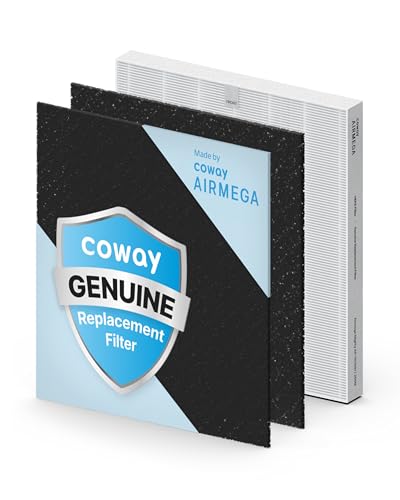
In brief: Blueair 211i Max vs Coway AP-1512HH compared side by side: CADR, noise, filters, running costs and features, with a clear winner for each type of buyer.

Quick verdict (winner-by-use)
Winner by use: Choose the Blueair Blue Pure 211i Max if you value a washable, reusable fabric pre-filter, color/customization options and Blueair’s HEPASilent marketing (fewer disposable pre-filters to buy). Choose the Coway AP-1512HH if you prefer a conventional True HEPA + carbon pre-filter system with manufacturer-stated HEPA capture and a clearly defined replacement cadence and lower-cost OEM filter pack.
Editorial plan: what this comparison focuses on
This comparison focuses on replacement filter types, washable pre-filter details, manufacturer filter claims, and third-party replacement examples. I explain how those filter-design choices affect maintenance, odor control and ownership cost, and I flag important performance specs that are missing and that you should confirm before buying.
Side-by-side facts table
| Spec / Feature | Blueair Blue Pure 211i Max | Coway Airmega AP-1512HH / 200M |
|---|---|---|
| Brand | Blueair | Coway |
| Model (context) | Blue Pure 211i Max — filter and pre-filter listings | Airmega AP-1512HH / 200M — replacement filter listings |
| Primary filter type | HEPA + washable fabric pre-filter (Blue Pure F2MAX replacement) | True HEPA + carbon pre-filter |
| Notable filter features | Washable, removable fabric pre-filter (custom colors); marketing claim: HEPASilent dual filtration technology | Manufacturer lists True HEPA (designed to capture 99.97% as small as 0.03 microns); carbon pre-filters for odors/gases |
| Replacement filter – OEM price | Check the current price on Amazon for the Blue Pure F2MAX replacement filter for 211i Max. | Check the current price on Amazon for the Coway AP-1512HH 1‑Year replacement pack. |
| Washable pre-filter cost | Check the current price on Amazon for genuine Blueair washable pre-filters. | Not listed as washable; Coway uses replaceable carbon pre-filters. |
| Replacement cadence | Not listed. | HEPA ~12 months; carbon pre-filter ~6 months (noted in the maker’s listing). |
| Third-party replacement options | OEM Blueair parts; no third‑party listings listed. | Third-party replacement filters available (example: isinlive AP-1512HH filter pack; note: non‑OEM). |
| Compatibility notes | Blueair pre-filters and replacement filters noted as not compatible with 211+ and 211+ Auto | isinlive listing notes compatibility with AP-1512HH, AP-1512HHS and 200M; replaces part# 3304899 (non‑OEM product note) |
| Claims about performance / energy | HEPASilent claim: “more clean air faster” and “uses less noise and energy than HEPA alone” (manufacturer marketing) | HEPA capture claim: “Designed to capture 99.97% of airborne allergens as small as.03 microns”; Power consumption listed as 77 W in replacement product features |
| Missing / not listed | CADR (smoke/dust/pollen), room coverage (sq ft), noise levels, fan speeds, smart features — Not listed. | CADR (smoke/dust/pollen), room coverage (sq ft), noise levels, smart features — Not listed. |
What the filter differences mean in everyday use
Two choices dominate this comparison: Blueair’s washable fabric pre-filter layered with a Blue Pure replacement filter, versus Coway’s conventional True HEPA cartridge plus carbon pre-filter. Each approach has practical implications for cleaning behavior, odor control and what you pay over time.
Washable fabric pre-filter (Blueair)
The Blueair listing emphasizes a removable, washable fabric pre-filter that traps larger particles — pollen, pet dander and household dust — and is designed to be vacuumed or machine-washed on a gentle cycle and hung to dry. Because the pre-filter is reusable, you won’t be buying a disposable pre-filter as frequently; that reduces the recurring cost and the amount of plastic/packaging you throw away.
Washable pre-filters are effective at holding coarse material, so the HEPA stage receives fewer large particles and may stay cleaner longer. That can delay replacement of the main filter if you maintain the fabric pre-filter regularly. The trade-off is that fabric pre-filters do not adsorb gases and volatile organic compounds (VOCs) the way carbon media does—so odor control is usually weaker unless the main filter media includes a dedicated carbon layer.
True HEPA + carbon pre-filter (Coway)
Coway’s listing describes a True HEPA filter “designed to capture 99.97% of airborne allergens as small as.03 microns” plus carbon pre-filters for odors and gases, with manufacturer-recommended lifetimes: HEPA ~12 months and carbon pre-filters ~6 months. This is the conventional multi-stage approach: a disposable pre-filter catches large particles, the HEPA captures fine particulates, and carbon removes odors and many gaseous contaminants.
The advantage: predictable replacement intervals and an explicit carbon stage for odor reduction. The disadvantage is ongoing disposable pre-filter purchases and more frequent hardware swaps compared with a washable pre-filter.
HEPASilent marketing vs stated HEPA capture
Blueair’s product text promotes HEPASilent dual-filtration technology and claims it delivers “more clean air faster” while using “less noise and energy than HEPA filtration alone.” That is presented as manufacturer marketing in the maker’s listing. Coway’s listing provides a specific HEPA capture figure and explicit replacement lifetimes for each filter stage. Treat the two as different kinds of manufacturer information: one describes a proprietary approach, the other gives a numerical capture claim and replacement cadence.
Maintenance, replacement cadence and running-cost examples
Deciding which unit is cheaper to own hinges on filter prices, how often you replace the main filter, and whether you use aftermarket replacements. The maker’s listings show OEM filter options and at least one non‑OEM option; they list Blueair’s washable pre-filter and Coway’s 1‑year pack with recommended cadences.
Filter prices and what they cover (note: check the current price on Amazon for up-to-date pricing)
- Blueair Blue Pure F2MAX replacement filter (OEM): check the current price on Amazon.
- Blueair genuine washable pre-filter examples: check the current price on Amazon.
- Coway AP-1512HH 1‑Year replacement filter pack (OEM): check the current price on Amazon — the maker’s listing indicates it includes True HEPA (12‑month lifetime) and carbon pre-filters (6‑month lifetime).
- Third-party (non‑OEM) Coway replacement pack example: isinlive AP-1512HH filters — check the current price on Amazon. The listing explicitly states it is not OEM and lists dimensions and compatibility.
Example ownership-cost scenarios (use the maker’s listed information only)
Below are simple scenarios using only the maker’s listed items. Assumptions are stated rather than inventing unknown replacement cadences for Blueair.
Scenario A — Blueair, if you replace the main filter annually
- Annual OEM filter cost for Blueair (assuming one F2MAX replacement per year): check the current price on Amazon.
- Pre-filter cost: if you reuse the washable pre-filter for multiple years, cost per year is minimal (depends on how often you replace a damaged fabric pre-filter; replacement cadence Not listed in the maker’s listing).
- Net: roughly $70/year in OEM main-filter expense (plus sporadic pre-filter purchases if desired).
Scenario B — Coway using OEM 1‑Year pack
- Annual OEM filter cost for Coway (one 1‑Year replacement pack per year): check the current price on Amazon; the maker’s listing indicates it covers HEPA and carbon replacements at suggested intervals.
- Net: check the current price on Amazon for OEM filter replacement costs.
Scenario C — Coway using the non‑OEM pack shown in the listing
- Annual cost: check the current price on Amazon for the non‑OEM isinlive pack, which the listing shows includes two HEPA and six carbon pre-filters.
- Net: substantially lower per the listing, but non‑OEM status may affect fit, performance and warranty—see the compatibility and third‑party section below.
Takeaway: based on the maker’s listings alone, Coway’s 1‑year replacement pack can look cheaper annually than Blueair’s OEM main filter if you replace Blueair’s main filter once a year. A washable Blueair pre-filter reduces recurring pre-filter spend; Coway’s included carbon pre-filters will require periodic replacement according to the maker’s listing. Because Blueair’s recommended filter-replacement cadence is Not listed in the maker’s listing here, confirm how often Blueair recommends replacing the main F2MAX filter to understand annual costs precisely.
Third‑party filters, compatibility and warranty considerations
The maker’s listings include a non‑OEM Coway replacement example (isinlive) and explicit compatibility notes for Blueair parts. Use these facts to guide decisions about cost versus risk.
The isinlive listing is explicit: the product is not OEM, it lists dimensions and compatibility with AP-1512HH/AP-1512HHS/200M, and it recommends replacing the HEPA every 12 months and pre-filter every 6 months. The listing also advertises more carbon pre-filters than the original pack and a lower cost. That can materially reduce annual spend, but the listing itself flags it as non‑OEM; non‑OEM filters may differ in media quality, carbon loading, electrostatic treatment and fit. The maker’s listings do not describe independent testing or warranty effects from using non‑OEM filters, so confirm warranty terms with Coway if that matters to you.
Blueair listings state specific compatibility: the Blue Pure F2MAX and the washable pre-filters are not compatible with certain other Blueair models (211+ and 211+ Auto). That is important if you are shopping for parts across similar model names; check model numbers on the unit before ordering.
How these differences affect indoor odors, allergies and maintenance routines
If household odor, cooking smells or smoke from wildfire are a primary concern, the presence and quality of carbon media matters. The Coway listing explicitly includes carbon pre-filters for odors and gases and recommends replacing them every six months—this is a clear benefit for odor removal based on the maker’s listing. Blueair’s washable fabric pre-filter is focused on trapping larger particles; the Blueair listing here does not claim a dedicated carbon odor stage in the washable pre-filter.
For allergy sufferers focused on particulate capture, Coway’s explicit True HEPA capture claim (99.97% as small as 0.03 microns) provides a numeric assertion you can evaluate. Blueair’s HEPASilent statement is a manufacturer claim describing a dual-filtration approach and energy/noise advantages; it does not supply a percent capture figure in the maker’s listing. Both claims are vendor-provided—neither is an independent lab result in the maker’s listing—so if you require verified test numbers, look for independent CADR and lab-tested capture figures before buying.
Maintenance routines diverge: with Blueair you’ll likely spend time vacuuming and occasionally washing the fabric pre-filter; with Coway you’ll be removing and replacing disposable carbon pre-filters on a schedule. Consider which routine fits your lifestyle: one emphasizes reusable fabric care, the other predictable cartridge swaps.
Decision scenarios — choose A if / choose B if
Choose Blueair 211i Max if
- You prefer a washable, reusable fabric pre-filter that reduces disposable-pre-filter purchases and can be vacuumed or machine‑washed.
- You value the aesthetic option of customizable fabric pre-filters (listed colors) and want the ability to refresh the look without changing the entire filter assembly.
- You accept manufacturer marketing language (HEPASilent) and want a Blueair OEM main filter (F2MAX). Check the current price on Amazon.
- You want to minimize recurring pre-filter purchases and are comfortable maintaining a washable fabric layer.
Choose Coway AP-1512HH if
- You want a conventional True HEPA + carbon pre-filter system with a stated capture figure (99.97% as small as.03 microns in the maker’s listing).
- You prefer explicit replacement intervals from the manufacturer (HEPA ~12 months, carbon pre-filter ~6 months) to plan costs and maintenance.
- You prioritize odor and gas removal via an included carbon pre-filter stage (the maker’s listing lists carbon filters for odors/gases).
- You want lower OEM annual filter spend per the maker’s listing for Coway’s 1‑year replacement pack, or are willing to consider non‑OEM savings (isinlive example) while accepting the non‑OEM trade-offs.
Limitations and the missing data you should confirm before buying
Several performance items that matter aren’t listed here. Confirm these data points from manufacturer pages, independent lab testing or retailer specs before committing.
- CADR (smoke / dust / pollen) ratings — Not listed.
- Room coverage (square feet) or recommended room size — not provided.
- Noise levels and fan-speed profiles — Not listed.
- Exact recommended replacement cadence for Blueair’s main filter — Not listed (Blueair pre-filter is washable but main filter lifetime isn’t listed here).
- Details on what the Blueair F2MAX media contains (activated carbon layer or not) — Not listed; check if odor control is needed.
- Independent verification of capture claims and energy-noise comparisons — manufacturer claims; verify with independent testing or third‑party reviews.
- Warranty and the manufacturer stance on using non‑OEM filters — Not listed; verify whether using non‑OEM filters affects coverage.
Practical buying checklist
Before you click purchase, confirm the following using product pages or independent reviews (internal resources that may help: AirPurifierFAQ’s comparison pages and reviews):
- Exact CADR and recommended room size for the specific model you intend to buy.
- Blueair’s recommended replacement interval for the F2MAX filter (to calculate realistic annual cost).
- Whether the Blueair replacement filter includes any carbon layer if odor control is important.
- Noise measurements if you plan to use the purifier in a bedroom or quiet space.
- Manufacturer warranty terms and whether using third‑party filters impacts coverage.
For deeper background on how these numbers affect real-world performance, see our review and comparison hubs: Air Purifier Reviews, Air Purifier Comparisons and Best Air Purifiers by Room, Need and Budget.
Final recommendation and next steps
If ongoing filter cost and predictable replacement intervals are your top priorities and you want explicit carbon odor control, the Coway AP-1512HH is the more transparent option: the maker’s listing shows a 12‑month HEPA life and a 6‑month carbon pre-filter life, and the maker lists OEM filter pack pricing. If you prefer a reusable washable pre-filter, color customization and Blueair’s HEPASilent dual‑filtration marketing, the Blueair Blue Pure 211i Max offers a washable pre-filter and an OEM F2MAX replacement; check the maker’s listing for the recommended main‑filter replacement interval and current filter pricing before finalizing total cost.
Both models have credible, product-focused selling points in the maker’s listings. If you want help interpreting CADR, room size or third‑party filter trade‑offs once you locate those missing specs, come back with those numbers and I’ll help translate them into a definitive purchase recommendation.
Ready to compare more models or dive into tests and lab numbers? Visit our comparison and review hubs: Blueair vs Coway, Air Purifier Comparisons and Air Purifier Reviews.
Sources: Blueair 211I Max vs Coway
To keep our Blueair 211I Max vs Coway information accurate, we rely on independent references such as the EPA’s Guide to Air Cleaners in the Home, AHAM Verifide CADR data and manufacturer spec sheets. See how we evaluate air purifiers and our editorial policy for details.
