

In brief: Blueair vs Coway compared side by side: CADR, noise, filters, running costs and features, with a clear winner for each type of buyer.

Winner-by-use (short verdict)
Winner by use: Choose Blueair when you want a compact, app‑controlled bedroom or apartment purifier (or a single unit that adds humidification) — the Blueair Signature/SP1i and 2‑in‑1 list HEPA filtration, app control and compact, whisper‑quiet operation. Choose Coway when you prefer cartridge-style maintenance, larger coverage options and models with IEST‑certified HEPA, advanced sensors and modular filter choices.
Side-by-side specs (representative models)
| Attribute | Blueair (BLUEAIR x NY Knicks / Signature SP1i) | Coway (Coway Airmega 150) |
|---|---|---|
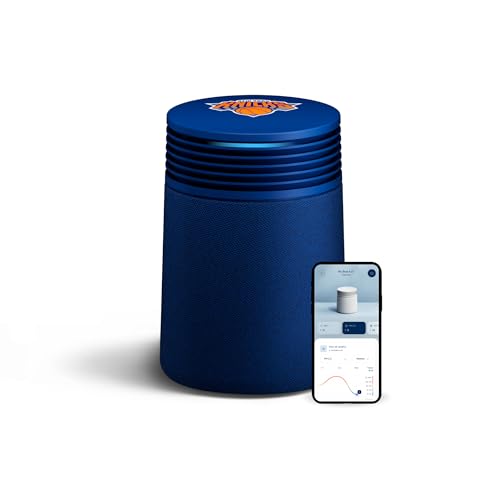
| Brand / model | BLUEAIR — BLUEAIR x NY Knicks (Signature SP1i) | Coway — Coway Airmega 150 |
| Price (as listed) | $159.18 | $189.99 |
| Coverage (per hour) | Cleans up to 1,190 sq ft per hour (248 sq ft in 12.5 minutes) | Cleans up to 1,035 sq ft per hour (518 sq ft in 30 minutes) |
| Filter type / claimed efficiency | HEPA — captures 99.97% of airborne particles down to 0.1 microns (product claim) | HyperCaptive system: HEPA + Carbon + Washable Filter — reduces 99.97% of 0.3‑micron particles and 99% of VOCs/odors (product claims) |
| Smart features | App Control, Auto Mode, real‑time air quality monitoring (product lists) | Auto Mode; Easy Touch Display (no app listed in product facts) |
| Special features | Compact, quiet for bedrooms/nurseries; smart app scheduling | Cartridge design for cleaner filter replacement; touch controls |
| CADR / numeric values | Not specified in provided data for this model | Not specified for Airmega 150 in provided data |
| Noise | Described as “whisper‑quiet” for bedrooms (no dB provided) | Noise not specified for this model in the provided data |
| Product page | Blueair — Signature SP1i | Coway — Airmega 150 |
How they differ — meaningful, model‑backed distinctions
Coverage and model range
The supplied Blueair facts focus on compact smart and a 2‑in‑1 purifier+humidifier option. The Signature/SP1i (marketed in a Knicks co‑brand) is presented as a compact unit that “cleans 248 sq ft in 12.5 minutes or 1,190 sq ft every hour,” making it suited to bedrooms, dorms and apartments. Separately, a Blueair 2‑in‑1 purifier+humidifier model is listed with coverage of 1,875 sq ft and humidification designed for up to 60 hours between refills.
Coway’s provided facts show a broader range of scale in the supplied models. The Airmega 150 covers 518 sq ft in 30 minutes (1,035 sq ft in 60 minutes). Other Coway models in the dataset extend to 1,898 sq ft (Halo) and 3,285 sq ft (Airmega 450), demonstrating that the brand’s documented line includes larger‑room and whole‑home options in the supplied material.
Filtration approach and maintenance
Blueair’s compact model lists HEPA filtration with a stated 99.97% capture claim and calls out removal down to 0.1 microns. The Blueair 2‑in‑1 model adds details on washable wick filters for humidification and a particle & carbon purifier filter meant to last up to nine months.
Coway emphasizes multi‑stage, cartridge‑style systems in the supplied facts. The Airmega 150 uses a “HyperCaptive Filtration System” combining HEPA, carbon and a washable filter and highlights the convenience of a contained cartridge for cleaner filter removal. Other Coway models include a 3‑in‑1 composite filter and explicit custom filter options (Fresh Starter, Allergen, Intense Smoke) in the product facts provided.
Smart controls, sensing and user interface
Blueair’s small smart unit lists app control, Auto Mode and real‑time air quality monitoring — the product copy stresses remote control of fan speed and scheduling through the Blueair app. The 2‑in‑1 model also promises app control for humidity and air quality settings.
Coway models in the supplied data emphasize Auto Mode and touch controls; some Coway models add dedicated sensing technologies. For example, the Airmega Halo lists a MegaScan particle sensor and a real‑time AQI indicator in the product facts. The supplied Airmega 150 listing includes Auto Mode and an Easy Touch Display but does not include an app in the provided data.
Certifications and specialized tech (what the product facts show)
Coway’s Halo model (included in the supplied facts) calls out IEST‑certified HEPA filtration; the Airmega 450 lists documented CADR values and Energy Star certification in its supplied listing. Blueair’s entries in the supplied data do not include IEST certification or CADR dB values for the compact model; they do, however, include specific humidification runtime and washable wick details for the 2‑in‑1.
Known limitations in the available product information
Useful purchase details are missing for a full technical apples‑to‑apples comparison. For these exact models the supplied facts do not include:
- CADR numbers for the Blueair Signature/SP1i (the small Blueair listing) or for the Coway Airmega 150—so you can’t directly compare CADR values for those two models from the provided data.
- Consistent noise (dB) figures for both small models; the Blueair compact is described as “whisper‑quiet” with no dB, while the Airmega 150 noise level is not provided in its listing.
- Filter lifetime and replacement costs for Coway Airmega 150 (the Blueair 2‑in‑1 lists a 9‑month filter life for particle & carbon filters, and a washable wick), so long‑term cost comparisons must be based on manufacturer details outside the supplied set.
- Explicit app connectivity for Coway Airmega 150—the product facts list Auto Mode and an Easy Touch Display but do not list an app for that model.
These omissions don’t negate the supplied strengths (coverage claims, filtration types, sensor features) but they do mean a buyer who needs CADR, detailed noise numbers, or replacement‑cost estimates should seek those specific figures before purchase.
Maintenance and filter handling — what the facts say
Maintenance style is a practical point of difference in the supplied facts. Coway’s Airmega 150 highlights a cartridge design that “contains” filters on a single portable cartridge so replacement is cleaner and easier. The Airmega 150 also lists a washable filter as part of its HyperCaptive system, which can reduce the frequency of full filter swaps in practice.
Blueair’s 2‑in‑1 lists machine‑washable wick filters for humidification and states the particle & carbon filter can last up to nine months; the compact Blueair SP1i does not list a filter lifespan in the provided facts. The difference is simple: Coway’s supplied facts emphasize a contained cartridge for less messy replacements; Blueair’s 2‑in‑1 emphasizes a combination of washable wick and a specified particle/carbon filter lifetime.
Practical decision scenarios
If you sleep in a small bedroom or need app control
Recommendation from supplied facts: Blueair (Signature/SP1i). The compact Blueair model is explicitly positioned for bedrooms, nurseries and small apartments, is described as “whisper‑quiet,” and lists app control, Auto Mode and real‑time monitoring — features useful for night‑time or remote control.
If you want humidification built into the purifier
Recommendation from supplied facts: Blueair (2‑in‑1 purifier + humidifier). The Blueair 2‑in‑1 model is rated to purify 1,875 sq ft per hour, provides 360° InvisibleMist humidification up to 60 hours between refills, and includes washable wick filters and app control for humidity and air quality levels.
If you prefer contained cartridge replacements and an easy swap
Recommendation from supplied facts: Coway (Airmega 150). The Airmega 150 calls out a cartridge design that keeps filters contained and easier/cleaner to remove and replace — suitable for shoppers who dislike dirty filter changes.
If you need scalable coverage up to whole‑home sizes or formal certifications
Recommendation from supplied facts: Coway. Within the supplied Coway product set there are models that scale up to 1,898 sq ft (Halo) and 3,285 sq ft (Airmega 450). The Halo lists an IEST‑certified HEPA filter and a MegaScan particle sensor; the Airmega 450 includes CADR numbers and Energy Star in the supplied data.
If you want targeted filter choices (smoke, allergens, VOCs)
Recommendation from supplied facts: Coway. The supplied Coway listings include custom filter options (Fresh Starter, Allergen, Intense Smoke) and an Airmega 150 that combines HEPA, carbon and a washable stage to reduce particles and VOCs/odors according to the product claims.
Buyer’s checklist (what to confirm before you buy)
- Confirm CADR and dB figures for the exact model you’re eyeing — the compact Blueair listing didn’t include CADR values in the supplied facts; Coway models vary and some supplied entries include CADR while others don’t.
- If replacement cost and frequency matter, check the manufacturer’s replacement filter recommendations and pricing — the Blueair 2‑in‑1 lists a 9‑month particle/carbon filter life in the supplied facts, but other models’ lifespans and replacement costs are not listed here.
- If an app or remote control is essential, verify app availability for the specific Coway model; the Airmega 150 listing includes Auto Mode and touch controls but does not list an app in the supplied data.
- If noise matters, request or check decibel values for the precise model — descriptive terms like “whisper‑quiet” don’t replace dB numbers for direct comparisons.
Where each option fits in a practical shopping plan
Start by matching coverage to your primary room. If your main use case is a bedroom, nursery or small living room and you value app control and quiet operation, the supplied Blueair compact listing is targeted at that use. If you want humidification built into the same unit, the Blueair 2‑in‑1 is the supplied choice to consider.
If your requirements include larger open‑plan spaces, multiple rooms, or whole‑home filtration, Coway’s supplied product set includes models that scale to those sizes and lists technologies aimed at that use (HyperVortex airflow, larger CADR values and IEST‑certified HEPA on specific models). If you dislike exposed filters during replacement, Coway’s cartridge design is highlighted as a cleaner option in the supplied facts.
Where to read more (site resources)
If you want deeper brand or model comparisons beyond the supplied facts here, see our general comparison pages and reviews to compare models and technical metrics that may not be included in a single product listing:
Direct product links (supplied pages)
- Blueair — BLUEAIR x NY Knicks (Signature SP1i)
- Blueair — Air Purifier + Humidifier (2‑in‑1)
- Coway — Airmega 150
- Coway — Airmega 450 (large model in supplied facts)
- Coway — Airmega Halo (IEST‑certified HEPA in supplied facts)
Final note — a fact‑first way to choose
This comparison uses only the supplied product facts to highlight practical differences: Blueair’s supplied entries focus on compact smart purifiers and a two‑in‑one humidifier/purifier with app control and washable wick filters; Coway’s supplied entries emphasize cartridge maintenance, larger coverage models, custom filter options and models that list IEST certification and CADR numbers. Confirm CADR, noise (dB) and replacement filter details for the specific model you plan to buy before finalizing.
Sources: Blueair vs Coway
To keep our Blueair vs Coway information accurate, we rely on independent references such as the EPA’s Guide to Air Cleaners in the Home, AHAM Verifide CADR data and manufacturer spec sheets. See how we evaluate air purifiers and our editorial policy for details.
