
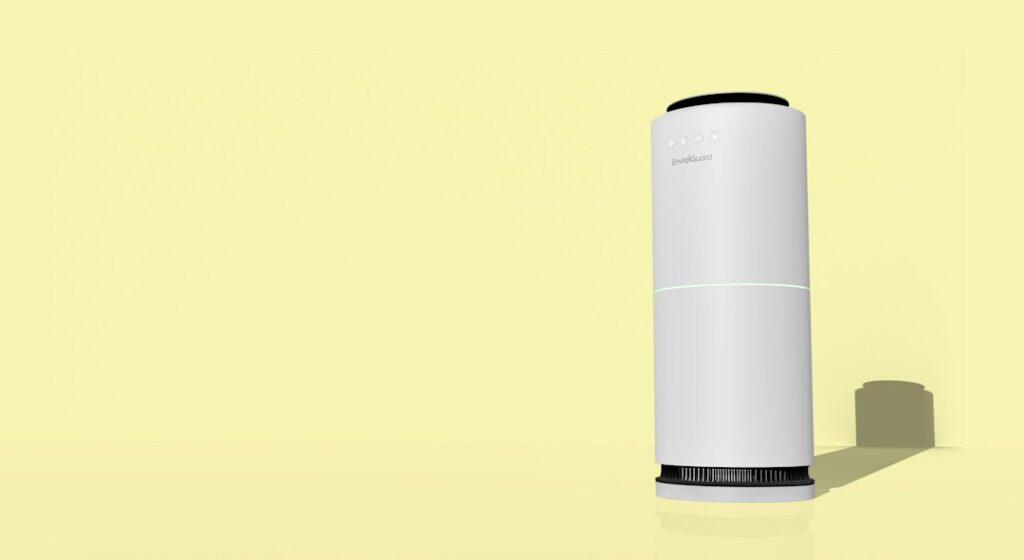
Most mainstream home air purifiers—true HEPA units and models that combine HEPA with activated‑carbon—do not produce ozone. Devices marketed as “ozone generators” and many consumer ionizers do intentionally produce ozone or can generate measurable ozone as a byproduct. Because ozone is a respiratory irritant, avoid ozone‑emitting devices in occupied rooms and choose certified filtration systems for nurseries and homes.
Why some air purifiers produce ozone
Ozone (O3) is a strong oxidant. Some machines use ozone intentionally as the active cleaning mechanism: the device generates ozone, which reacts chemically with odors or microbes. Other technologies can generate ozone unintentionally as a byproduct.
How this plays out across common technologies:
- Ozone generators: Built to make ozone. Product descriptions often mention “ozone,” “O3,” “oxidation,” or “ozone plates.” Manufacturers typically warn these devices are for unoccupied spaces; several commercial models on the market (for example, units sold under brands such as New Comfort, Enerzen, and Ivation) advertise large ozone outputs and include use‑in‑unoccupied‑space warnings.
- Ionizers / electrostatic precipitators: These release charged ions to cluster or capture particles. Depending on design and voltage, some ionizers produce measurable ozone. Not all ionizers generate significant ozone—check specifications or independent tests for each model.
- Filtration systems (HEPA, activated carbon): True mechanical HEPA filters and activated‑carbon adsorbents remove particles and many odors without producing ozone. These are the safe, standard choice for occupied rooms.
- UV lamps: UV light itself does not make ozone unless the lamp emits short‑wave UV wavelengths below roughly 240 nm, or the device combines UV with an ozone‑producing element. Verify lamp type in the specifications.
Quick reference: purifier types and ozone risk
| Purifier type | Typical ozone production | Typical use-case | Safety note |
|---|---|---|---|
| True HEPA (mechanical) | None | Bedrooms, nurseries, living rooms | Recommended for occupied spaces |
| HEPA + activated carbon | None | Particle + odor removal | Good choice for homes; carbon helps odors |
| Ionizers / electrostatic | May produce measurable ozone | Personal/portable use; some models for bedrooms | Check for measured ozone output before use |
| Ozone generators | Intentionally produces ozone | Odor remediation in unoccupied spaces | Not for occupied use; follow ventilation guidance |
| UV-only (non‑ozone) | Typically none (unless short‑wave UV) | Supplemental microbial control in HVAC | Confirm lamp wavelength and claims |
How to check a product for ozone (step‑by‑step)
- Read the description and manual. Search for the words “ozone,” “O3,” “ozone plates,” “oxidation,” or “ionizer.” Explicit ozone claims are a red flag for occupied use.
- Look for certifications and specs. AHAM certification, CADR numbers, or CARB (California Air Resources Board) compliance indicate filtration‑based designs. Products that fail to meet CARB limits are often ozone generators or high‑ozone ionizers and may be restricted from sale in some states.
- Check independent measurements. Reputable lab tests and reviews will report ozone emissions. If a product lacks independent verification, treat manufacturer claims cautiously.
- Ask the manufacturer. If unclear, request measured ozone output (often reported in mg/h or ppm) and whether operation assumes an unoccupied space.
- Choose by intended use. For occupied rooms—especially nurseries, bedrooms, or homes with people who have asthma—select HEPA + carbon units and avoid devices that require the room to be vacated.
Practical implications and safety guidance
Regulatory and health authorities (including the U.S. EPA and industry groups such as AHAM) advise against using ozone‑producing air cleaners in occupied spaces. Ozone is a respiratory irritant that can worsen symptoms for people with asthma or other respiratory conditions; children and older adults are more susceptible.
- Never run an ozone generator in a room while people, pets, or plants are present. Manufacturers of ozone machines typically include this warning.
- If an ozone device is used for remediation, follow the manufacturer’s instructions for vacancy time and airing out the space before re‑entry.
- Prefer HEPA filters with activated carbon for homes where people live, sleep, or where infants are present. For nursery guidance, see our recommended models: Best Air Purifiers for Nurseries & Babies (2026).
- Be wary of marketing language that promises to “destroy” all pathogens or “freshen” rooms via oxidation without specifying safety limits—those claims often indicate ozone or other oxidizing chemistry.
Common misunderstandings
- “All air purifiers make ozone.” False. Filtration‑based purifiers (true HEPA, carbon) do not create ozone.
- “Ozone removes everything safely.” Ozone can oxidize certain odor molecules and chemicals, but it is not a safe general‑purpose cleaning method in occupied spaces.
- “Ionic equals harmless.” Some ionizers emit negligible ozone; others emit measurable amounts. Check the model’s measured output.
- “Low ozone is harmless.” Even low concentrations can irritate sensitive individuals; follow EPA and AHAM guidance and avoid deliberate ozone exposure in occupied rooms.
Related questions
Are ionic air purifiers safe?
Short answer: It depends on the model. Some ionizers produce little ozone; others produce enough to be a concern. Check independent ozone measurements and prefer filtration for occupied rooms.
Are ozone generators safe?
Ozone generators are intended for unoccupied spaces and remediation tasks. They are not recommended for use in rooms while people or pets are present; follow manufacturer and regulatory guidance.
Are UV air purifiers safe?
UV is generally safe when properly enclosed; whether a UV unit produces ozone depends on the lamp wavelength. Confirm lamp type and installation details.
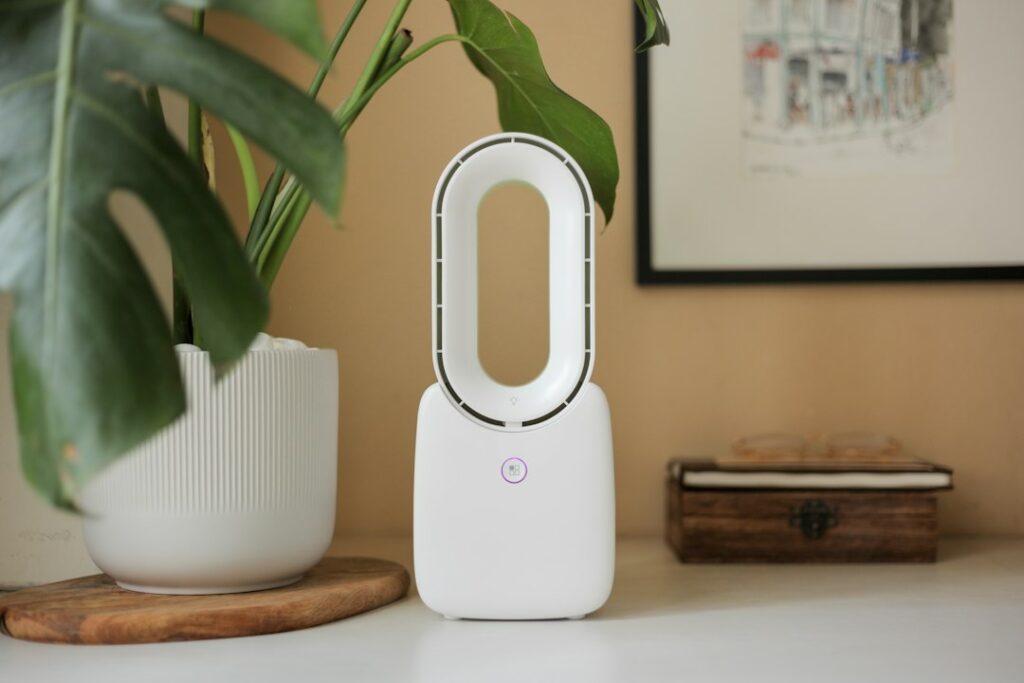
Are air purifiers safe for babies?
Yes—when you use filtration‑based (HEPA + carbon) devices that do not emit ozone. Check certifications, place the unit so airflow and noise are acceptable, and follow manufacturer maintenance guidance.
Sources and further reading
- U.S. Environmental Protection Agency (EPA) guidance on ozone generators and indoor air quality.
- Association of Home Appliance Manufacturers (AHAM) position statements and certification information for air cleaners.
- Peer‑reviewed literature on ozone as a respiratory irritant and on device emissions—look for controlled lab measurements of ozone output and health impact studies in occupational and environmental health journals.
- For definitions and technical terms, see our glossary: Ozone (O3): What It Means for Air Purifiers and the broader Air Purifier Glossary.
Sources for “Do Air Purifiers Produce Ozone?”
To keep our answer to “Do Air Purifiers Produce Ozone?” accurate, we rely on independent references such as the EPA’s guidance on ozone generators sold as air cleaners, AHAM Verifide CADR data and manufacturer spec sheets. See how we evaluate air purifiers and our editorial policy for details.
