Manfh
2026 Upgraded High Capacity Ozone Generator Odor Removal Up to 6000…
BrandManfhCoverage6,000 sq ft
See today’s price on Amazon
View product details
Product information comes from the current AirPurifierFAQ catalog and should be verified on Amazon before purchase.


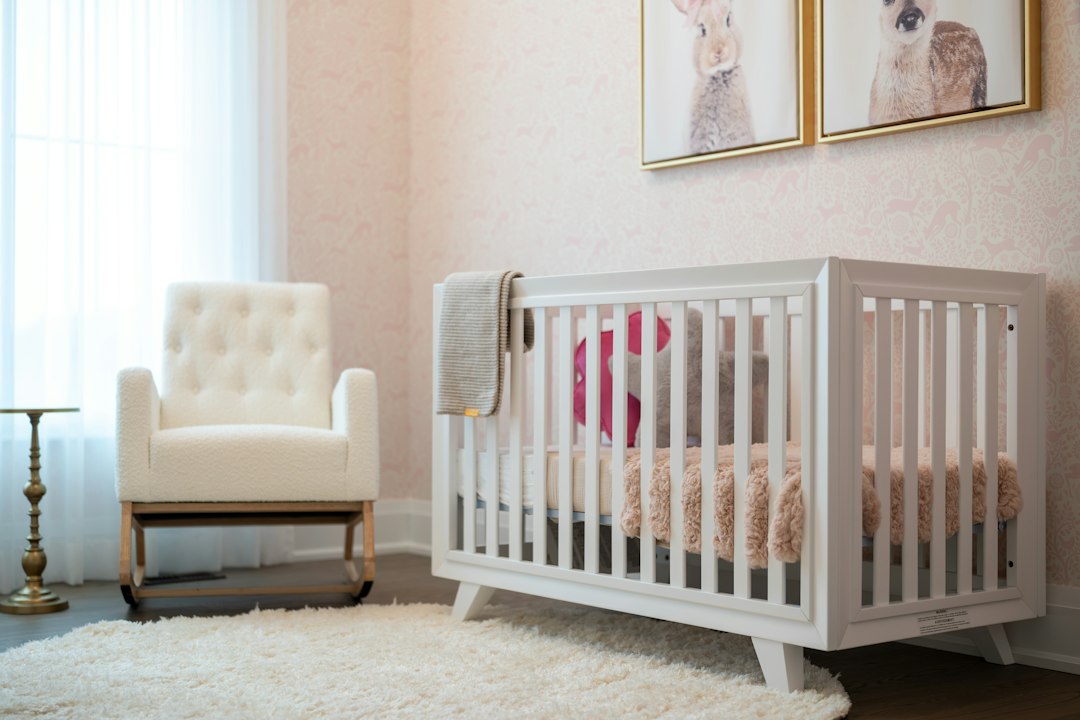
In brief: Best Air Purifier for Nursery: our top air purifiers for nurseries with no ozone and low noise, ranked by verified CADR, noise (dB) and yearly filter cost.
Ranked by our score from each maker's published specs. We earn a commission when you buy through our links, at no extra cost to you. Tap any button to see today's price on Amazon.

How this product scored 9.7 / 10
Based on the maker's specs as listed on Amazon. We don't lab-test every model. See how the score works.

How this product scored 9.7 / 10
Based on the maker's specs as listed on Amazon. We don't lab-test every model. See how the score works.

How this product scored 9.4 / 10
Based on the maker's specs as listed on Amazon. We don't lab-test every model. See how the score works.

How this product scored 9.3 / 10
Based on the maker's specs as listed on Amazon. We don't lab-test every model. See how the score works.

How this product scored 8.8 / 10
Based on the maker's specs as listed on Amazon. We don't lab-test every model. See how the score works.

How this product scored 8.5 / 10
Based on the maker's specs as listed on Amazon. We don't lab-test every model. See how the score works.

How this product scored 8.3 / 10
Based on the maker's specs as listed on Amazon. We don't lab-test every model. See how the score works.

How this product scored 8.3 / 10
Based on the maker's specs as listed on Amazon. We don't lab-test every model. See how the score works.
How this product scored 8.1 / 10
Based on the maker's specs as listed on Amazon. We don't lab-test every model. See how the score works.

How this product scored 8.1 / 10
Based on the maker's specs as listed on Amazon. We don't lab-test every model. See how the score works.
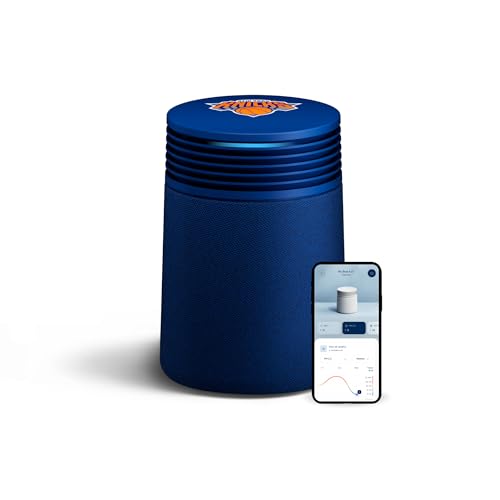
Top pick: Blueair SP3i (9.7/10). Runs as quietly as 19 dB; HEPA filter for fine dust, pollen and dander; covers rooms up to 2,390 sq ft. It scores highest on this list, led by room fit and filtration.
Runner-up: Blueair SP1i (9.7/10, quietest pick): covers rooms up to 1,190 sq ft. Also worth a look: Levoit air purifier (up to 222 sq ft) (9.4/10, best for odors): runs as quietly as 24 dB.
Scores come from published specs, certifications and brand track record, weighted for nurseries. See how we score.
This page is aimed at parents, caregivers and family members choosing an air purifier to run in a nursery or baby’s bedroom. Key priorities are safety (no ozone-producing devices), effective particle filtration (true HEPA where possible), very low sleep-time noise and simple child-safe controls. Where a product description omits an important spec, the guide highlights that gap so you can confirm it before purchase.
The selection focused on attributes that matter for infants and sleeping children using the product facts from the maker’s listing or retail listing.
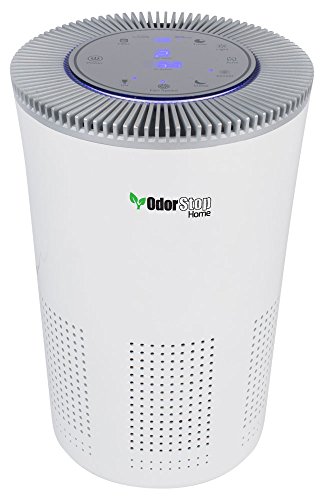
Short summary: OdorStop offers a complete nursery-oriented feature set: an H13 HEPA filter, Auto and Sleep modes, a 24-hour timer and a child lock. These features make it a straightforward option to run continuously in a sleeping space while limiting interaction and disturbance.
Short summary: The BLACK+DECKER tabletop model stands out for a relatively large coverage claim and ENERGY STAR certification. If your nursery is large or part of an open-plan area, it’s the product on this page with the highest stated coverage figure.
Short summary: The QUEENTY unit is a compact, USB-powered desktop purifier with an H13 HEPA and an explicitly stated 25 dB sleep mode. It’s a practical bedside choice for small nurseries where you need a very quiet local source of filtered air.
Short summary: Filters matter as much as the machine. If you already have a Minu A2-series purifier, this replacement kit includes H13 HEPA plus activated carbon and pre-filters and is offered at a competitive point in the maker’s listing.
Short summary: The listing advertises very large-area deodorizing via ozone and a low operating noise claim, but ozone generators are explicitly intended for unoccupied spaces and are not suitable for nurseries or occupied bedrooms.
Sizing an air purifier for a nursery requires two related numbers: the room’s volume and the air-cleaning capacity of the unit. Manufacturers may state CADR, coverage area, or ACH. Each tells you different things; when a spec is missing, err on the side of verifying before you purchase.
Measure length × width × height to get room volume. Purifier claims are usually expressed as either a square-foot coverage (based on a standard ceiling height) or as CADR/ACH values. If a listing gives only square-foot coverage (like BLACK+DECKER’s 435 sq ft), confirm the assumed ceiling height and ACH used in the calculation.
Air changes per hour (ACH) state how many times the purifier replaces the air in the room each hour. A common practical target for bedrooms and nurseries is 4 ACH or higher for continuous comfort; higher ACH (e.g., 5) cleans faster. The BLACK+DECKER listing explicitly uses a 5 ACH basis for its 435 sq ft claim, which helps you estimate suitability for larger nursery areas.
CADR (Clean Air Delivery Rate) is a standardized measure of how quickly a purifier reduces particular particle types in a room. If you need a specific performance expectation (for example, clearing smoke quickly), CADR is the most useful number. Many listings do not include CADR; in those cases, confirm CADR on the retailer page if you need a performance guarantee for a particular nursery size.
When a purifier runs at night in a baby’s room, noise matters. Two practical points:
Filter maintenance is as important as the initial purchase. A purifier that is never serviced will produce worse performance than a cheaper unit that is properly maintained. From the product facts: change and replacement intervals are listed by some makers; if not listed, plan for periodic checks.
When evaluating yearly costs, look for the replacement filter part number and a current price. If the manufacturer lists life in hours, estimate your runtime (for example, running 12 hours/day equals ~4,380 hours/year) to calculate how many replacement kits you’ll need annually.
Carbon-based layers are the practical way to reduce many household odors and VOCs in occupied rooms. Replacement filter kits that pair HEPA with activated carbon (for example, the SOMEWAYTOP MinuSA2 kit) let you address both particles and odor without resorting to ozone treatments. The Manfh ozone generator listing emphasizes reactions with odors but is explicitly intended for unoccupied use; do not use ozone devices in nursery spaces.
Certifications and manufacturer safety features help reduce risk. QUEENTY asserts “100% No-Ozone” and lists FCC, CE, RoHS, WEEE certification claims in its listing. When an ionizer or negative-ion feature is included (some desktop models mention ions), verify the unit does not produce harmful ozone above health-based limits. If a product is unclear about ozone generation, ask the retailer for a lab report or choose a model that explicitly states “no ozone” or that relies on sealed HEPA filtration and activated carbon.
OdorStop: strongest feature set for nursery operation on this page (H13 HEPA; Auto/Sleep/Timer/Child lock). Check dB and coverage before committing to a particular nursery size.
BLACK+DECKER: cost-effective, ENERGY STAR-certified tabletop purifier that the listing claims can handle large areas (435 sq ft) using a 5 ACH basis; useful if your nursery is large or partially open-plan. Confirm sleep-mode noise level and whether the 435 sq ft claim applies to your ceiling height.
QUEENTY: compact, USB-powered bedside/desktop purifier with a specifically stated 25 dB sleep mode and H13 HEPA; best as a bedside or very small-room solution where minimal noise and targeted breathing-zone cleaning are the priorities.
SOMEWAYTOP filters: a replacement kit with H13 HEPA + carbon for compatible Minu A2-series units — buying filters you can replace affordably is an important part of long-term nursery suitability.
Manfh ozone generator: listed product explicitly intended for unoccupied odor treatment; not appropriate for continuous use in a nursery and therefore not recommended for occupied rooms.
Several listings omit CADR and sleep-mode decibel levels. Before buying, confirm these items on the product page:
Start with the OdorStop H13 HEPA and verify the coverage or CADR on the product page. It has the most comprehensive set of nursery-oriented features listed here. If your nursery is genuinely large or open-plan, consider the BLACK+DECKER model (435 sq ft) but confirm sleep-mode noise and whether that coverage figure matches your real layout.
Choose the QUEENTY desktop purifier if you need a very quiet, localized bedside unit; the maker’s listing includes a 25 dB sleep-mode claim and H13 filtration. Remember that desktop purifiers usually work best as a breathing-zone supplement rather than as the whole-room solution.
Prefer a HEPA + activated carbon combination; the SOMEWAYTOP kit supplies H13 HEPA plus carbon for Minu A2 units. Activated carbon handles many household odors without the safety risks associated with ozone generators.
Do not use ozone-generating devices in occupied rooms or around infants. The Manfh listing explicitly states the device must be used in unoccupied spaces and ventilated before re-entry; that makes it unsuitable for typical nursery use.
A: Among these models, the OdorStop H13 HEPA is the best overall match for a nursery because it specifies H13 HEPA filtration and includes Auto, Sleep and child-lock features that support low-disturbance, continuous overnight use. Confirm room coverage and sleep-mode dB on the maker’s listing before purchase.
A: No — ozone generators are intended for use only in unoccupied spaces and must be ventilated thoroughly after treatment. The Manfh listing itself states the device should only operate in enclosed spaces while people, animals and plants are kept away. For occupied rooms, use HEPA plus activated carbon solutions instead.
A: Many parents target ≤30 dB for a quiet overnight environment. A stated sleep-mode value (for example, QUEENTY lists 25 dB) is helpful; if a listing mentions Sleep Mode without a dB value, confirm the noise level on the retailer page or seek a unit that provides a measured decibel specification.
A: Replacement intervals vary by model and use. The SOMEWAYTOP replacement kit recommends about 12 months depending on conditions. BLACK+DECKER lists filter life as up to 2,000 hours — track your typical daily runtime to convert hours to months, and budget for replacement filters before performance drops.
A: Desktop purifiers (like QUEENTY or other small USB units) are best for localized breathing-zone cleaning and very small rooms. They rarely provide whole-room performance for a standard nursery unless the unit is specifically rated for that room size. Verify the manufacturer’s stated coverage before relying on a desktop model as your sole purifier.
A: Activated carbon is the practical technology for reducing many household odors and some VOCs in occupied rooms. If odors are a concern (e.g., diaper pail, cooking in adjacent rooms), choose a purifier or replacement filter that includes an activated carbon stage rather than using ozone treatments.
Some important performance metrics — CADR, sleep-mode decibels for some models, and some replacement filter prices — were not listed for every product; those gaps are called out in the table and product sections so you can verify them on the maker’s listing or retailer page. The guide does not substitute for independent lab testing or certified health advice; it is intended to help you make an informed buying decision using the available product facts.
Confirm the missing specs you care about (CADR, sleep-mode dB, filter pricing) on the product pages linked above. For broader context on air-purifier selection or to compare more models and in-depth testing, see our reviews hub: Air Purifier Reviews: In-Depth Research & Comparisons, and our general buying guidance: The Best Air Purifiers (2026). If you have specific room dimensions, use those numbers when comparing coverage and CADR claims to ensure the purifier you choose matches your nursery’s size and your noise tolerance.
Ready to compare prices and see the current listings? Follow the product links in the quick-picks table for each unit. (Amazon affiliate buttons are available in the product modules on this page.)
To keep our Best Air Purifier for Nursery information accurate, we rely on independent references such as the EPA’s Guide to Air Cleaners in the Home, AHAM Verifide CADR data and manufacturer spec sheets. See how we evaluate air purifiers and our editorial policy for details.
Measure your nursery’s floor area and compare it to the model’s coverage/CADR on the retailer or manufacturer listing. Verify the exact model’s coverage claim and whether the stated ACH (air changes per hour) assumption matches your room layout. If coverage isn’t listed, ask the seller or check the maker’s listing for CADR or recommended square footage.
Check the manufacturer’s recommended replacement interval and the exact replacement part number on the product or retailer listing. For example, the maker’s listing for SOMEWAYTOP MinuSA2 recommends up to 12 months depending on use. Confirm compatibility, cost, and availability before buying replacements.
Use units that the maker’s listing states are non-ozone-producing and that offer Sleep mode, timers, or child locks to reduce disturbance. Before running 24/7, confirm the unit is listed as non-ozone-producing, check sleep-mode noise levels on the listing, and follow the manufacturer’s safety notes and warranty guidance.
Check the maker or retailer listing for manufacturer-stated dB values and the test conditions used to report them. The QUEENTY maker’s listing shows 25 dB in Sleep Mode; other models may list Sleep modes without a decibel value, so verify on the product page.
The QUEENTY unit is described on its listing as a compact, USB-powered desktop purifier intended for very small rooms or local breathing zones. Confirm the effective coverage on the maker or retailer page and whether one desktop unit provides adequate whole-room filtration versus a larger whole-room purifier.
Check the maker’s listing for child locks, power-off protection, recessed or tamper-resistant controls, and safe filter-access designs. Review how the child lock works, any manufacturer safety notes or certifications, and placement/weight guidance (the OdorStop listing shows about 6 lb).
Answers are educational and may link to relevant guides or products on this site. Product facts can change, so confirm current details before purchase.