

Hazel & House
Hazel True HEPA Air Purifier for Bedroom - Quiet Compact Air Cleaner
BrandHazel & HouseFilterTrue HEPA
See today’s price on Amazon
View product detailsProduct information comes from the current AirPurifierFAQ catalog and should be verified on Amazon before purchase.


In brief: Best HEPA Air Purifier: our top air purifiers for true HEPA filtration with verified CADR, ranked by verified CADR, noise (dB) and yearly filter cost.
Ranked by our score from each maker's published specs. We earn a commission when you buy through our links, at no extra cost to you. Tap any button to see today's price on Amazon.

How this product scored 8.6 / 10
Based on the maker's specs as listed on Amazon. We don't lab-test every model. See how the score works.

How this product scored 8.6 / 10
Based on the maker's specs as listed on Amazon. We don't lab-test every model. See how the score works.

How this product scored 8.4 / 10
Based on the maker's specs as listed on Amazon. We don't lab-test every model. See how the score works.

How this product scored 8.2 / 10
Based on the maker's specs as listed on Amazon. We don't lab-test every model. See how the score works.

How this product scored 8.1 / 10
Based on the maker's specs as listed on Amazon. We don't lab-test every model. See how the score works.

How this product scored 8.0 / 10
Based on the maker's specs as listed on Amazon. We don't lab-test every model. See how the score works.

How this product scored 7.5 / 10
Based on the maker's specs as listed on Amazon. We don't lab-test every model. See how the score works.

How this product scored 7.4 / 10
Based on the maker's specs as listed on Amazon. We don't lab-test every model. See how the score works.

How this product scored 7.3 / 10
Based on the maker's specs as listed on Amazon. We don't lab-test every model. See how the score works.
How this product scored 7.2 / 10
Based on the maker's specs as listed on Amazon. We don't lab-test every model. See how the score works.
Top pick: Smart Air air purifier (8.6/10). True HEPA filter for fine dust, pollen and dander; covers rooms up to 900 sq ft; runs as quietly as 23 dB. It scores highest on this list, led by room fit and quiet operation.
Runner-up: Coway Airmega Halo (AP-1526D) (8.6/10, best for odors): HEPA filter for fine dust, pollen and dander. Also worth a look: Shark BreatheClear (HP162) (8.4/10): covers rooms up to 750 sq ft.
Scores come from published specs, certifications and brand track record, weighted for True HEPA filtration. See how we score.
Why we picked it: The HSP002 is listed with an H13 HEPA filter and a 5‑in‑1 filtration stack (including a honeycomb activated carbon layer), plus an air‑quality sensor and auto mode. Manufacturer copy emphasizes quiet operation and a remote control — a combination that makes this a solid single‑unit solution for living rooms, open plan spaces and family areas where hands‑off operation matters.
Mini review: HATHASPACE positions the HSP002 as a living‑room and large‑room smart filter. The H13 HEPA element is rated to capture a high percentage of particles down to 0.3 microns (manufacturer claim listed in product data). The 5‑in‑1 system adds carbon for VOCs and odors, and the air‑quality sensor and display let the unit adjust automatically when air quality dips.
View product page / Buy (affiliate)
Why we picked it: AZEUS advertises the largest manufacturer‑listed coverage in this set — 2,160 sq ft — and includes an air‑quality sensor with auto and sleep modes. For readers who need to move a single purifier through large open areas or cover a large main floor, this model’s stated coverage and centrifugal fan design are the main appeal.
Mini review: AZEUS uses a 5‑in‑1 filtration system with True HEPA media and a centrifugal wheel to push high airflow. The product page lists UV light and an ionic generator as additional elements and highlights a real‑time color air‑quality indicator. Manufacturer claims include a 90‑minute cycle to treat 2,160 sq ft and sleep mode for quieter night use.
View product page / Buy (affiliate)
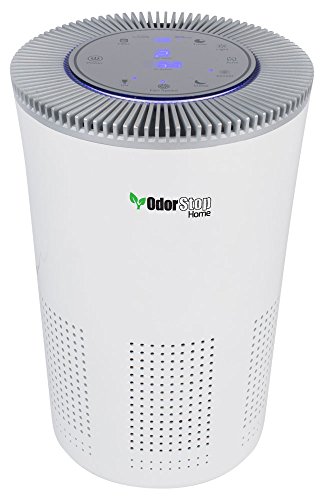
Why we picked it: OdorStop is the only product in the list explicitly labeled H13 and it pairs that filter grade with auto and sleep modes and an air‑quality display. The manufacturer emphasizes odor and smoke reduction and includes a multi‑speed motor and timer.
Mini review: The OdorStop unit lists 5 filtration technologies, 360° intake, and an H13 HEPA filter rated at capturing 99.97% of particles down to 0.3 microns in manufacturer claims. It also provides a timer, child lock, filter life and air‑quality displays, and comes with a 3‑year limited warranty.
View product page / Buy (affiliate)
Why we picked it: At an entry price point, Hazel & House offers a compact True HEPA unit aimed at nightstands and desks. Manufacturer copy calls out quiet, low‑decibel operation, adjustable fan speeds and portability — features that fit bedroom or small office use where footprint and price matter most.
Mini review: The Hazel unit emphasizes mechanical HEPA filtration in a multi‑layered structural filter media, low noise and user‑friendly controls. It’s aimed squarely at small rooms, dorms or desks and will suit someone who needs a simple, low‑cost purifier for a bedroom or personal workspace.
View product page / Buy (affiliate)
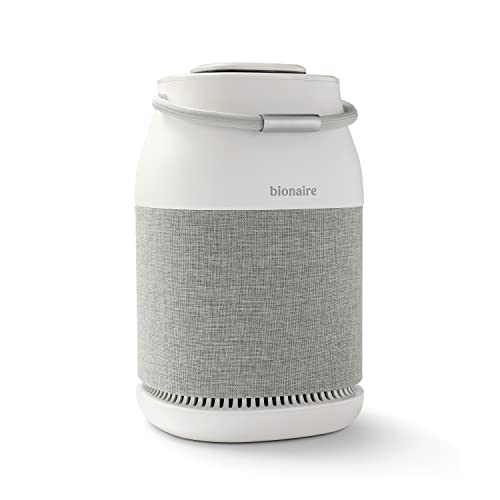
Why we picked it: Bionaire’s 360° model is AHAM Verifide, ETL listed and Energy Star rated (manufacturer claims), and offers a 6‑stage filtration including a UV light and an ionizer. The product provides two different coverage claims — a detailed AHAM‑style claim for a typical bedroom and a larger hourly figure for extended coverage — which gives more context than many listings.
Mini review: The Bionaire lists 848 sq ft coverage over 60 minutes and claims 4.8 air changes per hour in a 175 sq ft space in 12.5 minutes based on AHAM guidance. It is Energy Star rated and carries AHAM Verifide and ETL listings per the product data. These certifications and the multi‑stage system make it appropriate for allergy sufferers who want documented performance markers and an energy‑efficient unit.
View product page / Buy (affiliate)
Why we picked it: Whirlpool’s Whispure combines True HEPA + activated carbon with a proprietary anti‑bacterial filter and is listed as Energy Star approved. The product language emphasizes quiet operation and multi‑mode operation (including Sleep Mode), making it a candidate for bedrooms and for households concerned about wildfire smoke or persistent odors.
Mini review: The Whispure states True HEPA capture of 99.97% at 0.3 microns and an activated carbon layer for odors. It highlights a sleep mode for low‑speed, energy‑efficient operation and comes with a 5‑year limited warranty through a recognized appliance manufacturer.
View product page / Buy (affiliate)
Why we picked it: The HSP001 is a lower‑priced HATHASPACE model that lists an H11 HEPA element and the same smart features (auto mode, air‑quality sensor) as its bigger sibling. If you want smart control in a bedroom form factor and can accept H11 instead of H13, this model balances features and cost.
Mini review: HATHASPACE markets the HSP001 as a smart filter for bedrooms with a 4‑in‑1 arrangement including a honeycomb activated carbon layer. H11 HEPA media is listed by the manufacturer; the unit includes remote control and a two‑year warranty per the product copy.
View product page / Buy (affiliate)
This roundup is a buyer‑first selection from the products listed in our site inventory. We prioritized the maker’s listings and real use‑case signals rather than independent lab testing. The goal: help you match a real product to a real need quickly and transparently.
Core rules we followed:
Finally, any metric not present in the maker’s listing (CADR, dB level, yearly filter cost) is displayed as “Not listed” and not estimated. Where a model included additional technologies (UV, ionizers) we report them as the maker described, with a note in our tradeoffs where appropriate.
Use this short decision matrix to match the product to your priorities. The recommendations below are based on the manufacturer‑stated features and stated best‑fit labels in the maker’s listings.
The table above lists CADR, dB and yearly filter costs where makers provide them. Many product pages do not publish CADR or measured noise figures in the maker’s listings; when a figure is absent we show “Not listed.”
Notes about entries:
Below are the practical factors to weigh — we focus on measurable or manufacturer‑stated attributes and how they map to real life.
Manufacturer‑stated coverage (square feet) or AHAM/AHAM‑style performance claims are the most useful guide when available. If a product lists a coverage number, it usually assumes a standard ceiling height and a recommended number of air changes per hour. Products without a coverage listing should not be assumed suitable for large rooms.
Two practical approaches:
“True HEPA” on its own is a marketing term many manufacturers use to indicate mechanical HEPA media. Specific classes — H11, H13, etc. — are standardized grades that describe how efficiently the filter captures particles at or near 0.3 microns. In this roundup:
Note: Do not infer absolute performance based solely on the HEPA class without considering airflow and filter condition. Higher filtration efficiency with very low airflow will not clean a space quickly.
Replacement filter cost and availability are long‑term considerations. The product pages we list typically provide replacement filter SKUs or indicate where replacements can be found. If a product page doesn’t list filters, search the brand’s accessories or contact the manufacturer before buying.
To budget replacement costs:
Noise matters for bedrooms and home offices. Some listings here describe products as “quiet” or “low‑decibel” but do not provide measured dB values. If noise is critical, look for dB figures on the product page or in independent reviews (see our reviews hub) before buying. Sleep modes and lower‑speed settings are valuable even without a measured dB number because they reduce airflow and audible motor noise.
Auto mode and air‑quality sensors are practical: they let the purifier respond to real‑time changes (cooking, smoke, high pollen). If you want an appliance that runs largely unattended, a unit with a sensor and reliable auto mode is worth the premium. HATHASPACE models, AZEUS and OdorStop in our list include auto sensors per their product data.
Carbon is useful for VOCs and many odors; all activated‑carbon claims in this roundup come from the manufacturers’ feature lists. UV light and ionizers appear in several product descriptions; UV can be used for microbial control in certain designs, but its effectiveness depends on the implementation and exposure time. Ionizers may produce charged particles or small amounts of ozone in some designs — our editorial position is to avoid ozone generators and to note ionizer inclusion so you can verify the product’s emissions and safety notes before purchase.
Third‑party certifications are meaningful when present. Bionaire lists AHAM Verifide, ETL listing and Energy Star in the product data we used — those are documented signals of specific tests or standards. If you want independently validated metrics, prioritize products that publish AHAM/CADR numbers or carry third‑party certifications.
Place purifiers away from walls and obstructions so they can draw air from all sides. For bedroom units, orient the outlet away from the bed if the fan is audible at your preferred sleep speed. Check pre‑filter access and ease of replacement — HATHASPACE and many other brands describe tool‑free filter access in their product copy.
Transparency about missing data matters when choosing a purifier. Across the models in this roundup the following common gaps appeared in the maker’s listings:
When a missing metric matters to your decision (e.g., noisy fans or rapid purification), pause and request the number from the seller or check our reviews and the brand’s support pages before buying.
Quick checklist you can follow before clicking buy:
“True HEPA” indicates a mechanical HEPA media that captures particles by intercepting and trapping them in fibers. Specific classes (H11, H13) indicate different efficiency grades. In our inventory, some products explicitly list H13 (higher efficiency) or H11. Choose H13 when higher particle capture efficiency is a priority, but also consider airflow — effective cleaning requires both filtration efficiency and adequate airflow for your room size.
Auto modes and air‑quality sensors are usability features that let the purifier respond to changes (cooking, open windows, smoke). If you want a largely unattended device that ramps up only when needed, a sensor and reliable auto mode are worth paying for. Models in this roundup with sensors include the HATHASPACE units, AZEUS and OdorStop (per product data).
If a product lists a manufacturer coverage (square feet), use that figure and choose a model rated at or above your room area. For products without a coverage number, use smaller rooms or compare with models that provide AHAM or CADR information. When in doubt, contact the seller for CADR or AHAM data, or select a model that explicitly lists sq ft coverage (for example AZEUS and Bionaire provide coverage claims in their listings).
Replacement intervals depend on runtime, local pollution levels, and the filter stack. Typical guidance ranges from 6 to 12 months for HEPA filters under normal household use. Activated carbon layers can saturate faster if you have heavy odors or VOC sources. Because manufacturers in this set did not supply yearly filter costs, check the product page for replacement SKUs and recommended intervals to budget accurately.
UV and ionizer features are optional add‑ons that some manufacturers include. UV can have a role in specific microbial‑control designs, but its practical value depends heavily on exposure time and engineering. Ionizers can reduce airborne particles by charging them, but implementations vary and some people prefer to avoid ionizers because of potential ozone generation in low‑quality designs. We do not recommend ozone generators; if a unit includes an ionizer, verify the manufacturer’s emissions and safety documentation before purchase.
This roundup focuses on the products listed in our inventory and reflects only manufacturer‑stated specifications and feature claims from the maker’s listings. If you value independent CADR or noise measurements, check our reviews hub for in‑depth testing and comparisons, or contact the manufacturer to request CADR and dB figures before purchase.
Ready to take the next step? Follow the product links above to the product pages for full specs, replacement filters and purchasing options. For general questions about filters, filtration classes and how to size a purifier, see our Air Purifier FAQ and the sibling pages on room‑specific recommendations at Best Air Purifiers and Best Air Purifiers for Allergies.
To keep our Best HEPA Air Purifier information accurate, we rely on independent references such as the EPA’s Guide to Air Cleaners in the Home, AHAM Verifide CADR data and manufacturer spec sheets. See how we evaluate air purifiers and our editorial policy for details.
H13 is a higher-grade HEPA classification used in some makers' listings. Maker listings often claim high capture rates down to 0.3 µm (commonly 99.97%). For verified performance, check independent CADR/AHAM measurements or third‑party test results rather than relying only on the grade label.
Manufacturers use different methods to state coverage. When CADR or dB aren’t listed, ask the seller how they calculate room size and cycle time, look for AHAM or independent CADR results, and request metrics like expected air changes per hour for your room.
UV and ionic features are sometimes offered as supplemental functions. They are not a substitute for verified CADR performance. Confirm whether those features can be turned off and ask the maker for safety documentation if you have health concerns.
Key certifications to check: AHAM Verifide or published CADR for performance, ETL/UL listings for electrical safety, and Energy Star for efficiency. Verify any certification claim on the maker’s product page or on the issuing organization’s database.
Look for manufacturer dB figures at different fan speeds, a sleep or quiet mode, and sensors/auto modes that could change fan speed overnight. Don’t assume “quiet” without published decibel values.
Confirm filter life, availability and retail cost of replacement filters, and expected annual filter expenses on the maker’s listing. Also check warranty length and what it covers (fan, electronics, filters) on the manufacturer page.
Answers are educational and may link to relevant guides or products on this site. Product facts can change, so confirm current details before purchase.
