

Manfh
2026 Upgraded High Capacity Ozone Generator Odor Removal Up to 6000…
BrandManfhCoverage6,000 sq ft
Original price was: $46.99.$37.94Current price is: $37.94.
View product detailsProduct information comes from the current AirPurifierFAQ catalog and should be verified on Amazon before purchase.


In brief: Best Air Purifier for Sinus: our top air purifiers for sinus irritation from dust, pollen and smoke, ranked by verified CADR, noise (dB) and yearly filter.
Reader problem: I have frequent sinus irritation and need an air purifier that reliably removes the airborne triggers that make my sinuses worse — but I don’t know which models actually suit sinus sufferers or how to choose one for my room and symptoms.
Angle: A buyer-first, medically cautious roundup that prioritizes true HEPA plus activated-carbon designs and explicitly flags ozone devices as inappropriate for occupied rooms. Recommendations use only the supplied product data and manufacturer guidance.
Dek: This guide picks the best air purifiers for people with sinus sensitivity in 2026, explaining which designs reduce airborne triggers (particles, odors, smoke), which to avoid, and how to match purifier capacity and filters to your bedroom, office, or small living space.
Core takeaway: for most people with sinus sensitivity, choose a true HEPA purifier (H13 preferred) paired with an activated-carbon stage and a low-noise sleep mode. Avoid ozone-generating machines in occupied spaces — manufacturers explicitly warn they must be used only in unoccupied areas.
This is written for people whose sinuses flare from common indoor airborne triggers: dust, pollen, pet dander, tobacco smoke, cooking smoke, and household odors. You want practical buying advice: which machines remove particles and smells reliably, how to size a purifier to your room and sleep needs, and which technologies to avoid.
This is not medical advice. If you have chronic sinus disease, recurrent infections, or severe asthma, consult a clinician about comprehensive treatment. An air purifier can reduce exposures that commonly worsen irritation, but it is not a medical treatment.
People with sensitive sinuses react to two broad categories of airborne triggers: particulate irritants (dust, pollen, pet dander, smoke particulate) and chemical/odor irritants (cooking odors, VOCs, tobacco smell). A two-stage approach—particle filtration using a true HEPA filter and a dedicated activated-carbon layer for odors and many VOCs—addresses both.
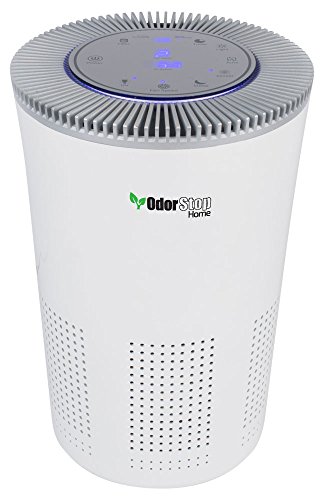
Product data in this guide highlight models that combine H13/HEPA media with carbon, such as the OdorStop (H13 HEPA + carbon stage described in features) and replacement filter kits like SOMEWAYTOP (H13 HEPA + activated carbon). Desktop and portable devices with H13 HEPA are useful when you need purified air directed to the head/bed area.
Why I recommend it: OdorStop lists an H13 HEPA filter and highlights both particle capture down to 0.3 microns and multi-technology odor/smoke control. The unit includes auto mode and sleep mode, a 24-hour timer, a 5-speed motor, a child lock, and an air quality display that drives the automatic adjustments. These features make it practical for continuous overnight use—important when sinus sensitivity is worst during sleep.
What the manufacturer states (key facts): H13 HEPA; auto mode and sleep mode; 3-year limited warranty; designed to capture 99.97% of contaminants down to 0.3 microns; 360-degree air intake for longer filter life.
Best fit: Bedrooms and living rooms where you want continuous, adaptive filtration against particles and odors. The H13 rating indicates an elevated level of particle capture compared with standard HEPA claims on many budget devices.
Limitations and unknowns: OdorStop’s listing does not publish a CADR or explicit noise dB numbers in the supplied data. If precise CADR is an important comparison point for you, request that specification from the retailer or manufacturer before purchase.
Practical notes: If your primary issue is nightly congestion tied to dust, pet dander, or residual cooking smoke, the OdorStop’s combination of H13 filtration plus a sleep mode and automatic adjustment makes it a strong generalist choice. The manufacturer’s claim that it removes contaminants to 0.3 microns should help remove common particulate triggers; the carbon/odor focus addresses smoke and cooking smells that can irritate nasal passages.
Why to consider: BLACK+DECKER markets this as an ENERGY STAR small-room purifier with 3-stage HEPA filtration and a manufacturer-stated coverage of up to 435 sq ft (based on 5 air changes per hour). It includes touch controls and a sleep mode. For bedrooms, offices, or small apartments where the manufacturer’s coverage matches your room, it’s a cost-conscious way to get a multi-stage HEPA system.
What the manufacturer states (key facts): HEPA filter capturing up to 99.97% of pollutants to 0.3 microns; coverage up to 435 sq ft; sleep mode; replacement filters available; filter life up to 2,000 hours; filter indicator and audible alarm.
Best fit: Medium bedrooms and offices where one machine is expected to handle an entire room. The 435 sq ft claim is useful if your bedroom or open-plan room is in that size range, but remember manufacturer coverage claims are based on a specific air-change assumption.
Limitations and unknowns: No CADR or exact dB numbers were provided in the supplied data. If you need a precise noise spec for light sleepers, check retailer details or independent reviews.
Practical notes: BLACK+DECKER’s explicit coverage claim is helpful for sizing. The 3-stage HEPA setup and filter-life guidance (about 2,000 hours) give a clear expectation for replacement intervals, which helps budget planning.
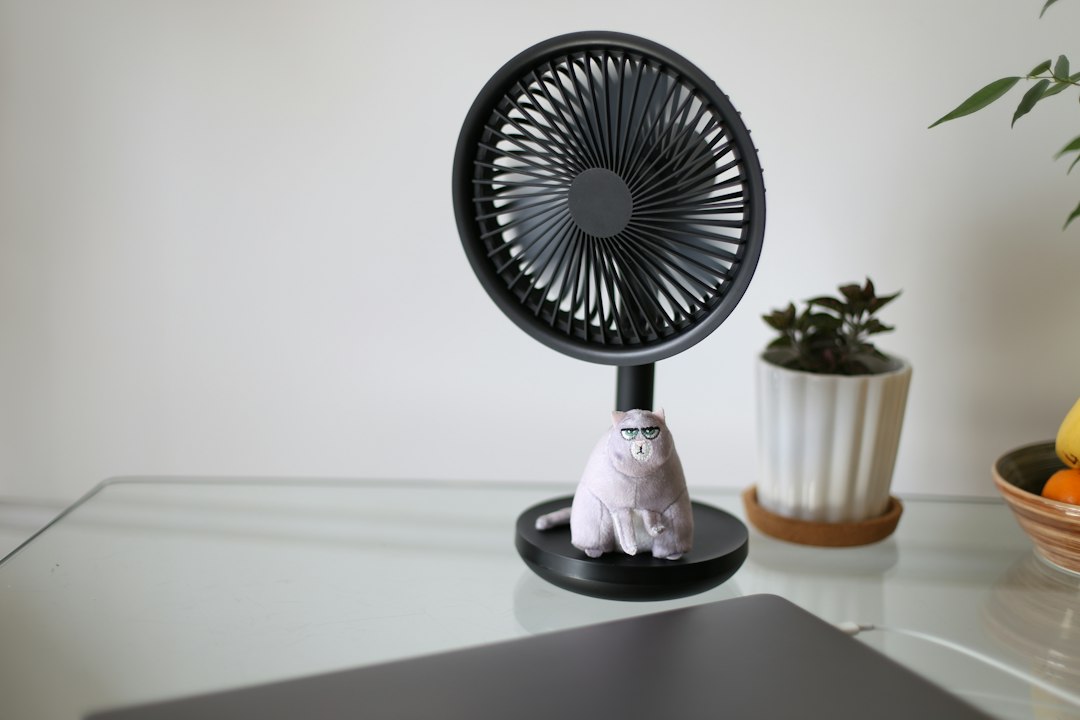
Why to consider: QUEENTY’s design emphasizes delivering purified air to the face/bed area with a “face to face” outlet and a 40° oscillation. It uses an H13 HEPA filter and advertises a sleep mode that operates at 25 dB — an objectively low noise figure that makes this a good candidate for bedside placement when you need quieter, localized delivery of purified air.
What the manufacturer states (key facts): H13 HEPA filter; sleep mode at 25 dB; face-height air outlet and oscillating airflow; USB-powered and portable; 2-year limited replacement.
Best fit: Desktop or bedside use where you want purified air directed near your head while sleeping or working. The low 25 dB sleep-mode spec is attractive for light sleepers.
Limitations and unknowns: No CADR or stated full-room coverage was supplied; manufacturers position this for small-space/desktop use. The product uses a small fan design intended to provide localized benefit rather than whole-room turnover.
Practical notes: If your sinus irritation is often worse at night and you want a quiet machine that puts purified air where you sleep, QUEENTY’s bedside-focused design and 25 dB sleep mode make it worth considering. Be realistic: a desktop purifier will not have the same whole-room turnover as larger tower units.
Why to consider: This compact purifier emphasizes activated-carbon filtration and portability. It ships with ten replaceable carbon filters and is pitched for smokers, travellers, and dorm-room users who need odor reduction in very small spaces. Carbon filters can help reduce odor-caused nasal irritation.
What the manufacturer states (key facts): Activated carbon filter; portable for desktops/counters/small rooms; comes with 10 replaceable carbon filters; claims ultra-quiet operation; adjustable fan speeds.
Best fit: Short-term odor control in confined areas (car, dorm, hotel room) or as a supplemental device when you need immediate localized carbon filtration—for example, after cooking or smoking.
Limitations and cautions: The AuroraTurn is not a full-room HEPA solution. It lacks a true HEPA stage in the supplied data, so it will not perform the same particulate capture as H13/HEPA devices. Use it when odors are the chief problem and only as a supplement for particulate-driven sinus issues.
Why it appears in the roundup: Manufacturer information describes rapid deodorizing and coverage up to 6,000 sq ft. However, the same listing explicitly warns that people, animals, and plants must be kept away while the machine is operating and that the treated space requires ventilation for 30–60 minutes before re-occupation.
What the manufacturer states (key facts): Up to 55,000 mg/hour ozone output; coverage up to 6,000 sq ft for odor treatment; operating noise below 30 dB; built-in timer up to 120 minutes with ‘hold’ for continuous operation; manufacturer warning that it must be used in an enclosed, unoccupied space and is not available for sale in California.
Why this is not a recommended daily solution for sinus sufferers: Ozone is a respiratory irritant. The manufacturer’s safety instructions require the space to be unoccupied during operation. For people with sinus sensitivity, regular exposure to ozone can exacerbate irritation. Use this class of machine only for short, targeted, professional-style deodorization when the space can be fully vacated and ventilated afterward.
Practical notes: If you are trying to reduce everyday nasal irritation, choose a HEPA + carbon approach for occupied rooms. Consider an ozone device only if you need a one-time deep odor treatment for an unoccupied space and you understand and follow the manufacturer’s ventilation instructions precisely.
Why it matters: Filter availability and cost strongly influence the long-term value of any purifier. The SOMEWAYTOP kit contains an H13 HEPA layer plus activated carbon and pre-filters and explicitly recommends replacement every 12 months depending on use. It’s proof that H13 + carbon combos are commercially available as replacement kits, which matters when budgeting for ongoing maintenance.
What the manufacturer states (key facts): H13 HEPA + activated carbon + pre-filter; compatible with certain MinusA2 purifiers; recommended replacement interval: every 12 months depending on use; product price listed at $35.99.
Practical notes: If you buy a purifier that uses replaceable cartridges, check for compatible H13+carbon kits and their prices. The SOMEWAYTOP example shows a combined H13+carbon replacement option for around $36 (manufacturer listing), which you can use as a ballpark when planning recurring costs.
Several small, USB-powered or rechargeable units in the supplied data (Ormos Rechargeable Desktop and Silanit Desktop Smoke Purifier Fan) emphasize portability, washable filters, and targeted smoke extraction. These are useful for cooking fumes, grilling, or very small spaces where you need immediate, local extraction rather than whole-room turnover.
Manufacturer notes: Ormos advertises a washable filter and USB power; Silanit offers washability and an oil collection cup for cooking grease. Both are positioned for portable/localized use, not whole-room HEPA filtration.
Best fit: Short-term smoke capture and odor control at a cooktop, game table, or work surface. Not a substitute for an H13 HEPA + carbon whole-room purifier when particles are the main concern for sinus symptoms.
Follow these steps to turn your needs into a purchase decision.
Ozone devices: The Manfh ozone generator is very potent for eliminating deep odors and lists coverage up to 6,000 sq ft in an enclosed space. However, the manufacturer explicitly requires the space to be unoccupied while it runs, and to ventilate for 30–60 minutes before re-entry. For sinus sufferers, routine use of ozone in occupied spaces is not appropriate. Consider the Manfh unit only for targeted, one-time deodorization of unoccupied spaces and always follow the ventilation guidance.
Missing specs: Several products in the supplied dataset do not publish CADR (clean air delivery rate) or dB values. CADR is a useful independent metric for comparing particle-removal speed; when it’s missing, rely on manufacturer coverage claims and filter types, and consider contacting the seller or looking for independent testing.
Manufacturers sometimes give filter-life guidance. BLACK+DECKER’s filters are stated to last up to 2,000 hours; SOMEWAYTOP recommends annual replacement for its H13+carbon kit depending on use. If a model doesn’t publish filter life or replacement part availability, contact the retailer or search the product page for replacement part SKUs before buying. Routine pre-filter cleaning and keeping the unit unobstructed extends effective filter life.
No. An air purifier can reduce exposure to airborne particles and many odors that commonly make sinuses feel worse, but it is not a medical treatment. If you have chronic or severe sinus disease, seek advice from your healthcare provider. Use purifiers as one element of exposure reduction.
True HEPA captures fine particles; H13 is a higher-grade HEPA classification that suggests stronger particle capture efficiency. For particulate triggers (dust, pollen, pet dander, smoke particles), a true HEPA or H13 filter will be more effective than non-HEPA or washable-only filters. For odors and many VOCs, make sure a purifier includes an activated-carbon stage in addition to HEPA.
Not for occupied spaces. The manufacturer information for the Manfh ozone generator explicitly requires operation only in unoccupied, enclosed spaces and ventilation before re-entry. Ozone is a respiratory irritant and is not appropriate for regular use in rooms where people or pets are present.
Noisy levels vary widely and are sometimes omitted from product listings. QUEENTY specifies a 25 dB sleep mode in its supplied data, which is very quiet. OdorStop and BLACK+DECKER include sleep modes that reduce fan speeds; however, dB numbers were not provided for OdorStop in the supplied data. If nighttime quiet is critical, look for explicit dB claims or seek independent reviews with measured sound levels.
Replacement intervals depend on use and pollutant load. SOMEWAYTOP recommends replacing its H13+carbon kit every 12 months depending on use; BLACK+DECKER notes filters lasting up to 2,000 hours in its listing. Price examples in the supplied data show the SOMEWAYTOP kit at $35.99. For any unit, check replacement filter availability and price before purchasing so you can budget ongoing costs.
It depends on your goal. Desktop purifiers (QUEENTY, AuroraTurn, Ormos, Silanit) are designed to provide localized benefit near your breathing zone or to handle small spaces. For whole-room turnover and consistent reduction of airborne particles across the room, a larger unit sized to the room (e.g., BLACK+DECKER’s 435 sq ft claim) will be more effective.
Ready to buy? Use the product links in this guide to review pricing, availability and any additional specs (CADR, measured noise) the retailer may publish. If you want independent verification of CADR or decibel figures before purchasing, check the product’s review pages or contact the manufacturer directly.
To keep our Best Air Purifier for Sinus information accurate, we rely on independent references such as the EPA’s Guide to Air Cleaners in the Home, AHAM Verifide CADR data and manufacturer spec sheets. See how we evaluate air purifiers and our editorial policy for details.
Match the purifier’s manufacturer-stated coverage to your room and look for air-change guidance. The guide recommends checking stated coverage (for example, BLACK+DECKER lists up to 435 sq ft at 5 ACH). If available, request CADR and recommended air changes per hour from the retailer or manufacturer to confirm it will deliver adequate turnover for your space.
No. This guide explicitly flags ozone devices as inappropriate for occupied rooms. Manufacturers in the supplied guidance warn ozone units must be used only in unoccupied areas. For sinus sensitivity, avoid ozone generators and choose a true HEPA plus activated-carbon design instead.
Yes—continuous overnight filtration is recommended because it reduces exposure while you sleep. Pick a unit with a low-noise sleep mode or quiet operation (the guide prioritizes this). If noise or comfort is a concern, ask the manufacturer for noise dB figures for sleep/low modes before buying.
The guide’s core recommendation is a two-stage approach: a true HEPA filter (H13 preferred) for particulates and a dedicated activated-carbon stage for odors and many VOCs. Replacement kits referenced in the guide (for example, SOMEWAYTOP) are described as H13 HEPA plus activated carbon. Verify filter availability and replacement intervals with the manufacturer.
Yes. The editorial notes desktop and portable H13 HEPA devices are useful for directing purified air to the head/bed area for targeted relief. They can be effective for short-range exposure reduction, but confirm the unit’s stated coverage and airflow so it adequately serves your sleeping position and room size.
Ask the manufacturer or retailer for CADR values (smoke/pollen/dust), noise levels in dB for each fan mode (especially sleep mode), detailed carbon-stage specification and replacement filter cost/availability, and recommended room size/CADR-equivalent coverage. Note what is provided: OdorStop lists H13 HEPA, 99.97% capture at 0.3 microns, auto and sleep modes, 360° intake, and a 3-year limited warranty.
Answers are educational and may link to relevant guides or products on this site. Product facts can change, so confirm current details before purchase.
