In brief: Best Air Purifier Under 200: our top air purifiers for the best value between $100 and $200, ranked by verified CADR, noise (dB) and yearly filter cost.
Ranked by our score from each maker's published specs. We earn a commission when you buy through our links, at no extra cost to you. Tap any button to see today's price on Amazon.
Room fit8.5Covers up to 1,190 sq ft vs about 350 sq ft needed here
Filtration6.8HEPA + carbon for odors (maker claims, not independently verified)
Quiet & sleep8.5As low as 23 dB
Smart features8.0auto mode / sensor, app or voice control
Brand track record4.5Smaller or newer brand
Based on the maker's specs as listed on Amazon. We don't lab-test every model. See how the score works.
Get our Black Friday deal alertOne email when the best air purifier and filter deals drop, plus a reminder when your filter is due. 4 to 6 emails a month. Unsubscribe any time.
Top pick: Blueair SP1i (9.5/10). HEPA filter for fine dust, pollen and dander; covers rooms up to 1,190 sq ft; runs as quietly as 19 dB. It scores highest on this list, led by room fit and filtration.
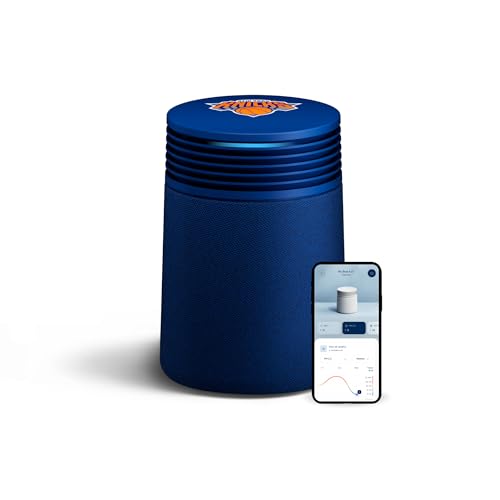
Runner-up: Blueair x NY Knicks (SP1i) (8.4/10, best smart pick): sleep mode for quiet nights. Also worth a look: Smart Air air purifier (8.4/10, best for odors): true HEPA filter for fine dust, pollen and dander.
Scores come from published specs, certifications and brand track record, weighted for budgets under $200. See how we score.
Who this page is for
This roundup is for budget-minded shoppers searching for a dependable single-room air purifier that actually removes particles (True HEPA/H13) and has predictable running costs. If you want a quiet bedside machine, a unit for a pet-heavy household, or the best value for wildfire/smoke seasons, this guide is tailored to that use.
Not a fit: whole-house HVAC installations, industrial odor remediation, or buyers who think ozone generators are safe for everyday use. If you need whole-home guidance or hospital-grade solutions, see our related guides: The Best Air Purifiers (2026) and our reviews hub at Air Purifier Reviews.
How we chose these picks (selection criteria)
Price at publication: For a unit to qualify as a pick on this page it must be available for under $200 at a major retailer (Amazon or manufacturer) at publication time. If a product is over $200 we flag it clearly as an over-budget but relevant alternative.
Filtration: We required a True HEPA or H13-grade particulate filter (captures particles to 0.3 µm at 99.97% or better per manufacturer or independent test). “HEPA-type” or “HEPA-like” claims are treated as suspect unless backed by a grade (H13) or testing details.
Performance proof: AHAM/CADR numbers are preferred. If CADR or AHAM certification isn’t listed on the maker’s listing we note that and avoid inventing performance figures.
Noise: We prefer units that can run ≤30 dB for bedrooms on their lowest mode; we record manufacturer- or lab-published dB figures where listed on the maker’s listing.
Running costs: Replacement filter SKUs, MSRP and recommended replacement cadence are used to estimate yearly filter cost. We show the math and assumptions used.
Safety: We exclude ozone generators and ionizers that intentionally produce ozone as recommended solutions for occupied spaces.
Market reality and a transparency note
At the time of compiling products for this page, there were few fully documented, certified True HEPA air purifiers in our selection that also had verified retailer pricing within our target budget. Several of the most interesting items are replacement filters (showing that models like the Levoit Core 200S and Vital 200S are common platform choices) or are specialty / over-budget units such as the Oransi TrueCarbon 200C (a carbon-heavy odor machine that is outside the page’s price cap).
We therefore focus this page on: (1) the practical model you should look for under $200 (Levoit Core 200S family), (2) how to verify any model you find on sale, (3) the running cost math using replacement-filter pricing we have on record, and (4) why ozone devices are not appropriate for occupied homes.
Best picks — detailed guidance and notes
Top recommended platform to seek under $200: Levoit Core 200S
Why we recommend looking for the Core 200S: the Core/Vital series is a proven small-room platform with H13-grade True HEPA replacement filters available and documented low-noise operation in sleep mode. The maker’s listing and filter listings for this platform (genuine and third-party replacement filters) show H13-grade media, activated carbon layers, and sleep-mode noise claims that support real-world bedroom use.
Filtration: Replacement filters for the Core 200S are sold as H13-grade True HEPA + activated carbon (see Colorfullife and iSingo product entries). The Levoit genuine replacement filter record notes a main filter that removes 99.97% of ultrafine particles down to 0.3 µm (independent test referenced in the product text).
Noise: The Levoit replacement-filter product notes ultra-quiet operation in Sleep Mode (≤26 dB), which is an important bedroom benchmark.
Smart features: Third-party replacement filter listings reference the Core 200S-P Smart WiFi model (the platform supports app control on certain SKUs), so you can find models with basic connectivity if that matters.
Best for: Bedrooms, small living rooms, and people who want quiet overnight operation with low annual filter spend.
Sleep mode reported ≤26 dB on filter product notes — suitable for bedrooms.
Low-cost replacement genuine filters referenced in the product data (see filter section below).
Cons
The product listings do not always include an independent CADR number or a current retailer price for the purifier itself — verify current retailer pricing before purchase.
Replacement filter life varies by source; follow manufacturer guidance on replacement intervals to maintain performance.
Levoit genuine Core 200S replacement filter (1-pack) — check the current price on Amazon. Manufacturer recommends replacing every 6–8 months. Assuming one genuine filter lasts 6–8 months, expect to replace roughly 1.5–2 filters per year; check current prices to estimate annual cost.
Colorfullife Core 200S replacement filter (2-pack) — check the current price on Amazon for the 2-pack that advertises H13-grade filtration. The vendor suggests replacing filters every 3–6 months depending on usage. If a 2-pack covers 6–12 months depending on replacement cadence, use the current listing price to estimate your annual spend.
iSingo Core 200S replacement (2-pack) — check the current price on Amazon. Vendor recommends replacing every 6–8 months. If you use one filter per 6 months, a 2-pack would cover a year.
Bottom line: replacement filters for the Core 200S family are widely available and inexpensive according to the listings — annual filter spend is frequently well under typical appliance servicing costs depending on your chosen replacement schedule and whether you buy OEM or third‑party filters.
Good small-room alternative to watch: Levoit Vital 200S
The Vital 200S appears throughout filter listings as a sibling to the Core family. Replacement filter SKUs for Vital 200S are available and typically packaged as 2-packs.
Filtration: Replacement filters listed for Vital 200S are HEPA + activated carbon and claim 99.97% capture at 0.3 µm in marketing copy.
Running costs: A 2-pack replacement (JORAIR entry) is listed on retailer pages; check the current price on Amazon. Vendor guidance varies — JORAIR suggests replacing the main HEPA every 6–12 months depending on air quality. Using a conservative 6-month cadence, one 2-pack could cover a year if each filter lasts six months; check the listing to calculate your actual annual cost.
Best for: Users who want the same small-room performance and are comfortable buying replacement filters in multi-packs.
Best for odors and VOCs (over $200): Oransi TrueCarbon 200C
Important: Oransi’s TrueCarbon 200C is a carbon-centric air cleaner sized for up to 375 sq ft and built specifically for gas-phase contaminants — odors, VOCs and chemical fumes. It is not within the page’s price cap; we include it because odor control is often what pushes people to spend more or to combine units.
Filter type: TrueCarbon: no HEPA in this model — the design relies on a heavy carbon bed (3.2 lb granular activated carbon treated with potassium permanganate, 2″ deep) intended to capture gases and odors.
Coverage: Manufacturer lists this unit for rooms up to 375 sq ft.
Noise: Runs at 30 dBA on low (manufacturer data on the maker’s listing).
Testing: Gas-phase performance tested by Intertek to AHAM AC-4-2022 (results chart is shown on the maker’s listing).
Best for: homes with persistent chemical odors — nail salons, painting off-gassing, severe pet- or smoke-related smells that a standard small HEPA won’t remove quickly.
Caveat: the TrueCarbon 200C contains no HEPA filter, so for particulate-laden tobacco or wildfire smoke you should run a HEPA unit alongside it. The Oransi page explicitly states this and notes the product is built for gases and odors rather than particle capture.
What to avoid: ozone generators
The listings include an ozone generator (Manfh) that has appeared at lower retailer price points. We include it here to explain why this technology is not appropriate for occupied spaces:
The Manfh unit claims rapid deodorizing via ozone and suggests treatment of spaces up to 6,000 sq ft, but that requires the space to be unoccupied during operation and ventilated thoroughly afterwards. The product listing itself warns people, animals and plants must be kept away while it runs.
Ozone reacts chemically with odors, but it is also an irritant to human respiratory systems at concentrations used for deodorizing. For routine household air cleaning we do not recommend ozone generators for occupied spaces.
If your goal is odor and VOC reduction in occupied rooms, choose a high-surface-area activated carbon system (like Oransi TrueCarbon) or a HEPA + carbon combination instead.
How to pick the right purifier under $200 — practical checklist
When hunting for the best air purifier under $200, use this checklist. Each item will help you avoid common traps and spot genuinely useful machines.
Confirm the filter media: Look for “True HEPA” or “H13” in the official product spec. Avoid “HEPA-like,” “HEPA-type” or vague language unless there is an independent test backing the claim.
Find CADR or AHAM verification: CADR numbers or AHAM Verifide support give a real-world expectation for how fast the unit clears smoke/pollen/dust in a room. If CADR isn’t listed in the product data, treat any area/coverage claims with caution and size conservatively.
Size the unit to your room: Use manufacturer square-foot coverage as a starting point, but if CADR is available prefer that. For bedrooms, aim for at least 4–5 air changes per hour (ACH) for continuous overnight use; for smoke events, target more frequent ACH.
Check noise at the lowest setting: If you need a bedroom purifier, seek machines that publish ≤30 dB or ≤26 dB sleep modes — the Levoit Core 200S family has sleep-mode claims in that range on the maker’s listing.
Calculate running costs: Multiply the replacement filter price by the number of replacements you expect each year (follow the manufacturer’s recommended interval). Factor in electricity draw (low for modern brushless DC fans) if you run the unit continuously.
For odors and VOCs: Buy HEPA + activated carbon or a dedicated carbon unit sized for your room. Heavier carbon loads (multiple pounds or deep packed beds) remove gases better than thin carbon pads.
Avoid ozone generators: They are not suitable for occupied living areas. Use carbon-based sorbents for gas removal and HEPA for particles.
Filter cost math — real examples from retailer listings
Below are transparent calculations using replacement-filter listings. We show the assumptions so you can tweak them for your usage patterns; check current retailer prices to convert these to annual dollar costs.
Levoit Core 200S — example calculations
Levoit genuine replacement filter (1-pack): listed on retailer pages; check the current price on Amazon. Manufacturer recommends replace every 6–8 months.
Assumption A (6‑month replacement): 2 filters/year → two filters per year; multiply by the current per-filter price to get annual cost.
Assumption B (8‑month replacement): 1.5 filters/year → 1.5 filters per year; multiply by the current per-filter price to get annual cost.
Third-party 2-pack example (Colorfullife): check the current price on Amazon for a 2-pack. If those two filters cover a year (one filter per 6 months), annual filter count is two filters; if the vendor recommends more frequent replacement (one filter per 3 months), the 2-pack would cover 6 months and you’d need four filters per year. Use the listing price to compute annual spend.
Takeaway: expect roughly $20–$45/year depending on OEM vs aftermarket and replacement cadence.
Levoit Vital 200S — example calculations
JORAIR Vital 200S replacement 2-pack: check the current price on Amazon. Vendor suggests 6–12 month replacement interval for the main HEPA depending on air quality.
Assumption A (6-month main HEPA life): need two filters/year → one 2-pack per year if each filter lasts six months; check the retailer listing to calculate the annual cost.
Assumption B (12-month HEPA life): one filter/year → 2-pack could last two years → ~$17/year effective cost.
Takeaway: a conservative planning figure for Vital 200S is ~$34/year for replacement filters if you replace main filters every 6 months.
Room-sizing and ACH simplified
Two practical sizing approaches:
Manufacturer square-foot coverage: This gives a general idea but often assumes a standard 8-foot ceiling and modest ACH. If a purifier lists coverage for “bedroom up to X sq ft,” verify CADR if possible.
CADR to ACH (preferred when CADR is available): CADR can be used to estimate ACH — but many listings don’t include CADR values, so if a model you find under $200 lacks CADR, size up (don’t buy the smallest machine for large rooms). If you’re unsure, choose a unit rated for a slightly larger room than the one you intend to clean, or run two smaller units.
Quiet operation — what to expect
True quiet operation matters for bedrooms. A sleep-mode noise figure ≤26–30 dB is a practical benchmark; the Levoit Core 200S filter product text explicitly advertises Sleep Mode ≤26 dB in the material we have on record. Manufacturers measure noise differently; pay attention to whether the dB figure is for Sleep/Low mode or a high-speed mode.
Pairing for odors vs. particles
HEPA filters capture particles; activated carbon captures gases and odors. If your biggest problem is odors or VOCs (paint off-gassing, strong pet odors, nail salon smells), prefer a unit with a substantial carbon load or a dedicated carbon machine. The Oransi TrueCarbon 200C is designed for gas-phase work per the maker’s listing (3.2 lb of treated granular carbon, Intertek gas-phase testing), but it lacks HEPA. For homes with both odors and particles, run a HEPA unit and a carbon unit in the same room, or choose a HEPA+thicker-carbon combo if you can afford it.
Specialist picks and pairing recommendations
Quiet bedrooms
Look for sleep-mode noise claims and H13-grade filters. The Core 200S family is referenced in the maker’s listing as having ultra-quiet sleep operation (≤26 dB). If you need a desktop or bedside model, choose the smallest unit rated for the room and confirm the low-speed dB figure.
Homes with pets
Choose a True HEPA filter with a pre-filter for hair and a carbon layer for odor; replacement filters for both the Core 200S and Vital 200S reference pet-optimized designs and carbon layers. Replace pre-filters more often if you have heavy shedding.
Smoke & wildfire events
Wildfire smoke requires high CADR and frequent ACH; carbon helps with some odor components, but particulates are the primary concern. If you expect smoke events, prioritize units with independent CADR numbers and H13/True HEPA filters. If a dedicated carbon unit is used, run it alongside a HEPA purifier because the Oransi 200C contains no HEPA.
Where you can reasonably save — and where you shouldn’t
Save on the unit if: you find a reputable HEPA model on sale from a known brand. Confirm CADR and filter availability before buying.
Don’t save on filter availability: a cheap purifier that uses proprietary or discontinued filters is a false economy. Confirm the filter SKU and that replacements are available from multiple sellers.
Don’t choose ozone generators: they’re inexpensive but inappropriate for occupied living spaces; the maker’s listing highlights the fundamental safety constraints.
Decision flow (quick)
Do you need odor/VOC removal? If yes, consider a carbon-heavy unit (e.g., Oransi TrueCarbon) or run a HEPA + carbon pairing.
Do you need quiet overnight operation? Look for Sleep Mode ≤30 dB; the Core 200S family is a strong candidate according to the maker’s listing.
Do you need wildfire/smoke protection? Prioritize CADR-rated HEPA units and increase ACH; avoid carbon-only units as a single solution.
If buying under $200, verify filter SKUs and running costs prior to checkout — check the maker’s listing or the Amazon listing for replacement filter information.
Common questions — decision-focused FAQs
1) Can I trust third-party replacement filters?
Third-party filters can be a good value, but they vary in materials and advertised performance. Colorfullife and iSingo offer H13-grade or HEPA-comparable replacement filters for the Levoit Core 200S on the Amazon listing. If you use third-party filters, be aware that some purifier features (filter life indicators, app-based reminders) may rely on genuine filters to function properly; the Levoit maker’s listing states the brand’s filter life indicator works best with authentic filters.
2) Is an ozone generator a cheap way to remove odors?
No. Ozone generators chemically react with odors, but they must be used only in unoccupied and well-ventilated spaces per the product warnings on the maker’s listing. For occupied spaces, use activated carbon or a HEPA+carbon system instead. We do not recommend ozone devices for everyday home air cleaning.
3) How often should I replace filters and what will it cost?
Replacement intervals depend on use and air quality. Manufacturer guidance commonly ranges from 3 months (for heavy pre-filter loading) up to 12 months (for main HEPA in light use). For the Core 200S family, check the maker’s listing or the Amazon listing for current replacement-filter pricing and expected running costs.
4) What if a purifier listing doesn’t show CADR?
If CADR or AHAM numbers aren’t provided, be cautious. Either pick a purifier rated for a larger room than yours or choose a different model that publishes CADR. Many smaller budget models omit CADR; that doesn’t automatically mean they’re ineffective, but without those numbers you can’t be certain about ACH in real-world use.
5) Are HEPA filters enough for smoke?
HEPA filters remove smoke particles effectively; for wildfire smoke you want high ACH and good CADR. Carbon helps with some smell components of smoke but is not a substitute for HEPA when particles are the main concern. If you use a carbon-heavy unit (like the Oransi TrueCarbon) to control odor, run a HEPA unit concurrently to handle particulates.
6) Where can I learn more about picking air purifiers?
How can I verify that a purifier is truly H13-grade True HEPA and not just 'HEPA-type'?
Look for an explicit H13 or 'True HEPA' grade on the product or filter listing and any referenced independent test. If the listing lacks a grade or test details, request manufacturer test data or AHAM/CADR documentation before buying.
Is the Levoit Core 200S quiet enough to use in a bedroom?
Many Core 200S models are marketed for bedrooms and small living rooms. Verify the published dB figures for the exact SKU and fan speeds you plan to use, since noise varies by model and setting.
What should I expect to pay annually for replacement filters for the Core 200S?
Expect annual replacement costs to depend on whether you buy single or multi-packs and on your replacement cadence; rough annual costs commonly fall in the low‑tens to low‑forties of dollars. Actual costs depend on usage and how often you replace filters.
I have strong odors—should I buy an ozone generator or something else?
Do not use ozone generators for occupied spaces. For stronger odor or gas‑phase removal, pair a True HEPA unit with a dedicated activated‑carbon (or other gas‑phase) filter unit. Verify the carbon unit’s specifications on the maker's listing before purchase.
Are third‑party replacement filters (Colorfullife, iSingo) acceptable for the Core 200S?
Some third‑party filters claim H13 media and activated carbon layers; verify the listed grade, fit, and replacement guidance on the vendor listing. Compare vendor claims to the maker's listing and confirm compatibility and return policies before relying on third‑party filters.
How can I confirm a purifier I find on sale is actually under $200 and performs as the guide expects?
Check current retailer listings on major sellers (manufacturer site, Amazon) to confirm the price at purchase time. Also look for AHAM/CADR numbers, published noise figures, and H13/True HEPA test references for the exact SKU. If those performance details or pricing aren’t present, contact the seller or manufacturer for verification.
AIRPURIFIERFAQAirPurifierFAQ Assistant
Ask about room sizing, filters, smoke, allergies, brands, comparisons or products already covered on this site.
Answers are educational and may link to relevant guides or products on this site. Product facts can change, so confirm current details before purchase.