
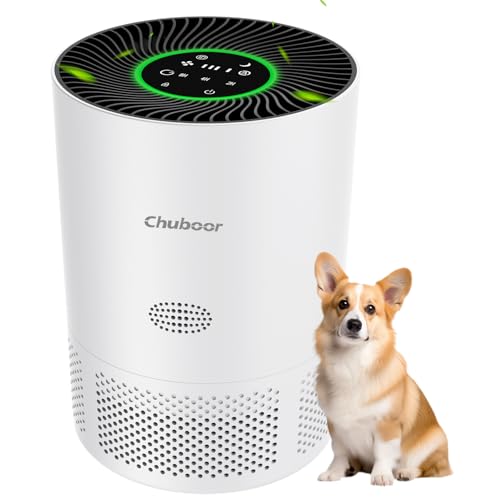
Chuboor
Air Purifiers for Home Large Rooms, H13 True HEPA with Timer
BrandChuboorCoverage1,200 sq ft
Original price was: $44.99.$38.24Current price is: $38.24.
View product detailsProduct information comes from the current AirPurifierFAQ catalog and should be verified on Amazon before purchase.




In brief: Best Air Purifier for Large Rooms: our top air purifiers for living rooms and open spaces over 500 sq ft, ranked by verified CADR, noise (dB) and yearly.
This buyer-first roundup evaluates eight large-room air purifiers using only the manufacturers’ published specs supplied to us: coverage (sq ft), filter media, any published CADR numbers, noise levels, and smart features. The aim is practical: give one clear overall pick, a fast comparison table for shoppers ready to buy, detailed profiles that match each model to real-life use cases (smoke, pets, allergies, quiet bedrooms, open-plan living), and a short, actionable buying guide you can apply to your room.
This guide is written for owners of large rooms, open-plan living spaces, lofts, or anyone hoping a single unit will clean air across multiple connected areas. If you care about measurable performance (CADR/ACH), quiet night-time operation, or smart controls, this page helps you trade those priorities off against manufacturer coverage claims so you can choose one model — or decide to buy two — with confidence.
Verdict — Best overall for large rooms: Jafanda Air JF500. It combines an H13/True HEPA stage plus a large 300 g activated‑carbon stage, a published 271 CFM CADR, smart controls (app + voice), and whisper‑quiet sleep mode (22 dB), making it the most feature-complete option here for open layouts and large living spaces up to ~2,100 sq ft. View product
Table footnote: room coverage is manufacturer-stated; compare coverage with CADR/ACH in the buying guide below to predict real-world performance.
| Model | CADR (CFM) | Room size (sq ft) | Noise (dB) | Yearly filter $ | Buy |
|---|---|---|---|---|---|
| Jafanda Air JF500 | 271 | 2,105 | 22 | Not provided | Buy |
| ECOSELF Air Purifier (HA‑2) | Not listed | 2,400 | 20 | Not provided | Buy |
| BlissAer Large-Room HEPA | Not listed | 1,800 | 25 | Not provided | Buy |
| Clorox Large Room Turbo | Not listed | 1,650 | Not listed | Not provided | Buy |
| Homvana H211 | 142 | 1,250 | 22 | Not provided | Buy |
| OdorStop OSAP5 | Not listed | 1,000 | Not listed | Not provided | Buy |
| Shark HP201 (renewed) | Not listed | 1,000 | Not listed | Not provided | Buy |
| Chuboor PJ01 | Not listed | 1,200 | Not listed | Not provided | Buy |
Jafanda Air JF500 — Brand: Jafanda Air; Price: $180.49 (current). Stated coverage: 2,105 sq ft. Filter: True HEPA + 300 g activated carbon. CADR: 271 CFM (published). Noise: 22 dB. Smart features: Alexa, Google Assistant, app control, sleep mode.
Why we picked it: JF500 is the only model in this set with a published high CADR (271 CFM) alongside a substantial activated carbon stage and H13/True HEPA media. Those three facts — decent CADR, HEPA grade, and large carbon capacity — make it the most balanced choice here for open-plan living rooms and spaces where both particles (dust, pollen, smoke) and odors matter. App and voice control make it convenient to run continuously or schedule around occupancy.
Best use-case: single-unit coverage for large open living rooms up to the manufacturer-stated area, and for buyers who want smart control and quiet night operation.
Downside: The manufacturer’s coverage claims are large; rely on the published CADR/ACH calculation (see buying guide) for realistic expectations. Yearly filter cost is not provided in the supplied specs.
ECOSELF Air Purifier — Brand: ECOSELF; Price: $99.99. Stated coverage: 2,400 sq ft. Filter: True HEPA (3‑stage). CADR: Not listed. Noise: 20 dB. Smart features: Auto mode, sleep mode, PM2.5 display.
Why we picked it: ECOSELF claims the largest service area (2,400 sq ft) and shows a low sleep‑mode noise rating (20 dB). That combination is appealing for those wanting a quiet device with very large coverage on paper. The built‑in PM2.5 sensor and auto mode help it react to changing indoor conditions.
Best use-case: buyers wanting the quietest operation and the highest manufacturer-stated coverage; good for rooms where low noise is a priority.
Downside: No published CADR in the supplied data. Large coverage claims without a CADR number make it harder to translate the claim into expected ACH — exercise caution and consider the buying-guide math before relying on single-unit coverage for very large or long spaces.
BlissAer Large-Room HEPA — Brand: BlissAer; Price: $76.49 (current). Stated coverage: 1,800 sq ft. Filter: True HEPA (H13 claim). CADR: Not listed. Noise: 25 dB. Smart features: Wi‑Fi, Alexa, sleep mode. Filter reorder code: B0DGKFLQ8K.
Why we picked it: BlissAer pairs a large claimed coverage with smart controls and a clearly stated replacement filter SKU — helpful for long‑term maintenance planning. The unit claims H13 True HEPA filtration and a 360° circulation design to cover open areas.
Best use-case: households that want smart app/voice control with straightforward filter reordering, and those who prefer a unit that balances coverage and connected features without a high price tag.
Downside: No CADR is published in the provided specs; the noise floor is higher than the quietest models listed here (25 dB in sleep mode vs. 20–22 dB elsewhere).
Clorox Large Room Turbo — Brand: Clorox; Price: $159.99. Stated coverage: 1,650 sq ft. Filter: True HEPA. CADR: Not listed. Noise: Not listed. Smart features: Turbo timer, multiple speeds.
Why we picked it: Clorox positions this model for quick cleaning bursts (turbo timer) and multi‑speed operation. The product lists clear TURBO and timing functions intended to clear odors and smoke quickly after high‑pollution events.
Best use-case: homes that occasionally need rapid cleaning — for example, after cooking or when wildfire smoke intrudes — where the turbo timer and higher speed options are desired.
Downside: No CADR and no explicit noise figure provided in the supplied spec sheet, making it harder to compare steady‑state performance or night‑time suitability against other entries.
Homvana H211 — Brand: Homvana; Price: $49.99. Stated coverage: 1,250 sq ft. Filter: H13 True HEPA. CADR: 142 CFM (published). Noise: 22 dB. Smart features: Auto mode, sleep mode. Filter reorder code: B09R1GHVKF.
Why we picked it: Homvana supplies a clear CADR (142 CFM), an H13 HEPA stage, and a low noise figure (22 dB) — concrete specs that let a buyer perform CADR/ACH math and predict expected air changes. The manufacturer also provides the filter SKU for replacements, which makes ownership easier.
Best use-case: buyers who want a documented CADR and a quiet device for medium-large rooms or as one of multiple units in an open plan. The clear CADR makes it a good second unit in multi‑unit setups.
Downside: CADR is lower than the Jafanda unit’s published number, so a single H211 will not circulate air as quickly in the largest open spaces.
OdorStop OSAP5 — Brand: OdorStop; Price: $149.99. Stated coverage: 1,000 sq ft. Filter: H13 HEPA + active carbon. CADR: Not listed. Noise: Not listed. Smart features: Auto mode, sleep mode, timer, child lock.
Why we picked it: OdorStop emphasizes an H13 HEPA filter and a 360° air intake and offers a broad set of convenience features: 24‑hour timer, five fan speeds, child lock, and an air quality display. The brand also highlights long filter life thanks to the 360° intake design.
Best use-case: situations where user controls and safety features (child lock, timer) are important and where H13 filtration is preferred at a mid‑price point.
Downside: No published CADR or explicit noise value in the supplied information, which limits direct performance comparison.
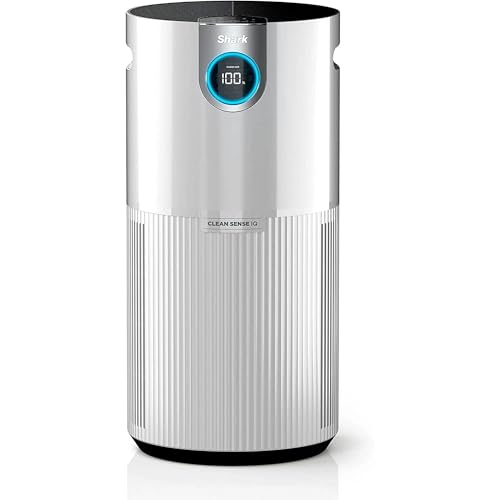
Shark Air Purifier (HP201 renewed) — Brand: Shark; Price: $99.99. Stated coverage: 1,000 sq ft. Filter: HEPA (Anti-Allergen Nanoseal). CADR: Not listed. Noise: Not listed. Smart features: Clean Sense IQ auto adjustment, real-time air-quality display.
Why we picked it: Shark promotes an auto‑adjusting Clean Sense IQ system and an anti‑allergen HEPA filter that exceeds HEPA standards according to the manufacturer. Auto adjustment reduces the need to fiddle with speeds and helps the unit react to particles of different sizes.
Best use-case: buyers who want an auto‑adjusting unit from a known brand for standard large rooms up to 1,000 sq ft.
Downside: No CADR or explicit sleep/noise spec is provided in the supplied data, limiting apples‑to‑apples comparisons for large spaces or nighttime use.
Chuboor PJ01 — Brand: Chuboor; Price: $38.24 (current). Stated coverage: 1,200 sq ft. Filter: True HEPA. CADR: Not listed. Noise: Not listed. Smart features: Timer; 360° intake.
Why we picked it: Chuboor is a budget-oriented option with a claimed 360° intake and a True HEPA stage that captures fine particulates according to the manufacturer. The low price lowers the barrier for adding multiple units around a large home.
Best use-case: budget buyers who prefer to buy two or more low-cost units to place across an open floor plan rather than a single expensive unit.
Downside: Missing CADR and noise figures in the supplied data mean you should plan conservatively — use the unit for supplementary coverage rather than relying on one unit for a very large room.
Short mapping of standout attributes from the supplied specs:
| Model | Published CADR | Coverage (sq ft) | Sleep noise (dB) | Smart features |
|---|---|---|---|---|
| Jafanda JF500 | 271 CFM | 2,105 | 22 | App, Alexa, Google |
| ECOSELF HA‑2 | Not listed | 2,400 | 20 | Auto, Sleep |
| Homvana H211 | 142 CFM | 1,250 | 22 | Auto, Sleep |
| BlissAer | Not listed | 1,800 | 25 | Wi‑Fi, Alexa |
| Clorox Turbo | Not listed | 1,650 | Not listed | Turbo timer |
| OdorStop OSAP5 | Not listed | 1,000 | Not listed | Auto, Sleep |
| Shark HP201 | Not listed | 1,000 | Not listed | Auto adjust |
| Chuboor PJ01 | Not listed | 1,200 | Not listed | Timer |
Trade-offs to watch for: a high manufacturer coverage number is useful marketing but without CADR you can’t reliably predict air changes per hour. If quiet night‑time use matters, prioritize models with published dB ratings. If you want to rely on a single unit to serve a very long or irregular open area, prefer models with published CADR numbers — and consider using two units if CADR or airflow patterns suggest single‑unit delivery will leave dead zones.
Two numbers you need to understand: CADR and ACH. CADR (clean air delivery rate) is usually reported in cubic feet per minute (CFM) or cubic meters per hour; it tells you how much filtered air the unit delivers at a given setting. ACH (air changes per hour) is how many times the device will replace all of the air in a room in one hour. Use CADR and room volume to calculate ACH and pick the right model for your goals.
Required CADR (CFM) = (Room volume in cubic feet × Desired ACH) ÷ 60
Room volume = 800 sq ft × 8 ft = 6,400 cubic feet.
If you want 4 ACH (a practical target for general air cleaning): Required CADR = (6,400 × 4) ÷ 60 = 25,600 ÷ 60 ≈ 427 CFM.
Interpretation: to get 4 complete air changes per hour in this example you would need roughly 427 CFM of clean air delivery. If you only have a 271 CFM unit (Jafanda) you can expect ~2.5 ACH in that 800 sq ft room at full speed (271 CFM × 60 ÷ 6,400 ≈ 2.54 ACH). To reach 4 ACH you could either: 1) run one higher‑CADR model, or 2) run two lower‑CADR units positioned apart so their combined CADR approaches the required value (for example, 271 CFM + 142 CFM ≈ 413 CFM, just under 427 CFM). Always place multiple units apart to reduce dead zones.
Manufacturer-stated coverage (sq ft) is often the area where the unit can produce 1 ACH, or sometimes a lower hourly rate — the marketing copy will vary. Because the supplied dataset mixes claims, prefer published CADR if your goal is a specific ACH target. If CADR is not provided, treat the coverage claim conservatively (assume it describes a lower ACH) and consider adding a margin by using two units or choosing a higher-rated model.
Placement and consistent operation have as much impact on real‑world performance as the rated CADR:
The supplied dataset includes strong claims (coverage, filter grade, quiet mode) but is missing CADR and noise numbers for several models. CADR is the most useful published metric for predicting ACH — without it you must either:
Also, yearly filter costs were not provided for any model in the supplied facts. If long-term operating cost is important, look for the filter SKU on the seller page (where supplied) or contact the manufacturer to get current replacement filter pricing before purchase.
Use this short checklist to convert your room and needs into a purchase decision quickly:
If you want a single, capable large‑room purifier with documented
To keep our Best Air Purifier for Large Rooms information accurate, we rely on independent references such as the EPA’s Guide to Air Cleaners in the Home, AHAM Verifide CADR data and manufacturer spec sheets. See how we evaluate air purifiers and our editorial policy for details.
Use the published CADR (or ACH) as your primary predictor of how fast a unit will clean air; manufacturer-stated square-foot coverage is a convenient guideline but can be optimistic. Compare the CADR/ACH to your room’s volume and layout (open-plan vs. compartmentalized). The buying guide on this page explains the CADR/ACH math to translate stated coverage into realistic expectations.
Verify the filter grade (H13/True HEPA is preferred), whether the unit has an activated-carbon stage for odors, published noise levels, and any built-in sensors/auto modes. If CADR isn’t listed, contact the manufacturer or retailer for CADR/ACH figures or plan conservatively—don’t assume the stated sq ft coverage equals equivalent CADR performance.
The JF500 combines a published 271 CFM CADR, an H13/True HEPA stage, a substantial 300 g activated-carbon stage, and very low published noise (22 dB). It also offers app and voice control plus a sleep mode, making it the most feature-complete option in this set for open-plan living and spaces where both particles and odors matter.
Based on the supplied specs, ECOSELF (HA-12) has the lowest listed sleep-mode noise at 20 dB, Jafanda JF500 lists 22 dB, and BlissAer lists 25 dB. If quiet night operation is your top priority, prefer the models with the lowest published dB figures and verify their low-speed performance in manufacturer materials before buying.
It depends on layout, room volume, and the unit’s CADR/ACH. Large manufacturer-stated coverage can be optimistic; use the CADR/ACH calculation in the buying guide to estimate real cleaning rate for your space. For very long, divided, or heavily used open plans, two strategically placed units often deliver more even, faster cleaning than a single device claiming large coverage.
No—yearly filter costs are not provided in the supplied specs (the table shows "Not provided" for filter cost). For planning, check each manufacturer’s product page or customer support for replacement filter pricing and lifetimes. BlissAer does list a reorder code (B0DGKFLQ8K), which helps you locate its replacement filter.
Answers are educational and may link to relevant guides or products on this site. Product facts can change, so confirm current details before purchase.
