
Air purifiers that use certified True HEPA filtration and do not produce ozone are generally safe to run around babies when the unit is properly sized, positioned, and maintained. Avoid ozone-generating devices and unverified ionizers; run purifiers continuously on low-to-medium speed and consult your pediatrician if the infant has known respiratory problems.
Why this answer — how air purifiers affect nursery safety
HEPA filtration works by passing room air through dense, fibrous filter media that traps particles such as dust, pollen, pet dander and many combustion particles. A True HEPA filter rated to capture ≥0.3 microns at 99.97% efficiency does not generate gases or ozone during normal operation, so it reduces particle exposure without adding new airborne pollutants.
Some devices rely on different technologies — ionizers, ozone generators, or certain UV/ozone hybrids — that can create ozone or other byproducts. Ozone is an irritant to the airways and is not recommended around infants. That is why device technology and third‑party safety certifications matter more than marketing language.
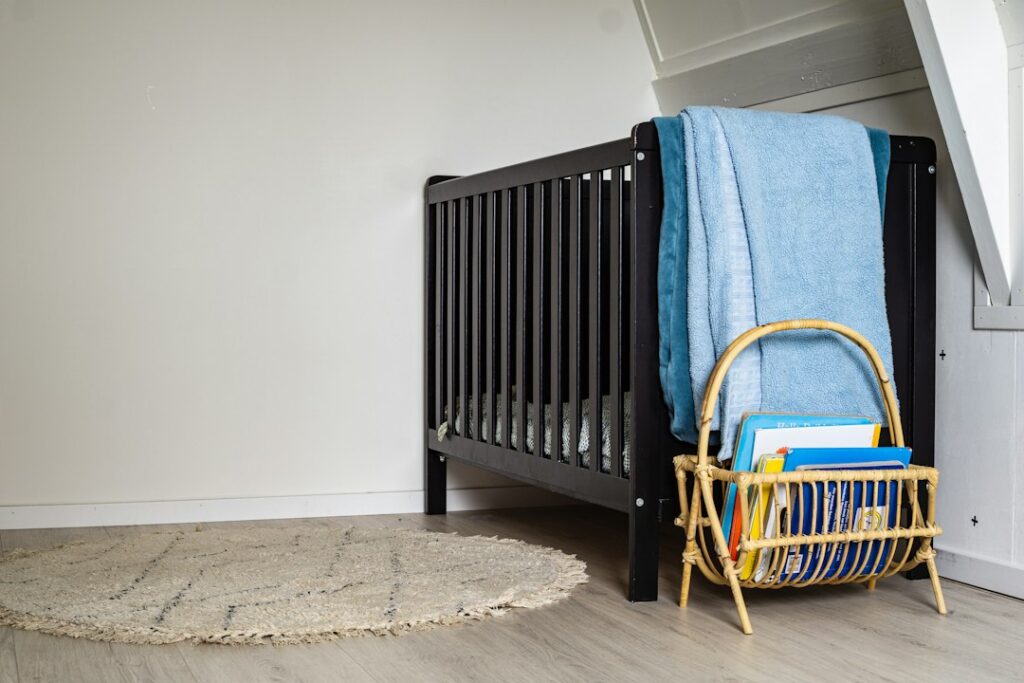
Safety in practice depends on more than the filter label: the purifier must be the right capacity for the room, placed so intake and exhaust aren’t blocked, run at an appropriate speed for steady cleaning (usually low or medium for sleep), and have filters changed on schedule to avoid re‑emission of captured material.
Key safety features and certifications to look for
- True HEPA filter: Preferred particle capture; look for manufacturer wording “True HEPA” and filter efficiency ratings.
- Activated carbon stage: Optional but useful for odors and some VOCs (does not replace HEPA for particles).
- Avoid ozone-producing technologies: Do not use ozone generators; be cautious about ionizers unless the manufacturer provides independent ozone measurements showing levels within safe limits.
- Third‑party safety checks: CARB (California) certification for low ozone, ETL/UL for electrical safety, and AHAM CADR verification for performance are meaningful signals.
- Noise and sleep modes: Quiet low-speed operation helps maintain use during sleep — continuous low-speed is preferable for steady air cleaning.
Practical steps for choosing and using an air purifier in a nursery
- Choose the right technology: Prioritize True HEPA plus optional activated carbon. Avoid devices marketed as ozone generators; treat standalone ionizers with caution unless independently verified.
- Match capacity: Confirm the purifier’s room coverage or CADR matches the nursery’s square footage. Manufacturers often list suggested room size—use that guidance.
- Check certifications: Look for CARB (or explicit “Zero Ozone Verified”), ETL/UL for safety, and AHAM/CADR ratings where available.
- Placement: Put the unit on a stable surface out of reach (not on the floor directly beside the crib). Keep intake and exhaust clear of curtains, walls or toys to ensure unobstructed airflow.
- Operation: Run continuously on low-to-medium for ongoing removal of particles; use higher speeds temporarily after events that spike pollution (cooking, smoke, heavy dusting).
- Maintenance: Replace prefilters, HEPA and carbon filters on the schedule the manufacturer specifies. Clean exterior grills and check indicators so the unit doesn’t operate at reduced efficiency.
- Consult health care providers: If an infant has diagnosed lung disease, recurrent wheeze, or other concerns, check with the pediatrician before introducing new devices.
Placement and operational specifics parents often ask about
Place the purifier where it can draw in room air and discharge it without obstruction, ideally elevated on a stable table or shelf and at least a few feet from the crib edge. Avoid placing the unit where curious hands can touch intake/exhaust grilles. For sleep, choose a quiet model and use a night or low‑fan setting; running continuously is more effective than intermittent bursts.
Example product notes — what to look for in a listing
Some current models show the attributes described above. For example, a GermGuardian model lists True HEPA + activated carbon filtration and states CARB, ETL certification and “Zero Ozone Verified,” plus smart features (app/Alexa) and independent testing claims. Those are the kinds of verified attributes that align with recommended practice.
By contrast, personal devices that rely on sealed UVC chambers or claim to “disintegrate contagion” for a narrow breathing zone (a product marketed as a personal UVC purifier is an example) are designed around different operating assumptions. Sealed UVC personal purifiers may be appropriate for individual use in limited circumstances, but their suitability in a nursery depends on evidence of safe operation, absence of ozone or UV leakage, and whether they meaningfully clean the whole-room air the baby breathes. For broad nursery use, True HEPA room purifiers remain the standard.
Common misunderstandings and important exceptions
“HEPA” on its own can be misused in marketing; confirm the claim says True HEPA and look for efficiency numbers if provided. A purifier’s sticker saying it helps “remove germs” should be read critically — particle trapping is different from disinfecting air, and manufacturers may pair technologies (HEPA + UV) with different intended effects.
Some parents worry air purifiers will dry the air or alter temperature; most plug-in purifiers do not meaningfully change humidity or thermal comfort. If humidity control is needed, use a humidifier alongside the purifier following safety guidelines for humidifiers.
Finally, air purifiers reduce airborne particle exposure but do not eliminate the need for basic controls: avoid indoor smoking, reduce strong pollutant sources, ventilate appropriately, and maintain good cleaning to limit dust and allergens.
Related questions
Do air purifiers produce ozone?
Some technologies can produce ozone as a byproduct. True HEPA and passive carbon filtration do not. If you want details on which devices produce ozone and why that matters, see our page: Do Air Purifiers Produce Ozone?
Are UV air purifiers safe?
UV can be part of multi‑stage systems, but safety depends on design (sealed chambers vs. open UV), potential for ozone generation, and validated claims. For a deeper look: Are UV Air Purifiers Safe?
Are ionic/ionic‑style air purifiers safe for babies?
Some ionic purifiers produce charged particles to make pollutants settle or stick to surfaces; some also generate ozone. If considering such a device, seek independent ozone measurements and performance verification. See: Are Ionic Air Purifiers Safe?
Are ozone generators safe?
Short answer: no, they are not recommended for occupied spaces and are unsafe for babies. For a full explanation: Are Ozone Generators Safe?
For curated recommendations that focus on nursery-safe models and correct room sizing, see our guide: Best Air Purifiers for Nurseries & Babies (2026).
Sources and further reading
- U.S. Environmental Protection Agency (EPA) — guidance on indoor air cleaners and particle removal.
- Association of Home Appliance Manufacturers (AHAM) — CADR performance and testing guidance.
- California Air Resources Board (CARB) — certification program and ozone emission limits for air cleaners.
- Peer‑reviewed literature on HEPA filtration and particle removal in indoor environments (systematic reviews and controlled studies).
If you want hands‑on help selecting a nursery model with verified HEPA and low‑noise operation, our product guide can help: Best Air Purifiers for Nurseries & Babies (2026).
Sources for “Are Air Purifiers Safe for Babies?”
To keep our answer to “Are Air Purifiers Safe for Babies?” accurate, we rely on independent references such as the EPA’s Guide to Air Cleaners in the Home, AHAM Verifide CADR data and manufacturer spec sheets. See how we evaluate air purifiers and our editorial policy for details.
