Clorox
Clorox Small Room Turbo Air Purifiers for Home With True HEPA Filter
BrandCloroxCoverage613 sq ft
See today’s price on Amazon
View product details
Product information comes from the current AirPurifierFAQ catalog and should be verified on Amazon before purchase.




In brief: Best Air Purifier for Small Room: our top air purifiers for small bedrooms, dorms and offices, ranked by verified CADR, noise (dB) and yearly filter cost.
Ranked by our score from each maker's published specs. We earn a commission when you buy through our links, at no extra cost to you. Tap any button to see today's price on Amazon.

How this product scored 8.1 / 10
Based on the maker's specs as listed on Amazon. We don't lab-test every model. See how the score works.
How this product scored 6.8 / 10
Based on the maker's specs as listed on Amazon. We don't lab-test every model. See how the score works.

How this product scored 6.8 / 10
Based on the maker's specs as listed on Amazon. We don't lab-test every model. See how the score works.

How this product scored 6.7 / 10
Based on the maker's specs as listed on Amazon. We don't lab-test every model. See how the score works.

How this product scored 6.6 / 10
Based on the maker's specs as listed on Amazon. We don't lab-test every model. See how the score works.

How this product scored 6.6 / 10
Based on the maker's specs as listed on Amazon. We don't lab-test every model. See how the score works.
How this product scored 6.6 / 10
Based on the maker's specs as listed on Amazon. We don't lab-test every model. See how the score works.

How this product scored 6.2 / 10
Based on the maker's specs as listed on Amazon. We don't lab-test every model. See how the score works.

How this product scored 5.7 / 10
Based on the maker's specs as listed on Amazon. We don't lab-test every model. See how the score works.

How this product scored 5.7 / 10
Based on the maker's specs as listed on Amazon. We don't lab-test every model. See how the score works.
This roundup is buyer-first: every recommendation ties a real, available compact purifier to a clear small-room scenario—bedside, desktop, travel/dorm, or a slightly larger small-open living space—using the maker’s listing specifications and features. Selections emphasize filtration type, stated coverage/CADR where listed, noise or sleep features, power source and filter maintenance. Read the short verdict if you want one pick; read the use-case pages to match a model to the room and your tolerance for noise, portability and running costs.
Top pick: Shark BreatheClear Compact Pro (HP062PK) (8.1/10). Sleep mode for quiet nights; HEPA filter for fine dust, pollen and dander; covers rooms up to 300 sq ft. It scores highest on this list, led by room fit and filtration.
Runner-up: Black+Decker Tabletop (BAPT01) (6.8/10): covers rooms up to 435 sq ft. Also worth a look: GoveeLife Smart Mini (6.8/10, best smart pick): runs as quietly as 24 dB.
Scores come from published specs, certifications and brand track record, weighted for small rooms. See how we score.
Why this pick: BLACK+DECKER’s tabletop model pairs a 3-stage HEPA filtration system with ENERGY STAR certification, a Sleep Mode, a timer and a compact form factor. The manufacturer states it removes up to 99.97% of pollutants as small as 0.3 microns and covers up to 435 sq ft (based on 5 air changes per hour), which makes it versatile for bedrooms, home offices and larger small rooms.
Main limitation: The maker’s listing does not list CADR and the yearly filter cost isn’t listed on the spec sheet shown here—verify replacement-filter pricing before purchasing if filter cost is a priority.
Key practical note: the unit includes a filter indicator with audible alarm and filters rated to last up to 2,000 hours per the manufacturer; that makes scheduling replacements straightforward. For bedside use, Sleep Mode and the timer are useful for lowering noise and runtime overnight.
See product details — check the product page for the latest availability and replacement filters.
Why this pick: Clorox advertises True HEPA filtration and substantial manufacturer-stated coverage—up to 613 sq ft for 1 air change/hour and 5 air changes/hour in a 123 sq ft room—plus a Turbo Timer for short bursts of intense cleaning. If you need a compact unit that will be used occasionally for quick cleanups after cooking or when smoke levels spike, this one is designed for that workflow.
Main limitation: The listing does not supply CADR or a specific noise-dB number for each speed; it only notes quiet operation on the lowest setting. For continuous overnight bedroom use, verify reported low-speed noise if you are particularly noise-sensitive.
See product details — use the Turbo Timer for short bursts after high-pollution events.
Why this pick: QUEENTY pairs an H13 HEPA filter with a 25 dB Sleep Mode and a “face-to-face” outlet and oscillating airflow designed to direct purified air toward the user. It includes a USB cable and claims universal voltage (suitable for desktop power banks), plus certifications and a no-ozone declaration in its specifications. That combination suits people who want very low operational noise and a purifier positioned close to the sleeping occupant.
Main limitation: The maker’s listing does not provide a room-coverage square footage or CADR. QUEENTY’s design focuses on delivering air directly to a breath zone rather than high ACH for a whole room; judge it as a personal/desktop unit rather than a whole-room workhorse.
See product details — good choice for a bedside nightstand or a desk where quiet matters.
Why this pick: frestar’s compact desktop model specifies coverage up to 161 sq ft, 3-stage filtration (HEPA plus activated carbon), USB power and a quiet 30 dB operation. It’s designed to be powered by a laptop or power bank and has replacement HEPA filters available. For a small office, home desk or dorm room where noise and power flexibility are priorities, this one is a solid, budget-friendly option.
Main limitation: Coverage is modest—suitable for desks and small rooms but not for larger small-open living spaces. Check the recommended filter replacement cadence (manufacturer suggests 3–6 months) if you plan to run the unit continuously.
See product details — USB power makes placement flexible, and replacement filters are available.
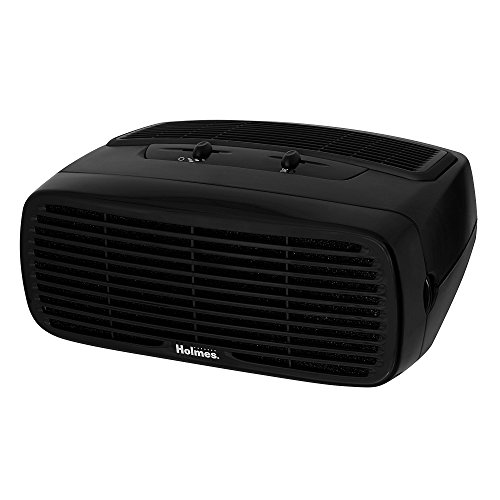
Why this pick: Holmes provides a listed CADR of 70 and recommends the unit for rooms up to 109 sq ft. That makes it one of the few compact models in this set with a CADR specification, which helps estimate performance for a given room size. It also offers an optional ionizer and three fan speeds; the manufacturer states removal of up to 99% of airborne particles in its materials.
Main limitation: The model is designed for true small rooms/desk areas rather than larger small-open living spaces. If you need higher ACH in a larger area, choose a model with higher stated coverage or multiple units.
See product details — use CADR 70 and the stated coverage to compare expected air-change performance.
Why these picks: AuroraTurn and Silanit are inexpensive mini units that emphasize portability, activated-carbon pads and plug-in convenience; both are presented as solutions for dormitories, RVs, travel and quick spot odor reduction. ormos is a rechargeable desktop unit with a washable filter and a manufacturer-stated noise figure of 36 dB—handy when you want no ongoing filter purchases.
Main limitation: Mini and rechargeable devices rely on activated carbon or washable filters and are intended for spot purification. Manufacturer descriptions emphasize portability and convenience, not whole-room ACH. These are best when used near the breathing zone or as short-term odor/smoke spot-control devices.
Use the manufacturer-stated coverage (square feet) or CADR to match a purifier to a room. If a product lists coverage, treat that number as the manufacturer’s recommendation of where the product can provide reasonable air changes per hour at its normal settings. If CADR is provided, you can estimate ACH (air changes per hour) by comparing CADR to room volume—CADR and stated coverage together are the clearest way to pick the right unit.
Examples from the product list:
Noise is a primary consideration for bedside units. QUEENTY specifies 25 dB in Sleep Mode; frestar lists 30 dB; ormos reports 36 dB. BLACK+DECKER highlights a Sleep Mode without a decibel figure. When noise numbers are missing, prioritize models that advertise Sleep Mode and a low-speed setting designed for overnight use.
HEPA (True HEPA or H13 HEPA) captures fine particles—pollen, dust, pet dander and many smoke particles. Activated carbon or replaceable carbon pads help reduce light odors and volatile compounds but are not a replacement for HEPA when your primary concern is fine particles. Washable filters (ormos) can be convenient for low-maintenance use, but they typically need regular cleaning and may not match the particle-capture efficiency of certified HEPA filters.
USB-powered or rechargeable units (frestar, QUEENTY’s USB compatibility, ormos, AuroraTurn, Silanit) offer placement flexibility for desks, dorm rooms, travel or shared spaces. Mains-powered models with larger coverage (BLACK+DECKER, Clorox) are better for continuous whole-room operation. Decide whether you need 24/7 whole-room cleaning (mains plug) or targeted personal/desktop purification (USB/rechargeable).
Filter cost and lifetime matter for total ownership cost. BLACK+DECKER supplies a filter life estimate (up to 2,000 hours); frestar recommends replacement every 3–6 months. For models with washable filters (ormos) or included carbon pads (AuroraTurn, Silanit), the operating cost may be lower but check how often consumables need replacement or reconditioning. If the product page doesn’t list filter prices, check retailer listings for replacement filters before buying.
Filter approach: Clorox and BLACK+DECKER use True HEPA / 3-stage filtration aimed at whole-room cleaning. QUEENTY offers H13 HEPA for a personal breathing-zone approach. frestar combines HEPA and activated carbon for mixed particle-and-odor control. AuroraTurn and Silanit focus on activated-carbon pads for spot odor control. ormos offers a washable filter for fewer consumables.
Coverage and performance: Clorox and BLACK+DECKER list the highest manufacturer coverage (613 sq ft and 435 sq ft respectively), while frestar (161 sq ft) and HOLMES (109 sq ft / CADR 70) are focused on smaller rooms or desks. QUEENTY and the mini units do not list whole-room coverage and should be treated as personal/desktop units unless manufacturer data specifies otherwise.
Noise and bedside suitability: QUEENTY (25 dB) and frestar (30 dB) advertise low-noise operation suitable for bedrooms; BLACK+DECKER lists a Sleep Mode but not a dB value. ormos lists 36 dB, which is still moderate but may be more noticeable than the 25–30 dB devices.
For deeper reading on matching purifier size to room, visit our broader roundups and guides:
Choose BLACK+DECKER for a strong balance of coverage, a Sleep Mode and practical features (timer, filter indicator) or choose QUEENTY if you want an almost silent personal-flow device aimed at the breathing zone and USB powerability. Verify noise in real settings when possible.
Pick frestar or HOLMES: frestar for USB power, HEPA+carbon combination and low noise; HOLMES if you prefer a CADR-listed product and a more traditional desktop air-cleaning design. If you need a rechargeable or travel-capable model, AuroraTurn or Silanit are purpose-built for portability and spot odor control.
Clorox’s Turbo Timer and higher stated maximum coverage make it a candidate for occasional rapid cleaning. For continuous wildfire smoke exposure you’ll likely need a higher-capacity, HEPA-equipped unit and to close windows and doors to let the purifier work more effectively—these products are useful, but in heavy smoke situations verify that filter replacement cadence and filtration efficiency meet your long-term needs.
Consider ormos for a washable filter to reduce consumable purchases, or check BLACK+DECKER’s 2,000-hour filter life estimate for a clearer replacement interval. For carbon-pad-based minis, ensure the model supplies enough pads and that pads are reusable per manufacturer instructions.
A: Use the manufacturer-stated coverage or CADR to match a unit to your room’s square footage. If a model states a specific coverage (for example, BLACK+DECKER’s 435 sq ft or Clorox’s 123–613 sq ft range), choose a unit whose coverage equals or exceeds your room size for the ACH you want. If only CADR is available, compare CADR to room volume to estimate air changes per hour. For a bedroom, aim for a purifier that can achieve at least 4–5 air changes/hour at the fan speeds you’re comfortable running.
A: Mini USB and rechargeable purifiers are effective for spot and personal-area cleaning and can reduce mild odors with activated carbon pads. For ambient allergens and significant smoke across a whole room, choose a unit with True HEPA or H13 HEPA filtration and a suitable manufacturer-stated coverage. Use mini units close to your breathing zone for the best immediate improvement.
A: Replacement intervals vary by product and usage. BLACK+DECKER lists filter life up to 2,000 hours; frestar recommends filter replacement every 3–6 months. Washable filters (ormos) eliminate frequent replacements but require periodic cleaning. Check each product page for manufacturer guidance and availability of replacement parts before purchasing.
A: Safety depends on the design. QUEENTY’s listing includes a no-ozone claim and certifications (FCC, CE, RoHS, WEEE). If a purifier uses ionization or a negative-ion generator, confirm the manufacturer’s ozone emissions statement and certifications before prolonged use, and avoid models that do not provide clear safety information. If you are sensitive or have respiratory concerns, choose a purifier that relies on HEPA filtration without ion generation.
A: Activated carbon pads and carbons in multi-stage filters reduce light odors and volatile organic compounds. AuroraTurn and Silanit include replaceable carbon pads for spot odor control. For heavy or persistent kitchen smoke, use a unit with both HEPA and carbon stages (frestar) or a larger whole-room purifier run at high speed, and ventilate when possible.
A: When a manufacturer omits CADR or decibel figures, rely on the listed coverage, Sleep Mode or low-speed claims, and check the product page and user reviews for real-world reports. If noise tolerance or precise ACH matters to you, prioritize models that supply CADR and dB data or choose a product with a documented sleep or low-noise specification.
This page focused on compact, real-world models available in 2026 and matched them to common small-room scenarios using the maker’s listings. If you want a quick shopping path: use the Quick picks table to narrow options, confirm replacement-filter availability and cost on the product page, and pick mains-powered whole-room models for continuous ACH or USB/rechargeable mini units for spot and personal-area use. Product pages linked above provide the most up-to-date pricing and accessory information; check them before completing a purchase.
Ready to buy? Use the product links on this page to view details and purchase options. For broader context on sizing and long-form reviews, see our in-depth reviews and the main roundup at The Best Air Purifiers (2026).
To keep our Best Air Purifier for Small Room information accurate, we rely on independent references such as the EPA’s Guide to Air Cleaners in the Home, AHAM Verifide CADR data and manufacturer spec sheets. See how we evaluate air purifiers and our editorial policy for details.
Use the manufacturer-stated coverage or air-change/hour (ACH) claim to match a unit to your room square footage. The roundup matches units by coverage or ACH where provided. If coverage or CADR isn’t listed, verify the manufacturer’s stated sq ft, the ACH used to calculate it, and whether that applies to continuous or short-burst operation before buying.
Most USB/rechargeable desktops are intended for personal or small-workspace use rather than whole-room cleaning. For example, QUEENTY focuses on a face-to-face breathing zone and doesn’t list room coverage; frestar specifies coverage up to 161 sq ft. Verify the manufacturer’s stated coverage and intended use (personal vs. whole-room) before assuming whole-room performance.
Sleep Mode and low-noise operation are critical for bedside units. The roundup prioritizes models advertising sleep modes or low-dB operation—QUEENTY lists a 25 dB Sleep Mode and BLACK+DECKER includes a low-noise Sleep Mode designed for bedrooms. If you’re noise-sensitive, verify the manufacturer’s noise figures and whether Sleep Mode is sufficient for overnight use.
Check filter life, replacement costs and whether the unit has a filter indicator. For example, BLACK+DECKER states filters last up to 2,000 hours and includes a filter indicator with an audible alarm. The roundup notes we used only manufacturer-supplied specs; if a model’s replacement-filter pricing or lifespan isn’t listed, verify those details on the product page before purchasing.
Activated-carbon pads or focused suction are useful for spot or source control of cooking fumes, smoke or vaping; the roundup highlights carbon pads for mild odors but notes they aren’t equivalent to HEPA for tiny particles. Models with a Turbo or high-cleaning mode (like the Clorox Turbo) can help with short spikes. Verify the amount/type of carbon media and any CADR figures relevant to smoke.
ENERGY STAR indicates greater energy efficiency and can lower running costs; in this roundup the BLACK+DECKER tabletop model is noted as ENERGY STAR certified. Prioritize it if you plan long runtimes. For other models, check manufacturer listings for ENERGY STAR status and consider filter-replacement costs and power source when estimating overall running cost.
Answers are educational and may link to relevant guides or products on this site. Product facts can change, so confirm current details before purchase.