Cleaner air guidance. Practical comparisons. Smarter recommendations.
Independent Guides Practical Comparisons Better Breathing
SEARCH AIRPURIFIERFAQ

What can we help you find?

Best

Best Air Purifiers With Washable Filters (2026)

PRODUCTS IN THIS GUIDE

Recommended models

Product information comes from the current AirPurifierFAQ catalog and should be verified on Amazon before purchase.

In brief: Air Purifier with Washable Filter: our top air purifiers for low filter costs over time, ranked by verified CADR, noise (dB) and yearly filter cost.

5 best air purifiers for washable filters

By the AirPurifierFAQ teamUpdated Oct 28, 2026How we scoreAdvertising disclosure

Ranked by our score from each maker's published specs. We earn a commission when you buy through our links, at no extra cost to you. Tap any button to see today's price on Amazon.

  1. 1 Best Overall Shark NeverChange Detect iQ MAX with BreatheClear Air Purifier, HP362
    Shark NeverChange Detect iQ MAX with BreatheClear Air Purifier, HP362
    • HEPA filter for fine dust, pollen and dander
    • Covers rooms up to 1,650 sq ft
    • Sleep mode for quiet nights
    8.8
    Check Price on Amazon
  2. 2 Best for Odors Shark BreatheClear Smart Air Purifier, HP162, Dove
    Shark BreatheClear Smart Air Purifier, HP162, Dove
    • HEPA filter for fine dust, pollen and dander
    • Covers rooms up to 750 sq ft
    • Sleep mode for quiet nights
    8.6
    Check Price on Amazon
  3. 3 Shark BreatheClear Compact Pro Smart Air Purifier, HP062PK, Blush
    Shark BreatheClear Compact Pro Smart Air Purifier, HP062PK, Blush
    • HEPA filter for fine dust, pollen and dander
    • Covers rooms up to 300 sq ft
    • Sleep mode for quiet nights
    8.2
    Check Price on Amazon
  4. 4 Best for Big Rooms DAYETTE Pet Air Purifier for Home Large Room 3400 Ft²,
    DAYETTE Pet Air Purifier for Home Large Room 3400 Ft², TVOC…
    • True HEPA filter for fine dust, pollen and dander
    • Covers rooms up to 3,400 sq ft
    • Runs as quietly as 22 dB
    7.8
    Check Price on Amazon
  5. 5 Quietest Pick Nuwave Forever Air Purifier for Home Large Room Up to
    Nuwave Forever Air Purifier for Home Large Room Up to 2,002…
    • Covers rooms up to 2,002 sq ft
    • Runs as quietly as 21.4 dB
    • Washable filter cuts replacement costs
    5.4
    Check Price on Amazon
Get our Black Friday deal alertOne email when the best air purifier and filter deals drop, plus a reminder when your filter is due. 4 to 6 emails a month. Unsubscribe any time.

Air Purifier with Washable Filter – Best Air Purifier Fan Combos (2026)

Washable filters and reusable pre‑filters are a straightforward way to cut lifetime filter costs and simplify upkeep for small, targeted air‑cleaning tasks—desk areas, kitchen counters, RVs and travel—and to protect an expensive main filter from hair, lint and grease. This guide focuses only on products and accessory kits in our catalog that specifically advertise washable or reusable filters. Below you’ll find clear recommendations by use case, selection criteria, maintenance rules and the trade‑offs you need to accept when you choose washable media over single‑use HEPA cartridges.

What we included — selection criteria and exclusions

To keep the guide buyer‑first and practical, we only considered items that explicitly state a washable/reusable filter or pre‑filter in the product listing. We included both complete small purifiers that use washable media and replacement washable pre‑filter kits for mainstream purifiers (for example, Coway and Blueair). We excluded products that do not advertise reusable media.

Important exclusions and safety notes:

  • Ozone generators. Some listings in the catalog — notably the Manfh “ozone generator” — are not filtration devices and must only be used in unoccupied, ventilated spaces. They are not substitutes for an air purifier in occupied rooms; we do not recommend them for everyday indoor use.
  • Ambiguous “washable” claims. Products that claim “washable” but do not specify what is washable (for example, only an external fabric cover vs. the actual particle‑trapping media) were treated cautiously. We relied on product text that clearly identifies washable filters or washable pre‑filter kits.
  • Performance context. We used information from the maker’s listing. Where CADR, laboratory tests or independent certifications are not listed in the maker’s listing, we flag that absence below. We did not perform our own lab testing for this roundup.

Verdict

Top pick: Shark NeverChange Detect iQ MAX (HP362) (8.8/10). HEPA filter for fine dust, pollen and dander; covers rooms up to 1,650 sq ft; sleep mode for quiet nights. It scores highest on this list, led by room fit and smart features.

Runner-up: Shark BreatheClear (HP162) (8.6/10, best for odors): covers rooms up to 750 sq ft. Also worth a look: Shark BreatheClear Compact Pro (HP062PK) (8.2/10): covers rooms up to 300 sq ft.

Scores come from published specs, certifications and brand track record, weighted for washable filters. See how we score.

Best picks — detailed guidance

Silanit Desktop Smoke Purifier Fan — Best overall washable‑filter personal purifier

Why this pick: the Silanit unit is described in the listing as a washable‑filter purifier with a removable oil collection cup for cooking grease. It’s marketed for smoke/odor removal in small, targeted locations—exactly the scenarios where washable media makes sense: quick capture of grease and larger particles, low running cost and no monthly cartridge purchases.

  • Key facts: brand Silanit; washable filter; USB powered. (product page)
  • Best for: apartments, RVs, countertops, near‑stove capture, small rooms where you want targeted smoke/odor extraction and low upkeep.

Pros:

  • Washable filter and removable oil cup make it practical for repeated kitchen use—oil and grease collect in the cup rather than saturating the filter fabric.
  • USB power and compact size are convenient for portable placement or use on a counter/desk without dedicated outlet access.
  • Dual‑speed operation is marketed as quiet, so it’s tolerable for bedrooms or offices where loud fans would be distracting.

Caveats:

  • No CADR or certified particle‑capture claims in the listing; treat this unit as a targeted capture device for localized fumes and coarse particles, not a whole‑room HEPA replacement.
  • Washable media performance declines if not cleaned and dried properly; oil buildup requires regular attention and can reduce suction and trapping efficiency.
  • Because it’s designed for close‑range capture, placement relative to the source (directly in the path of rising fumes) matters more than raw fan speed.

Shopping note: the washable filter reduces ongoing cost; treat this as a targeted smoke/odor tool rather than whole‑room HEPA replacement. If you plan to use it primarily for cooking smoke, position the unit as close as practical to the stove or hot pot and empty the oil cup after heavy use.

ormos Rechargeable Desktop Air Purifier — Best budget / rechargeable desktop option

Why this pick: inexpensive, rechargeable and explicitly including washable filters, the ormos unit is a strong choice for desk use, travel and tiny rooms where you need portability with minimal operating costs.

  • Key facts: brand ormos; washable filter; the maker’s listing states 36 dB noise (library‑quiet). (product page)
  • Best for: desks, bedside, travel, camping and short‑duration odor/smoke capture.

Pros:

  • Rechargeable and USB powered for use away from mains power—good for hotels, RVs and temporary setups.
  • Includes reusable filters and a removable cup for grease/condensate per the listing.
  • Low reported noise (36 dB) suits bedrooms and shared spaces where constant background noise would be disruptive.

Caveats:

  • Small rechargeable units often trade continuous runtime for portability—confirm runtime and charge behavior if you expect multi‑hour continuous use.
  • No CADR or formal lab certification in the listing; performance is realistic for very small areas and source‑proximate capture, not large open rooms.
  • Rechargeable batteries may degrade over time; long‑term ownership plans should factor potential battery replacement or reduced run time.

Practical tip: use the ormos on a bedside table for short overnight odor control or at a desk for concentrated smoke/steam capture. Keep a charging cable nearby and rotate a second washable pad if you use it daily so you always have a dry spare.

FMDZFL AP‑1512HH Washable Pre‑filter + Carbon set — Best for Coway owners who want reusables

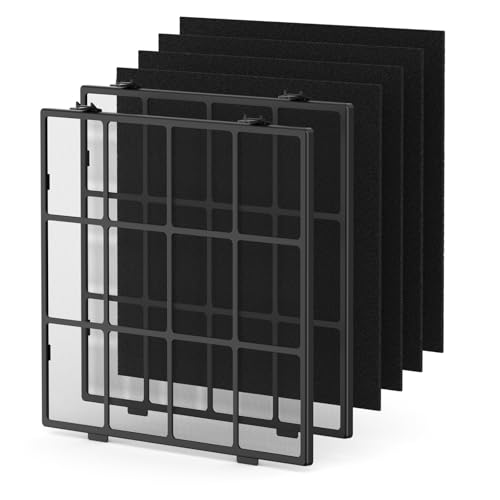
Why this pick: if you already own a Coway Airmega AP‑1512HH or a model in the 200M series, the FMDZFL kit offers two washable pre‑filters plus four activated carbon pre‑filters to control odors. It’s a cost‑effective way to protect the main filter and reduce replacement frequency.

  • Key facts: brand FMDZFL; includes 2 washable pre‑filters + 4 activated carbon filters. Compatibility is listed for Coway AP‑1512HH and several 200M models. (product page)
  • Best for: Coway owners who want to trap hair/dust at the front line and add odor control at a lower recurring cost than OEM cartridges alone.

Pros:

  • Two washable pre‑filters let you rotate covers—one in use while the other dries—so there’s almost no downtime during cleaning cycles.
  • Includes four carbon filters for periodic odor control; the listing recommends replacing carbon filters every 3–6 months depending on usage, which aligns with common household odor loads.
  • Protects the main filter from coarse debris (pet hair, lint), prolonging the life of the main HEPA or other primary media.

Caveats:

  • The kit protects the main filter but does not replace it; the main HEPA (if present in your Coway) still follows the OEM replacement schedule and should be checked periodically.
  • Carbon filters are consumable—plan for replacement costs if you rely on frequent odor adsorption (heavy cooking, smokers, or strong pet odors).

Installation note: confirm model compatibility before ordering. A snug fit matters: a loose pre‑filter can allow bypass or shift and reduce overall performance.

XBWW / Cabiclean / uahpet washable pre‑filters — Best low‑cost pre‑filter covers by model

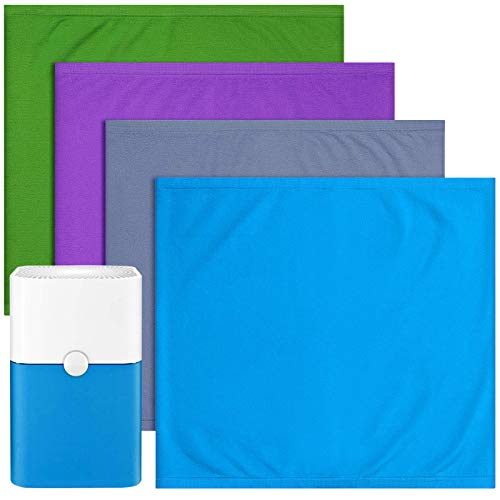
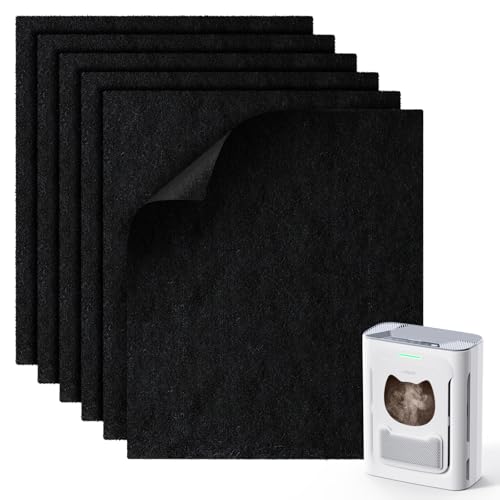
Why these picks: for Blueair owners and specialist purifier models, several low‑cost washable fabric pre‑filter covers are available. They trap lint, pet hair and coarse dust ahead of the main filter and are inexpensive to replace or rotate. Buying multi‑packs simplifies maintenance.

Pros:

  • Very low cost vs. OEM disposable covers; helpful for homes with pets and heavy dust where the outer layer collects most of the hair and large particles.
  • Washing and rotating covers extends the life of the inner filter and reduces ongoing spend—multi‑packs make rotation practical.

Caveats:

  • Fit is model specific—measure or confirm model compatibility before ordering. A pre‑filter meant for the 211+ will not necessarily fit a different Blueair size or shape.
  • Pre‑filters filter out larger particles; they do not provide HEPA‑grade capture by themselves. Keep the main HEPA filter in place for fine particle removal.

How washable filters actually perform — practical realities

Washable filters and fabric pre‑filters are good at trapping larger particles—dust, lint, hair, pet fur—and at collecting grease and condensates in kitchen‑facing units that have oil cups. They serve three useful roles:

  • First‑line defense: catching coarse debris so it never reaches the main filter.
  • Cost control: reducing frequency of expensive main filter cartridge changes and saving money over the long run.
  • Targeted capture: localized fume and grease trapping where extraction is short‑range and directional (for example, over a cooktop or at a desk).

But there are limits you must accept:

  • Particle size and grade: Washable pre‑filters and small desktop purifiers typically do not provide the same certified small‑particle removal as true HEPA filters. If medical‑grade or allergy‑level removal of submicron particles is required, a certified HEPA purifier should be your primary device.
  • Coverage and airflow: A small USB‑powered unit can only influence a limited volume of air—precise placement near the pollution source matters more than raw motor power. For whole‑room cleaning you still need a device sized and rated for that room.
  • Maintenance impacts performance: A saturated, greasy or compressed fabric does less work than a freshly washed cover. Regular washing, complete drying and inspection for wear keep performance high.
  • Carbon layer limits: Any odor control that depends on activated carbon will be time‑limited; carbon adsorbs until saturated and then must be replaced to remain effective.

When to choose a washable‑filter purifier (versus buying washable pre‑filters only)

Choose a compact purifier with a washable filter if:

  • You need immediate, local capture of cooking smoke, grill odors or cigarette smoke at a counter or desktop.
  • You want the lowest possible recurring cost and are willing to wash, dry and maintain the unit yourself.
  • You travel often and need a portable, rechargeable or USB device for hotel rooms, RVs or short‑term use.
  • Your primary concern is grease and coarse airborne debris rather than submicron particulate removal.

Choose washable pre‑filters for an existing purifier if:

  • You already own a mid‑range or premium purifier (Coway, Blueair, etc.) and want to trap hair and big debris ahead of the main filter to reduce replacement frequency.
  • You have pets or heavy dust and prefer rotating covers to vacuuming the main filter frequently.
  • You need targeted odor control in addition to particulate removal—look for kits that include activated carbon elements alongside washable pre‑filters (the FMDZFL kit is an example).

Buying checklist — what to look for (prioritized)

  • Clear “washable” labeling: the listing should explicitly state “washable filter” or “washable pre‑filter.” If it’s ambiguous, contact the seller or treat the part as disposable until confirmed.
  • Compatibility: for pre‑filters, confirm model fit (AP‑1512HH, Blue Pure 211+, Mini Max, uahpet Slim, etc.). Manufacturer model numbers are decisive—don’t assume similar‑looking units share the same filter dimensions.
  • Odor control needs: If you need odor mitigation, verify whether the kit adds activated carbon and how many carbon elements are included. Carbon is consumable—check replacement cadence and cost.
  • Physical features for kitchen use: removable oil cup, directional tilt or targeted suction are valuable for capturing grease or rising steam. The Silanit and ormos listings highlight these features for cooktop use.
  • Power source and runtime: rechargeable or USB units are portable but confirm runtime and charge profile. For overnight bedroom use, check noise level claims—ormos lists 36 dB—and account for real‑world tolerance to fan noise.
  • Pack size for rotation: buying multi‑packs or kits with spare covers makes rotation and drying practical—most sellers offer 2+ covers for this reason.
  • Durability and care instructions: check whether the seller gives clear washing instructions and any exclusions (machine‑wash vs. hand‑wash, bleach warnings, dryer instructions). Prefer goods that offer explicit care guidance.
  • Safety exclusion: avoid ozone generators for occupied spaces. They are not a filter substitute and require evacuation and ventilation when used.

Maintenance: keep washable filters working well

Washable filters are low‑cost only when maintained correctly. Follow these practical steps to maintain performance and avoid unpleasant side effects like odors or mold:

  • Pre‑clean: remove loose hair, lint and dust by gently shaking the pre‑filter outdoors or vacuuming it with a brush attachment before washing. This reduces cleaning cycles and protects the fabric from abrasion.
  • Washing method: use mild dish soap or gentle laundry detergent and lukewarm water. Agitate gently by hand or use a delicate cycle if the manufacturer allows machine washing. Avoid bleach and strong solvents unless the seller specifies they’re safe.
  • Deal with oil and grease: for filters exposed to cooking fumes, let them soak briefly in warm soapy water to break down grease, and rinse thoroughly. Empty and wash any removable oil cup with dish soap and hot water.
  • Drying: always air dry completely before reinstalling. Do not use a clothes dryer on high heat—high temperatures can warp or shrink fabric and adhesive. A well‑ventilated spot or a fan can speed drying; ensure the media is fully dry to avoid mold growth.
  • Rotation strategy: keep at least one spare pre‑filter so you can rotate covers—one in use, one drying. Multi‑packs (2–6 covers) are inexpensive and reduce downtime between washes.
  • Inspection and replacement cues: inspect filters for fraying, thinning, discoloration or compressed fibers. If the fabric no longer springs back, allows visible bypass, or smells after washing, replace it—the pre‑filter has reached the end of useful life.
  • Carbon element care: activated carbon cannot be washed clean to restore adsorption capacity. Replace carbon inserts per the kit guidance (FMDZFL recommends replacement every 3–6 months, depending on odor load).
  • Storage: store spare washable covers in a dry, dust‑free bag. Avoid sealed plastic where residual moisture could encourage mildew; instead use a breathable cloth bag or a labeled box in a dry area.

Placement and practical use cases — how to get the most benefit

Washable‑filter devices shine when placed and used appropriately. Here are practical placement tips and example use cases:

  • Over a cooktop or hot pot: position the purifier as close as practical to the rising fumes without obstructing normal cooking. A tilted, directional unit (Silanit, ormos) that captures plumes at source will perform much better than a centrally located device.
  • Desk or bedside: place the unit on the side of your desk closest to the pollution source (for example, a scented candle or smoking area) or on a bedside table if you want localized overnight odor control. Small units affect a small radius—positioning matters.
  • RV or hotel rooms: compact USB or rechargeable units are ideal for temporary stays; they handle short‑term odors and coarse particulates better than trying to move a full‑size purifier.
  • Pre‑filter for large purifier: install a washable pre‑filter on a full‑size purifier if you have pets or heavy dust. It will catch hair and lint that would otherwise cake on a main filter, reducing the main filter’s replacement frequency.
  • Close vs. far: a small desktop purifier will perform well for the immediate breathing zone (roughly a 3–6 foot radius). For whole‑room cleaning, especially in open plans, expect performance to drop unless the main unit is rated for the room size.

Decision flow — choose the right washable option for your situation

Use this short decision flow to pick a product:

  1. Do you already own a full‑size purifier (Coway, Blueair, uahpet)? If yes, buy a model‑specific washable pre‑filter to protect the main filter (FMDZFL for Coway; XBWW/Cabiclean for Blueair; uahpet pre‑filters for uahpet units).
  2. If not, do you need a portable/localized solution for cooking smoke, cigarette smoke or a desk? Choose a compact washable‑filter purifier (Silanit for USB power; ormos for rechargeable portability).
  3. Do you need odor control in addition to particle capture? Choose a kit that includes activated carbon (FMDZFL includes carbon filters) or a model that supports an odor element; remember carbon is consumable and will need periodic replacement.
  4. Is quiet operation important? Look for dB claims—ormos lists 36 dB and may be a better choice for bedrooms; for other models, expect quieter operation on lower fan settings.
  5. Do you want minimal downtime during cleaning? Buy multi‑packs or sets that include extra washable covers so you can rotate while one dries.
  6. Are you sensitive to small particles or have allergy concerns? Use washable pre‑filters as a supplement—keep a certified HEPA main filter for fine particulate removal and medical‑grade needs.

Extended FAQs

Are air purifiers with washable filters effective?

Short answer: yes, within limits. Washable filters and pre‑filter covers work well for larger particles, pet hair, lint, and in many cases grease and localized cooking smoke. Their main value is protecting the main filter and reducing the frequency of expensive replacements. However, they usually do not match the fine‑particle capture of certified true HEPA media. Pair a washable pre‑filter with a HEPA main filter if you need comprehensive particle removal.

How often should I wash a washable pre‑filter?

Manufacturer guidance varies, but a common recommendation—also given in several listings—is every 2–3 months for pre‑filter covers. If you have pets, heavy cooking, wildfire smoke exposure or visibly clogged fabric, wash more frequently (monthly or even weekly in extreme cases). For kits that include activated carbon, follow the carbon replacement schedule (often every 3–6 months) because carbon loses adsorption capacity over time and cannot be restored by washing.

Can washable filters replace HEPA filters?

Not usually. Washable pre‑filters extend the life of the main filter and cut costs by trapping large particles and hair, but they do not typically provide the same fine‑particle capture as certified true HEPA media. Use washable filters for cost and convenience; keep a HEPA main filter if allergy‑level small‑particle removal is required.

Is the Manfh ozone generator a washable‑filter purifier I can use indoors?

No. The Manfh model in the catalog is an ozone generator, not a filtration purifier. Ozone generators should be operated only in unoccupied, sealed spaces and require ventilation before people or animals re‑enter. They are not a safe substitute for mechanical filtration in occupied rooms and are explicitly not recommended for continuous indoor use with people or pets present.

Can I machine‑wash washable pre‑filters?

That depends on the product. Some fabric pre‑filters are machine‑washable on delicate cycles; others are intended for hand‑washing only. If the product page does not specify, assume hand wash with mild soap and lukewarm water. Avoid high‑heat drying unless the manufacturer explicitly allows it—heat can deform fabric or adhesives.

How do I avoid mold when I wash filters?

Thorough drying is the single most important step. After washing, air dry the pre‑filter completely in a ventilated area before reinstalling. Do not store damp filters in a sealed bag. If a filter smells musty after drying, discard it—odor can indicate trapped mold spores or bacteria that survived cleaning.

Are washable filters hygienic for use in kitchens and around food?

Yes, if cleaned properly. Remove and empty oil cups after each heavy cooking session, wash with dish soap, and wash the pre‑filter as needed. Always let parts dry completely before reassembly. For heavy grease exposure, you may want to shorten cleaning intervals to avoid rancid odors or reduced performance.

How long do washable pre‑filters typically last?

Material and frequency of washing determine lifespan. Many reusable covers can last months to a few years if washed gently and inspected regularly. Replace covers when they fray, thin out, lose shape, or no longer trap dust effectively. If in doubt, treat them as a low‑cost consumable—packs are inexpensive to replace.

Will a washable pre‑filter reduce airflow and affect my purifier?

A pre‑filter adds some resistance to airflow, but its purpose is to remove large particles before they reach the main media. Over time, a clogged pre‑filter can reduce airflow more than a clean one—regular washing prevents this. If you notice reduced suction or higher fan noise, check and clean the pre‑filter first.

What do I do if the washable filter smells even after washing?

If odors persist after washing and drying, the fabric may have absorbed oils or volatile compounds beyond what washing can remove, or the unit may have trapped grease in areas not reached during normal cleaning. Replace the pre‑filter and clean all removable parts (oil cup, housing). If the smell returns quickly, consider adding or replacing activated carbon elements for odor adsorption or increasing cleaning frequency.

Troubleshooting — common issues and quick fixes

  • Low airflow or weak suction: remove and inspect the pre‑filter—vacuum or wash it if clogged. Check for obstructions in the intake or outlet and ensure the unit is on a flat surface.
  • Persistent odor: empty and wash the oil cup, replace saturated carbon inserts, and wash the fabric cover. Consider more frequent carbon replacement if odors are heavy.
  • Unit makes unusual noise: check that the washable pre‑filter is seated properly and not fluttering; ensure the fan housing is clean and screws are tight. If the unit is battery‑powered, reduced charge can change noise profile—verify battery health.
  • Filter smells musty after washing: allow more air drying time or use a secondary drying location. If the smell persists, discard and replace the cover to avoid mold reintroduction.

Comparison notes and limitations of this guide

A few editorial limits you should know:

  • Many of the small purifiers and pre‑filter accessories in our catalog do not publish CADR values or independent test results; where CADR or noise is not listed in the maker’s listing we call that out. The absence of CADR does not mean the product is ineffective—only that lab‑verified whole‑room airflow data is not listed in the maker’s listing.
  • We have not performed laboratory particle‑capture testing on the listed items for this roundup; recommendations are made from the product descriptions, stated features and use‑case suitability.
  • Washable pre‑filters are an economical addition but not a drop‑in replacement for certified HEPA filtration when small particulate removal is the central requirement.
  • The Manfh listing in the catalog is an ozone generator. We list it on the site under odor control products but explicitly advise against using ozone generators in occupied rooms. They are not washable‑filter purifiers and are unsafe for continuous indoor use with people or pets present.

Where to go next on AirPurifierFAQ

For deeper buying guidance and lab‑style comparisons, see our broader coverage:

Final notes

Washable filters and washable pre‑filter covers are an economical, practical choice when the objective is localized capture, reduced replacement expense and simpler maintenance. They pair best with a main filter if you need comprehensive particle removal. If your priority is long‑term low‑cost capture of hair, grease and coarse dust in small personal zones, one of the options above—properly maintained—will serve you well.

  • Silanit Desktop Smoke Purifier Fan — Washable filter, oil cup, USB powered. Best for targeted smoke and kitchen use. (product page)
  • ormos Rechargeable Desktop Air Purifier — Rechargeable, washable filters included, quiet operation (36 dB reported). Best for desks, travel and bedside use. (product page)
  • FMDZFL AP‑1512HH Washable Pre‑filter + Carbon set — Two reusable pre‑filters + four carbon inserts; compatible with Coway AP‑1512HH / 200M series. Best for Coway owners who want reusable front filters plus replaceable carbon for odor control. (product page)
  • XBWW / Cabiclean / uahpet washable pre‑filters — Low‑cost fabric pre‑filter packs for Blueair and uahpet models; buy multi‑packs for rotation and rapid drying. (XBWW 211+, Cabiclean 4‑pack, uahpet 6‑pack)
  • Manfh 2026 Upgraded High Capacity Ozone Generator — Ozone generator for unoccupied odor treatment only. Not a washable‑filter product and not safe for use in occupied spaces. (product page)

Sources: Air Purifier with Washable Filter

To keep our Air Purifier with Washable Filter information accurate, we rely on independent references such as the EPA’s Guide to Air Cleaners in the Home, AHAM Verifide CADR data and manufacturer spec sheets. See how we evaluate air purifiers and our editorial policy for details.

FAQ

Questions buyers often ask

How often should I clean washable filters and empty oil collection cups?

Cleaning frequency depends on use and the manufacturer’s guidance in the product listing. The guide notes oil buildup quickly reduces suction and trapping efficiency, so empty oil cups after heavy cooking and clean washable pads regularly. Always dry filters thoroughly before reinstalling. If the listing doesn’t state intervals, verify recommended cleaning and drying instructions with the seller or manufacturer.

Can a purifier with a washable filter replace a single-use HEPA cartridge for whole-room cleaning?

No — the roundup treats washable-media units as targeted capture tools, not whole-room HEPA replacements. The listings for items like the Silanit and ormos units lack CADR or certified particle-capture claims, so expect effective capture of larger particles, grease and nearby smoke/odors but not guaranteed whole-room HEPA performance.

Will a washable pre-filter kit protect my main purifier filter and save money?

Yes — washable pre-filters are intended to trap hair, lint and grease and thereby protect an expensive main filter. For example, the FMDZFL kit is sold for Coway Airmega AP-11512HH and 200M-series owners and includes washable pre-filters plus carbon pre-filters for odor control. Verify compatibility with your exact model in the product listing before purchase.

Is the Manfh "ozone generator" treated as a washable-filter air purifier in this guide?

No. The guide explicitly excludes ozone generators from filtration recommendations. The Manfh listing is an ozone generator, not a filtration device; it must only be used in unoccupied, ventilated spaces and is not a substitute for an air purifier in occupied rooms. The guide does not recommend ozone units for everyday indoor use.

How should I choose between a small rechargeable desktop unit and a replacement washable pre-filter kit?

Match the product to the use case: small rechargeable/USB desktop units (Silanit, ormos) are best for portable, close-range smoke/odor capture on desks, counters, RVs or bedside use. Replacement washable pre-filter kits are for owners of larger purifiers who want to protect the main filter and control odors. Also check runtime, compatibility, maintenance burden and whether CADR or certifications are provided in the listing.

Some listings don’t show CADR or independent certifications — what should I verify before buying?

If CADR, lab tests or certifications aren’t in the listing, verify those performance metrics with the seller or manufacturer. Also confirm exactly what is washable (media vs. external cover), compatibility with your model, recommended cleaning/drying procedures, and, for battery units, runtime and battery behavior. Treat models without performance data as source-proximate, targeted devices rather than whole-room solutions.

AirPurifierFAQ
Logo
Register New Account
Shopping cart