

Manfh
2026 Upgraded High Capacity Ozone Generator Odor Removal Up to 6000…
BrandManfhCoverage6,000 sq ft
See today’s price on Amazon
View product detailsProduct information comes from the current AirPurifierFAQ catalog and should be verified on Amazon before purchase.



Top pick: Levoit air purifier (up to 222 sq ft) (8.4/10). HEPA filter for fine dust, pollen and dander; covers rooms up to 222 sq ft; runs as quietly as 24 dB. It scores highest on this list, led by quiet operation and brand track record.
Runner-up: Shark NeverChange (HP301) (7.9/10): covers rooms up to 1,300 sq ft. Also worth a look: Shark Clean Sense (HP232) (7.8/10): covers rooms up to 1,200 sq ft.
Scores come from published specs, certifications and brand track record, weighted for pollen. See how we score.
Ranked by our score from each maker's published specs. We earn a commission when you buy through our links, at no extra cost to you. Tap any button to see today's price on Amazon.

How this product scored 8.4 / 10
Based on the maker's specs as listed on Amazon. We don't lab-test every model. See how the score works.

How this product scored 7.9 / 10
Based on the maker's specs as listed on Amazon. We don't lab-test every model. See how the score works.

How this product scored 7.8 / 10
Based on the maker's specs as listed on Amazon. We don't lab-test every model. See how the score works.

How this product scored 7.3 / 10
Based on the maker's specs as listed on Amazon. We don't lab-test every model. See how the score works.
How this product scored 7.2 / 10
Based on the maker's specs as listed on Amazon. We don't lab-test every model. See how the score works.

How this product scored 7.2 / 10
Based on the maker's specs as listed on Amazon. We don't lab-test every model. See how the score works.

How this product scored 7.2 / 10
Based on the maker's specs as listed on Amazon. We don't lab-test every model. See how the score works.

How this product scored 6.9 / 10
Based on the maker's specs as listed on Amazon. We don't lab-test every model. See how the score works.
How this product scored 6.8 / 10
Based on the maker's specs as listed on Amazon. We don't lab-test every model. See how the score works.

How this product scored 6.8 / 10
Based on the maker's specs as listed on Amazon. We don't lab-test every model. See how the score works.
Primary audience: seasonal pollen sufferers and people who want routine, practical reduction of airborne pollen in the rooms they use most. This guide focuses on occupant-safe, HEPA-equipped devices and clarifies when other product types (carbon, washable filters, ozone) are appropriate or not.
Three quick scenarios to self-select:
To keep recommendations practical and transparent we used a short checklist. All statements below refer only to the maker’s listing product facts and feature text.
Brand: BLACK+DECKER | Coverage: 435 sq ft | Filter: HEPA (3-stage) | Smart features: Sleep Mode, Timer, Filter indicator
Why it’s recommended: The BLACK+DECKER tabletop purifier provides a clear manufacturer claim: three-stage filtration that removes up to 99.97% of pollutants down to 0.3 microns and a stated coverage up to 435 sq ft (based on 5 air changes per hour). That combination of a HEPA-level filter and a quantified room-size rating makes this model a practical, everyday choice for people who want reliable pollen reduction in bedrooms or medium-sized living rooms.
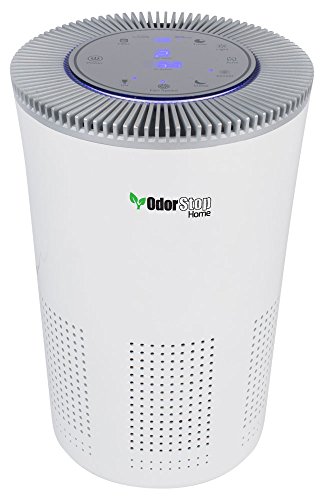
Brand: OdorStop | Filter: H13 HEPA | Smart features: Auto Mode, Sleep Mode, Air-quality display, Timer
Why it’s recommended: OdorStop’s listing highlights H13 HEPA filtration and a suite of convenience features — auto mode, sleep mode, 24-hour timer, five-speed motor and an air-quality display. For someone who wants automated continuous operation with minimal interaction (the purifier adjusts itself as the air changes), this unit’s features are compelling.
Brand: QUEENTY | Filter: H13 HEPA | Noise: 25 dB | Smart features: Sleep Mode, USB power
Why it’s recommended: QUEENTY’s desktop model lists H13 HEPA media and a very low-noise sleep mode (25 dB). Its face-to-face outlet and oscillating airflow design aim to deliver purified air directly into the user’s breathing zone, which makes it a sensible choice when you sit at a desk or want a close-range bedside unit.
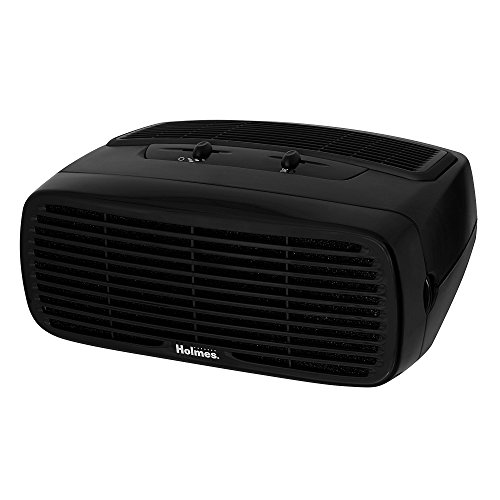
Brand: HOLMES | Coverage: 109 sq ft | Filter: HEPA-type | CADR: 70
Why it’s recommended: The Holmes desktop purifier is an economical option with explicit guidance for small rooms (up to 109 sq ft) and a stated CADR of 70. It’s a practical pick for compact bedrooms, studies or nightstands where budget and footprint are the primary constraints.
Brand: SOMEWAYTOP | Filter: H13 HEPA + Activated Carbon + Pre-Filter | Price: check the current price on Amazon
Why it’s recommended: Replacement filters with H13 HEPA media, carbon and pre-filters help maintain performance. SomewayTop’s kit explicitly recommends a 12-month replacement interval as a starting point (actual frequency should depend on runtime and environment). Including a known compatible replacement kit helps buyers plan maintenance and budget for recurring costs.
Brand: AuroraTurn | Filter: Activated Carbon | Price: check the current price on Amazon
Why it’s included: This model emphasizes activated carbon filters and portability. It’s useful for smoke or kitchen odor reduction in small, localized areas, but it’s not a HEPA-based particle-removal solution — readers seeking pollen reduction should treat it as an odor-focused supplement rather than a primary pollen-control device.
Brand: ormos | Filter: Washable Filter | Noise: 36 dB (feature text)
Why it’s included: ormos’s portable purifier with washable filters is useful for short-term or travel scenarios and for users who want to avoid recurring filter purchases. It’s best for occasional smoke or odor capture in small areas; a washable filter typically will not meet H13/H14 HEPA standards for consistent pollen removal.
Brand: Manfh | Coverage: up to 6,000 sq ft (the maker’s listing claims for odor treatment) | Price: check the current price on Amazon
Why it’s listed: This product is an ozone generator and is included for clarity about use and safety. The manufacturer text emphasizes that ozone reacts with odors and must be used in enclosed, unoccupied spaces — people, animals and plants must be kept away while the device runs and the room must be ventilated for 30–60 minutes afterward. Because of those explicit operating constraints, this device is not an occupant-safe solution for daily pollen control.
Short decision flow mapping the included models to typical use cases. Use this to quickly choose the right device for your space and habits.
| Model | Best for (one-line) |
|---|---|
| BLACK+DECKER Tabletop | Best overall for bedrooms and medium living rooms where a stated coverage and sleep mode matter. |
| OdorStop H13 HEPA | Best for users who want an H13 unit with auto and sleep modes and an air-quality display for automated continuous operation. |
| QUEENTY Desktop (H13) | Best for close-range personal use at a desk or bedside where low noise and direct airflow matter. |
| HOLMES Desktop HEPA-Type | Best budget option for a very small room (up to 109 sq ft) that needs simple particle reduction. |
| SomewayTop Replacement Filters | Buy if you own a compatible MinusA2-series purifier and want H13 + carbon replacements (vendor recommends ~12 months replacement depending on use). |
| AuroraTurn / ormos (portable) | Best for portability and targeted odor/smoke capture in small spaces; not substitutes for HEPA-based pollen control. |
| Manfh Ozone Generator | Use only for unoccupied odor treatments — follow vendor safety instructions and ventilate before people return. |
Below is an action-focused checklist and a short mini-calculator to help you pick a purifier that matches your room and use case. Use the maker’s listing coverage numbers when available; where they’re missing, assume the product is intended for personal/portable use unless the maker’s listing states otherwise.
For pollen and other airborne particles, prioritize true HEPA media listed in the product facts. Vendors often label these as “HEPA,” “H13 HEPA” or “H14 HEPA.” HEPA-level filters are designed to capture small particles; products that rely only on activated carbon, washable filters or ozone do not provide the same particle-capture performance. If a product is labeled “HEPA-type” (for example, HOLMES is described as HEPA-type), read the feature text carefully — such models can still reduce particles but may not meet the stricter H13/H14 standards.
Step A — Measure your room:
Step B — Compare to the purifier’s listed coverage:
Step C — Optional ACH-to-CADR math (if you want to compare to CADR values):
Formula overview (maker’s listing coverage makes this easier): CADR (cfm) roughly equals (Room volume in cubic feet × Desired ACH) ÷ 60. You can compute room volume by multiplying floor area by ceiling height. This calculation helps when you have CADR figures and want to check how many air changes per hour a given CADR provides in your space. Note: we did not invent CADR numbers for the models here (only HOLMES lists a CADR of 70).
Trade-offs:
Check the maker’s listing filter-life guidance before buying. BLACK+DECKER lists a filter life up to 2,000 hours and mentions an indicator; SomewayTop recommends a 12-month replacement interval for its kit. When yearly filter cost isn’t listed, use the product page links in this guide to find replacement SKU prices and calculate annual cost based on expected runtime (continuous 24/7 use will consume filters faster than occasional use).
If you spend time in multiple rooms, consider a properly sized purifier in each frequently used room rather than relying on a single remote unit. Example: a QUEENTY desktop at your desk plus a BLACK+DECKER in the bedroom can be more effective than one unit placed far from your main living areas.
Some models include ionizers (QUEENTY, HOLMES optional ionizer). An ionizer can produce charged particles that clump together and settle more readily; some vendors also market negative-ion features and may claim improved sleep. If you prefer strictly mechanical filtration, choose a purifier that omits ionizer functions or explicitly states “No-Ozone.” Ozone generators (Manfh) are intended only for unoccupied deodorizing and must be used according to the vendor’s safety instructions.
Proper maintenance keeps a purifier running near its rated performance. Below are practical steps based on the maker’s listing guidance.
Ozone-generating devices are a distinct product category and have explicit safety limitations in vendor text. The Manfh 2026 Upgraded High Capacity Ozone Generator listing states the device removes odors by producing ozone, must be used in an enclosed space with people, animals and plants kept away during operation, and requires ventilation for 30–60 minutes before re-entry. The vendor also notes the product is not for sale in California. Use this model only for occasional, unoccupied deodorizing tasks and follow all vendor instructions.
Limitations summary:
Yes. For practical reduction of airborne pollen, choose a purifier that lists true HEPA, H13 or H14 media in the product facts. These media are the vendor-standard claims for particle removal; carbon-only or washable-filter models are not substitutes for HEPA-level particle capture.
Measure your bedroom floor area (length × width) and pick a model whose manufacturer-stated coverage meets or exceeds that area. If a model’s coverage is expressed at a specific ACH (e.g., BLACK+DECKER’s 435 sq ft at 5 ACH), note that the vendor’s basis affects how quickly air is cycled — the product page will help confirm that the stated coverage fits your expectations.
No for occupied-room allergy control. Ozone generators (for example, the Manfh 2026 model) are intended for unoccupied deodorizing tasks and must be used with the space vacated and ventilated before people return. For routine, occupied-room pollen control, choose an occupant-safe HEPA or H13/H14 unit instead.
Check the vendor’s filter-life guidance. Where listed, product text may list hours or a replacement interval (BLACK+DECKER lists up to 2,000 hours; SomewayTop recommends ~12 months depending on use). If the vendor doesn’t specify, inspect filters visually and replace when you see heavy soil, reduced airflow or persistent odors.
Activated carbon targets gases and odors, not airborne particles. Carbon filters can supplement a HEPA filter when odors are also a concern, but carbon-only devices are not substitutes for HEPA
To keep our Best Air Purifier for Pollen information accurate, we rely on independent references such as the EPA’s Guide to Air Cleaners in the Home, AHAM Verifide CADR data and manufacturer spec sheets. See how we evaluate air purifiers and our editorial policy for details.
Use the maker’s room-coverage or “best fit” square footage as your primary guide. Favor units rated for the actual room footprint. If a coverage number isn’t listed, check the vendor page or consider multiple properly sized units for large open-plan areas.
Choose models that list true HEPA, H13 or H14 media because manufacturers advertise those filters for capturing pollen-sized particles. If HEPA/H13/H14 isn’t listed, verify the filter media on the vendor page to confirm suitability for pollen reduction.
No. Ozone-emitting devices should not be used in occupied rooms for routine allergy control. They are intended for unoccupied spaces and are placed in a separate category with safety notes.
The BLACK+DECKER listing shows three-stage HEPA-level filtration (capture to 0.3 microns, up to 99.97%) and a maker-stated 435 sq ft coverage. It also lists sleep mode, timers (1/2/4/8 hours), child lock and a filter indicator, which suit quiet, continuous bedroom use. Check the vendor page for CADR and filter-cost details.
OdorStop’s product facts list H13 HEPA, capture to 0.3 microns, auto and sleep modes, a 24-hour timer, five fan speeds and an air-quality display. Because the maker’s listing does not include a room-size coverage number, verify the vendor page for sq ft guidance or CADR before assuming it’s sized appropriately for your bedroom.
QUEENTY is presented as a personal/desk option with H13 HEPA media and a noise rating listed as 25 dB on the maker’s listing, plus sleep features. That combination makes it suitable for close-range personal airflow at a desk or bedside; pair a personal unit with a whole-room unit if you also want broader room coverage.
Answers are educational and may link to relevant guides or products on this site. Product facts can change, so confirm current details before purchase.
