Manfh
2026 Upgraded High Capacity Ozone Generator Odor Removal Up to 6000…
BrandManfhCoverage6,000 sq ft
See today’s price on Amazon
View product details
Product information comes from the current AirPurifierFAQ catalog and should be verified on Amazon before purchase.

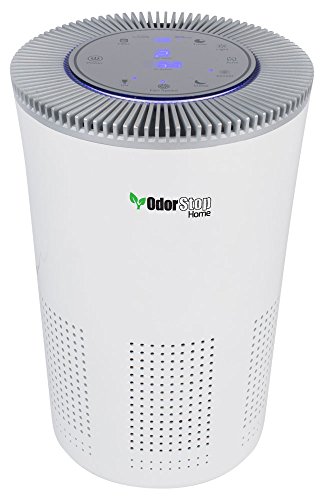


In brief: Best Air Purifier for Apartment: our top air purifiers for apartments and shared-wall living, ranked by verified CADR, noise (dB) and yearly filter cost.
Ranked by our score from each maker's published specs. We earn a commission when you buy through our links, at no extra cost to you. Tap any button to see today's price on Amazon.

How this product scored 7.3 / 10
Based on the maker's specs as listed on Amazon. We don't lab-test every model. See how the score works.

How this product scored 7.3 / 10
Based on the maker's specs as listed on Amazon. We don't lab-test every model. See how the score works.

How this product scored 7.0 / 10
Based on the maker's specs as listed on Amazon. We don't lab-test every model. See how the score works.
How this product scored 6.7 / 10
Based on the maker's specs as listed on Amazon. We don't lab-test every model. See how the score works.

How this product scored 6.7 / 10
Based on the maker's specs as listed on Amazon. We don't lab-test every model. See how the score works.

How this product scored 6.7 / 10
Based on the maker's specs as listed on Amazon. We don't lab-test every model. See how the score works.
How this product scored 6.5 / 10
Based on the maker's specs as listed on Amazon. We don't lab-test every model. See how the score works.
How this product scored 6.4 / 10
Based on the maker's specs as listed on Amazon. We don't lab-test every model. See how the score works.

How this product scored 6.2 / 10
Based on the maker's specs as listed on Amazon. We don't lab-test every model. See how the score works.

How this product scored 6.2 / 10
Based on the maker's specs as listed on Amazon. We don't lab-test every model. See how the score works.
This roundup is written for apartment dwellers who need a clear, practical way to choose an air purifier that fits real constraints: limited floor space, shared walls, sleep-time noise sensitivity, and occasional kitchen smoke or pet/odor problems. If you rent a one- or two‑bedroom unit and want a reliable bedroom or living‑room unit, a compact desktop option for a home office or dorm, or a smoke/odor extractor for countertop cooking, this guide focuses on those needs.
It also separates routine purifiers (HEPA/carbon/washable filters) from specialty devices (ozone generators). If you are considering an ozone device for deep deodorizing, read the safety section below—these must be used only in unoccupied, well‑ventilated spaces. The recommendations that follow use only the manufacturer and retailer specifications provided for each product.
We did not perform independent lab testing for this article; specifications such as CADR, decibel levels and replacement‑filter pricing are reported only when stated on the maker’s listing or the Amazon listing.
Top pick: LG PuriCare 360-Degree (AS560DWR0) (7.3/10). True HEPA filter for fine dust, pollen and dander; covers rooms up to 512 sq ft; sleep mode for quiet nights. It scores highest on this list, led by room fit and filtration.
Runner-up: Shark BreatheClear Compact Pro (HP062PK) (7.3/10): HEPA filter for fine dust, pollen and dander. Also worth a look: Shark NeverChange (HP153) (7.0/10): covers rooms up to 650 sq ft.
Scores come from published specs, certifications and brand track record, weighted for apartments. See how we score.
Key facts: H13 HEPA filter; auto and sleep modes; 360° air intake; 3‑year limited warranty; check the current price on Amazon.
Why it made the list: This model pairs a high‑efficiency H13 HEPA stage with features apartment owners value—auto mode for hands‑off operation and sleep mode for quiet nights. The 360° intake is useful in confined spaces because it draws air from all sides rather than relying on a single directional flow.
Who it’s best for: Small living rooms and bedrooms where a user wants strong particle filtration plus simple automation (auto/sleep/timers) and a longer warranty for peace of mind.
What to check before buying: The manufacturer page does not list CADR or a specific room‑size rating—confirm the room area you want to cover and the unit’s ACH/CADR with the retailer if you need a quantified performance metric; verify filter replacement pricing and schedule for ongoing operating costs. The product page includes manufacturer language about capturing 99.97% of particles down to 0.3 microns—this is the manufacturer’s filtration claim; treat it as a specification rather than a medical claim.
Key facts: Stated coverage up to 435 sq ft (manufacturer basis: 5 air changes per hour); HEPA filter; sleep mode; replacement filters available; filter life listed as up to 2,000 hours.
Why it’s useful in apartments: If you have a larger living area or an open‑plan studio, this tabletop model is explicitly rated for larger single‑room coverage than most desktop purifiers. The 3‑stage filtration and filter‑life indicator make maintenance straightforward.
Who it’s best for: Studio apartments and larger living rooms where a single unit can cover the main space. The sleep mode and compact footprint make it suitable for bedside or living‑room placement as well.
What to check before buying: The product page doesn’t publish CADR or decibel numbers—ask the retailer for CADR if you want a direct comparison with other units. If you run the unit continuously, convert the stated 2,000‑hour filter life into replacement timing based on your actual run hours (e.g., 8–24 hours/day) to estimate yearly filter cost.
Key facts: H13 True HEPA, sleep mode, manufacturer‑stated noise of 25 dB in sleep mode, USB power, oscillating face‑to‑face outlet design, manufacturer states “100% No‑Ozone” and provides a 2‑year limited replacement.
Why it’s useful in apartments: The 25 dB sleep mode makes this one of the quietest desktop choices in the list—well suited to light sleepers and shared bedrooms. The USB power and small footprint are useful for desks, bedside tables, and dorm rooms.
Who it’s best for: Remote workers, students, and anyone who needs a very quiet purifier that doubles as a local breathing‑zone boost (face‑level outlet).
What to check before buying: Manufacturer claims include a built‑in ionizer; the product page also states “No‑Ozone.” If you are sensitive to ionizers or want to avoid ion generation for any reason, confirm the unit’s certification and operation details on the product page. Replacement filter availability and cost are not listed—verify before purchase.
Key facts: Washable/removable filter with an oil collection cup; USB power; adjustable tilt angle; dual‑speed operation; the maker’s listing positions it for smoke removal and kitchen fumes; check the current price on Amazon.
Why it’s useful in apartments: This small extraction fan is designed to sit near a cooking surface and capture cooking fumes at the source. The washable filter and removable oil cup help keep operating costs low, which is important in rental kitchens where full hood ventilation isn’t available.
Who it’s best for: People who cook frequently on stovetops without good range ventilation, small gatherings with grilling or hot‑pot, and RV/camping use where portability is required.
What to check before buying: The manufacturer does not provide CADR or decibel numbers—if kitchen noise or quantified performance matters, ask the retailer. Because the filter and oil cup are washable, confirm the cleaning procedure and how often filters should be cleaned under your cooking habits.
Key facts: Portable, plug‑in mini purifier with 10 replaceable activated carbon filters included; marketed for desktops, dorms and small rooms; check the current price on Amazon.
Why it’s useful in apartments: A low‑cost way to tackle minor cooking odors and smoke on a desk or countertop. The included filters and USB‑powered design make it convenient for renters or travelers who want temporary odor relief without a large investment.
Who it’s best for: Students, short‑term rentals, travelers, or roommates who want a portable, low‑cost odor absorber for small tasks rather than whole‑room filtration.
What to check before buying: Activated carbon filters help with odors but do not replace HEPA for particles. Confirm the filter replacement cadence and whether the included filters are intended for single use or reuse after drying. CADR and decibel information are not provided on the product page.
Key facts: Washable filters, dual‑channel suction, USB power; the maker’s listing states “library‑quiet 36 dB”, and a removable oil cup for grease collection; check the current price on Amazon.
Why it’s useful in apartments: The 36 dB noise rating (manufacturer‑stated) places it in the quiet portable category while offering stronger suction than many single‑channel desktop units. Washable filters reduce replacement cost and waste.
Who it’s best for: Users who want a rechargeable, portable extractor for brief cooking tasks or tabletop gatherings where a small, quiet fan can capture smoke and grease close to the source.
What to check before buying: Confirm actual run time per charge and any limitations for continuous operation. If you plan to use it repeatedly for heavy frying, check how often the washable filters and oil cup must be emptied and cleaned.
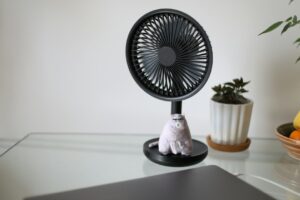
Key facts: Marketed as an ozone generator with an output up to 55,000 mg/hour; the maker’s listing states coverage up to 6,000 sq ft, timer up to 120 minutes plus a hold option, and operating noise below 30 dB. The maker’s listing notes that ozone generators should be operated in unoccupied spaces; check the current price on Amazon.
Why it’s on the list: For persistent, deep‑seated odors that aren’t solved by cleaning and carbon filtration, manufacturers of ozone machines claim rapid deodorizing because ozone reacts with odor molecules. This is a specialty device, not a routine indoor air purifier for occupied rooms.
Who it’s best for: Property managers or renters who need to deodorize an unoccupied unit between occupants (for example, after heavy smoke or mold remediation) or deodorize vehicles, storage spaces or trash rooms. The manufacturer notes the device is not available for sale in California.
What to check before buying: Read and follow all safety instructions on the product page. Ozone machines must only be used in unoccupied spaces; the page recommends ventilating for 30–60 minutes before reentry. If you have legal or building restrictions (many landlords and local regulations restrict ozone use), confirm permissibility before purchase.
Key facts: Replacement kit contains H13 HEPA + activated carbon + pre‑filter; the maker’s listing recommends replacing filters every 12 months depending on use; check the current price on Amazon.
Why it’s useful in apartments: Replacement filter pricing is one of the single largest ongoing operating costs for air purifiers. Having an explicit replacement kit linked to a purifier model makes budgeting straightforward and helps ensure that the unit will continue to perform as intended.
Who it’s best for: Owners of Minu A2 compatible purifiers who want a complete replacement kit and a manufacturer recommendation on replacement cadence.
What to check before buying: Confirm model compatibility before purchase and verify if shipping or quantity discounts are available for multi‑pack purchases if you plan to replace filters yearly.
Match the unit’s strengths to common apartment needs rather than chasing the highest spec alone. Below are the typical scenarios and the models that best fit each.
Ozone devices (e.g., the Manfh unit listed above) are marketed for rapid deodorizing, but the product page clearly states these machines must be used only in unoccupied spaces. Follow these minimum precautions: operate the device only in an empty, sealed area; keep people, pets and plants out while it runs; ventilate thoroughly for the manufacturer‑suggested interval (the product page recommends 30–60 minutes) before reentry; and check local regulations—some states or jurisdictions restrict sale or use. The Manfh product page also notes it is not available for sale in California.
Washable filters (Silanit, ormos) reduce ongoing costs but require regular cleaning to maintain suction and performance. True HEPA and activated carbon stages (OdorStop, QUEENTY, BLACK+DECKER, AuroraTurn’s carbon filters) will typically require replacement on a schedule determined by run hours and pollutant loading—manufacturers sometimes provide filter life hours (e.g., BLACK+DECKER lists up to 2,000 hours) or replacement kit pricing (SOMEWAYTOP replacement kit price shown).
Actionable rules of thumb:
Sleep mode and low dB figures matter if you share walls or have a light sleeper in the apartment. Use the lowest effective fan speed at night and place purifiers off the floor if it improves room circulation. For desk models, position the outlet toward your breathing zone rather than behind a monitor.
Most modern purifiers use modest power, but continuous operation increases both filter replacement frequency and energy use. Use built‑in timers and auto modes to balance air quality and cost. If you plan to run a unit 24/7, estimate replacement frequency from stated filter life hours (if provided) or confirm with the manufacturer.
Where you put a purifier matters almost as much as which model you buy:
If CADR, decibel ratings or replacement filter pricing are not listed on the product page, ask the retailer these direct questions before buying:
<h2
To keep our Best Air Purifier for Apartment information accurate, we rely on independent references such as the EPA’s Guide to Air Cleaners in the Home, AHAM Verifide CADR data and manufacturer spec sheets. See how we evaluate air purifiers and our editorial policy for details.
Measure the room floor area and compare it to the manufacturer’s stated coverage or ACH/CADR. The guide used manufacturer room ratings when provided (for example, BLACK+DECKER lists 435 sq ft at 5 ACH). If CADR or ACH isn’t published, ask the retailer for those metrics to confirm the unit will achieve the air changes you need.
Ozone devices are flagged as specialty tools for deep deodorizing and must be used only in unoccupied, well‑ventilated spaces. Follow the guide’s safety note: do not run ozone generators while people or pets are present, and review the manufacturer’s safety instructions and ventilation requirements before use.
Check the manufacturer’s listed filter life (for example, BLACK+DECKER lists up to 2,000 hours). Convert that into calendar time based on your daily runtime (e.g., 8–24 hours/day) to estimate yearly replacements. If filter life or pricing isn’t provided, verify replacement schedule and part costs with the retailer before buying.
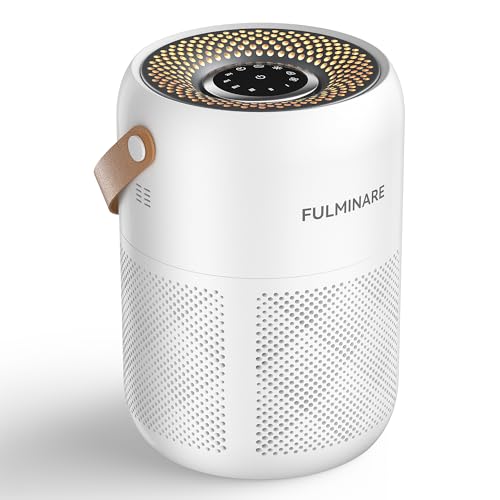
The OdorStop is recommended for bedrooms because it includes auto and sleep modes and is positioned as a quiet, balanced choice for small living spaces. The product page does not publish a decibel rating, so if you are noise‑sensitive, confirm the sleep‑mode dB level and CADR/room‑size rating with the retailer before purchasing.
The QUEENTY states H13 HEPA, 25 dB sleep mode, USB power, and a built‑in ionizer while claiming “100% No‑Ozone.” If you are sensitive to ionizers, confirm whether the ionizer can be turned off and review the product page for certification and operational details. Also verify replacement filter availability and costs.
The guide favors activated carbon where odor and smoke adsorption is stated—use carbon‑based or HEPA+carbon units for routine kitchen smoke and odors. Ozone units are noted only for deep deodorizing and should be used in unoccupied, well‑ventilated spaces; verify the manufacturer’s odor‑removal claims and safety guidance before using an ozone device.
Answers are educational and may link to relevant guides or products on this site. Product facts can change, so confirm current details before purchase.